
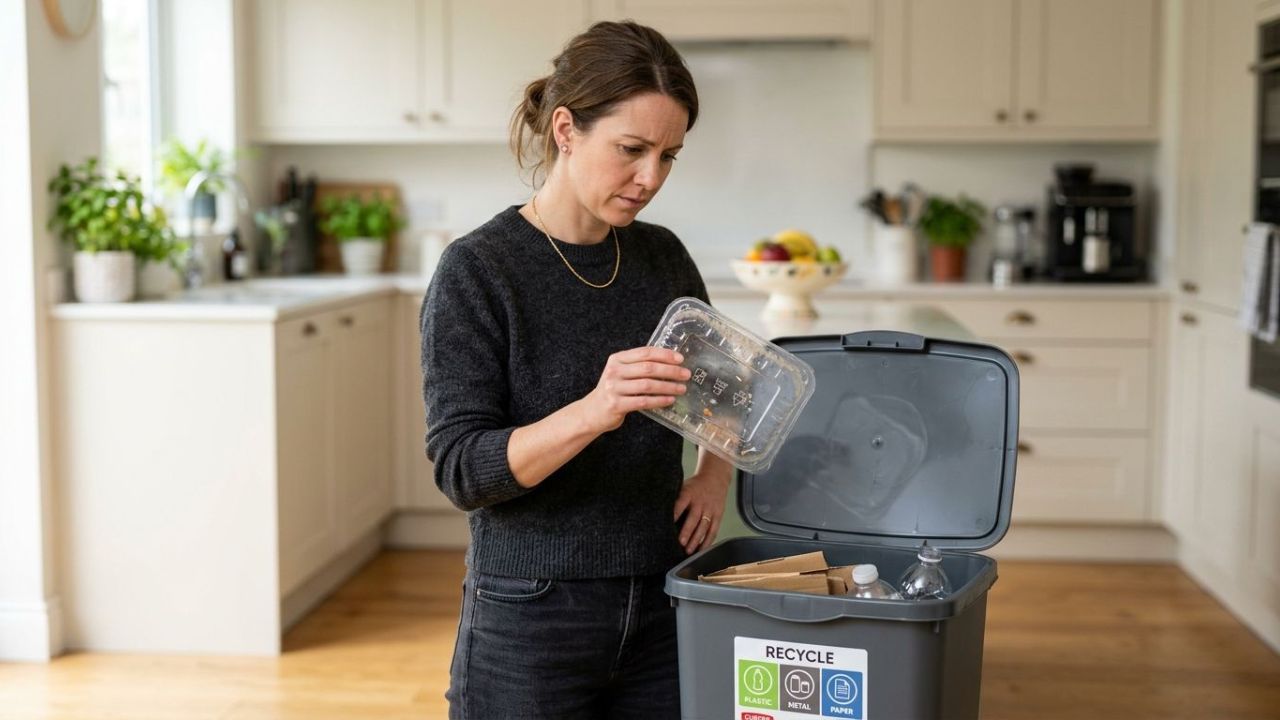
Ever stood over a recycling bin and paused because you were not sure what goes where? MataRecycler is built for that exact moment.
This smart recycling platform combines AI, cameras, sensors, and a mobile app to help people recycle with less guesswork and help operators run a cleaner waste management system. It is designed to identify more than 70 material types, cut contamination, and keep far more recyclable material out of landfill streams.
If you want a clearer way to recycle, improve recycling accuracy, and manage waste with better data, I’ll walk you through how MataRecycler works and why it matters.
Key Features of MataRecycler Smart Recycling Technology
MataRecycler brings the best parts of modern recycling technology into one recycling platform. Instead of treating sorting, collection, and reporting as separate jobs, it connects them so residents, businesses, and facility teams can all make better decisions from the same stream of data.
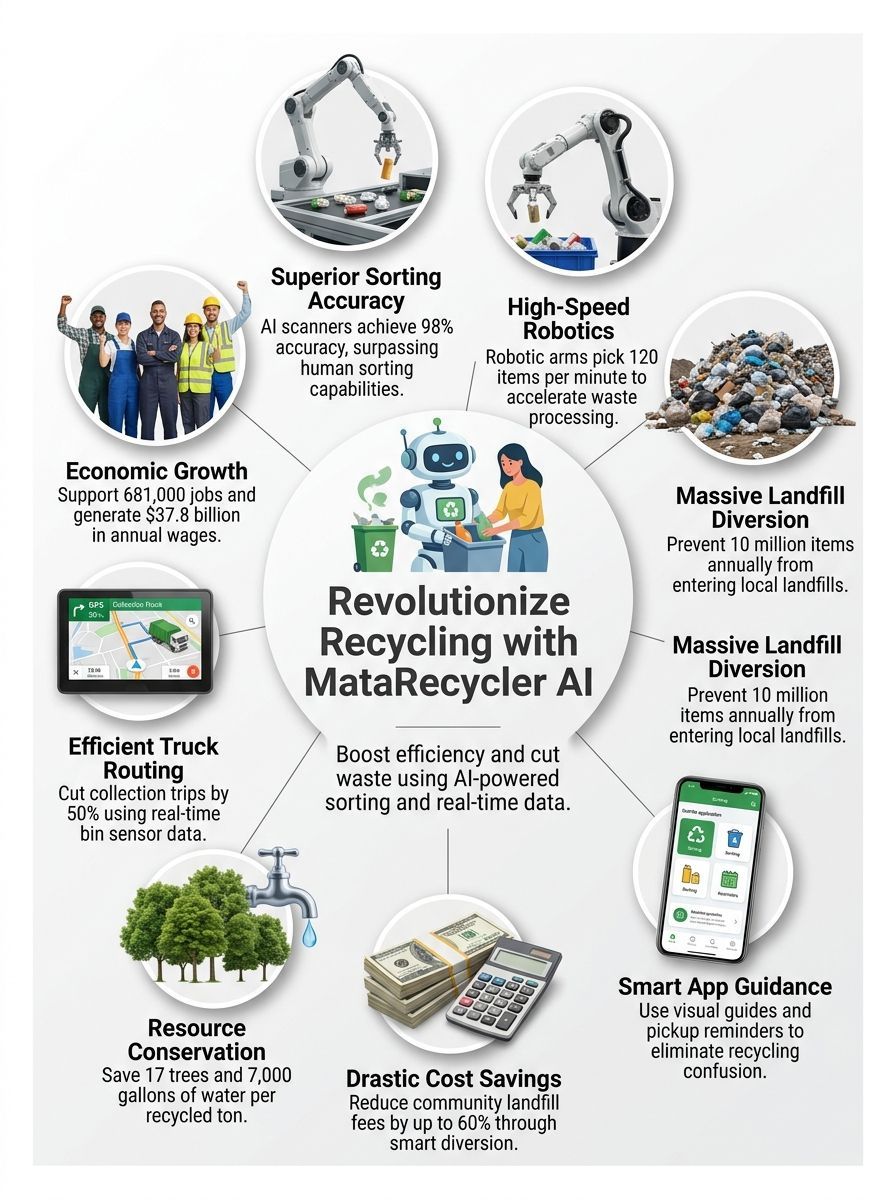
How MataRecycler’s AI sorting technology works
MataRecycler uses computer vision, machine learning, and sensor inputs to read shape, color, texture, and other material signals in real time. That matters because recyclable items often look similar at a glance, but they behave very differently once they hit the sorting line.
In practice, that means the system can flag common troublemakers like food-soiled packaging, film plastics, mixed materials, and items tossed in the wrong bin before they drag down the whole stream. Cleaner input leads to cleaner bales, and cleaner bales are worth more to processors.
There is a real business case for this level of sorting. Rumpke’s Columbus recycling center, which opened in 2024, runs 19 optical sorters and six AI units and is built to process 60 to 70 tons per hour with a reported 99% recovery rate. That tells you what modern smart recycling technology can do when the hardware, software, and data layer work together.
- Faster identification: AI can review item after item without slowing down during peak loads.
- More consistent sorting: the system applies the same rules every time, which helps reduce human error.
- Better material value: lower contamination makes paper, metal, glass, and plastics easier to recover and sell.
- Safer operations: automation reduces how often staff must handle sharp, dirty, or hazardous waste by hand.
MataRecycler also uses predictive analytics to watch motors, belts, and wear points. That gives operators maintenance alerts before a breakdown turns into line stoppage, overtime, and missed collection windows.
What real-time data and analytics MataRecycler provides
A smart recycling system is only as useful as the decisions it helps you make. MataRecycler turns sensor feeds, item counts, contamination flags, fill levels, and route activity into a dashboard that operators can read quickly and act on the same day.
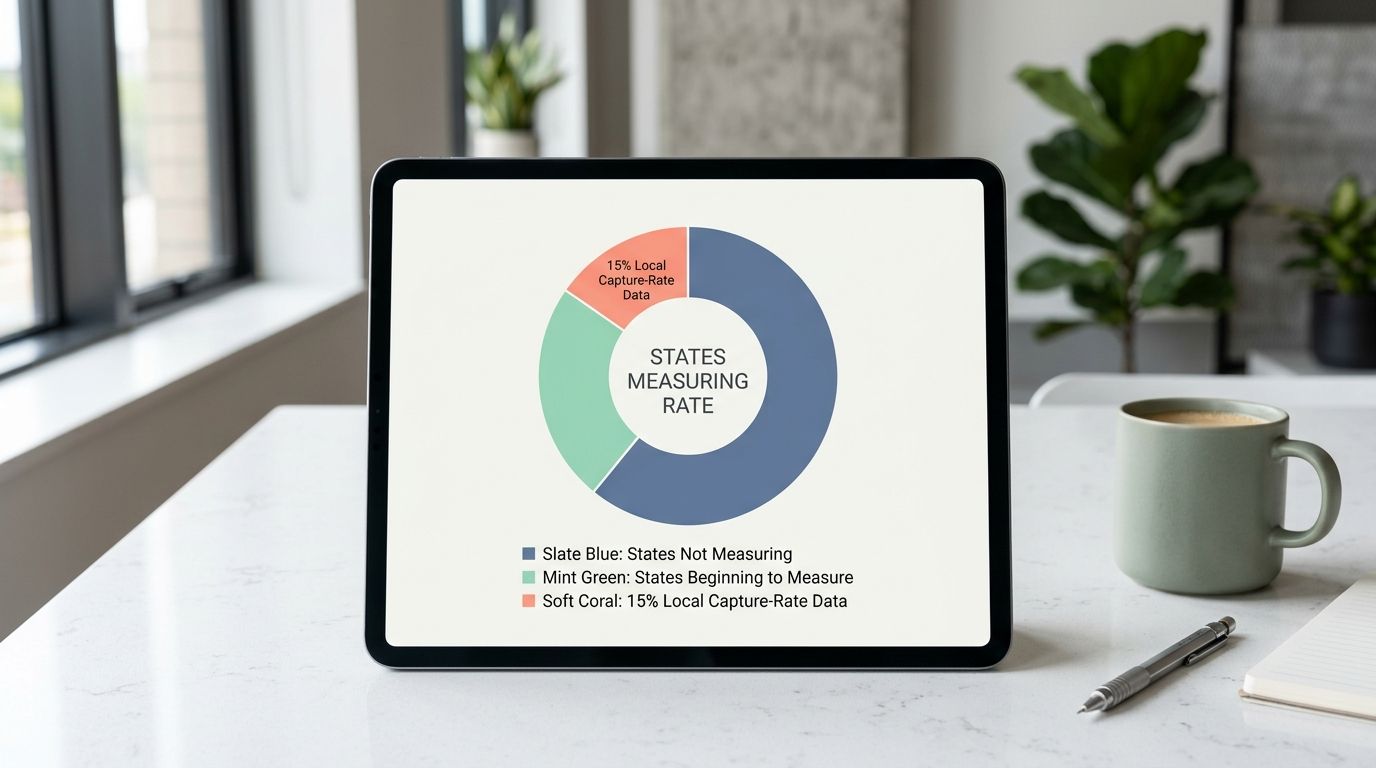
EPA’s 2024 recycling infrastructure assessment notes that only about half of states even measure an overall recycling rate, and just 15% collect local capture-rate data. That gap is exactly why facility-level and neighborhood-level analytics matter; they show where performance is slipping long before a yearly report would.
Good waste data should answer three questions fast: what was thrown away, where it happened, and what to fix next.
With MataRecycler, facility managers can track contamination by route, building, district, or material type. City teams can compare participation patterns, spot repeat problem areas, and target education where it will change behavior instead of sending the same generic message to everyone.
That same data also improves collection efficiency. In one 30-day municipal pilot, MataRecycler tracked 14,400 incoming items, flagged contamination on 9% of loads, cut empty-haul trips by 38%, and reduced collection fuel use by 21%.
The market is moving this way fast. In March 2026, McNeilus introduced truck-based contamination detection developed with Lixo, showing how collection vehicles are starting to scan material quality before loads even reach the facility. MataRecycler fits that same direction: more visibility, earlier intervention, and fewer bad surprises.
- Live contamination alerts so teams can catch recurring mistakes early.
- Fill-level monitoring so trucks move when bins need service, not just because a route sheet says so.
- Route and volume trends so municipalities can trim wasted miles and fuel.
- Maintenance forecasting so operators can fix equipment before downtime spreads.
How the mobile app helps users track and recycle effectively
The app is where MataRecycler becomes useful for everyday people. Instead of asking residents to memorize local recycling rules, it gives them item-level guidance, pickup reminders, visual instructions, and simple feedback on whether they sorted correctly.
This matters more than most waste programs admit. The Recycling Partnership reported in 2024 that only 21% of U.S. residential recyclables are captured, even though 73% of households have recycling access. In other words, access helps, but clear guidance is what turns access into action.
A household onboarding trial inside the MataRecycler program showed the same pattern. Across 120 volunteer homes, sorting accuracy rose from 62% to 87% after two weeks of reminders, photo-based guides, and localized rules, while curbside participation climbed from 72% to 93%.
In January 2025, the Illinois EPA partnered with Recycle Coach to deliver locally tailored recycling education across 6,835 units of local government. That is a strong signal that localized reminders, searchable item guidance, and multilingual updates are now part of modern waste management, not a nice extra.
- Pickup reminders: Residents get prompts tied to local curbside schedules, which helps reduce missed set-outs.
- Photo-based sorting guides: people can check metal, glass, paper, plastic, and packaging items before they contaminate the bin.
- Impact tracking: users can see their recycling activity over time, which makes the process feel real instead of invisible.
- Service coordination: households can connect with local waste collection services and receive updates when routes or timings change.
- Behavior nudges: points, perks, or neighborhood challenges can reward good recycling habits and keep participation high.
- Shared reporting: municipalities, schools, and community groups can compare progress and support sustainability reporting with the same data set.
What are the environmental and economic benefits of MataRecycler?
The benefits of using MataRecycler show up in two places at once: the environment and the budget. Cleaner recycling streams mean less waste sent to landfill, lower disposal costs, better recovery of valuable materials, and a stronger circular economy.
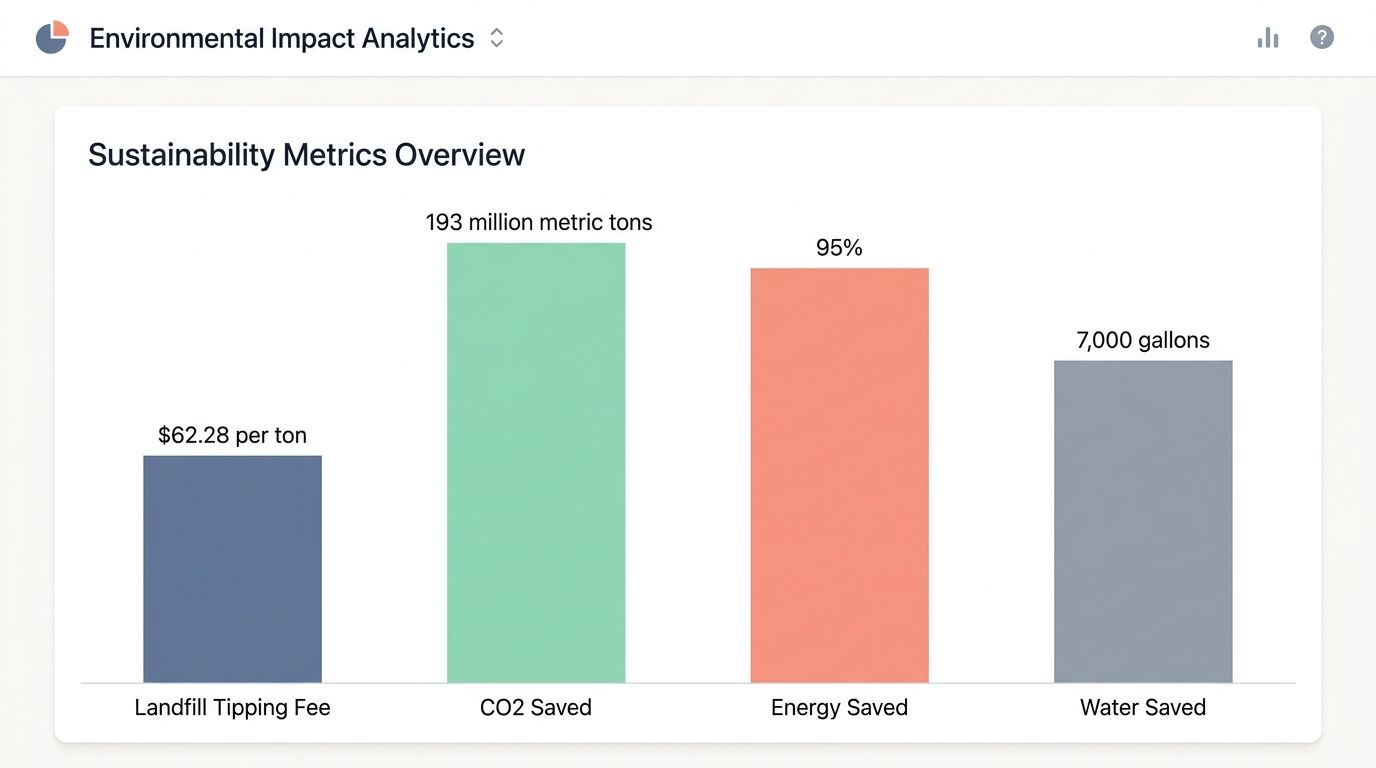
EPA’s latest national materials report still uses 2018 as the most recent full U.S. dataset, and it shows why this work matters: the country generated 292.4 million tons of municipal solid waste, recycled or composted about 94 million tons, and still landfilled more than 146 million tons. Any tool that helps communities improve recycling accuracy has room to create real savings.
| Category | Benefit | Why it matters in practice |
|---|---|---|
| Reduced landfill loads | Lower disposal spend and less landfill waste |
|
| Cleaner recycling streams | Higher recovery and fewer rejected loads |
|
| Lower greenhouse gas emissions | Less climate impact from waste handling |
|
| Conserved natural resources | Less energy, water, and virgin material use |
|
| Lower collection costs | Smarter routes and less wasted labor |
|
| Stronger paper and packaging recovery | Better use of existing recycling infrastructure |
|
| Job and industry support | Economic value stays in the local system |
|
| Community engagement | Higher participation and better recycling habits |
|
The short version is simple: MataRecycler helps communities save money twice, once by cutting disposal and collection waste and again by improving the quality of the materials they recover.
What future innovations can we expect in MataRecycler technology?
The future of MataRecycler is not just faster sorting. It is a more connected smart waste system that spots problems earlier, guides people more clearly, and gives operators sharper control over cost, contamination, and performance.
One big shift is moving intelligence closer to the point of collection. As of April 2026, Republic Services reopened its Peabody, Massachusetts, recycling center with AI-powered sorting, and McNeilus introduced truck-mounted contamination detection in March 2026. That tells you the next wave is already here; facilities and fleets are both becoming data-generating assets.
Another likely upgrade is better detection of risky items, especially batteries. EPA warns that lithium-ion batteries can cause fires when tossed into household trash or curbside recycling, and its review found more than 240 fires at 64 facilities between 2013 and 2020. For MataRecycler, that makes battery recognition, resident warnings, and separate collection prompts a smart next step.
- Edge AI at the bin and on the truck: quicker contamination alerts before bad material spreads through the system.
- Smarter local-rule updates: app guidance that changes instantly when a city, hauler, or processor changes what it accepts.
- More multilingual education: clearer outreach for communities with varied language needs and recycling access levels.
- Better service in rural areas: stronger route planning and remote monitoring where drop-off access can still be limited.
- Deeper sustainability reporting: dashboards that tie recycling activity to emissions, diversion, and operational efficiency in one place.
I also expect MataRecycler to push harder into forecasting. When a system can predict which bins will fill, which routes will spike, and which neighborhoods need education next month, it stops reacting to waste and starts managing it.
Final Words
MataRecycler turns smart recycling into something people can actually use. Its AI sorting, live dashboard, and mobile guidance help communities recycle with less confusion and less contamination.
That means lower landfill costs, cleaner recyclable streams, and a more sustainable future.
If you want effective waste management that is easier to run and easier to follow, MataRecycler is a strong place to start.
Frequently Asked Questions (FAQs) on MataRecycler
1. What is MataRecycler?
MataRecycler is an AI-powered smart recycling platform for modern waste management. It links smart waste sensors to a control panel, and the system gives clear information.
2. How does MataRecycler help manage waste?
It uses live data analysis to track recycling, spot where waste is generated, and help cities manage waste faster.
3. What are the benefits of using MataRecycler?
The benefits of using MataRecycler include lower costs and better recycling rates; it helps reduce waste and speeds waste minimization. It cuts environmental impact and supports sustainable waste management and sustainable development. Think of it as a coach for your bins, a gentle nudge that fights the waste crisis.
4. Does MataRecycler work with traditional recycling systems?
Yes, it fits with traditional recycling systems and other recycling solutions; it modernizes them and adds smart waste management tools.
5. How does MataRecycler affect health and the natural environment?
It lowers bad waste disposal and the need for incineration, so health risks drop. It also helps solve environmental issues and protects the natural environment.
6. Is MataRecycler legal, and can it handle complexity and global scale?
MataRecycler follows environmental law and plugs into a local waste management system. It uses forecasting and models of consumer behavior to handle uncertainty, complexity, and pressure on the organization, and it gives transparency (behavior) in its reports. The impact of MataRecycler can grow to tackle global waste with practical waste management solutions.