
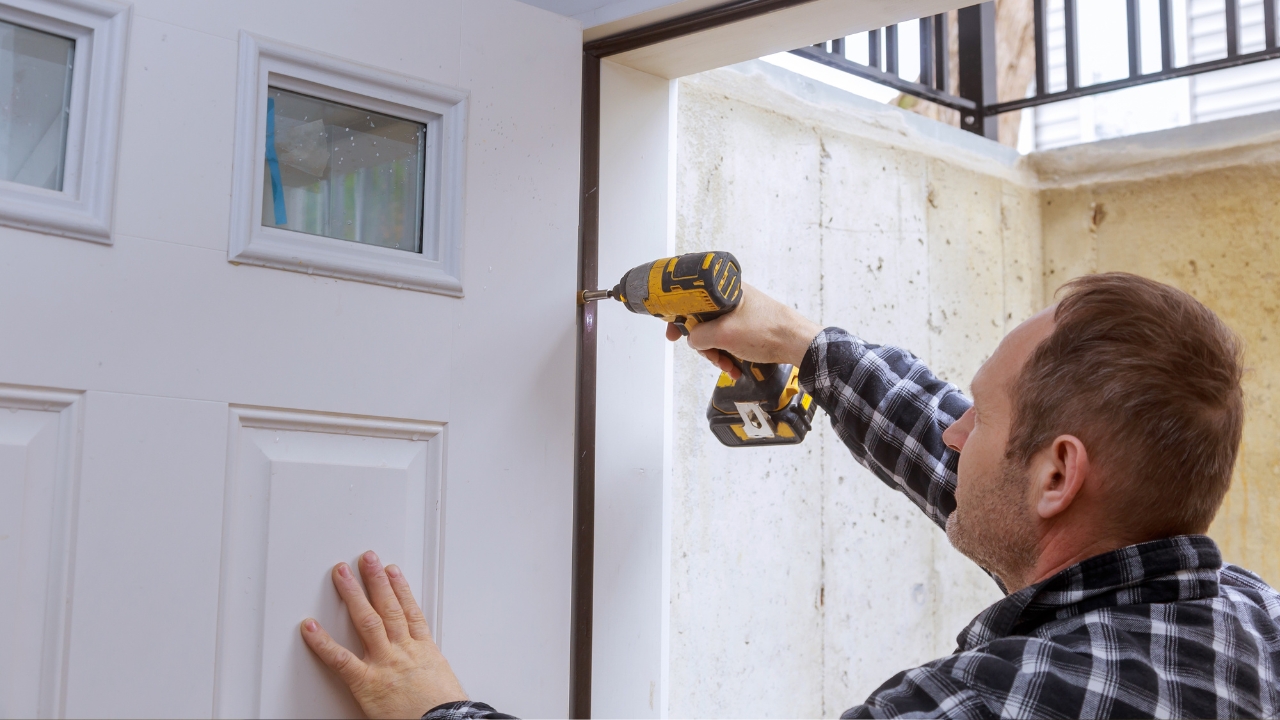
A squeaky door is one of those tiny home problems that can feel much bigger than it is. It wakes people up at night, makes a bathroom door awkwardly loud, and turns a simple bedroom door into a horror movie sound effect. The good news is that you usually don’t need a carpenter, a new door, or a full weekend project.
In most cases, the easiest way to fix squeaky door hinge noise is to add the right lubricant in the right place. The squeak often comes from dry metal parts rubbing together inside the hinge. Dust, rust, old grease, or loose screws can make it worse.
This guide starts with the fastest two-minute fix. Then it explains the deeper repair method, the best lubricant options, what not to do, and how to stop the squeak from coming back. The steps are simple enough for beginners, but detailed enough to help when the quick spray-and-test method doesn’t work.
Quick Answer: How to Fix Squeaky Door Hinge Noise Fast
The fastest method is simple: find the noisy hinge, apply a small amount of lubricant, move the door several times, and wipe away the extra oil or spray. This usually takes less than two minutes if the hinge is dry but not damaged.
A squeaky hinge often happens because friction builds up inside the hinge barrel. The problem may come from rust, dust, debris, or lack of lubrication. That means the fix is not just “spray anything anywhere.” The goal is to get lubricant into the moving part of the hinge.
The 2-Minute Fix
- Open and close the door slowly to find the squeaky hinge.
- Put a paper towel or cloth under the hinge.
- Apply a small amount of lubricant to the hinge pin area.
- Swing the door back and forth 8–10 times.
- Wipe away extra lubricant.
- Test the door again.
|
Step |
What To Do |
Why It Helps |
|
1 |
Find the noisy hinge |
Stops you from treating the wrong hinge |
|
2 |
Protect the floor |
Prevents oil marks and drips |
|
3 |
Add lubricant |
Reduces metal friction |
|
4 |
Move the door |
Pulls lubricant into the hinge |
|
5 |
Wipe excess |
Keeps dust from sticking |
|
6 |
Test again |
Confirms whether the quick fix worked |
Why Door Hinges Start Squeaking
A hinge looks simple, but it does a lot of work. Every time you open a door, the hinge pin and hinge leaves move against each other. When that movement becomes dry or dirty, the hinge starts to complain.
The sound may be sharp, slow, grinding, or high-pitched. That difference matters. A light squeak usually means dry friction. A rough grinding sound can mean dirt, rust, or a worn hinge.
Dry Metal-on-Metal Friction
Most door hinges are metal. When the thin layer of lubricant wears away, metal starts rubbing against metal. That rubbing creates the squeak you hear.
Bedroom doors, bathroom doors, pantry doors, and front doors can all develop this issue. Doors that get opened many times a day usually squeak sooner.
Dust, Dirt, and Old Grease
Old grease can turn sticky over time. It collects dust and dirt, especially around the hinge knuckles. Instead of helping the hinge move smoothly, it can create resistance.
That is why some squeaky doors need cleaning before lubrication. Adding fresh oil over old grime may quiet the sound for a day, but the squeak often returns.
Rust and Moisture
Bathroom doors, exterior doors, garage entry doors, and basement doors face more moisture. Moisture can lead to rust, and rust makes hinge movement rough.
If you see orange or brown marks near the hinge pin, the hinge needs more than a quick spray. It may need cleaning, lubrication, or replacement.
Loose Screws or Door Misalignment
Sometimes the hinge is not the only problem. Loose screws can let the hinge shift slightly. That tiny movement can create extra pressure and noise.
A door that rubs the frame may also sound like a hinge problem. Before you blame the hinge, check the door gaps and the latch area.
|
Cause |
Common Sign |
Best Fix |
|
Dry hinge |
High-pitched squeak |
Light lubrication |
|
Dust buildup |
Sticky movement |
Clean and lubricate |
|
Rust |
Rough or grinding sound |
Clean pin, apply grease |
|
Loose screws |
Door shifts or sags |
Tighten screws |
|
Misalignment |
Door rubs frame |
Adjust hinge or frame |
Tools and Materials You Need
You don’t need a toolbox full of expensive gear. Most people can fix squeaky door hinge problems with items already at home. Still, using the right lubricant makes the repair cleaner and longer-lasting.
The basic goal is to reduce friction inside the hinge. A thin oil can work quickly. A thicker grease may last longer. A spray can reach tight spots more easily.
Basic Tools
Keep these items nearby:
- Paper towel or old cloth
- Screwdriver
- Small hammer
- Nail, punch, or flathead screwdriver
- Cotton swab or small brush
- Gloves, optional
- Lubricant of your choice
The paper towel matters more than people think. Sprays and oils can drip onto wood, tile, carpet, or painted trim. A few seconds of prep saves cleanup later.
Best Lubricants for Door Hinges
Silicone spray is a clean option for many indoor hinges. White lithium grease is thicker and better for heavier doors or hinges that squeak again after a few days.
A small amount of oil on the exposed hinge pin can also help. The key is to move the door after applying the lubricant so it spreads into the moving parts.
Read Also: 12 Closet Organization Hacks That Actually Save Space
Household Items That Can Work Temporarily
If you don’t have a proper lubricant, you can try petroleum jelly, candle wax, bar soap, or a tiny amount of cooking oil. These are emergency fixes, not the best long-term solutions.
Cooking oil can become sticky. Soap can dry out. Wax can help but may not spread deep into the hinge. Use these only when you need a quick quiet fix and don’t have a better product.
|
Item |
Best Use |
Long-Lasting? |
Mess Risk |
|
Silicone spray |
Indoor hinges |
Good |
Low |
|
White lithium grease |
Heavy doors |
Very good |
Medium |
|
Household oil |
Fast DIY repair |
Good |
Medium |
|
WD-40 |
Quick squeak relief |
Short to moderate |
Medium |
|
Petroleum jelly |
Temporary fix |
Short |
Medium |
|
Candle wax |
Light squeaks |
Short |
Low |
Step-by-Step Guide to Fix Squeaky Door Hinge Noise
This is the main repair method. It works for most light and moderate squeaks. Do not rush the first step. Finding the correct hinge saves time and avoids unnecessary mess.
If your door has three hinges, test all three. The middle hinge is not always the guilty one. The top hinge often carries a lot of stress, especially on heavier doors.
Step 1: Find the Noisy Hinge
Open and close the door slowly. Listen closely near each hinge. You can also place your fingers lightly near the hinge leaves while the door moves.
Do not put your fingers inside the hinge gap. Just feel for vibration from a safe spot. The noisy hinge often vibrates more than the others.
Step 2: Protect the Area
Place a paper towel, rag, or old cloth under the hinge. If you are using spray lubricant, also protect nearby paint or wallpaper.
A straw nozzle helps control the spray. It sends the lubricant directly into the hinge gap instead of all over the door trim.
Step 3: Apply a Small Amount of Lubricant
Add lubricant to the top of the hinge pin and the gaps between the hinge knuckles. Use less than you think you need.
Too much lubricant can drip down the door. It can also attract dust later. A small, targeted amount is usually enough.
Step 4: Move the Door Back and Forth
Open and close the door 8–10 times. This movement pulls the lubricant deeper into the hinge.
If the squeak gets quieter but does not disappear, add one more small amount and repeat. Do not flood the hinge.
Step 5: Wipe and Test
Wipe the hinge, pin cap, and surrounding area. Then open and close the door again.
If the squeak is gone, you’re done. If it comes back quickly, the lubricant may not have reached the hinge pin. That means it is time for the deeper method.
|
Step |
Time Needed |
Difficulty |
Result |
|
Find hinge |
15–30 seconds |
Easy |
Locates the problem |
|
Protect area |
15 seconds |
Easy |
Prevents stains |
|
Apply lubricant |
20 seconds |
Easy |
Reduces friction |
|
Swing door |
30–45 seconds |
Easy |
Spreads lubricant |
|
Wipe excess |
20 seconds |
Easy |
Keeps repair clean |
|
Retest |
10 seconds |
Easy |
Confirms success |
Deeper Fix: Remove and Lubricate the Hinge Pin
Sometimes a surface spray is not enough. The squeak may be coming from the hinge pin itself. If the pin is dry, dirty, or rusty, lubricant needs to touch it directly.
This method takes longer than two minutes, but it gives a better result. It is also useful when a squeak keeps returning after a quick fix.
When You Should Remove the Hinge Pin
Remove the pin if:
- The squeak returns after a day or two
- The hinge feels stiff
- You see dirt or rust around the hinge
- Lubricant on the outside does not work
- The door makes a grinding sound
Remove hinge pins one at a time, clean them, apply lubricant, and reinstall them. Removing one pin at a time helps prevent the door from shifting out of place.
How to Remove the Hinge Pin Safely
Keep the door closed or almost closed. Place a nail, punch, or flathead screwdriver under the pin cap. Tap gently with a hammer until the pin rises.
Once the pin is high enough, pull it out with your fingers or pliers. Do not force it. If it is stuck, add a little penetrating spray and try again.
Clean and Lubricate the Pin
Wipe the pin with a cloth. If there is rust or dark grime, clean it gently with fine steel wool. Do not scrape aggressively because you do not want to damage the pin.
Apply a thin coat of silicone spray, white lithium grease, or household oil. Put the pin back in and tap it down gently. Open and close the door to spread the lubricant.
|
Problem |
What It Means |
Deeper Fix |
|
Squeak returns fast |
Lubricant did not reach pin |
Remove and coat pin |
|
Hinge feels stiff |
Dirt or rust inside |
Clean pin |
|
Grinding sound |
Rough hinge movement |
Use grease or replace hinge |
|
Pin is stuck |
Rust or buildup |
Use penetrating spray carefully |
|
Door shifts |
Hinge screws may be loose |
Tighten screws |
WD-40, Silicone Spray, Oil, or Grease: What Should You Use?
This is where many people get confused. WD-40 is popular because it is easy to find and works fast. But it is not always the longest-lasting choice for a hinge that keeps squeaking.
For a quick quiet fix, WD-40 can help. For longer hinge movement, silicone spray, white lithium grease, or light machine oil may be better.
WD-40 for Fast Relief
WD-40 can help loosen grime and reduce squeaking quickly. It is useful when the hinge is stiff or dirty.
The downside is that the squeak may return if the hinge needs a longer-lasting lubricant. Think of it as a fast helper, not always the final answer.
Silicone Spray for Clean Indoor Use
Silicone spray is light, clean, and easy to apply. It is a good choice for bedroom doors, closet doors, bathroom doors, and other indoor hinges.
It does not usually leave a heavy oily mess. That makes it useful near painted trim and finished wood.
White Lithium Grease for Longer Results
White lithium grease is thicker. It stays in place better than thin sprays or oils.
Use it for heavy doors, garage entry doors, exterior doors, or hinges that squeak again after a few days. Apply a thin coat. Too much grease can look messy and attract dirt.
Household Oil for a Simple Fix
Light household oil can work well if you apply it carefully. A few drops on the hinge pin are often enough.
Sewing-machine oil is another good light option. Apply a drop or two to the exposed hinge pin and move the door to work it in.
|
Lubricant |
Best For |
Main Benefit |
Main Drawback |
|
WD-40 |
Quick relief |
Fast and easy |
May not last long |
|
Silicone spray |
Indoor doors |
Clean application |
May need reapplying |
|
White lithium grease |
Heavy-use hinges |
Long-lasting |
Can be messy |
|
Household oil |
Simple home repair |
Easy to control |
Can drip |
|
Sewing-machine oil |
Light hinges |
Smooth movement |
Not always available |
|
Graphite lubricant |
Dry lubrication |
Less oily mess |
Can stain if careless |
Common Mistakes to Avoid
A squeaky hinge is easy to fix, but it is also easy to make a small mess. Most mistakes come from using too much product or skipping the simple checks.
Take a slow, careful approach. You only need a small amount of lubricant and a few minutes of testing.
Spraying Too Much Lubricant
More lubricant does not mean a better repair. It can drip down the door, stain surfaces, and collect dust.
Start small. Add more only if the squeak improves but does not fully stop.
Ignoring Loose Screws
If the hinge screws are loose, the door may move slightly every time it opens. That movement can create noise even after lubrication.
Tighten screws gently. If a screw hole is stripped, the screw may not hold. In that case, the hole may need a wood filler or a longer screw.
Removing All Hinge Pins at Once
Do not remove every hinge pin at the same time. The door can shift, sag, or become hard to realign.
Work on one hinge pin at a time. This keeps the door supported.
Using the Wrong Product Near Paint or Carpet
Some oils and sprays can stain. Always use a cloth and wipe the hinge afterward.
If you are working near carpet, place a thicker towel under the hinge.
|
Mistake |
Why It Is a Problem |
Better Move |
|
Using too much spray |
Causes drips and stains |
Apply a small amount |
|
Skipping screw check |
Noise may continue |
Tighten screws first |
|
Removing all pins |
Door may shift |
Remove one pin only |
|
Not wiping excess |
Attracts dust |
Clean after testing |
|
Using sticky oil outdoors |
Collects grime |
Use durable grease |
What If the Door Still Squeaks After Lubrication?
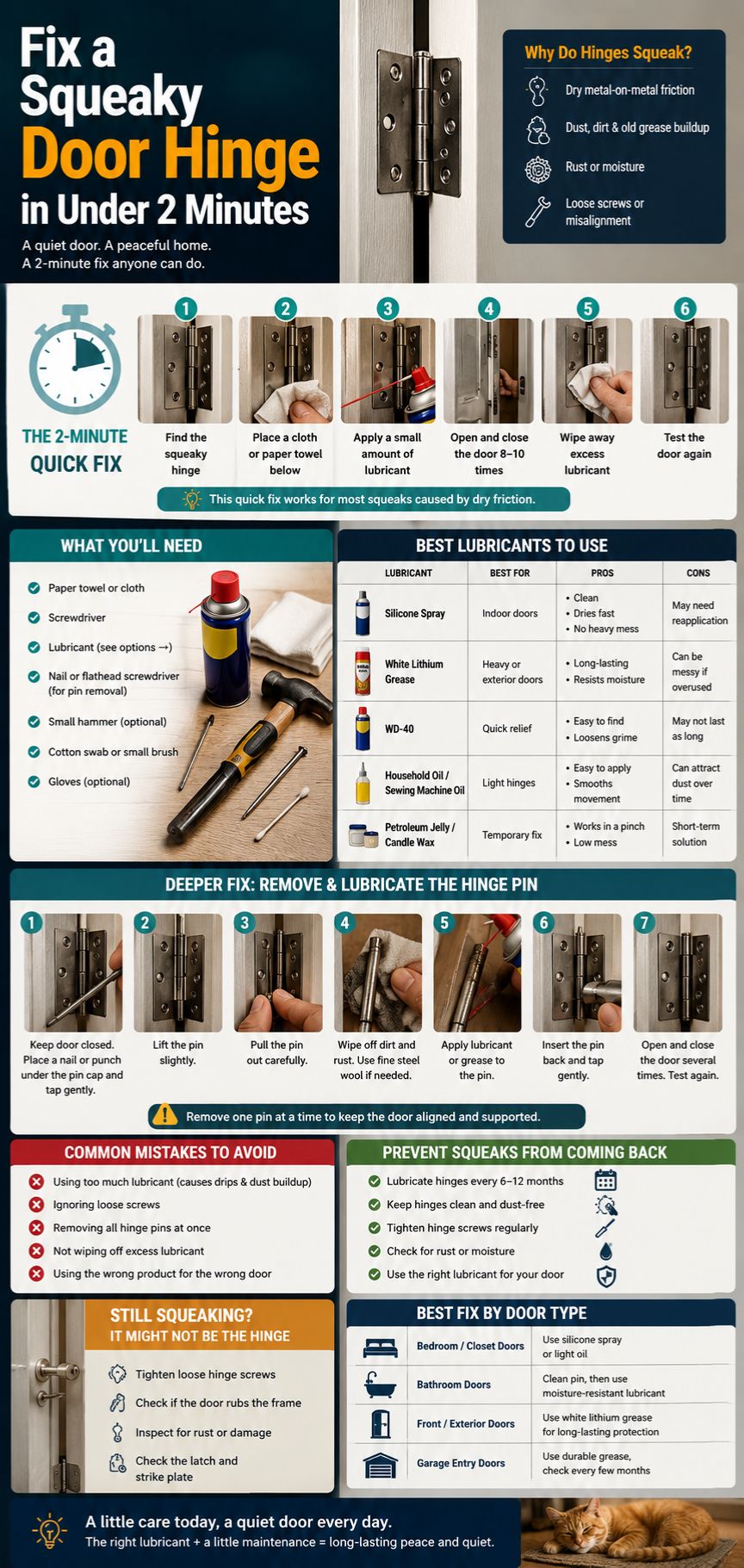
If the squeak does not stop, do not keep spraying more lubricant. The real issue may be deeper than dry friction.
A door can squeak because it is rubbing the frame, hanging unevenly, or using worn hardware. At this point, you need to inspect the whole door, not just the hinge.
Tighten the Hinge Screws
Use a screwdriver that fits the screw head properly. Tighten the screws on the door side and the frame side.
If a screw spins without tightening, the hole may be stripped. A longer screw can sometimes grip better, especially on the frame side.
Check Whether the Door Rubs the Frame
Look at the gap around the door. If one side is tight and another side is wide, the door may be slightly misaligned.
Open and close the door slowly. Listen for scraping near the top, side, or bottom. That sound is not always a hinge squeak.
Inspect the Hinge for Rust or Damage
A bent hinge, cracked hinge leaf, or badly rusted pin may not respond to lubrication.
If the hinge looks damaged, replacing it is usually better than fighting the same squeak every week.
Check the Latch and Strike Plate
Sometimes the latch makes noise when it enters the strike plate. A little adjustment or lubrication at the latch may solve the problem.
Do not assume every door sound comes from the hinge.
|
Symptom |
Possible Cause |
What To Check |
|
Squeak remains |
Dry pin inside |
Remove and lubricate pin |
|
Scraping sound |
Door rubs frame |
Check door gaps |
|
Door drops slightly |
Loose screws |
Tighten hinge screws |
|
Grinding sound |
Rust or worn hinge |
Clean or replace hinge |
|
Noise near handle |
Latch friction |
Check strike plate |
How to Prevent Door Hinges from Squeaking Again
Once the hinge is quiet, keep it that way. Prevention takes less time than another repair.
A small maintenance habit can save you from repeated squeaks. It also helps hinges last longer, especially on doors used every day.
Lubricate Hinges Every 6–12 Months
For most indoor doors, light lubrication once or twice a year is enough. High-use doors may need it more often.
Front doors, bathroom doors, and garage entry doors deserve extra attention because they face more moisture and movement.
Keep Hinges Clean
Dust the hinge area when you clean the room. Dirt buildup is one reason lubricant stops working properly.
A dry cloth is usually enough. If the hinge is greasy, wipe it carefully before adding fresh lubricant.
Watch for Seasonal Door Movement
Wood can expand and shrink with humidity. That movement can change how the door sits in the frame.
If a door starts squeaking during rainy months or winter, check both the hinge and the frame gap.
Use the Right Product for the Right Door
Indoor doors usually need a light, clean lubricant. Exterior or heavy doors may need grease.
Matching the product to the door helps the repair last longer.
|
Prevention Tip |
How Often |
Why It Matters |
|
Light lubrication |
Every 6–12 months |
Reduces friction |
|
Dust hinges |
Monthly |
Prevents buildup |
|
Tighten screws |
Every few months |
Stops hinge movement |
|
Check rust |
Seasonally |
Catches damage early |
|
Wipe excess oil |
After every repair |
Keeps hinge clean |
Safety Tips Before You Start
This is a simple DIY job, but basic safety still matters. Sprays and oils can irritate skin, stain surfaces, or create slippery spots if used carelessly.
Work slowly, especially if you remove a hinge pin. A door is heavier than it looks, and even a small shift can make it hard to close properly.
Ventilate the Room
If you use spray lubricant, open a window or door. Avoid breathing in spray mist.
Do not use sprays near open flames, heaters, or hot surfaces. Many household sprays are flammable.
Keep Products Away From Children and Pets
Store lubricants safely after use. Wipe the hinge and floor so pets do not lick or step in the product.
If lubricant gets on your hands, wash them after the repair.
Protect Painted and Finished Surfaces
Some products can mark painted trim, wood stain, wallpaper, or flooring. Use a cloth as a shield.
Apply lubricant directly to the hinge, not the whole door area.
|
Safety Step |
Why It Helps |
Easy Habit |
|
Open a window |
Reduces fumes |
Ventilate first |
|
Use a cloth |
Prevents stains |
Place under hinge |
|
Apply small amount |
Avoids drips |
Start light |
|
Wipe floor |
Prevents slipping |
Clean right away |
|
Store products |
Protects kids and pets |
Put away after use |
Best Fix by Door Type
Not every door needs the same repair. A closet door is different from a heavy front door. A bathroom door faces more moisture than a bedroom door.
Choosing the right fix by door type helps avoid overdoing it. It also makes the repair cleaner and more durable.
Bedroom and Closet Doors
Use silicone spray or a few drops of light household oil. These doors are usually lighter and easier to treat.
Avoid heavy grease unless the hinge keeps squeaking after normal lubrication.
Bathroom Doors
Bathroom hinges often deal with steam and moisture. Use a lubricant that helps resist moisture and wipe the hinge dry when you clean the bathroom.
If you see rust, remove the pin and clean it before applying lubricant.
Front Doors and Exterior Doors
Exterior doors are heavier and exposed to weather. White lithium grease is often a better long-term choice.
Also check the screws. A heavy door with loose screws can squeak even after lubrication.
Garage Entry Doors
Garage entry doors often get heavy use. They may also face dust, temperature changes, and moisture.
Use a durable lubricant and inspect the hinge every few months.
|
Door Type |
Common Issue |
Best Fix |
|
Bedroom door |
Dry hinge |
Silicone spray or oil |
|
Closet door |
Light squeak |
Light oil |
|
Bathroom door |
Moisture and rust |
Clean pin, lubricate |
|
Front door |
Heavy movement |
White lithium grease |
|
Garage entry door |
Dust and frequent use |
Durable lubricant |
Final Thoughts: A Quiet Door Is Usually a Small Fix
A squeaky door can sound dramatic, but the repair is usually simple. Start with the fastest method: find the noisy hinge, protect the area, apply a small amount of lubricant, move the door, and wipe away the extra product.
If that does not work, remove and clean the hinge pin. This gives the lubricant a better chance to reach the real friction point. Also check loose screws, rust, misalignment, and the latch area before replacing anything.
The best way to fix squeaky door hinge noise is to treat the cause, not just cover the sound. A few careful minutes can make the door quiet again and keep it that way for months.
Quick Takeaway
Use a light lubricant for a quick squeak. Use a deeper hinge-pin cleaning method if the sound returns. Replace the hinge only when it is bent, badly rusted, or worn out.
|
Situation |
Best Next Step |
|
Light squeak |
Apply lubricant |
|
Squeak returns |
Remove and grease pin |
|
Door rubs frame |
Check alignment |
|
Screws are loose |
Tighten or repair screw holes |
|
Hinge is damaged |
Replace hinge |
Frequently Asked Questions About Squeaky Door Hinges
These FAQs answer practical questions that many homeowners ask after the basic repair steps. They focus on small details that can prevent mess, repeated squeaks, and wasted effort.
Can I Fix a Squeaky Door Hinge Without WD-40?
Yes. You can use silicone spray, white lithium grease, light household oil, sewing-machine oil, petroleum jelly, or candle wax. WD-40 is not the only option.
For a cleaner and longer-lasting result, silicone spray or white lithium grease is often better than a random household oil.
Is Cooking Oil Safe for Door Hinges?
Cooking oil can stop a squeak for a short time, but it is not the best choice. It can become sticky and attract dust.
Use it only as an emergency fix. Replace it later with a proper lubricant.
Why Does My Door Squeak Only in Cold Weather?
Cold weather can affect metal movement and wood expansion. The door may shift slightly in the frame, or the hinge lubricant may become less effective.
Check the hinge screws and door gaps. Then apply a suitable lubricant.
Should I Oil the Top, Middle, or Bottom Hinge First?
Test all hinges before applying oil. Open and close the door slowly and listen near each hinge.
Treat the hinge that makes the sound. If you are unsure, lubricate all hinges lightly and wipe away excess.
Can a Squeaky Door Mean the Door Is Sagging?
Yes, sometimes. If the door gap looks uneven or the door rubs the frame, the hinge screws may be loose or the door may be slightly misaligned.
Lubrication may quiet the sound for a while, but tightening or adjusting the hinge may be needed.
How Do I Stop Lubricant From Dripping Down the Door?
Use less product. Apply lubricant directly into the hinge gap and keep a cloth under the hinge.
After opening and closing the door several times, wipe the hinge clean.
When Should I Replace the Hinge Instead of Lubricating It?
Replace the hinge if it is bent, cracked, heavily rusted, or still noisy after cleaning and lubrication.
A new hinge is usually inexpensive and can save time if the old one is worn out.
|
FAQ Topic |
Short Answer |
|
WD-40 alternative |
Use silicone spray, oil, or grease |
|
Cooking oil |
Temporary only |
|
Cold-weather squeak |
Check hinge and door alignment |
|
Which hinge first |
Test before applying |
|
Sagging door |
Check screws and gaps |
|
Dripping lubricant |
Use less and wipe excess |
|
Replace hinge |
If damaged or badly rusted |