
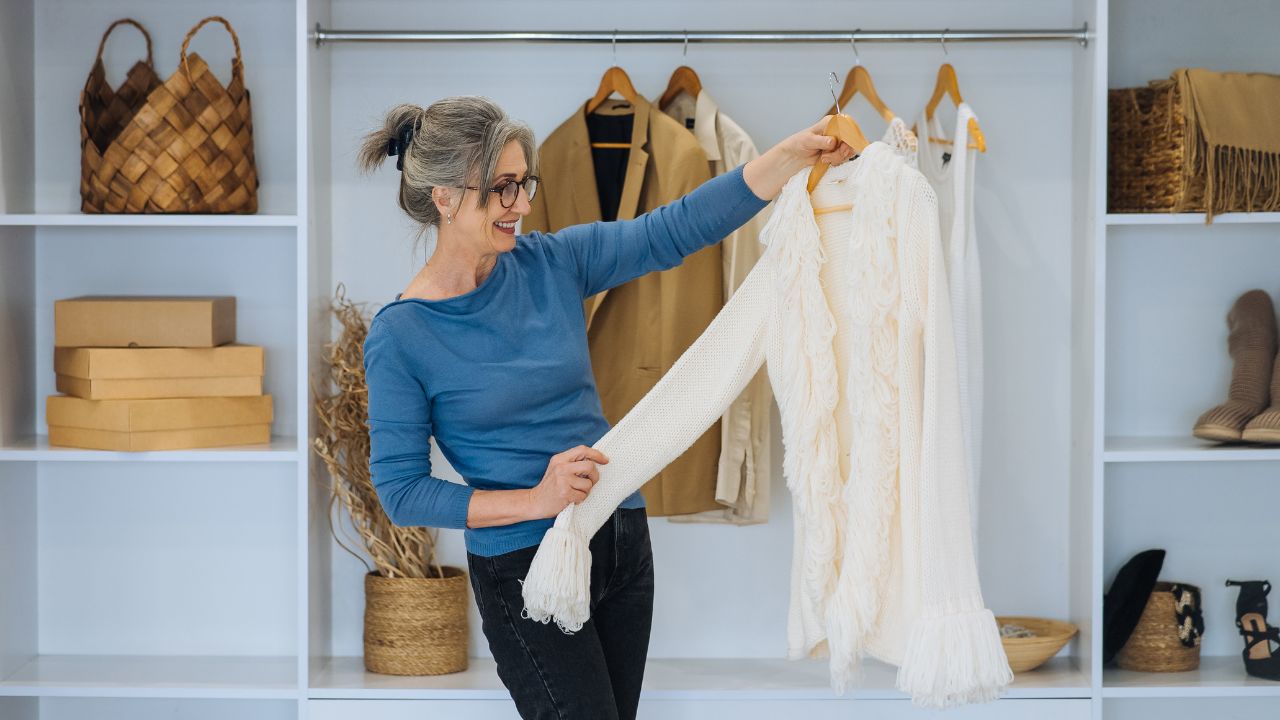
We all know the familiar struggle of opening a bedroom door only to be greeted by a chaotic mountain of clothing, misplaced shoes, and tangled accessories. It is easy to assume that you simply have too many clothes or that your storage area is fundamentally too small to accommodate your modern lifestyle.
However, the reality usually points to a lack of strategic planning and efficient systems. You do not necessarily need a massive, custom-built walk-in room to enjoy a streamlined morning routine. By implementing smart, space-saving strategies, you can transform even the tightest and most awkwardly shaped storage areas into a highly functional wardrobe. The global demand for clever storage is surging, with market analysts projecting the closet organizer industry to surpass nine billion dollars by the next decade due to rising urbanization and a desire for minimalist living. This guide covers twelve incredibly effective closet organization hacks that will help you maximize every inch of your space, reduce daily stress, and beautifully display your belongings.
Why Smart Storage Matters Now
Modern living spaces are becoming more compact, requiring us to think vertically and resourcefully about where we keep our belongings. Utilizing the right closet organization hacks transforms a cramped corner into a highly efficient staging area for your day. We will explore everything from ruthless decluttering techniques to the integration of 2026 artificial intelligence tools to help you manage your wardrobe better.
|
Trend Factor |
Description |
Market Impact |
|
Urbanization |
Smaller living spaces require optimized storage solutions. |
High demand for modular systems. |
|
Minimalism |
A cultural shift toward keeping fewer, high-quality items. |
Need for curated display areas. |
|
Smart Tech |
Integration of AI and digital catalogs. |
Rise of digital wardrobe management. |
The Psychological Impact of a Clutter-Free Closet
Before diving into the physical strategies of arranging your clothes, it is completely necessary to acknowledge how your environment affects your mental well-being on a daily basis. Waking up to visual chaos can instantly trigger anxiety and set a negative, frantic tone for the rest of your day. Searching frantically for a missing shoe or realizing your favorite work shirt is wrinkled beneath a heavy coat consumes both time and precious mental energy. Conversely, an organized space operates like a personal boutique, visually communicating calm, order, and readiness. When every item has a designated home, decision fatigue drastically diminishes. You can effortlessly put together outfits, feel confident in your styling choices, and step out the front door with a clear, focused head.
The Science of Clutter and Stress
Psychological studies consistently show that physical clutter overloads our senses, making it harder to process information and focus on specific tasks. A disorganized wardrobe forces your brain to work overtime just to complete the simple act of getting dressed. By streamlining your visual field, you give your brain a break right at the start of the day.
|
State of Closet |
Psychological Effect |
Morning Routine Impact |
|
Chaotic / Overfilled |
High cortisol, increased anxiety, decision fatigue |
Rushed, frustrating, often late |
|
Moderately Messy |
Mild annoyance, slight time delays |
Inconsistent, occasional outfit regret |
|
Highly Organized |
Calm, focused, sense of control |
Efficient, creative outfit planning |
Hack 1: Start with a Ruthless Closet Audit
No amount of expensive storage products can fix a wardrobe that is overflowing with things you no longer wear, need, or love. The foundation of any successful project is a deep, uncompromising decluttering session. To begin, you must take everything out of your storage space and lay your belongings on your bed so you can see the sheer volume of what you actually own. Go through each piece and categorize it into distinct piles for keeping, donating, selling, or tossing into the trash. If you have not worn a garment in the last twelve months, it is time to let it go so you can free up valuable real estate for items you actually use. One of the best closet organization hacks is simply owning less stuff to begin with.
The “One In, One Out” Rule
Once you have successfully purged your belongings, you need a reliable system to prevent the clutter from quietly returning over the next few months. Adopt the one in, one out rule to maintain equilibrium. For every new sweater, pair of shoes, or heavy jacket you bring into your home, an older item must be removed and sent to a donation center.
|
Sorting Category |
Action Required |
Timeline |
|
Keep |
Hang or fold back into the newly organized space. |
Immediate |
|
Donate |
Place in a sturdy box for local charity drop-off. |
Within 48 hours |
|
Sell |
Photograph and list on online resale platforms. |
Within 1 week |
|
Trash |
Bag up unwearable, stained, or torn garments. |
Immediate |
Hack 2: Switch to Uniform Slim Velvet Hangers
One of the most cost-effective and visually impactful changes you can make to your daily routine is standardizing your clothing hangers. A disorganized mix of thick wooden hangers, flimsy wire hangers from the local dry cleaner, and bulky plastic hangers creates an incredibly messy, distracting aesthetic. Worse, these mismatched shapes cause clothing to hang at irregular, unpredictable heights, wasting premium horizontal and vertical air space. Slim velvet hangers are a massive upgrade because they are remarkably thin, allowing you to fit significantly more garments on a single rod compared to standard alternatives. The soft velvet texture provides a non-slip grip, ensuring that delicate camisoles, wide-neck blouses, and heavy winter cardigans stay securely in place.
Caring for Velvet Hangers
While velvet hangers are incredibly space-efficient, they do require a gentle touch to prevent snapping the slim plastic core. Never pull a shirt aggressively off a velvet hanger while it is still on the rod. Instead, remove the entire hanger from the closet first, and gently unbutton or slide the garment off to preserve the hardware.
|
Hanger Type |
Space Efficiency |
Grip Quality |
Best Used For |
|
Slim Velvet |
Excellent |
High (Non-slip) |
Everyday shirts, blouses, dresses |
|
Thick Wood |
Poor |
Medium |
Heavy winter coats, tailored suits |
|
Plastic Tube |
Fair |
Low |
Casual t-shirts, dorm rooms |
|
Wire |
Excellent |
Low |
Temporary dry cleaning transit |
Hack 3: Double Your Hanging Capacity with a Rod Doubler
Most standard residential builder-grade closets feature a single hanging rod positioned about eye level, leaving a vast amount of completely unused space closer to the floor. If your wardrobe consists mostly of short shirts, blouses, folded trousers, and skirts, that entire lower half is essentially wasted air. A rod doubler, also known as an adjustable tension rod, instantly fixes this common architectural flaw. These clever devices hook directly onto your existing top rod and suspend a second hanging bar directly beneath it. Suddenly, you have twice as much hanging capacity without requiring any power tools, complicated measurements, or permanent home renovations.
Read Also: How to Make a Small Bedroom Look Bigger: 12 Tricks
Installing Your Tension Rod Safely
When setting up a second hanging bar, make sure to adjust the height so that your longer tops do not drag on the lower bar. Place your shirts and lightweight blouses on the upper rod, and reserve the lower rod for folded slacks, skirts, and heavier denim.
|
Rod Setup |
Vertical Space Used |
Ideal Garment Types |
Installation Difficulty |
|
Single High Rod |
50% |
Long dresses, trench coats, jumpsuits |
None (Pre-installed) |
|
Double Rod System |
90% |
Shirts, blouses, folded pants, skirts |
Very Low |
|
Triple Rod (Custom) |
100% |
Children’s clothing, specialized collections |
High (Requires tools) |
Hack 4: Install Adjustable Shelving
Fixed wooden shelves are notoriously inefficient because they lock you into a specific height constraint that rarely matches the actual items you need to store. Stacking winter sweaters too high on a tall fixed shelf leads to an unstable clothing tower that inevitably tips over and creates a frustrating mess. Adjustable shelving tracks are an absolute game-changer for long-term organization and flexibility. By mounting vertical metal tracks along the structural walls, you gain the complete freedom to move shelf brackets up or down as your seasonal wardrobe changes throughout the year. During the freezing winter, you can space the shelves farther apart to accommodate thick wool knits, and in the summer, you can lower them to create snug compartments for beachwear.
Mixing Open Shelving with Bins
To make adjustable shelves even more functional, mix standard open stacking with structured bins. Keep items you use daily out in the open for easy access, and place smaller, seasonal, or oddly shaped items into bins that slide perfectly onto your newly measured shelf heights.
|
Shelf Spacing |
Best For |
Structural Requirement |
|
6 to 8 Inches |
T-shirts, activewear, flat sandals |
Extra shelf boards |
|
10 to 12 Inches |
Denim jeans, standard sweaters, sneakers |
Standard track settings |
|
14+ Inches |
Heavy winter boots, large storage bins |
Reinforced brackets |
Hack 5: Optimize Overhead and Vertical Space with Bins
The highest shelves in your home are often difficult to reach safely and tend to become a dusty dumping ground for random, forgotten items. To make this overhead space highly functional, you need to rely on strict physical containment systems. Invest in matching, structured bins or woven baskets to store your out-of-season clothing, sentimental family keepsakes, or specialized travel gear that you do not need to access on a normal weekday. Grouping these loose items into distinct categories and placing them in uniform containers completely prevents the top shelf from looking like a disaster zone. Using bins for overhead storage is one of the most reliable closet organization hacks to maintain long-term visual harmony.
Labeling Systems That Work
Structured bins are useless if you cannot remember what you put inside them six months ago. Utilize a modern label maker or stylish clip-on bin tags to clearly identify the contents. This simple step prevents you from having to pull down heavy boxes just to find a single winter scarf.
|
Container Material |
Durability |
Visual Aesthetic |
Best Application |
|
Clear Acrylic |
Very High |
Modern, sterile |
Shoe storage, delicate accessories |
|
Woven Rattan |
High |
Warm, textured |
Sweaters, casual seasonal items |
|
Canvas Fabric |
Medium |
Soft, clean |
Out-of-season clothing, scarves |
|
Cardboard |
Low |
Basic, temporary |
Sentimental paperwork, light items |
Hack 6: Utilize the Back of Your Closet Door
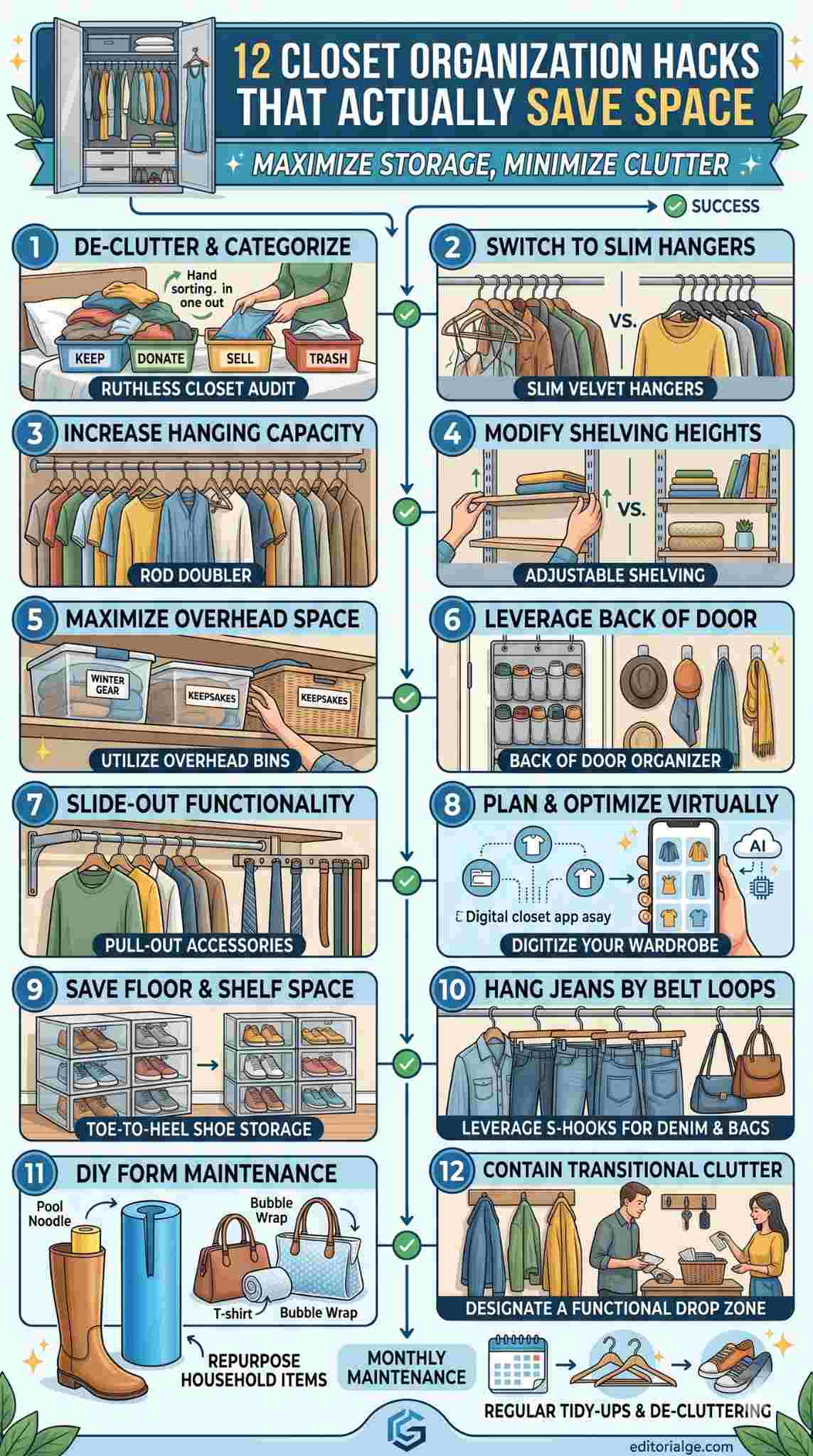
When evaluating potential storage space, many frantic homeowners completely forget to look at the blank back of the door. This vertical flat surface is prime real estate for organizing small, easily tangled daily accessories that would otherwise permanently clutter your shelves or small drawers. An over-the-door pocket organizer is absolutely perfect for sorting rolled leather belts, delicate sunglasses, rolled silk ties, or even small evening clutches. Alternatively, you can easily install a sturdy wooden pegboard or a uniform row of adhesive hooks to hang your daily necklaces, winter beanies, and lightweight rain jackets. By migrating these accessories to the door, you free up vital breathing room inside the main wardrobe area.
Avoiding Door Damage
If you are renting an apartment, drilling permanent holes into a hollow-core door is usually prohibited. Opt for high-quality over-the-door hooks that slide over the top frame, or utilize heavy-duty removable adhesive strips that can securely hold lightweight organizers without peeling the paint.
|
Organizer Type |
Installation Method |
Ideal Items to Store |
|
Pocket Organizer |
Over-the-door hooks |
Shoes, sunglasses, small rolled belts |
|
Pegboard |
Screws/Wall anchors |
Jewelry, hats, small customized bins |
|
Adhesive Hooks |
Sticky command strips |
Light jackets, scarves, long necklaces |
|
Towel Bar |
Screws |
High heels (hung by heel), heavy ties |
Hack 7: Introduce Pull-Out Accessories for Smaller Items
Modern architectural design emphasizes hidden accessibility, and sleek pull-out accessories are becoming a completely standard feature in high-end customized spaces across the world. However, you can easily add aftermarket pull-out valet rods, sliding tie racks, and telescoping belt organizers to your existing structure for a very tiny fraction of the cost. A sliding valet rod is an incredible, luxurious tool for planning your work outfits the night before or setting aside specific garments that need to be steamed in the morning. Pull-out hardware keeps long delicate necklaces and leather belts completely separated and tangle-free behind the scenes. Because they seamlessly slide back into the dark depth of the cabinetry, they maintain a sleek profile when not actively in use.
Customizing with Aftermarket Hardware
You do not need to hire a professional carpenter to install these smart accessories. Most aftermarket pull-out racks come with simple template guides and require only a basic screwdriver to attach directly into the pre-drilled holes of standard modular shelving units.
|
Accessory Type |
Function |
Space Saved |
|
Valet Rod |
Temporary staging for daily outfits |
Frees up bed/chair space |
|
Sliding Tie Rack |
Holds up to 30 ties in a narrow profile |
Eliminates messy drawer piles |
|
Pull-Out Belt Hook |
Hangs belts flat by the buckle |
Prevents leather creasing and rolling |
|
Jewelry Drawer |
Conceals valuables in a velvet tray |
Removes bulky boxes from shelves |
Hack 8: Digitize Your Wardrobe with AI Tools
In recent years, mobile technology has fundamentally revolutionized how we manage our physical clothing collections. Rather than physically digging through heavy packed bins to try and remember what you own, you can now digitize your entire fashion wardrobe using your smartphone. Applications utilizing advanced artificial intelligence allow you to meticulously catalog your clothing simply by snapping quick pictures on your bedroom floor. These smart digital closets automatically organize your items by specific category, fabric color, and appropriate season. You can seamlessly use your smartphone screen to mix and match tops and bottoms, create digital mood boards for upcoming vacations, and completely eliminate the need to pull clothes out just to see if they match.
Saving Time with Virtual Outfits
By relying on a digital catalog, you might quickly realize you do not need to keep all your out-of-season clothes in your main bedroom area. You can confidently pack them away in the attic or garage, knowing your AI app will remind you exactly what you own when the weather finally changes.
|
AI Feature |
User Benefit |
Space Saving Result |
|
Auto-Background Removal |
Clean digital cataloging |
N/A (Digital organization) |
|
Outfit Generator |
Reduces decision fatigue |
Prevents pulled-out clothing messes |
|
Wear Analytics |
Identifies unworn items |
Highlights exactly what to donate |
|
Remote Staging |
Plan trips without packing first |
Keeps physical closet pristine longer |
Hack 9: Adopt the Toe-to-Heel Shoe Storage Strategy
Footwear is notoriously difficult to store efficiently because everyday shoes are bulky, oddly shaped, and very easily scuffed if thrown into a pile. If you are currently lining your shoes up side-by-side facing forward on a flat shelf, you are drastically wasting a significant amount of horizontal wooden space. Instead, adopt the clever toe-to-heel placement strategy to maximize your footprint. Place the right shoe with the front toe facing you, and place the left shoe directly next to it with the back heel facing forward. Because the widest part of a standard shoe usually nests perfectly against the narrowest part of its partner, this method allows you to instantly squeeze an extra pair or two onto the exact same shelf.
Using Clear Cubbies
For highly expensive heels, delicate suede dress shoes, or collectible sneakers you desperately want to protect from airborne dust, clear stackable drop-front shoe boxes are a phenomenal long-term investment. They look incredibly uniform and allow you to see your footwear instantly.
|
Storage Method |
Pairs Per 3-Foot Shelf |
Visual Appeal |
Protection Level |
|
Standard Side-by-Side |
4 to 5 pairs |
High |
Low |
|
Toe-to-Heel Method |
5 to 7 pairs |
Medium |
Low |
|
Clear Drop-Front Boxes |
4 pairs (stackable high) |
Very High |
Excellent |
|
Floor Pile (No System) |
Varies |
Terrible |
Poor (Scuffing likely) |
Hack 10: Leverage S-Hooks for Denim and Handbags
Folding stiff heavy denim jeans takes up a massive amount of valuable shelf space, and stacking them too high makes it nearly impossible to retrieve the specific pair at the bottom without totally ruining the careful fold. Furthermore, traditional plastic hangers are often not structurally sturdy enough to support heavy wet or dry denim over time. A brilliant alternative is to purchase heavy-duty metal S-hooks from a hardware store and hook them directly onto your sturdy closet rod. You simply loop the back belt loop of your jeans over the bottom curve of the metal S-hook. This method allows the heavy jeans to hang completely flat, taking up a tiny fraction of the lateral space that folded jeans require on a shelf.
Maintaining Leather Handbag Shape
S-hooks are equally incredible for storing expensive luxury handbags. Hanging purses by their straps on metal S-hooks keeps them perfectly upright, prevents the delicate leather from creasing or collapsing under its own weight, and makes them incredibly easy to view and grab on your way out.
|
Storage Item |
S-Hook Benefit |
Alternative Method Flaws |
|
Denim Jeans |
Uses vertical space, no folding needed |
Stacks fall over, take up shelf space |
|
Handbags |
Keeps straps straight, maintains shape |
Bottoms get crushed on tight shelves |
|
Canvas Totes |
Groups them together tightly |
Look messy when piled on the floor |
|
Heavy Belts |
Hangs them perfectly straight |
Rolling cracks the stiff leather over time |
Hack 11: Repurpose Household Items for Shape Maintenance
You do not always have to buy expensive, highly specialized commercial products to achieve a polished, high-end look in your home. Some of the most effective and creative space-saving hacks involve simple items you might already have laying around the house. Tall winter leather boots have an annoying habit of flopping over, which aggressively creases the leather and takes up way too much extra floor space. To keep your tall boots standing perfectly upright, carefully cut a cheap foam pool noodle to the exact height of the inner boot shaft and slip it inside. This incredibly simple trick maintains the expensive shape of the footwear and allows you to line them up neatly like soldiers in a row.
Budget-Friendly Solutions
Similarly, if you have large soft-sided tote bags or duffels that lose their structural integrity when empty, simply stuff them with old folded t-shirts, recycled tissue paper, or leftover bubble wrap. This keeps them standing tall on your shelves, maximizing vertical area and presenting a very clean display.
|
Household Item |
Repurposed Closet Use |
Money Saved |
|
Foam Pool Noodles |
Tall boot shapers |
High (vs. cedar boot trees) |
|
Shower Curtain Rings |
Hanging tank tops or silk scarves |
Medium (vs. specialty hangers) |
|
Bubble Wrap / Tissue |
Handbag stuffers for shape retention |
High (vs. purse pillows) |
|
Empty Shoeboxes |
Drawer dividers for socks and underwear |
Medium (vs. acrylic dividers) |
Hack 12: Designate a Functional Drop Zone
A perfectly organized space can sadly become messy within a matter of days if you do not actively account for the transitional items of daily human life. When you come home completely exhausted from a long workday, you are significantly less likely to perfectly fold a heavy sweater or hang a damp jacket. To prevent clothes from ending up in a sad pile on the floor or draped haphazardly over an accent chair, create a designated drop zone near the front entrance of your wardrobe. This zone can be as simple as a decorative row of wooden wall hooks or a small canvas laundry basket placed neatly on the floor. Utilizing a drop zone is one of the most practical closet organization hacks for busy professionals who lack time.
Keeping the Drop Zone Clean
This transitional zone acts as a temporary holding area for items you plan to realistically wear again before washing, such as a light daily cardigan, a sturdy pair of jeans, or your everyday dog-walking jacket. You must empty this drop zone at the end of every week to prevent it from overflowing.
|
Drop Zone Element |
Purpose |
Ideal Location |
|
Wall Hooks |
Holding daily jackets and worn jeans |
Just inside the closet door |
|
Small Basket |
Catching pocket items, receipts, loose change |
On a waist-high shelf |
|
Valet Chair |
Draping tomorrow’s work outfit |
Adjacent to the closet |
|
Hamper |
Immediate disposal of dirty garments |
Tucked under lower hanging items |
Monthly Maintenance to Keep Your Closet Perfect
Implementing these twelve creative hacks will undoubtedly transform your daily space, but true organization is not a one-time magical event; it is a very strict ongoing practice. Without regular dedicated maintenance, even the absolute best storage systems will eventually fall apart under the weight of daily life. Schedule a strict ten-minute reset session at the very end of every single month. Use this quiet time to re-hang any items that have carelessly slipped off their velvet hangers, put wandering sneakers back into their proper toe-to-heel alignment, and completely clear out the temporary drop zone. Ask yourself if there is any specific piece of clothing you repeatedly pushed aside over the last thirty days, and consider removing it entirely.
Seasonal Deep Cleans
Beyond the quick monthly resets, plan for a larger seasonal switch-out four times a year. As the weather drastically changes, rotate your heavy coats out for light jackets, ensuring the prime eye-level real estate is always occupied by weather-appropriate gear.
|
Maintenance Task |
Frequency |
Time Required |
|
Emptying the Drop Zone |
Weekly |
2 Minutes |
|
Re-aligning Shoes |
Monthly |
3 Minutes |
|
Fixing Slipped Hangers |
Monthly |
5 Minutes |
|
Seasonal Wardrobe Swap |
Quarterly |
1 to 2 Hours |
|
Full Declutter Audit |
Annually |
3 to 4 Hours |
Final Thoughts
Conquering a chaotic wardrobe absolutely does not require expanding the square footage of your property or spending thousands of dollars on luxury custom wood cabinetry. By being highly intentional with the items you choose to keep and rethinking how you utilize basic vertical space, hanging rods, and the back of your interior doors, you can dramatically increase your total storage capacity. Implementing proper closet organization hacks like utilizing uniform velvet hangers, installing a simple rod doubler, and embracing modern digital wardrobe applications prove that working smarter is far superior to working harder. Approach your storage systems methodically, maintain them with a quick monthly ten-minute sweep, and you will consistently enjoy a beautifully streamlined bedroom space that makes getting dressed the absolute easiest part of your morning.
Frequently Asked Questions (FAQs)
What is the most efficient way to organize a deep, narrow closet?
Deep, narrow spaces are notoriously tricky because items easily get lost in the dark back corners. The best approach is to install pull-out drawer systems or rolling heavy-duty bins on the floor so you can physically slide the contents out into the light. Utilize the side walls for staggered shelving, and install bright motion-sensor LED puck lights to illuminate the dark recesses.
The absolute golden rule of a shared space is strict, visible division. Divide the space directly down the middle, or assign specific fixed zones based on clothing volume. Use entirely different colored velvet hangers for each person to visually enforce the established boundaries. If one partner’s clothing begins encroaching on the other color, it is an immediate signal that a decluttering session is necessary.
Can closet organization actually increase the resale value of my home?
Yes, highly organized and visually appealing storage spaces are a major selling point in the 2026 real estate market. While a few velvet hangers will not change the appraisal value, installing semi-custom modular shelving systems, adjustable tracks, and proper interior lighting makes the home feel significantly larger and highly maintained, which heavily influences potential buyers’ perceptions.
Why do my clothes always smell musty in my organized closet, and how do I fix it?
Musty smells usually stem from poor air circulation and trapped residual moisture, especially if you pack clothes too tightly together to save space. To combat this, ensure you never hang damp clothing. Leave a slight gap between heavy garments, and place natural cedar blocks, activated charcoal moisture absorbers, or small pouches of dried lavender on the top shelves to actively purify the stagnant air.