
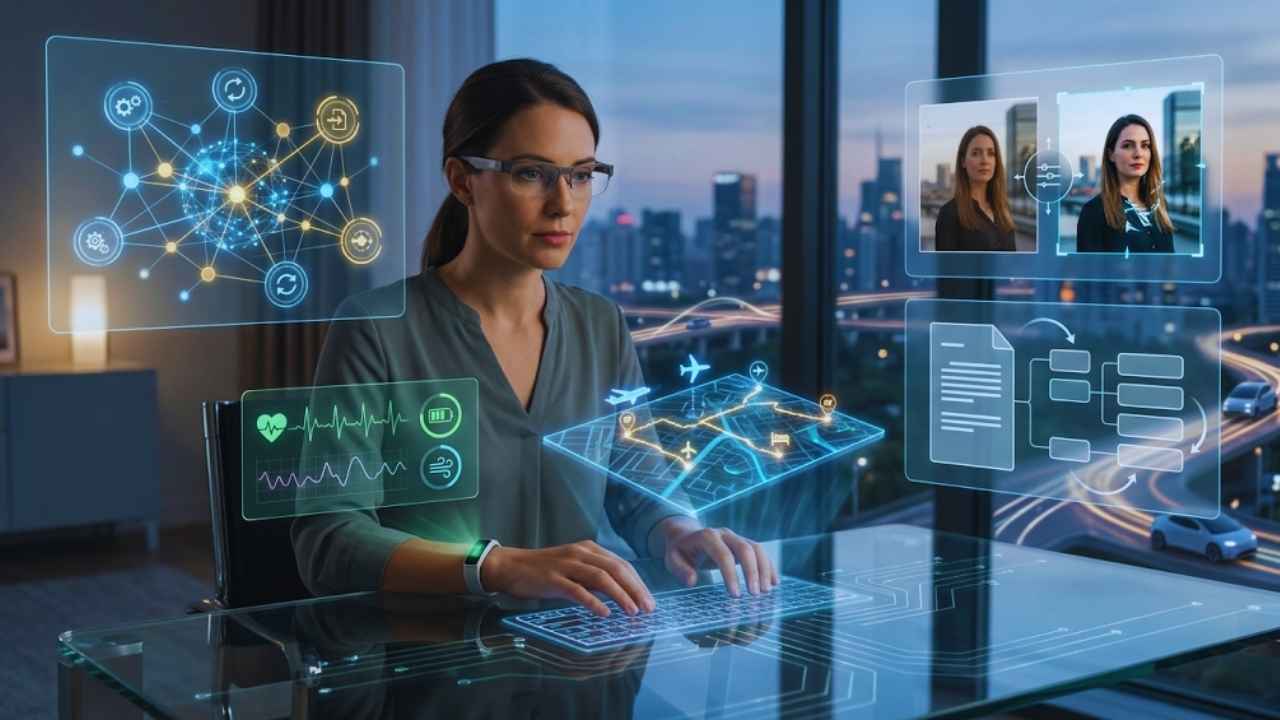
Artificial intelligence is no longer just a shiny buzzword or a distant science fiction dream that we read about in magazines. It has become the silent engine running the background of our daily routines right now. When we talk about AI in everyday life 2026, we are looking at real examples that touch billions of people globally every single day. You probably interact with it from the moment you wake up until you go to sleep without even noticing it.
It helps you avoid massive traffic jams on your morning commute, curates your morning news feed to show exactly what you care about, and even filters the spam out of your inbox before you pour your first cup of coffee. The conversation has completely shifted from what this technology might do someday in the distant future to what it is actively doing right now in our homes and offices. I have seen firsthand how these systems have moved out of the testing labs and straight into our living rooms. We rely on them to save time, reduce stress, and make smarter decisions every single day. This guide breaks down exactly how these practical applications are reshaping the world around us.
The Shift from Experimentation to Daily Integration in 2026
We have officially moved past the era of clunky chatbots and highly experimental generative models that required constant supervision. Over the last few years, the tech industry focused heavily on showing off what large language models could do in isolation just to prove a point. Now, the magic happens in how these systems talk to each other to handle complex tasks without human hand-holding or constant prompt engineering. Computing infrastructure has leveled up with liquid cooling and faster optical networks, allowing data centers to process your requests instantly.
We are seeing a massive surge in edge computing, which means your phone or smart watch processes data right on the device instead of sending it to a cloud server miles away. This shift makes everything faster and much more private for the end user. It is clear that the technology has faded into the background, operating quietly as an ambient layer of everyday utility. “We are no longer testing these systems; we are living inside them.” Tech Industry Analyst. It changes how we view technology entirely, moving from active tools to passive partners.
|
Shift Phase |
System Characteristics |
2026 Reality |
|
Early Testing |
Standalone apps and manual prompts |
Fully integrated background processes |
|
Infrastructure |
Standard cloud computing environments |
Edge computing and local processing |
|
Focus Area |
Generating raw text and basic images |
Executing multi-step daily actions |
|
Consumer View |
Novelty tech trick for enthusiasts |
Essential everyday household utility |
AI in the Smart Home and Digital Assistants
The concept of a connected home finally works the way we always hoped it would back when smart speakers first hit the market. Gone are the days of juggling five different apps just to turn off the lights and lock the front door before going to bed. Machine learning models now act as a central brain for the entire household ecosystem, connecting everything seamlessly. They learn the specific habits of everyone living in the house and adjust settings automatically without you needing to say a word.
The focus is completely on reducing the mental load of managing a property so you can relax. You no longer have to tell your house what to do because it already knows what you want based on your historical behavior. The smart home in 2026 is less about flashy gadgets and more about invisible intelligence working quietly in the background to improve your comfort and safety.
Anticipatory Virtual Companions
Virtual assistants are completely different now compared to the rigid voice boxes of the past. You no longer have to speak in specific commands to get a response from your smart speaker. These companions understand conversational context, tone of voice, and even your current mood based on your interactions throughout the day.
If you have an early morning flight, the assistant tracks the traffic, moves your alarm up by twenty minutes, and gently reminds you to grab your passport before you walk out the door. They handle the background noise of life so you can focus on what actually matters instead of sweating the small details.
Seamless Home Automation
Home automation acts like a silent property manager that never sleeps or takes a day off. Your house tracks when you leave and drops the temperature to save money on heating bills, bringing it back up just before you walk through the door. Refrigerators scan what you have left on the shelves and suggest dinner recipes so food does not go to waste at the end of the week.
Advanced systems like the AI Rejuvenation Shower use smart mirrors to analyze your skin hydration and adjust the water chemistry automatically. Security cameras do not just send a notification every time a leaf blows past the porch; they analyze the video feed locally to tell you if a delivery driver dropped off a package or if an unfamiliar car is lingering.
|
Smart Home Feature |
Past Capability |
2026 Reality |
|
Voice Assistants |
Simple timer setting |
Proactive schedule management |
|
Climate Control |
App-based manual changes |
Predictive adjustments based on habits |
|
Home Security |
Constant motion alerts |
Distinction between pets and intruders |
|
Daily Chores |
Manual cleaning |
Autonomous robot assistants handling tasks |
Transforming Healthcare with Proactive AI
The medical field is experiencing a massive upgrade that impacts how we approach personal wellness on a fundamental level. The traditional healthcare system always relied on treating people after they got sick or injured. Now, algorithms process vast amounts of medical data to catch potential health issues before you even feel a single symptom or pain.
Medical professionals use these tools as a second set of highly trained eyes to review patient files. It removes a lot of the guesswork from complex medical cases and allows doctors to move faster. This proactive approach saves lives and drastically cuts down on hospital wait times for everyone involved. Healthcare has shifted from a reactive panic to a calculated, preventative strategy that puts the patient in control.
Early Disease Detection and Triage
Hospitals use massive datasets to train imaging models that catch microscopic anomalies on X-rays and MRI scans faster than ever. These systems highlight areas of concern that a human eye might miss during a long, exhausting shift in the radiology department.
When you go to the emergency room, an algorithm reviews your basic symptoms and medical history in seconds to place you in the correct priority queue immediately. This means critical patients get a doctor right away, while minor issues are routed to urgent care staff without causing a bottleneck. It completely streamlines the chaotic environment of hospital admissions and reduces patient stress.
Personalized Medicine and Daily Wearables
We are moving away from the old idea that one specific pill works the exact same way for every single person. By analyzing your genetic profile and daily habits, doctors tailor treatments to match your specific biological makeup perfectly. Daily wearables like smartwatches and rings are no longer just for counting steps during a casual afternoon walk.
They monitor your blood oxygen levels, heart rhythms, and sleep cycles around the clock without you noticing. If the software notices a weird pattern in your heartbeat, it alerts your phone and sends a summary to your cardiologist before a major problem happens.
|
Healthcare Tech |
Function |
Patient Benefit |
|
Diagnostic Scans |
Rapid anomaly detection |
Catching diseases earlier |
|
Smart Rings |
Continuous vital tracking |
Preventing cardiac events |
|
Triage Algorithms |
Symptom sorting |
Reducing emergency wait times |
|
Precision Meds |
Genetic drug matching |
Lowering negative side effects |
Revolutionizing the Modern Workplace and Education
Offices and classrooms are leaning heavily on smart software to handle the boring stuff that drains our energy. We used to worry that machines would take all the creative jobs, but they actually took over the administrative nightmares instead. Workers can now offload heavy data entry, basic email replies, and calendar management to their digital tools with confidence.
Teachers are experiencing a similar relief from endless grading and late-night lesson planning sessions. This shift allows people to spend their time actually connecting with others and doing deep, meaningful work that requires a human touch. It completely changes the daily grind into a collaborative effort between human creativity and machine efficiency.
AI Agents as Digital Colleagues
Think of an AI agent as a hyper-competent intern who never needs to sleep or take a lunch break. If you run a marketing campaign, you can ask the agent to pull consumer data, write three different ad variations, and schedule them for optimal times. You just review the final product, give it a quick edit, and hit approve to launch the whole thing.
Software developers use repository intelligence that acts like a pair programmer, suggesting fixes and catching bugs as they type the code. It dramatically reduces burnout because professionals are no longer drowning in repetitive tasks and can focus on strategy.
Hyper-Personalized Learning Paths
Every student learns at a different speed, and modern educational platforms finally reflect that reality in 2026. If a student gets stuck on a complex algebra problem, the system notices the struggle and instantly changes the teaching method to help them understand.
It might offer a visual aid or break the problem down into smaller, bite-sized steps until it finally clicks for the learner. Teachers no longer have to spend their weekends grading multiple-choice tests with a red pen. They get a clean dashboard showing exactly where each student is struggling, allowing them to step in and offer direct, one-on-one help.
|
Sector |
Automated Task |
Human Focus Area |
|
Corporate Office |
Data entry and meeting prep |
Strategy and client relations |
|
Software Dev |
Code review and bug fixes |
Architecture and innovation |
|
Education |
Test grading and scheduling |
Mentoring and group discussion |
|
Content Teams |
Initial drafting and research |
Editing and creative direction |
The way we move through massive cities is getting significantly safer and entirely less frustrating for daily commuters. Traffic jams and unpredictable delays used to be an unavoidable part of daily life that ruined mornings. Now, massive data networks talk to cars, traffic lights, and mapping apps simultaneously to keep everything moving smoothly across the grid.
Whether you are driving your own car, taking a rideshare, or using public transit, the underlying software is doing heavy calculations to find the best route. It takes the stress out of the daily commute and gives you back valuable time. The entire transportation infrastructure has become a massive, interconnected puzzle that solves itself in real time.
You no longer have to type a specific street address into your phone while sitting at a red light in a panic. You can just ask your map app to find a coffee shop with good reviews and a drive-thru somewhere along your current route to the office. The app processes the request instantly, checking live traffic data and store hours before guiding you there safely.
If a sudden accident happens two miles ahead on the highway, the system recalculates and directs you down a quiet side street without you ever having to press a single button. It feels less like reading a map and more like riding with a local guide.
Autonomous Vehicles and Smart Traffic Control
Self-driving technology is heavily integrated into commercial trucking and urban public transit systems across the globe. Delivery fleets use automated systems to move goods safely, maintaining perfect distances and speeds to save fuel on long hauls. Inside crowded cities, smart traffic lights do not just run on a basic timer that ignores the actual flow of cars anymore.
They use cameras and sensors to see exactly how many cars are waiting and adjust the green lights to clear out congestion immediately. This significantly lowers emissions from idling engines and makes the morning rush hour much more bearable for everyone on the road.
|
Navigation Tool |
How It Works |
End Result |
|
Mapping Apps |
Real-time crowd data analysis |
Avoiding sudden traffic jams |
|
Traffic Lights |
Sensor-based timing adjustments |
Smoother city intersections |
|
Ridesharing |
Predictive driver placement |
Shorter wait times for rides |
|
Logistics Fleets |
Automated route optimization |
Faster package deliveries |
Personalized Shopping and Entertainment
The digital experiences we consume daily are entirely custom-built for our specific tastes and current moods. E-commerce sites and streaming platforms know exactly what we want before we even type a word into the search bar. This level of extreme curation saves us from endlessly scrolling through bad options on a Friday night.
The algorithms track what we ignore just as closely as what we click, constantly refining their understanding of our unique preferences. It makes online shopping incredibly fast and ensures our weekend entertainment actually matches what we want to watch. The entire internet feels like a personal boutique tailored specifically for you.
Hyper-Targeted Recommendations
When you open an online store in 2026, the homepage looks completely different from what your next-door neighbor sees on their screen. The system analyzes your past purchases, the specific items you hover over, and even seasonal weather trends to show you products you actually need right now.
Behind the scenes, these same prediction models tell massive retailers exactly where to store their physical inventory across the country. If the software knows a specific neighborhood is going to buy a lot of space heaters in November, it ships them to the local warehouse early to guarantee fast, same-day delivery.
Content Creation and Consumption
Streaming services do not just suggest a random movie anymore; they analyze thousands of tiny data points to find the exact genre and pacing you prefer. But the real shift is happening heavily on the actual creation side of the entertainment industry.
Independent creators use these powerful digital tools to generate storyboards, clean up messy audio tracks, and build stunning special effects from their bedrooms. A solo creator can now produce a video that looks exactly like it came from a massive professional studio in Hollywood. It completely levels the playing field for digital artists and writers trying to break into the industry.
|
Platform Type |
Personalization Method |
Consumer Benefit |
|
E-commerce |
Buying habit prediction |
Faster checkout process |
|
Streaming TV |
Watch-time tracking |
Better show recommendations |
|
Music Apps |
Mood and time-of-day analysis |
Perfect playlist creation |
|
Retail Logistics |
Regional demand forecasting |
Same-day local delivery |
Addressing the Ethical Challenges of AI
We cannot simply ignore the massive friction that comes with such a huge technological shift in our society. Handing over so much control to hidden software creates real, valid problems with absolute trust, data privacy, and overall economic stability. As these systems become deeply embedded in our daily routines and homes, society is heavily forced to set strict boundaries immediately.
We have to ensure that the amazing convenience does not come at the heavy cost of our civil liberties or our personal livelihoods. It requires constant human oversight and aggressive regulations to keep everything fair and safe. The technology might be smart, but it still needs human wisdom to guide it properly.
Data Privacy and Algorithmic Bias
These smart systems run on a massive, endless diet of our personal data, which makes deep privacy a critical concern for everyone. People are rightly worried about exactly who holds their private health metrics, daily schedules, and home security footage. The industry is responding quickly with stronger built-in security, but users still have to stay incredibly vigilant about their settings.
Furthermore, if a machine learning model learns from historical data filled with nasty human prejudices, it will simply repeat those exact mistakes at scale. Fixing this completely requires diverse training datasets and actual humans constantly checking the math to stop discrimination.
It is a harsh reality that software is aggressively taking over jobs that rely heavily on manual data entry, basic customer service, and routine admin work. While the tech industry creates plenty of new jobs, the people losing their current positions are often not trained for the new engineering roles at all. This creates a massive, painful skills gap that leaves many workers feeling completely left behind by the economy.
Companies and governments have to invest heavily in serious retraining programs to get people up to speed quickly. To survive in this market, workers must heavily focus on uniquely human skills like empathy, complex problem-solving, and relationship building.
|
Challenge Area |
Core Issue |
Mitigation Strategy |
|
Data Privacy |
Massive personal data collection |
Strict ambient security protocols |
|
Algorithmic Bias |
Historical prejudices in training |
Diverse data and human review |
|
Job Displacement |
Routine tasks getting automated |
Widespread worker upskilling |
|
Transparency |
Hidden decision making |
Open source models and audits |
Final Thoughts
The reality of AI in everyday life 2026 is that it is absolutely here to stay, operating quietly in the background to make our days run significantly smoother. We have finally moved past the exhausting hype and entered an era of incredible practicality that actually helps regular people. From the exact moment your anticipatory assistant wakes you up to the seamless navigation on your drive home, the technology is heavily working to give you back your most valuable resource, which is time.
While we must carefully navigate the complex hurdles of data privacy and job transitions, the daily benefits clearly far outweigh the temporary growing pains. Embracing these advanced tools and learning how to collaborate with them is the absolute best way to thrive in this new digital landscape. Keep a close eye on how these smart systems adapt to your specific needs, and use them to deeply focus on the physical human connections that truly matter.
Frequently Asked Questions (FAQs) About AI Changing Everyday Life 2026
What happens if the internet goes down in a smart home?
Most modern smart homes now rely heavily on edge computing to function properly. This means your central hub processes commands locally right inside your house. Your lights, locks, and climate control will still operate perfectly on your local network even if the main internet connection drops out entirely for the afternoon.
How are delivery companies using these models to speed up shipping?
Logistics companies use predictive models to thoroughly analyze regional buying habits. They ship products to local micro-fulfillment centers before you even place the actual order. Once you click buy, the item is already sitting a few miles from your house, allowing for delivery within a couple of hours.
Can virtual assistants actually understand my mood?
Yes, many advanced systems now heavily use advanced sentiment analysis. By picking up on the exact tone, speed, and volume of your voice, they can quickly determine if you are rushed or frustrated. The assistant will simply respond with shorter, more direct actions rather than giving you lengthy conversational replies.
Are teachers losing their jobs to digital learning platforms?
No, teachers remain completely essential to the actual learning process. The software simply removes the massive administrative burden of grading papers and creating basic lesson plans from scratch. This frees educators to spend their entire day mentoring students, leading group projects, and providing emotional support that a machine simply cannot replicate.
How does edge computing protect my personal data at home?
Edge computing physically processes the data directly on the device itself, like your smart camera or phone, rather than sending it to a remote cloud server. This means your private conversations or video feeds never actually leave your home network. It drastically reduces the chance of a hacker intercepting your data while it travels across the internet.
The biggest risk is blindly trusting the system during sudden road closures or extreme weather events that the live data has not fully registered yet. While the apps are incredibly accurate most days, drivers still need to pay close attention to physical road signs and real-world conditions rather than staring at their screens constantly.