
Your washing machine works hard. It handles sweat, dirt, towels, bedding, pet hair, detergent, fabric softener, and sometimes the mysterious things left in pockets. So, yes, the machine that cleans your clothes also needs cleaning.
If your laundry smells musty, comes out with gray marks, or the washer has a sour odor when you open the door, it’s probably time to learn how to clean a washing machine the right way. The good news? You don’t need a complicated routine.
Most washer care comes down to three things: cleaning the drum, removing residue from hidden spots, and letting the machine dry after use. Front-load and top-load washers need slightly different care, but the goal is the same. You want to remove detergent buildup, mold risk, lint, grime, and trapped moisture before they affect your laundry.
This guide explains how to clean front-load and top-load washing machines safely, what products to use, what mistakes to avoid, and how often to repeat the process.
How to Clean a Washing Machine: Quick Answer
The fastest way to clean a washer is to run an empty hot cleaning cycle, wipe the gasket or lid area, clean the detergent drawer, and dry the drum afterward. If your washer has a “Clean Washer,” “Self Clean,” “Tub Clean,” or “Pure Cycle” setting, use that first.
Whirlpool recommends cleaning a washing machine at least once a month or every 30 cycles. Samsung also recommends running Self Clean or Pure Cycle monthly, especially when the washer is used often.
|
Cleaning Step |
What to Do |
Why It Matters |
|
Empty the washer |
Remove clothes and debris |
Prevents items from blocking the drum or drain |
|
Clean visible areas |
Wipe door, lid, gasket, and rim |
Removes grime and moisture |
|
Clean dispenser |
Rinse detergent and softener trays |
Stops sticky buildup and odor |
|
Run cleaning cycle |
Use washer cleaner or approved cleaner |
Clears the drum and hidden residue |
|
Dry the washer |
Leave door or lid open |
Reduces musty smells |
Start With the Empty Drum
Never clean the washer with clothes inside. Remove laundry, socks, coins, hair clips, tissues, and anything else stuck in the drum. This helps the cleaner move freely through the machine.
Use the Washer’s Built-In Cleaning Cycle
Many modern washers have a cleaning cycle. Use it with a washing machine cleaner or the product your manual recommends. If your machine does not have a cleaning cycle, choose the hottest long cycle and run it empty.
Dry It After Cleaning
The drying step matters more than people think. After the cycle ends, wipe the drum, door, seal, and dispenser area. Leave the door or lid open when safe so air can move through the washer.
Why Washing Machines Get Dirty
A washer gets dirty because water, detergent, body oil, lint, minerals, and fabric softener collect inside the machine. The buildup may not show immediately, but it can sit behind the drum, inside the gasket, around the dispenser, and near the drain area.
High-efficiency washers use less water than older traditional machines. ENERGY STAR says certified clothes washers use about 20% less energy and about 30% less water than regular washers, which is good for bills but also means using too much detergent can leave more residue behind.
|
Cause |
Where It Builds Up |
Common Sign |
|
Too much detergent |
Drum and dispenser |
Soap film or residue |
|
Fabric softener |
Dispenser and tub |
Sticky buildup |
|
Moisture |
Door seal and drum |
Musty smell |
|
Hard water |
Drum and internal parts |
Mineral scale |
|
Pet hair and lint |
Gasket, filter, drain area |
Clogs or odor |
Detergent and Softener Residue
Using more detergent does not make clothes cleaner. It often does the opposite. Too much detergent creates a film that traps lint, dirt, and odor inside the washer.
Fabric softener can also leave a waxy layer. This layer may stick to the dispenser, drum, and hidden parts of the machine. Over time, it can make the washer smell stale.
Moisture Around the Door or Lid
Front-load washers are more likely to hold moisture around the rubber door gasket. Consumer Reports found that mold, mildew, and odor complaints are more common among front-load washer owners than top-load washer owners.
Top-load washers can also smell bad, especially when the lid stays closed after every wash. Any damp, closed space can develop odor.
Hard Water and Mineral Scale
Hard water leaves mineral deposits inside appliances. In a washer, that scale can mix with detergent residue and create rough buildup. If you live in a hard-water area, you may need to clean the washer more often.
How Often Should You Clean Your Washing Machine?
Most households should clean the washing machine once a month. If you wash several loads per day, have pets, wash sports clothes, or use fabric softener often, clean it more frequently.
Samsung says some top-load models show the Self Clean reminder after 20 washes, while some front-load models show it after 40 washes. The company also recommends running the cycle at least once a month if you do fewer loads.
|
Household Type |
Suggested Cleaning Frequency |
|
Single person or light use |
Every 4–6 weeks |
|
Average family use |
Once per month |
|
Heavy laundry use |
Every 2–3 weeks |
|
Pet owners |
Every 2–3 weeks |
|
Musty smell or visible mold |
Clean immediately |
|
After dye transfer or dirty work clothes |
Clean before the next load |
Monthly Cleaning Works for Most Homes
A monthly washer cleaning habit keeps odor and residue under control. It is easier to prevent buildup than remove months of grime at once.
Clean Sooner If Laundry Smells Bad
If your clothes smell musty after washing, do not wait for the monthly schedule. Clean the washer right away. Odor usually means trapped moisture, detergent film, or hidden residue.
Watch the Machine’s Reminder Light
Some washers tell you when to clean them. Do not ignore the reminder for too long. The machine may still run, but odor and residue can build up if the cleaning cycle is skipped.
What You Need Before Cleaning
You do not need a huge cleaning kit. Most washer cleaning jobs need a microfiber cloth, warm water, a soft brush, and a washer cleaner or manufacturer-approved cleaning product.
Be careful with bleach, vinegar, and other cleaning products. The CDC says household bleach should never be mixed with other cleaners or disinfectants. Washington State Department of Health also warns not to mix bleach with ammonia, acids, or other cleaners because it can create dangerous fumes.
|
Item |
Best Use |
|
Microfiber cloth |
Wiping drum, glass, gasket, and exterior |
|
Soft brush |
Cleaning gasket folds and dispenser corners |
|
Mild dish soap |
Cleaning removable parts and exterior |
|
Washer cleaner |
Routine drum cleaning |
|
Bleach |
Mold or mildew odor, if manual allows |
|
White vinegar |
Light odor or mineral residue, if manual allows |
|
Rubber gloves |
Hand protection |
|
Towel and shallow bowl |
Cleaning front-load drain filter |
Check the Manual First
Every washer is a little different. Some brands recommend a specific cleaner. Some warn against certain products. Read the manual before using bleach, vinegar, or cleaning tablets.
Never Mix Cleaning Products
This rule is simple: use one cleaner at a time. Do not mix bleach with vinegar, ammonia, toilet cleaner, drain cleaner, or any random cleaning product. The reaction can release harmful gas.
Use Gentle Tools
Avoid steel wool, sharp scrapers, and rough pads. They can damage rubber seals, glass doors, coated drums, and control panels.
How to Clean a Front-Load Washing Machine
A front-load washer needs extra attention around the door gasket, detergent drawer, and drain pump filter. These areas collect moisture, lint, hair, and detergent residue.
Whirlpool advises wiping the front-load washer seal dry and leaving the washer door open so the gasket can air-dry. This helps reduce odor-causing buildup around the rubber seal.
|
Front-Load Area |
Cleaning Method |
Frequency |
|
Drum |
Run Clean Washer or hot cycle |
Monthly |
|
Rubber gasket |
Wipe folds and dry fully |
Weekly or after heavy use |
|
Detergent drawer |
Remove, rinse, scrub, dry |
Monthly |
|
Door glass |
Wipe with damp cloth |
Weekly |
|
Drain pump filter |
Drain, remove debris, reinstall |
Every 1–3 months |
Step 1: Empty the Washer
Remove everything from the drum. Run your hand around the inside to check for socks, coins, pet hair, and lint. Also look around the door opening.
Step 2: Clean the Rubber Gasket
Pull the gasket folds back gently. Remove hair, lint, and small objects. Wipe the area with warm water and mild soap.
If you see black spots or heavy mildew, use a cleaner approved by your washer manual. Dry the gasket well after cleaning.
Step 3: Wash the Detergent Drawer
Remove the drawer if your machine allows it. Rinse it under warm water. Use a soft brush to clean detergent, bleach, and softener compartments.
Dry the drawer before putting it back. If the drawer area inside the machine looks dirty, wipe that too.
Step 4: Run the Clean Washer Cycle
Place the washer cleaner in the drum unless the product label says otherwise. Do not put clothes inside. Run the Clean Washer, Tub Clean, Self Clean, or hottest empty cycle.
Step 5: Clean the Drain Pump Filter
Many front-load washers have a small panel near the bottom front. Place a towel and shallow bowl under it before opening. Drain water slowly, remove debris from the filter, and reinstall it tightly.
How to Clean a Top-Load Washing Machine
Top-load washers are usually easier to air out, but they still collect residue. The rim, agitator, impeller, dispenser, and tub line can hold grime.
A top-load washer may not have a rubber front gasket, but it can still smell if detergent and softener build up. The lid area, dispensers, and upper tub ring are common trouble spots.
|
Top-Load Area |
Cleaning Method |
Why It Matters |
|
Drum |
Run hot cleaning cycle |
Removes residue and odor |
|
Lid and rim |
Wipe with damp cloth |
Clears splashes and grime |
|
Agitator or impeller |
Scrub around base |
Removes trapped lint and film |
|
Dispensers |
Rinse and brush |
Prevents softener buildup |
|
Exterior |
Wipe controls and surface |
Keeps spills from hardening |
Step 1: Empty the Drum
Remove clothes and check the bottom of the tub. Look around the agitator or impeller. Small items can hide there.
Step 2: Run a Cleaning Cycle
Use the Tub Clean, Clean Washer, or hottest long cycle. Add a washer cleaner or approved cleaning product. Keep the washer empty.
Step 3: Scrub the Rim and Lid Area
Dip a cloth in warm soapy water and wipe under the lid, around the rim, and near the hinges. These areas catch splashes but are easy to forget.
Step 4: Clean the Agitator or Impeller
If your washer has an agitator, clean around its base. If it has an impeller, wipe the low-profile plate and surrounding area. Use a soft brush for trapped grime.
Step 5: Clean the Dispensers
Remove dispenser cups if the manual allows it. Rinse them with warm water and scrub sticky residue. Dry them before putting them back.
Best Cleaner Options: Washer Cleaner, Bleach, Vinegar, or Baking Soda
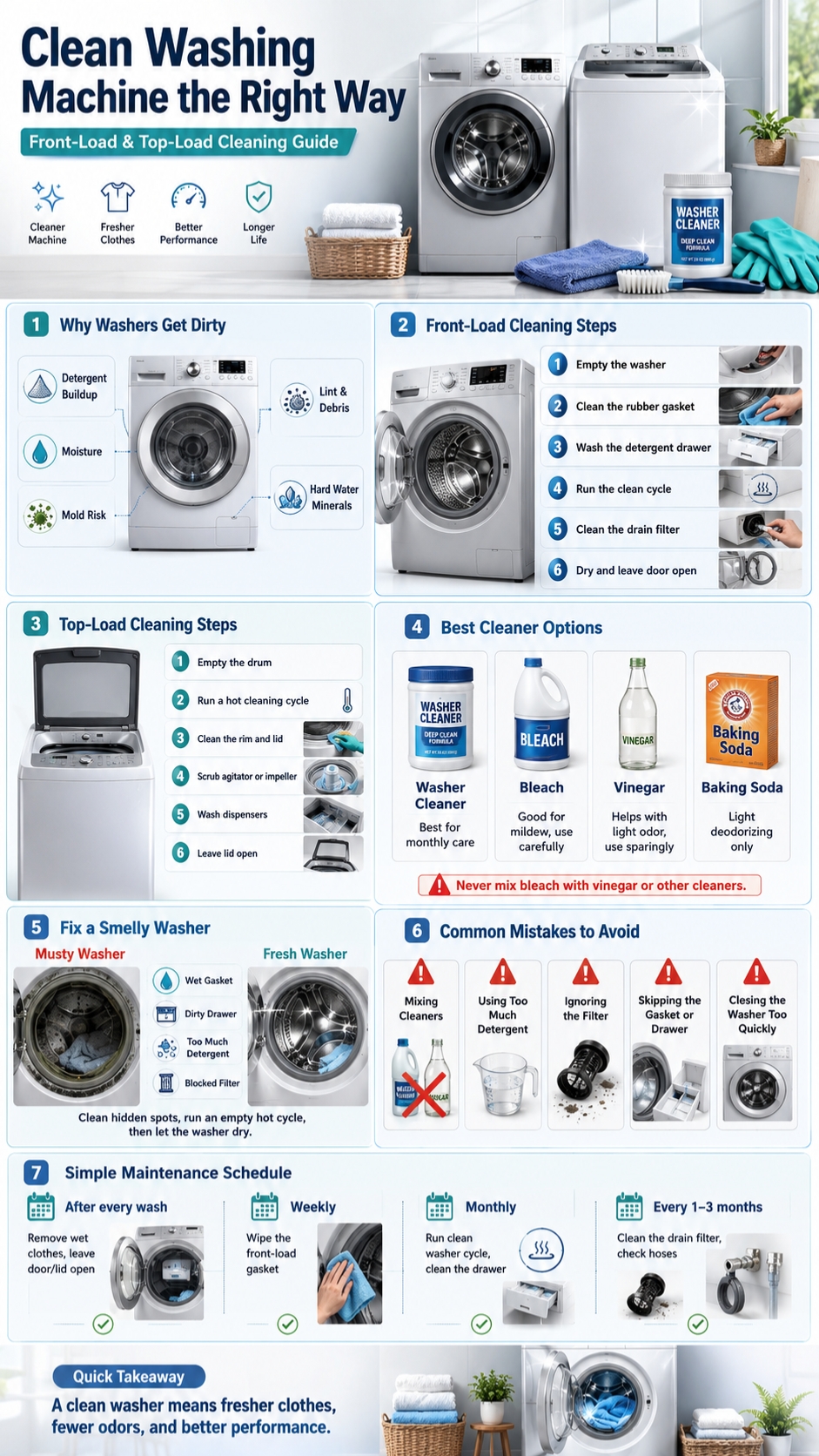
There is no single best cleaner for every washer. The safest option is the cleaner your washer manual recommends. A commercial washing machine cleaner is usually the easiest choice for routine maintenance.
Bleach may help with mildew odor when the manual allows it. Vinegar may help with light mineral residue, but some manufacturers warn against frequent overuse around rubber parts. LG notes that vinegar can help remove residue but cautions that overuse may affect rubber seals and gaskets.
|
Cleaner |
Best For |
Avoid When |
|
Washer cleaner tablet |
Monthly maintenance |
Product label does not match your washer type |
|
Bleach |
Mildew smell or mold concern |
Manual says not to use it |
|
White vinegar |
Light odor and mineral film |
Used too often or mixed with bleach |
|
Baking soda |
Light deodorizing |
Heavy mold or serious odor |
|
Mild dish soap |
Gasket, drawer, exterior |
Running large amounts inside the drum |
Washer Cleaner Tablets
These are simple and beginner-friendly. Most are made for empty washer cleaning cycles. Always follow the package directions and place the cleaner where the label says.
Bleach
Bleach can be useful for mildew and odor, but it needs care. Use it only if the washer manual allows it. Never mix it with vinegar or other cleaners.
Vinegar
Vinegar is popular for light odor and mineral residue. Use it sparingly. It is not a magic fix for heavy mold, and it should never be mixed with bleach.
Baking Soda
Baking soda can help with light smells and gentle scrubbing. It is not strong enough for deep mold problems, blocked filters, or heavy detergent buildup.
How to Fix a Washing Machine That Smells Bad
A smelly washer usually has trapped moisture, detergent buildup, mold, or a dirty filter. The smell may be stronger after the door has been closed for a few hours.
Front-load washers need more attention because the rubber gasket can hold water. Top-load washers usually smell when the lid stays closed, the dispenser is dirty, or the tub has softener film.
|
Smell Source |
Likely Cause |
Fix |
|
Door area smells |
Wet gasket or mold |
Clean and dry gasket |
|
Drum smells sour |
Detergent buildup |
Run hot cleaning cycle |
|
Drawer smells bad |
Softener or detergent residue |
Remove, scrub, and dry |
|
Clothes smell after washing |
Too much detergent or dirty washer |
Clean washer and reduce detergent |
|
Water smell near floor |
Drain issue |
Check filter and drain hose |
Clean the Gasket and Drawer First
If you have a front-load washer, start with the gasket and drawer. These two areas often cause odor. Wipe them, scrub them gently, and dry them fully.
Run a Hot Cleaning Cycle
Use a washer cleaner or approved cleaner. Run the cycle empty. If suds or residue remain, Samsung recommends running another Self Clean cycle afterward.
Change Your Laundry Habits
Use less detergent. Remove wet clothes quickly. Leave the door or lid open after washing. These small habits stop odor from coming back quickly.
Common Mistakes to Avoid When You Clean Washing Machine Parts
Many people clean the drum but forget the hidden areas. That is why the smell comes back. A proper clean washing machine routine includes the gasket, drawer, lid, rim, filter, and drying step.
Another mistake is following viral cleaning hacks without checking the manual. Washers have rubber, sensors, coatings, and drainage parts that can be damaged by harsh or repeated chemical use.
|
Mistake |
Why It’s a Problem |
Better Choice |
|
Mixing bleach and vinegar |
Can create dangerous fumes |
Use one cleaner only |
|
Using too much detergent |
Leaves residue |
Measure detergent |
|
Closing door after every wash |
Traps moisture |
Leave it open when safe |
|
Ignoring the gasket |
Mold can hide there |
Wipe and dry folds |
|
Skipping the drawer |
Softener buildup grows |
Remove and rinse monthly |
|
Forgetting the filter |
Debris can block drainage |
Clean every 1–3 months |
Do Not Use Too Much Cleaner
More cleaner does not always mean better cleaning. Too much product can leave residue or cause extra suds. Follow the label.
Do Not Ignore the Filter
If your washer has a drain pump filter, clean it. Hair, lint, coins, and small debris can collect there and cause drainage or odor problems.
Do Not Close the Washer Too Quickly
Let the inside dry. A dry washer is less likely to smell. This habit takes two seconds but makes a big difference.
Front-Load vs Top-Load Washer Cleaning Checklist
Front-load and top-load washers share the same basic cleaning goal, but the high-risk areas are different. Front-load machines need more gasket and filter care. Top-load machines need more attention around the rim, agitator, and dispenser.
Use this checklist as a simple maintenance guide. It helps you clean the machine without missing the areas that usually cause odor.
|
Cleaning Area |
Front-Load Washer |
Top-Load Washer |
|
Drum |
Run clean cycle monthly |
Run clean cycle monthly |
|
Door or lid |
Wipe glass and door edge |
Wipe lid and rim |
|
Rubber gasket |
Clean folds and dry |
Usually not applicable |
|
Dispenser |
Remove, rinse, scrub |
Clean cups and compartments |
|
Filter |
Clean drain pump filter if accessible |
Check manual |
|
Agitator or impeller |
Not usually applicable |
Scrub around base |
|
Drying habit |
Leave door open |
Leave lid open |
Front-Load Checklist
Clean the gasket, drawer, drum, door glass, and drain pump filter. Dry the gasket after cleaning. Leave the door open when it is safe.
Top-Load Checklist
Clean the drum, lid, rim, dispenser, and agitator or impeller area. Run a hot empty cleaning cycle once a month.
Use the right detergent amount. Remove wet clothes quickly. Wipe spills. Keep the machine dry between wash days.
Troubleshooting: Why Is the Washer Still Dirty After Cleaning?
If the washer still smells or leaves residue after cleaning, the problem may be deeper than the drum. Check the gasket, dispenser, filter, drain hose, detergent amount, and fabric softener use.
GE Appliances notes that if a Self Clean cycle is interrupted, the washer may need a complete Self Clean cycle before regular use. This is a good reminder not to stop the cleaning cycle halfway unless necessary.
|
Problem |
Possible Cause |
What to Try |
|
Musty smell returns |
Gasket or drawer still dirty |
Clean hidden areas |
|
Clothes have gray marks |
Detergent or softener film |
Use less product |
|
Washer drains slowly |
Dirty filter or hose issue |
Check filter and drain hose |
|
Black spots remain |
Mold in gasket |
Deep clean or replace seal |
|
Cleaning light stays on |
Cycle not completed |
Run full clean cycle |
The Smell Comes Back Fast
This usually means moisture is trapped somewhere. Clean the gasket, drawer, and filter. Then leave the door open after every wash.
Clothes Have Residue
Use less detergent and avoid overloading the washer. Too many clothes stop water and detergent from moving properly.
Water Stays in the Drum
Check the drain pump filter if your washer has one. If water still remains, call a technician. A pump or hose problem may need repair.
Simple Washer Maintenance Schedule
A clean washer is easier to maintain than a neglected one. You do not need to deep clean it every week. A few small habits can keep it fresh.
This schedule works for most homes. Adjust it if your washer sees heavy use, handles pet laundry, or sits in a humid laundry room.
|
Task |
Frequency |
|
Remove wet clothes |
After every wash |
|
Leave door or lid open |
After every wash |
|
Wipe front-load gasket |
Weekly or after laundry day |
|
Clean detergent drawer |
Monthly |
|
Run washer cleaning cycle |
Monthly or every 30 cycles |
|
Clean drain pump filter |
Every 1–3 months |
|
Check hoses and leaks |
Every 3–6 months |
|
Deep clean visible mold |
Immediately |
After Every Wash
Remove clothes quickly. Wipe visible moisture if needed. Leave the washer open so the drum can dry.
Every Month
Run a clean washer cycle. Clean the dispenser. Wipe the door, lid, rim, and control area.
Every Few Months
Clean the filter if your machine has one. Check hoses, leaks, and drainage. If you hear odd noises or see standing water, inspect the machine sooner.
Final Thoughts
Learning how to clean a washing machine is less about deep cleaning once a year and more about small habits. A monthly cleaning cycle, a clean dispenser, a dry gasket, and an open door or lid can prevent most odor problems.
Front-load washers need extra care around the rubber seal and drain filter. Top-load washers need attention around the rim, agitator, and dispenser. Both types benefit from the same basic rule: keep residue low and moisture under control.
If your washer smells bad, start with the areas you can see. Clean the gasket or lid area, wash the drawer, run the hottest empty cleaning cycle, and dry everything afterward. Once the machine is fresh again, stay consistent. A clean washing machine gives you better-smelling laundry and fewer annoying surprises on laundry day.
Frequently Asked Questions About How to Clean a Washing Machine
Can I Clean My Washing Machine Without a Cleaning Tablet?
Yes. You can use the washer’s hot cleaning cycle with a manufacturer-approved cleaner such as bleach or vinegar, depending on the manual. A cleaning tablet is simply the easiest option for many users.
Why Does My Washing Machine Smell Like Sewage?
A sewage-like smell may come from a dirty drain filter, blocked drain hose, plumbing trap issue, or standing water. Clean the washer first, but call a plumber or technician if the smell continues.
Can I Use Dishwasher Tablets to Clean a Washing Machine?
It is better not to. Dishwasher tablets are made for dishwashers, not washing machines. They may create too many suds or leave residue. Use a washing machine cleaner instead.
Should I Clean the Washer Before or After Washing Clothes?
Clean it before your next laundry load, especially if the washer smells bad. Run the cleaning cycle empty, wipe the drum, and then wash clothes after the machine is clean.
Can Too Much Detergent Make My Washer Smell Bad?
Yes. Extra detergent can leave a sticky film inside the washer. That film traps lint, dirt, body oil, and odor. Use the amount recommended for your load size and washer type.
Is It Safe to Use Vinegar and Baking Soda Together in a Washer?
It is not dangerous like mixing bleach and vinegar, but it is not always effective. Vinegar and baking soda can neutralize each other. Use them separately if your manual allows them.
How Do I Clean a Washing Machine After Washing Pet Bedding?
Remove pet hair from the drum and gasket first. Wipe the washer, clean the filter if needed, and run an empty cleaning cycle. Pet bedding can leave hair, dander, and odor behind.
Why Does My Washer Leave Black Flakes on Clothes?
Black flakes may come from detergent residue, fabric softener buildup, mold, or dirt inside the drum. Run a cleaning cycle, clean the dispenser, and reduce detergent or softener use.