

Mosquitoes can ruin a perfectly good evening faster than almost anything else in the yard. You set up the chairs, bring out snacks, maybe light a candle, and within minutes everyone is slapping their arms and ankles. It feels random, but it usually is not.
If you want to get rid of mosquitoes in yard naturally, you need to stop thinking about one magic trick. A citronella candle, a few lavender plants, or a homemade spray may help a little, but mosquitoes usually come back when the real problem is still sitting somewhere in the yard.
The real answer is less glamorous but much more effective. Remove standing water. Treat water you cannot drain. Make the yard less damp and shaded. Protect the sitting area when people are outside.
This guide keeps things practical. No scare tactics. No miracle claims. Just natural and lower-toxicity ways to reduce mosquitoes so your yard feels usable again.
Why Mosquitoes Keep Showing Up in Your Yard
Mosquitoes do not appear out of nowhere. They come because your yard gives them something they need. Most of the time, that means water for breeding, shade for resting, and people or pets for biting.
A yard with clogged gutters, flowerpot saucers, birdbaths, thick bushes, and damp corners can become a perfect mosquito setup. Even a small amount of stagnant water can support mosquito larvae. That is why the first step is always inspection, not spraying.
Many people try to repel adult mosquitoes without removing the places where new mosquitoes are growing. That creates a frustrating cycle. You may reduce bites for one evening, but the next batch is already developing nearby.
|
Yard Condition |
Why It Attracts Mosquitoes |
Natural Fix |
|
Standing water |
Mosquitoes lay eggs near or in water |
Empty, scrub, cover, or treat it |
|
Tall grass |
Gives mosquitoes a cool resting place |
Mow regularly |
|
Dense shrubs |
Creates shade and trapped moisture |
Trim and thin plants |
|
Clogged gutters |
Holds hidden water |
Clean and repair gutters |
|
Outdoor clutter |
Collects rainwater |
Store or remove unused items |
Standing Water Is the Main Problem
Mosquitoes need water to complete their life cycle. That water does not have to be a pond or swamp. It can be a plant saucer, a bottle cap, a birdbath, a bucket, a toy truck, or a folded tarp.
This is why a clean-looking yard can still have mosquitoes. The breeding spots are often small and easy to miss.
The most useful habit is simple. Walk the yard once a week and after rain. Empty anything that holds water. Scrub containers when needed because eggs can stick to surfaces.
Shade and Moisture Help Adult Mosquitoes Rest
Adult mosquitoes often rest in cool, damp, shaded areas during the day. Tall grass, thick hedges, ivy, and piles of leaves can make the yard more comfortable for them.
You do not need to destroy your garden. You just need better airflow and less trapped moisture. Trim overgrown plants, remove damp debris, and keep seating areas open.
People and Pets Bring Mosquitoes Closer
Mosquitoes are attracted to carbon dioxide, body heat, sweat, and scent. That is why they often seem worse when several people sit together outside.
Pets can also attract mosquitoes, especially if water bowls, toys, or shaded resting areas are left outside. A pet-friendly mosquito plan should focus on water cleanup, fans, and safe product choices.
The Best Way to Get Rid of Mosquitoes in Yard Naturally
The best way to get rid of mosquitoes in yard naturally is to break the breeding cycle first. Repellents and plants can help, but they work better after you reduce the mosquito population around your home.
A good natural mosquito control plan has four parts. First, remove water. Second, treat water that cannot be removed. Third, clean up the landscaping so mosquitoes have fewer resting places. Fourth, protect people when they are outside.
This layered method works better than depending on one product. It also fits homeowners who want safer choices around kids, pets, pollinators, gardens, and outdoor dining spaces.
|
Step |
What to Do |
Why It Works |
|
1 |
Remove standing water |
Stops mosquito breeding |
|
2 |
Use Bti in unavoidable water |
Kills larvae before they become adults |
|
3 |
Trim and clean the yard |
Reduces resting areas |
|
4 |
Use fans and barriers |
Makes sitting areas harder for mosquitoes |
|
5 |
Apply personal repellent when needed |
Reduces bites during outdoor time |
Start With Source Reduction
Source reduction means removing the places where mosquitoes breed. It is the least flashy step, but it is the one that matters most.
Look for anything that catches rainwater. If it can be emptied, empty it. If it can be turned over, turn it over. If it needs to stay outside, cover it or screen it.
This one habit can do more than many expensive backyard mosquito products.
Use Repellents as Support, Not the Whole Plan
Repellents help protect people from bites. They do not remove breeding sites. That means you can use repellent and still have a mosquito problem in the yard.
The smarter approach is to reduce mosquitoes first and then use repellents during high-risk times like dusk, humid evenings, or after rain.
Think Weekly, Not Once a Season
Mosquito control is not a one-time Saturday project. Rain, irrigation, wind, and outdoor activity can create new breeding spots every week.
A short weekly check is easier than fighting a full mosquito outbreak later.
Remove Standing Water Before Anything Else
If you only do one thing from this guide, do this. Remove standing water from your yard every week. This is the foundation of natural mosquito control.
Mosquitoes can develop quickly in warm weather. So water that sits for several days can become a problem before you notice it. The more consistent you are, the fewer mosquitoes your yard produces.
This step is also free. You do not need a special device, chemical spray, or professional service to start. You need a careful walk around the yard.
|
Water Source |
What to Do |
How Often |
|
Birdbath |
Empty, scrub, refill |
Weekly or more often |
|
Flowerpot saucers |
Empty or remove |
Weekly |
|
Buckets |
Turn upside down |
After use |
|
Kids’ toys |
Store under cover |
After play |
|
Pet bowls |
Refresh and scrub |
Daily or weekly |
|
Gutters |
Clean and repair |
Seasonally and after storms |
|
Tarps |
Stretch tightly or store dry |
After rain |
Check the Yard After Rain
Rain exposes mosquito problems. Walk around the yard after a storm and look for water sitting in places you normally ignore.
Check under chairs, behind sheds, inside toys, on trash can lids, inside wheelbarrows, and on folded covers. These small spots matter.
If you see water sitting for days, fix the cause. Emptying it once helps, but changing the setup prevents the same problem from returning.
Scrub Containers, Not Just Empty Them
Dumping water is good. Scrubbing is better for containers that stay outside. Mosquito eggs can cling to container walls, especially in birdbaths, plant trays, and pet bowls.
Use a brush and clean water. You do not need harsh chemicals for routine cleaning. The goal is to remove eggs, slime, and organic buildup.
Fix Gutters and Drainage Trouble Spots
Clogged gutters are easy to miss because they are above eye level. But they can hold leaves, sludge, and water, giving mosquitoes a hidden breeding place.
Also check low lawn spots where water sits after rain. You may need soil, gravel, better grading, or a drainage solution. If the same area stays wet for days, it deserves attention.
Use Bti Mosquito Dunks for Water You Cannot Drain
Some water cannot be removed. Rain barrels, ponds, drainage areas, and certain water features may need another solution. That is where Bti mosquito dunks or bits can help.
Bti stands for Bacillus thuringiensis israelensis. It is a naturally occurring bacterium used to target mosquito larvae. It does not repel adult mosquitoes, but it can stop larvae in treated water from becoming biting adults.
For people who want natural mosquito control, Bti is one of the most useful tools. It works best when used correctly and combined with standing-water cleanup.
|
Bti Use Area |
Good Option? |
Important Note |
|
Rain barrels |
Yes |
Keep barrels covered too |
|
Decorative ponds |
Yes, if label allows |
Keep water moving when possible |
|
Drainage ditches |
Sometimes |
Follow label directions |
|
Birdbaths |
Usually better to refresh water |
Use only if label allows |
|
Pet water bowls |
No |
Refresh and scrub instead |
|
Swimming pools |
No |
Maintain proper pool chemistry |
How Bti Works
Bti targets mosquito larvae in water. Larvae feed in the water and are affected before they mature into adult mosquitoes.
This makes Bti a larvicide, not a repellent. It helps reduce the next generation of mosquitoes, but it will not stop adult mosquitoes that already fly into your yard.
That is why you should not use Bti as your only method.
Read Also: How to Fix a Sticking Door That Won’t Close Properly
Where Mosquito Dunks Make Sense
Mosquito dunks are useful in water that must stay in place. Rain barrels are a common example. Decorative ponds, drainage areas, and unused water features may also need treatment.
Always read the label before using any product. The label tells you where it can be used, how much to use, and how often to replace it.
Try a Mosquito Dunk Bucket Trap
A mosquito dunk bucket trap can help in some yards. The idea is simple. A dark bucket with water and organic material attracts mosquitoes to lay eggs. A Bti dunk then kills the larvae.
Use a shaded location away from children, pets, and sitting areas. Check it regularly. Do not let it overflow or become an untreated breeding site.
This method should support your yard plan, not replace it.
Make Your Lawn and Landscaping Less Mosquito-Friendly
Mosquitoes love yards that feel cool, damp, and protected. Overgrown grass, heavy shrubs, dense vines, and leaf piles create the kind of resting places they like.
A cleaner yard will not remove every mosquito, but it makes the space less comfortable for them. It also helps the soil and surfaces dry faster after rain.
This section is where natural mosquito control connects with basic yard care. The goal is not a sterile lawn. The goal is better airflow, less hidden moisture, and fewer damp resting zones near people.
|
Landscaping Issue |
Mosquito Problem |
Better Yard Habit |
|
Tall grass |
Cool resting place |
Mow regularly |
|
Thick shrubs |
Shade and trapped moisture |
Trim and thin |
|
Leaf piles |
Damp hiding spots |
Remove or compost properly |
|
Ivy or dense ground cover |
Holds moisture |
Thin or manage carefully |
|
Water-holding plants |
Breeding pockets |
Flush or drain regularly |
Mow and Trim With Airflow in Mind
Shorter grass dries faster and gives mosquitoes fewer places to rest. Trim shrubs so sunlight and air can move through them.
Pay special attention near patios, decks, doors, and walkways. These are the places where people gather and get bitten.
You do not need to cut everything down. Even small improvements in airflow can help.
Remove Damp Yard Debris
Leaves, branches, unused pots, and old containers can trap moisture. They can also hide small pockets of standing water.
Clean up around sheds, fences, compost bins, and garden corners. These spots are often ignored during normal lawn care.
If you compost, keep the compost area managed and not overly wet.
Watch Plants That Hold Water
Some plants collect water in leaves, cups, stems, or containers. Bromeliads, bamboo, dense ivy, pond plants, and container plants with saucers can all create mosquito-friendly spots.
You do not have to avoid these plants completely. Just manage them. Flush water-holding plants, remove saucers when possible, and keep containers from sitting wet.
Use Outdoor Fans Around Patios and Seating Areas
Outdoor fans are one of the simplest natural ways to reduce mosquito bites in a sitting area. Mosquitoes are weak fliers, and moving air makes it harder for them to land.
A fan will not remove mosquitoes from the whole yard. But it can make a deck, porch, balcony, or dining area much more comfortable.
This is especially helpful during warm evenings when people sit outside for dinner, tea, or conversation.
|
Fan Location |
Why It Helps |
Setup Tip |
|
Patio table |
Protects legs and arms |
Aim airflow across seats |
|
Porch |
Creates moving air near entry |
Use an outdoor-safe fan |
|
Grill area |
Helps during cooking |
Keep cords away from heat |
|
Gazebo |
Reduces still air |
Use two fans for larger spaces |
|
Balcony |
Works well in small areas |
Aim across the sitting zone |
Aim Fans Low Enough
Mosquitoes often bite ankles, legs, and lower arms. A fan pointed too high may not protect the area where bites happen most.
Aim the airflow across the sitting area, not just above it. For larger patios, use more than one fan.
Use Outdoor-Rated Equipment
Outdoor spaces can get wet. Use equipment designed for outdoor use when needed. Keep cords safe, dry, and away from walking paths.
A cheap indoor fan in a wet area is not worth the risk.
Combine Fans With Other Methods
Fans work best after you remove water and trim the yard. They protect people during outdoor time, while water control reduces the mosquito population.
That combination is much stronger than using a fan alone.
Use Mosquito-Repelling Plants, But Be Realistic
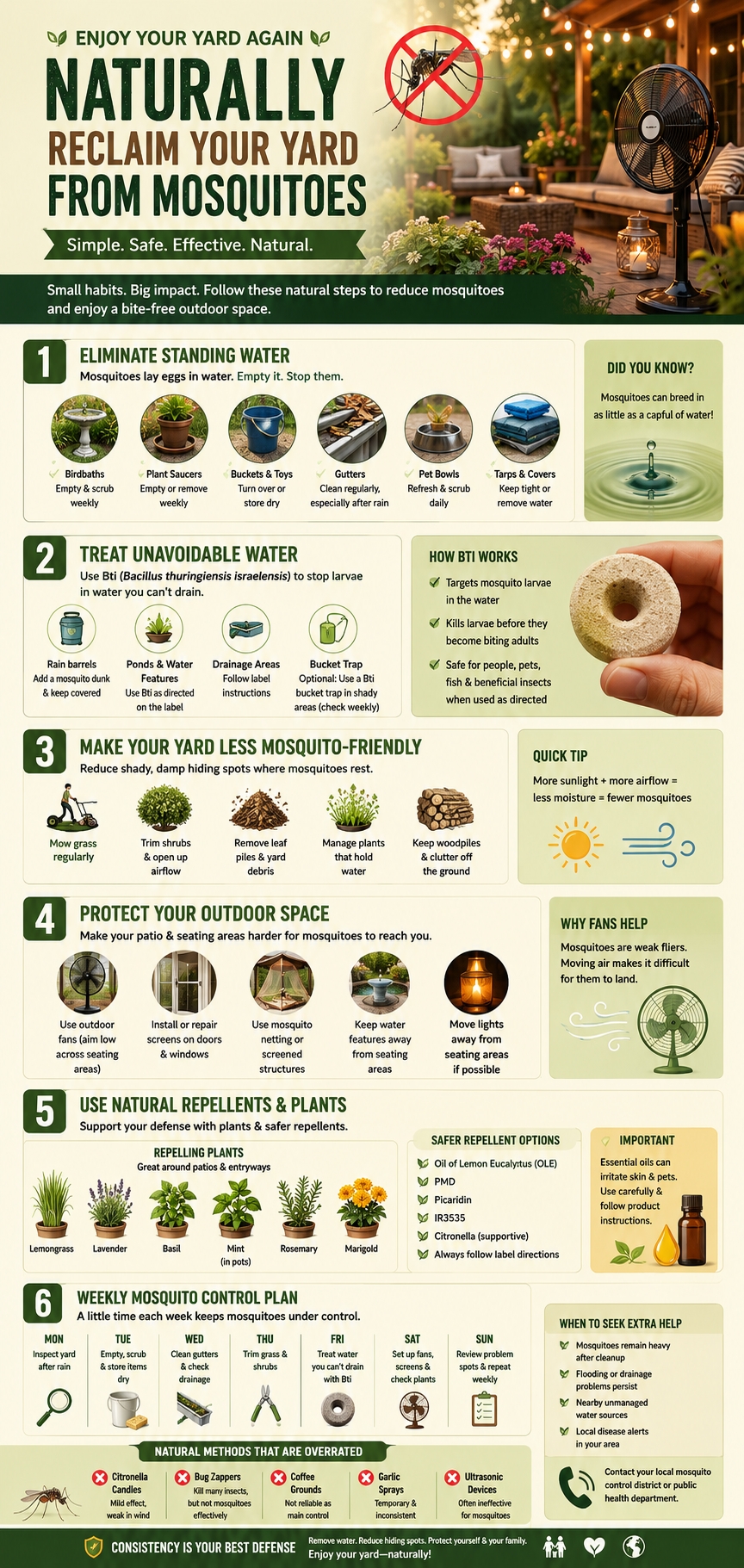
Mosquito-repelling plants are popular because they sound easy. Put a few pretty plants near the patio, and the mosquitoes disappear. Sadly, it does not usually work that way.
Some plants contain scents or compounds mosquitoes may dislike. But a plant sitting in a pot does not protect a whole yard. The scent is often too weak unless leaves are crushed, brushed, or used in a concentrated product.
Still, these plants can support a natural mosquito plan. They look good, smell nice, and may help around small sitting areas when combined with stronger habits.
|
Plant |
Best Use |
Reality Check |
|
Citronella grass |
Patio containers |
Not a full-yard shield |
|
Lemongrass |
Sunny borders |
Needs warmth and care |
|
Lavender |
Dry sunny spots |
Works better as a support plant |
|
Basil |
Herb garden or patio pots |
Useful and easy to grow |
|
Mint |
Containers |
Can spread aggressively |
|
Rosemary |
Dry, sunny areas |
Good for cooking too |
|
Marigold |
Garden borders |
Adds color and scent |
Best Plants to Place Near Outdoor Areas
Citronella grass, lemongrass, lavender, basil, mint, rosemary, marigold, lemon balm, catnip, and sage are commonly suggested for mosquito control.
Use them around patios, entryways, walkways, and seating areas. Containers work well because you can move them where people sit.
Mint and lemon balm should usually stay in pots because they can spread fast.
Do Not Depend on Plants Alone
Plants are a supporting tool. They do not kill larvae, drain water, or block mosquitoes from flying in.
If your yard has clogged gutters and water-filled saucers, mosquito plants will not fix the problem. Use plants after the basics are handled.
Use Plants for a Better Outdoor Setup
Even if the mosquito effect is modest, these plants still add value. They improve the look of the patio, support cooking, and can make outdoor areas feel fresher.
That makes them worth using, as long as expectations stay realistic.
Choose Safer Personal Repellents When Needed
Natural yard control reduces mosquitoes, but it does not guarantee zero bites. If you live in a mosquito-heavy area, personal repellent may still be necessary.
This matters more in places where mosquitoes can carry diseases. Comfort is one reason to prevent bites. Health protection is another.
The key is to choose products carefully. Natural does not always mean safe, and homemade does not always mean effective.
|
Repellent Type |
Useful For |
Important Note |
|
Oil of lemon eucalyptus |
Plant-derived bite protection |
Check age and label directions |
|
PMD |
Mosquito repellent active ingredient |
Often linked with OLE products |
|
Picaridin |
Long-lasting protection |
Not plant-based but widely used |
|
IR3535 |
Bite prevention |
Follow product label |
|
Essential oil DIY sprays |
Short-term scent-based use |
Can irritate skin and may not last |
|
Citronella oil products |
Mild support |
Effect varies by product |
Oil of Lemon Eucalyptus Is Not the Same as Essential Oil
This point matters because many people confuse the two. Oil of lemon eucalyptus repellent products are regulated differently from lemon eucalyptus essential oil.
A bottle of essential oil from a store should not be treated as the same thing as a tested repellent product. Check the active ingredient on the label.
Be Careful With DIY Essential Oil Sprays
DIY sprays may smell good, but they can be inconsistent. Some can irritate skin, eyes, or pets. Others fade quickly and leave people unprotected.
Use extra care around children, pregnant people, older adults, and pets. When in doubt, choose a properly labeled repellent and follow the directions.
Use Repellent the Right Way
Apply repellent to exposed skin according to the label. Do not spray near eyes or mouth. Do not apply to cuts or irritated skin. Wash hands after applying.
For children, adults should apply the product to their own hands first and then put it on the child’s skin. Always check age restrictions.
Build a Mosquito-Smart Outdoor Living Area
A comfortable outdoor area should not depend on luck. You can design the patio, deck, or garden corner in a way that makes mosquito bites less likely.
Start with the sitting zone. That is where people spend time, eat, talk, and get bitten. Then work outward into the rest of the yard.
The goal is not perfection. The goal is a space where you can sit for a while without feeling attacked.
|
Outdoor Feature |
Mosquito-Smart Upgrade |
Why It Helps |
|
Patio seating |
Add fans |
Makes landing harder |
|
Porch |
Repair screens |
Blocks mosquitoes |
|
Dining area |
Remove nearby water |
Reduces breeding |
|
Garden corner |
Trim dense plants |
Improves airflow |
|
Rain barrel |
Add tight lid or mesh |
Blocks egg-laying |
|
Lighting |
Move lights away from seats |
Reduces insect activity near people |
Use Screens and Netting
Screens are simple and effective. Repair holes in porch screens, window screens, and door screens. Small gaps can let mosquitoes in.
For outdoor seating, consider mesh curtains, a net canopy, or a screened gazebo. These are useful for families with children or anyone who spends long evenings outside.
Move Standing Water Away From Seating Areas
Keep birdbaths, plant saucers, rain barrels, and water features away from patios when possible. If they must stay nearby, manage them carefully.
A beautiful water feature can become a mosquito problem if the water sits still. Keep water moving or treat it properly.
Manage Trash, Compost, and Outdoor Clutter
Mosquitoes are not mainly attracted to food scraps the way flies are. Still, messy outdoor areas often hold water and create pest-friendly corners.
Keep trash bins closed. Rinse recycling. Store garden tools and toys dry. Keep compost balanced and not soggy.
Natural Mosquito Methods That Are Often Overrated
Many mosquito tips online sound exciting but do little in real yards. Some help slightly. Some are almost useless. Some create a false sense of safety.
This does not mean every traditional method is worthless. It means you should know what each method can actually do.
A good rule is simple. If a method does not remove standing water, kill larvae, block mosquitoes, or protect skin, it probably has limited value.
|
Method |
What It May Do |
Main Limitation |
|
Citronella candles |
Mild short-range support |
Weak in wind and open spaces |
|
Bug zappers |
Kill some flying insects |
Do not target mosquitoes well |
|
Coffee grounds |
Popular DIY idea |
Not reliable as main control |
|
Garlic sprays |
Temporary odor barrier |
Results vary |
|
Bats and birds |
Support biodiversity |
Not a guaranteed mosquito fix |
|
Ultrasonic devices |
Marketed as repellents |
Often unreliable |
Citronella Candles
Citronella candles may help a little in a small, still area. But smoke and scent spread unevenly outdoors.
Use them for atmosphere if you like them. Do not expect them to fix a mosquito-heavy yard.
Bug Zappers
Bug zappers kill insects, but they do not reliably target mosquitoes. They may also kill harmless or beneficial insects.
For mosquito control, source reduction, Bti, fans, and repellents are usually more useful.
Bats, Birds, and Backyard Predators
Bats and birds eat insects, and supporting wildlife can be good for the environment. But attracting them should not be sold as a guaranteed mosquito solution.
A bat house will not cancel out ten water-filled containers in the yard.
A 7-Day Plan to Get Rid Mosquitoes Yard Problems Naturally
If the yard feels overwhelming, use a one-week reset. This makes the work easier and gives you a repeatable system.
You do not need to finish everything in one day. Mosquito control works better as a routine than as a panic project before guests arrive.
This plan is simple enough for most homeowners and renters with outdoor space.
|
Day |
Task |
Result |
|
Day 1 |
Walk the yard after rain |
Find hidden water |
|
Day 2 |
Empty and scrub containers |
Remove eggs and larvae |
|
Day 3 |
Clean gutters and drains |
Fix hidden breeding spots |
|
Day 4 |
Trim grass and shrubs |
Reduce resting areas |
|
Day 5 |
Treat unavoidable water with Bti |
Stop larvae development |
|
Day 6 |
Set up fans and screens |
Protect sitting areas |
|
Day 7 |
Review problem spots |
Build a weekly routine |
Day 1: Inspect the Yard Slowly
Look at the yard like a mosquito would. Find water, shade, and quiet damp corners.
Check behind things, under things, and inside things. Mosquito breeding spots are often small and boring.
Day 2: Empty, Scrub, Cover, or Store
Empty water from anything that should be dry. Scrub containers that will stay outside. Store unused items under cover.
This is the day that usually makes the biggest difference.
Day 3: Fix Gutters and Drainage
Clean gutters and check downspouts. Look for places where water pools near the house, patio, or fence.
If water sits for days, plan a drainage fix.
Day 4: Trim and Open the Yard
Mow the lawn. Trim dense shrubs. Remove damp leaves. Open airflow around the patio and garden paths.
This makes the yard less comfortable for adult mosquitoes.
Day 5: Use Bti Where Water Must Stay
Treat rain barrels, water features, or drainage spots where water cannot be removed. Follow label directions.
Do not use Bti as an excuse to ignore water you can easily dump.
Day 6: Improve the Sitting Area
Add fans, repair screens, move water sources away from seats, and set up netting if needed.
This gives you immediate bite reduction while the yard plan starts working.
Day 7: Review and Repeat
Notice where mosquitoes are still worst. That tells you where to inspect again.
Repeat the water check every week during mosquito season.
When Natural Mosquito Control May Not Be Enough
Natural methods can reduce mosquitoes a lot, but some yards need extra help. This is especially true near wetlands, drainage ditches, wooded areas, unmanaged neighboring properties, or flood-prone land.
It is also important to take mosquito problems seriously in areas where mosquito-borne diseases are a concern. Natural control is useful, but bite prevention still matters.
If you have tried the basics for a few weeks and the problem is still severe, it may be time to contact a local mosquito control program or a responsible pest professional.
|
Warning Sign |
What It May Mean |
What to Do |
|
Mosquitoes remain heavy after cleanup |
Nearby source may exist |
Inspect beyond the patio area |
|
Daytime biting is intense |
Certain species may be active |
Use repellent and remove containers |
|
Yard floods often |
Drainage issue |
Improve grading or drainage |
|
Neighboring property has standing water |
Mosquitoes may fly in |
Talk with neighbors if possible |
|
Local disease alerts exist |
Higher health concern |
Follow public health guidance |
Call Local Mosquito Control When Needed
Some areas have local mosquito control districts or public health departments that provide advice, inspections, or community-level control.
This can be helpful when the source is outside your property.
Ask Better Questions Before Hiring a Service
If you hire a company, ask what they inspect before spraying. A responsible approach should look at breeding sites, water sources, and larval control.
Also ask about product safety, pollinators, pets, edible gardens, and re-entry times after treatment.
Avoid Blanket Spraying as the First Step
Spraying adult mosquitoes can give temporary relief, but it should not be the first or only step. If breeding sites remain, mosquitoes return.
A better plan starts with inspection and source reduction.
Final Thoughts
The most reliable way to get rid of mosquitoes in yard naturally is not dramatic. It is a set of boring habits that actually work.
Empty the water. Scrub the containers. Clean the gutters. Trim the damp hiding spots. Use Bti where water cannot be drained. Run fans when people sit outside. Add mosquito-repelling plants if you like them, but do not expect them to carry the whole plan.
A mosquito-free yard is rarely created by one product. It is created by removing what mosquitoes need most.
Start with a weekly water check. That one habit can change the whole yard.
Frequently Asked Questions About How to Get Rid of Mosquitoes in Yard Naturally
Can mosquitoes breed in a tiny amount of water?
Yes. Some mosquitoes can use very small amounts of standing water. That is why bottle caps, plant saucers, toys, gutters, and folded tarps should not be ignored.
How long does it take to reduce mosquitoes in a yard naturally?
You may notice fewer mosquitoes within one to two weeks if you remove breeding sites consistently. Heavy infestations or nearby mosquito sources can take longer to manage.
Are mosquito dunks safe for backyard ponds?
Mosquito dunks with Bti are commonly used for mosquito larvae in water, but you should always follow the product label. Use the correct amount and make sure the product is suitable for your pond or water feature.
Do mosquito plants work better in pots or garden beds?
Pots are often better near seating areas because you can move them where people gather. Plants like mint and lemon balm are also easier to control in containers because they can spread aggressively in beds.
Why are mosquitoes worse after rain?
Rain fills containers, gutters, low lawn spots, toys, and plant saucers. If that water sits, mosquitoes get new breeding sites.
Can outdoor fans really keep mosquitoes away?
Fans can help around patios, decks, and seating areas because mosquitoes do not fly well in steady moving air. They work best when aimed across the area where people sit.
Should I remove my birdbath to stop mosquitoes?
You do not have to remove it if you maintain it. Empty, scrub, and refill it regularly so the water does not become a breeding site.
Is vinegar a good natural mosquito killer?
Vinegar is not a reliable main method for mosquito control in a yard. It is better to remove standing water, use Bti in water you cannot drain, and protect sitting areas with fans and screens.
Can mosquitoes come from my neighbor’s yard?
Yes. Mosquitoes can fly in from nearby yards, ditches, wooded areas, drains, and unmanaged water sources. That is why your yard may still need fans, repellents, and community-level awareness.
What is the safest natural mosquito control method for pets?
The safest pet-friendly starting point is removing standing water, refreshing pet bowls daily, trimming dense vegetation, and using fans. Be careful with essential oils around pets because some can be harmful.