

We love the modern, sleek look that metal brings into our homes, but that magazine-perfect shine disappears the second someone touches the fridge. Fingerprints, grease spatters, and water drips quickly ruin the aesthetic, leaving you frustrated and constantly wiping. When you try to wipe away the mess, you often end up with cloudy, swirling marks that look worse than the original smudge.
Figuring out how to clean stainless steel appliances without streaks feels like cracking a secret code. You actually do not need an arsenal of expensive chemical sprays to restore that brilliant factory finish. With a basic understanding of the metal and a few everyday household items, you can achieve a flawless, mirror-like surface.
The Science Behind the Smudges
Understanding what you are actually cleaning makes the process much easier. Stainless steel is a durable alloy consisting mainly of iron and carbon, mixed with at least 10.5 percent chromium. The chromium content is the magic ingredient that reacts instantly with oxygen to form a microscopic, invisible layer of chromium oxide over the surface. This protective layer shields the iron underneath from moisture, preventing rust and corrosion. While this barrier repels water, it unfortunately acts like a magnet for the natural oils found on human skin and in cooking vapors.
|
Characteristic |
Description |
|
Chromium Content |
Ranges from 10.5 to 30 percent, depending on the appliance grade. |
|
Chromium Oxide |
The microscopic layer that forms instantly to prevent rust and corrosion. |
|
Oil Attraction |
The smooth surface easily traps skin oils and kitchen grease. |
|
Streaking Cause |
Leftover moisture and un-dissolved oils sitting on top of the oxide layer. |
Why Your Kitchen Shows Every Fingerprint
Because the metal surface is highly reflective, any slight disruption in the light bouncing off it becomes glaringly obvious. When you touch a handle, you leave behind an oily residue that breaks up the reflection. Streaks occur when your cleaning cloth pushes that oil around instead of lifting it completely off the surface. If your soap or spray fails to cut through the grease, you just end up spreading a thin, cloudy film across the entire door. Removing the dirt completely and applying an even, micro-thin polish is the only way to make the light reflect uniformly again.
Identifying the Metal Grain Direction
This is the single most important rule you must learn if you want to clean stainless steel appliances without streaks. Much like a piece of solid wood furniture, this metal features a distinct grain pattern created during the manufacturing process. The factory brushing leaves millions of microscopic, parallel scratches that run continuously in one direction. You have to work parallel to these lines rather than fighting against them. Wiping in circles or going against the grain is guaranteed to trap dirt and moisture in those tiny grooves.
|
Appliance Type |
Typical Grain Direction |
|
Refrigerator Doors |
Usually vertical (top to bottom). |
|
Oven Drawers |
Typically horizontal (side to side). |
|
Dishwasher Fronts |
Mostly vertical, though some models vary. |
|
Range Hoods |
Often horizontal, following the width of the hood. |
Working With the Finish, Not Against It
You have to get up close to your fridge or dishwasher to find the grain. Look very closely at a clean section under good lighting, and you will see faint lines running either vertically or horizontally. Never assume that every machine in your kitchen shares the same pattern, as handles and bottom drawers often run in conflicting directions. Wiping along the same path allows the tiny fibers of your cloth to reach deep down into the grooves to sweep away trapped dirt. If you swipe across the grain, your cloth just skips over the top, leaving soap and oil behind to dry into visible streaks.
Essential Tools for a Scratch-Free Shine
The materials you use matter just as much as the cleaning solutions you mix up. Using abrasive pads or rough towels will permanently scratch the chromium layer, resulting in dull spots and eventually allowing rust to form. You want soft, absorbent materials that physically lift away the grime instead of simply smearing it around the appliance. Investing in the proper textiles will save you from frustration and protect your expensive investments. Throw away the paper towels, as they leave paper dust and lint everywhere while occasionally causing micro-scratches.
|
Tool Category |
Recommended Items |
Items to Avoid |
|
Cloths |
Microfiber cloths, lint-free cotton. |
Paper towels, old rough rags. |
|
Sponges |
Soft cellulose sponges. |
Scouring pads, scrub sponges. |
|
Heavy Duty |
Soft nylon brushes for tight seams. |
Steel wool, metal scrapers. |
|
Polishers |
Dry, clean microfiber for buffing. |
Dirty cloths holding old oil. |
Choosing the Right Materials for the Job
Microfiber cloths are the absolute gold standard for tackling modern kitchen surfaces. They are woven from incredibly fine synthetic threads that scoop up grease and hold onto it, preventing you from dragging dirt back across the metal. You should always keep at least two clean microfiber towels on hand when you start your chores. You need one slightly damp cloth to apply the washing solution and cut through the fingerprints. You then need a completely dry, fresh cloth to handle the final buffing stage, which is the secret to getting a totally streak-free reflection.
Natural Solutions to Clean Stainless Steel Appliances Without Streaks
You absolutely do not need to buy expensive, heavily scented commercial products to get a perfect finish. Some of the best grease-cutting agents are likely sitting right in your pantry or underneath your sink right now. Natural ingredients give you total control over what chemicals are introduced into the area where you prepare your family meals. From tackling heavy stuck-on food to leaving a light protective polish, pantry staples can handle the job safely and effectively.
|
Natural Ingredient |
Primary Cleaning Purpose |
|
White Vinegar |
Cuts through heavy grease and hard water spots. |
|
Liquid Dish Soap |
Breaks down daily fingerprints and oily food splatters. |
|
Mineral Oil |
Provides a light, protective polish to prevent new smudges. |
|
Baking Soda |
Creates a gentle, abrasive paste for dried, stuck-on food. |
Pantry Staples That Cut Through Grease
The most popular and effective DIY method involves simple liquid dish soap and mineral oil. Dish soap is chemically designed to bind to cooking fats, making it perfect for breaking down the stubborn smudges on your fridge handles. Mix a few drops into warm water, wet your cloth, and wipe down the surface following the grain. Rinse the soap away with a clean damp cloth, then apply a single drop of mineral oil or baby oil to a dry microfiber towel. Buff the oil into the metal along the grain to create a microscopic, smudge-proof barrier that makes the kitchen look brand new. Alternatively, straight white vinegar in a spray bottle works wonders for dissolving hard water stains on the front of the dishwasher.
Commercial Alternatives and What to Avoid
While home remedies work beautifully, many people prefer the grab-and-go convenience of store-bought sprays and wipes. The market is flooded with products specifically formulated with specialized solvents to lift dirt and silicones to leave a shiny coating. You just need to be careful, as applying too much of these heavy products creates a sticky, greasy residue that turns your appliances into dust magnets. Furthermore, you must read the labels to ensure you are not accidentally destroying the protective finish of your expensive machines.
|
Product Type |
Impact on Stainless Steel |
|
Aerosol Polish |
Good for applying a fine, even mist. Requires thorough buffing. |
|
Pre-moistened Wipes |
Convenient but heavily saturated; often leaves a sticky film. |
|
Glass Cleaners |
Contains ammonia; destroys the finish and causes cloudiness. |
|
Bleach Products |
Highly corrosive; causes pitting and immediate rust spots. |
Reading Labels Before You Spray
The biggest mistake homeowners make is grabbing a bottle of standard blue window cleaner to wipe down the stove. Most traditional glass cleaners contain harsh ammonia, which degrades the chromium oxide layer and leaves a permanently dull, cloudy patch. You must also avoid any product containing chlorine bleach, as it physically eats into the metal and causes rapid rusting. If you opt for a commercial aerosol spray, spray a light mist directly onto your cloth rather than coating the appliance. Spraying the appliance directly often results in overspray hitting your kitchen floors, making them dangerously slippery and hard to wash.
Step-by-Step Guide for a Smudge-Free Finish
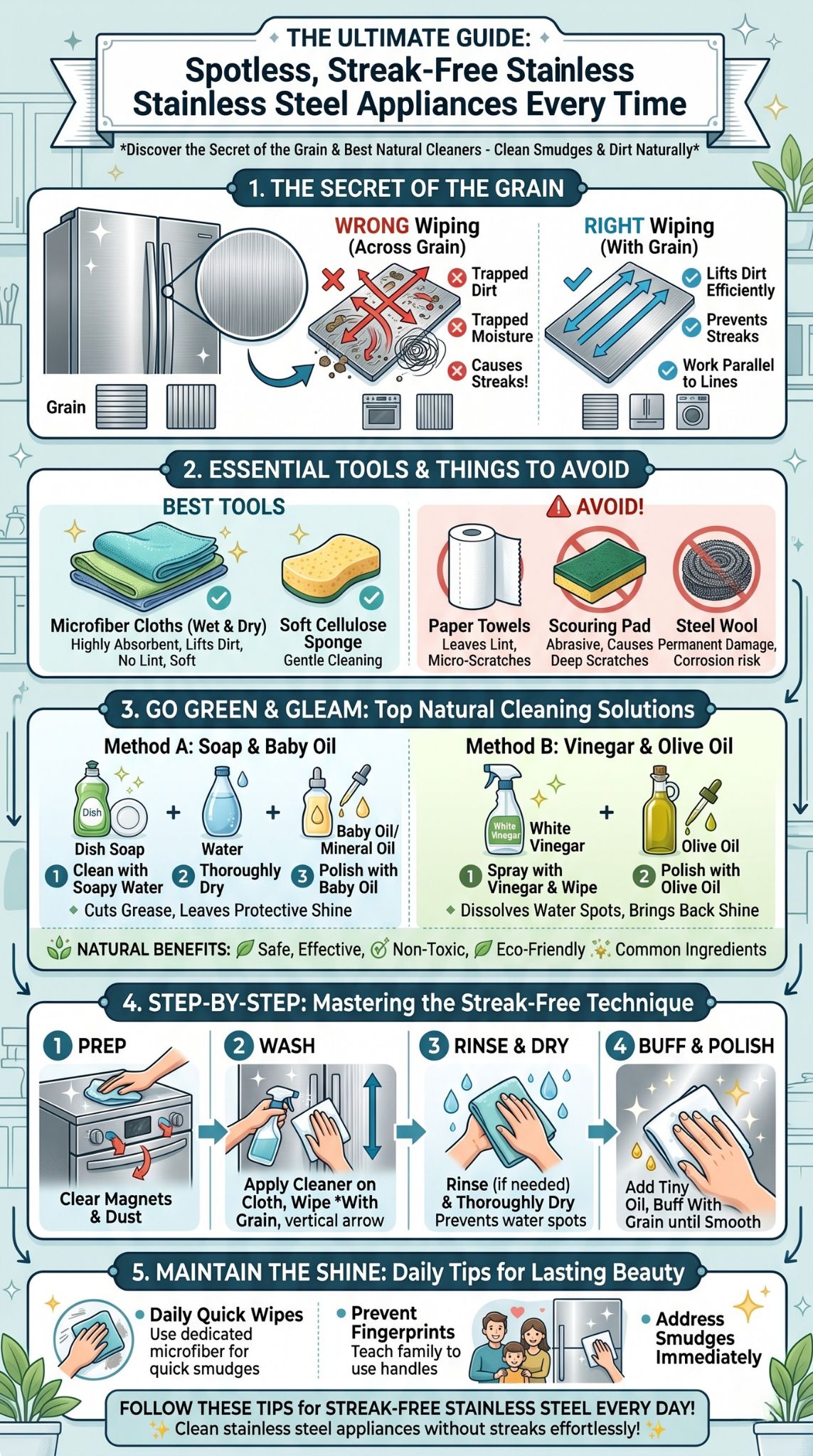
Getting that magazine-quality shine is less about the specific liquid you use and more about the technique you apply. Rushing the process or skipping steps guarantees that you will see cloudy swirls as soon as the moisture evaporates. Approaching the task systematically ensures you remove the grime, dry the surface, and protect the metal in one smooth workflow. Once you practice these motions a few times, keeping your kitchen looking pristine takes only a few minutes.
|
Step |
Action Required |
|
1. Preparation |
Remove magnets and use a dry cloth to brush away loose crumbs. |
|
2. Washing |
Apply soapy water or vinegar to lift the oils, moving with the grain. |
|
3. Rinsing |
Wipe away the cleaner with a damp, residue-free cloth. |
|
4. Buffing |
Vigorously rub the dry metal with a touch of oil to polish the surface. |
Perfecting Your Technique
Start by clearing the canvas, removing all the school papers, magnets, and sticky notes from the refrigerator doors. Use a dry towel to lightly dust the tops of the doors and the handles so you do not drag hard crumbs across the metal. Apply your chosen cleaning solution with your first microfiber cloth, using long, deliberate strokes that run perfectly parallel to the grain lines. Never wipe in circles, no matter how stubborn a spot seems. Once the dirt is gone, immediately switch to your dry cloth, apply a tiny drop of polish, and buff the metal vigorously until it feels totally dry and smooth.
Tips for Specific Kitchen Fixtures
Different machines handle different types of messes, so your approach needs to adapt depending on what you are washing. A refrigerator faces a constant barrage of oily hands, while an oven door is subjected to high heat and airborne cooking fats. Understanding these different environments helps you choose whether you need a mild soap or an acidic grease-cutter. Treating each fixture according to its specific daily abuse keeps the entire kitchen looking uniform and clean.
|
Kitchen Appliance |
Common Messes |
Best Cleaning Approach |
|
Refrigerator |
Fingerprints, sticky juice drips, dog nose prints. |
Warm soapy water followed by a mineral oil buff. |
|
Oven & Range |
Baked-on grease, cooking oil splatters. |
White vinegar spray or baking soda paste for tough spots. |
|
Dishwasher |
Hard water drips, detergent spills. |
Undiluted vinegar to dissolve the alkaline water spots. |
|
Microwave |
Airborne dust mixing with kitchen grease. |
Light soapy water wipe-down on the exterior. |
Handling High-Traffic Areas
The handles of your fridge and the buttons on your microwave require the most frequent attention. Because skin oils build up rapidly in these spots, a quick daily wipe-down prevents the grime from hardening into a sticky, stubborn mess. When dealing with the front of the dishwasher, pay close attention to the bottom edge where water drips down and dries into white, chalky lines. Vinegar is the perfect acidic solution to dissolve those alkaline water spots quickly. For ovens, always spray your cleaner onto the cloth first to prevent liquid from seeping behind the digital control panel and causing electrical issues.
Takeaways
Maintaining a pristine, modern kitchen does not require you to spend hours scrubbing or buy expensive, toxic chemicals. The secret to success lies entirely in understanding the material you are working with and respecting the manufacturing process. By recognizing the microscopic grain lines, you ensure your efforts actually lift dirt away instead of trapping it in the surface. Avoiding harsh chemicals like ammonia and bleach keeps the protective chromium layer intact for decades.
|
Key Concept |
Final Recommendation |
|
The Golden Rule |
Always wipe parallel to the grain, never in circles. |
|
Best Tool |
Stick exclusively to clean microfiber cloths. |
|
Safest Cleaner |
Warm water with mild dish soap or white vinegar. |
|
Perfect Polish |
A single drop of mineral oil buffed until totally dry. |
When you want to clean stainless steel appliances without streaks, the combination of a damp microfiber cloth, a drop of dish soap, and a final dry buffing stage is unbeatable. Addressing small fingerprints daily prevents oils from hardening, saving you from exhausting deep-cleaning sessions on the weekends. Remember that less is always more when it comes to applying oil or polish. Keep your motions smooth, stick to straight lines, and your kitchen will always look incredibly bright, welcoming, and flawlessly clean.
Uncommon FAQs About Stainless Care
Even with a solid routine, you will likely encounter strange stains or tricky situations that standard advice does not cover. Many people search for alternative methods or worry they have permanently ruined their expensive fixtures. From removing unexpected rust to dealing with heat discoloration, knowing how to handle these odd occurrences saves a lot of panic. We have gathered some of the least discussed but highly searched questions regarding metal maintenance.
|
Common Question |
Recommended Solution |
|
Can WD-40 clean metal? |
Yes, but it leaves a strong odor and is not food-safe for kitchens. |
|
Why is my metal rusting? |
Chlorine exposure or abrasive scratching broke the protective layer. |
|
Can I use olive oil? |
Yes, but only a microscopic amount, as thick oils can turn rancid. |
|
How to fix heat tint? |
Use a specialized non-abrasive stainless steel restorative powder. |
Answering Your Hidden Questions
Can WD-40 clean stainless steel?
While it cuts through rust and leaves a shine, it is a petroleum product with a harsh chemical smell that does not belong near your food preparation areas.
Why am I seeing rust spots on a rust-proof surface?
This usually happens if someone used a bleach-based wipe on the metal, which eats through the chromium oxide layer. You can gently rub those spots out using a baking soda paste.
Can I use coconut oil instead of mineral oil?
It is best avoided. Coconut oil solidifies at cooler temperatures, which can leave a cloudy, thick residue on your refrigerator doors rather than a smooth shine.