
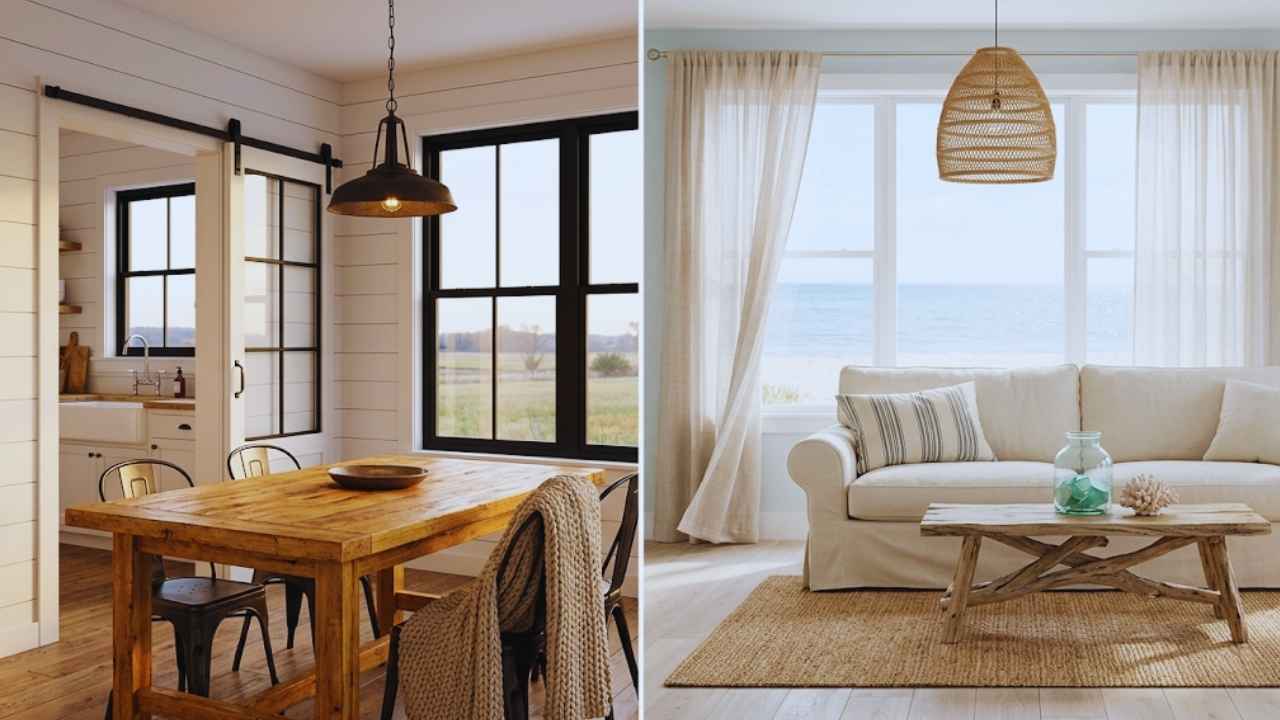
Walking into a well-designed home feels like catching a specific mood. You know that feeling when you enter a room and immediately want to kick off your shoes and stay a while? That is the magic of great interior design. Right now, two heavyweights are battling for the top spot in our hearts and homes.
If you have been looking for inspiration lately, you have almost certainly bumped into the debate of Modern Farmhouse vs Coastal decor. Both styles focus on comfort and light, but they go about it in very different ways. Choosing between them is not just about picking a paint color. It is about deciding what kind of story you want your home to tell.
Do you want the grounded, heritage-rich feel of a country escape, or the breezy, weightless vibe of a weekend at the shore? In this guide, we break down the DNA of both aesthetics. We look at the colors, the textures, and the practical side of living with these designs. By the time we finish, you will know exactly which one feels like home to you.
Understanding the Foundations of Each Style
To really get why these styles are so popular, we have to look at where they came from. Modern Farmhouse is not just rural, and Coastal is not just beachy. They are refined versions of traditional lifestyles that have been polished for a modern audience. Both prioritize a relaxed atmosphere over formal rigidity, which is why they work so well for families today.
They encourage life to happen inside the home rather than treating it like a museum. You will notice that neither style demands perfection. Instead, they celebrate lived-in comfort and natural beauty. This foundational mindset makes the Modern Farmhouse vs Coastal decor comparison incredibly fascinating, as both aim for comfort but deliver entirely different visual experiences. Let us look closer at the specific origins of these popular trends.
The Rise of Modern Farmhouse
This style exploded in popularity because it offers a massive sense of stability and warmth. It takes the practical elements of a working farm think big sinks and durable floors and mixes them with high-end, clean finishes. It feels historical but never outdated or dusty. It is a style that values the bones of a house, highlighting architectural details like exposed beams that make a space feel solid.
People love it because it feels incredibly welcoming and safe. The design invites you to sit down, share a meal, and not worry about spilling a little wine on the rugged wooden table. It is the perfect marriage of rugged durability and sleek, contemporary lines, giving homeowners the best of both worlds without sacrificing everyday usability.
|
Feature |
Modern Farmhouse Foundation |
Reader Takeaway |
|
Core Inspiration |
19th-century agricultural homesteads |
Grounded and historical |
|
Primary Vibe |
Cozy, sturdy, and welcoming |
Perfect for busy family life |
|
Material Focus |
Heavy woods and strong metals |
Built to last generations |
|
Modern Update |
Clean lines and minimalist clutter |
Prevents the space from feeling dusty |
The Evolution of Coastal Decor
Modern Coastal design has moved miles away from the kitschy beach houses of the past. You will not find many literal anchors, fishing nets, or Beach This Way signs here. Instead, it draws deep inspiration from the natural landscape of the coast itself. It is about capturing the light that bounces off the water and bringing the soft textures of the sand and sky indoors.
It is a sophisticated, minimalist approach to maritime living that feels effortlessly chic. By focusing on organic materials and an abundance of natural light, it turns any home into a serene retreat. The goal is to make the walls feel like they disappear, blending the indoor living space seamlessly with the great outdoors for ultimate relaxation.
|
Feature |
Coastal Decor Foundation |
Reader Takeaway |
|
Core Inspiration |
Shorelines and ocean horizons |
Light and natural |
|
Primary Vibe |
Serene, airy, and refreshing |
Ideal for stress relief |
|
Material Focus |
Glass, light woods, and soft linens |
Mimics natural outdoor textures |
|
Modern Update |
Removal of literal beach motifs |
Feels elegant rather than themed |
Color Palettes and Visual Mood
The first thing you notice when comparing Modern Farmhouse vs Coastal decor is the color story. While both rely heavily on white as a base, the way they use accent colors changes the entire temperature of the room. One feels warm and striking, while the other feels cool and receding.
This choice dictates how much energy a room has and how it reacts to natural light throughout the day. Getting the color palette right is the most critical step in establishing your chosen theme. Let us explore how these two styles handle their paint choices and accents.
High Contrast in Farmhouse Design
Modern Farmhouse loves a bold statement. The use of matte black hardware against white cabinets is a classic move that anchors the room. This high contrast creates a visual rhythm that feels organized and highly energetic. It is a palette that says I am here and I am sturdy without being overwhelming.
You will often see deep forest greens or rich cognacs used to add warmth and depth to the neutral base. These darker tones provide a sense of structure to the rooms, making the space feel intentionally designed. The interplay between bright whites and deep darks gives the farmhouse look its signature modern edge.
|
Color Element |
Farmhouse Application |
Visual Effect |
|
Base Tones |
Warm whites and creamy off-whites |
Creates a soft, welcoming background |
|
Accent Colors |
Matte black, charcoal, navy, forest green |
Adds necessary visual weight and structure |
|
Metal Finishes |
Oil-rubbed bronze or matte black |
Enhances the rustic, industrial feel |
|
Overall Contrast |
Very High |
Draws the eye immediately to focal points |
Soft Tones in Coastal Spaces
Coastal design is all about the whisper. Instead of harsh black, you might see a weathered gray or a very soft navy used sparingly. The goal is to keep the eye moving without any sharp interruptions or jarring stops. By using colors that are close to each other on the spectrum, the room feels much larger and significantly more peaceful.
It mimics the way the horizon looks where the sea meets the sky on a hazy morning. You will find plenty of seafoam greens, sky blues, and sandy beiges working together in harmony. This low-contrast approach is what makes coastal rooms feel like a permanent vacation away from city noise.
|
Color Element |
Coastal Application |
Visual Effect |
|
Base Tones |
Crisp, stark whites and soft grays |
Maximizes natural light reflection |
|
Accent Colors |
Pale blue, seafoam, sandy beige, muted coral |
Brings the colors of the ocean indoors |
|
Metal Finishes |
Brushed nickel, light brass, or silver |
Keeps the hardware looking light and airy |
|
Overall Contrast |
Very Low |
Promotes a feeling of unbroken tranquility |
Architectural Elements and Structural Details
The bones of your house often dictate which style will look more natural. Modern Farmhouse vs Coastal decor both utilize wood and glass, but the shapes and finishes differ significantly. Farmhouse tends to be more angular and heavy, whereas Coastal feels lighter and more curved.
Understanding these structural differences helps you work with your home rather than fighting against its natural architecture. If you are building or remodeling, these structural choices will lay the groundwork for your entire interior design journey.
Reclaimed Wood and Ironwork
In a farmhouse, the materials look like they have a rich history to share. Reclaimed wood beams on the ceiling or a mantle made from an old barn timber are incredibly common. There is a lot of physical and visual weight to these items, grounding the room beautifully.
Ironwork is also a staple, used in stair railings and light fixtures to provide that industrial edge. This keeps the style from feeling too shabby chic or overly sweet. Incorporating these heavy, durable materials ensures the home feels like a protective fortress that can withstand decades of family life.
|
Structural Detail |
Farmhouse Execution |
Design Purpose |
|
Wall Treatments |
Vertical board and batten or shiplap |
Adds historic texture to flat walls |
|
Ceiling Features |
Heavy, dark reclaimed wood beams |
Draws the eye up and adds rustic charm |
|
Windows |
Black framed grids |
Creates graphic, modern contrast |
|
Doors |
Heavy sliding barn doors |
Saves space while acting as a focal point |
Airflow and Natural Light
Coastal architecture is entirely obsessed with the sun and the breeze. It is common to see huge windows that lack heavy grids to allow the beautiful view to take center stage. Everything is designed to maximize airflow and pull natural light into every corner.
White-washed wood is much more common than dark wood, as it helps reflect the light rather than absorbing it. Vaulted ceilings painted in bright white are often used to make the rooms feel as expansive as the sky outside. The architecture steps back to let the natural environment shine through the glass.
|
Structural Detail |
Coastal Execution |
Design Purpose |
|
Wall Treatments |
V-groove paneling or smooth white plaster |
Keeps walls looking clean and seamless |
|
Ceiling Features |
White-painted beams or high vaults |
Enhances the feeling of open space |
|
Windows |
Large, ungridded picture windows |
Erases the boundary between inside and out |
|
Doors |
Glass French doors or louvered styles |
Promotes constant airflow and light transfer |
Furniture Styles and Layout Choices
When it comes to furniture, the comparison of Modern Farmhouse vs Coastal decor reveals two very different approaches to comfort. Farmhouse furniture is often chunky and feels like it could survive a hundred years of heavy use. Coastal furniture is leggy and feels like it could be moved around easily on a whim.
The layout of a farmhouse room is often centered around a cozy focal point like a stone fireplace. Meanwhile, a coastal room is almost always oriented toward a large window or an outdoor view to maximize the connection to nature.
The Power of the Farmhouse Table
If there is one piece of furniture that truly defines the farmhouse, it is the dining table. It is usually a massive, solid wood piece meant for big family gatherings and holiday feasts. It represents the literal heart of the home where everyone drops their bags and gathers.
The chairs might be deliberately mismatched or include a long wooden bench, emphasizing a casual vibe. This come as you are attitude is still very much grounded in strong tradition. The furniture feels substantial, offering a sense of security and permanence that anchors the dining space perfectly.
|
Furniture Piece |
Farmhouse Characteristic |
Functionality |
|
Dining Table |
Thick, solid oak or pine trestle table |
Withstands heavy daily use and crafts |
|
Sofas |
Deep, overstuffed leather or heavy linen |
Provides maximum lounging comfort |
|
Accent Chairs |
Spindle-back wooden chairs or recliners |
Blends traditional shapes with modern use |
|
Storage |
Large wooden hutches and sideboards |
Hides family clutter effectively |
Breezy Seating and Woven Accents
Coastal furniture feels like it is floating slightly above the floor. You will see a lot of slipcovered sofas in crisp white or light gray. This gives a relaxed, beachy look that is also highly practical since the covers can be easily removed and washed.
Rattan and seagrass are used frequently in accent chairs and side tables to bring in that organic, outdoor element. It is about creating a living space that feels uncluttered and incredibly easy to navigate. The furniture layout encourages open conversation and easy movement toward the outdoor patio or deck.
|
Furniture Piece |
Coastal Characteristic |
Functionality |
|
Dining Table |
Light oak, whitewashed wood, or glass top |
Keeps the dining area looking bright |
|
Sofas |
Slipcovered cotton or lightweight linen |
Easy to clean and feels cool to the touch |
|
Accent Chairs |
Woven rattan or bamboo frames |
Adds organic texture without visual weight |
|
Storage |
Open woven consoles and low bookcases |
Displays decor while keeping sightlines clear |
Textures, Fabrics, and Layering
Texture is exactly what makes a room feel finished and professionally designed. Without it, a white room can feel cold, flat, and clinical. In the debate of Modern Farmhouse vs Coastal decor, texture is where the styles really start to show their distinct personalities.
Farmhouse uses texture to create a sense of deep coziness, while Coastal uses it to create interest without adding any visual weight. Both styles actively avoid shiny, synthetic materials in favor of things that come directly from the earth.
Cozy Layers and Heritage Fabrics
Modern Farmhouse is all about piling on the cozy layers. You might see a thick wool rug layered perfectly over a larger, flat-weave neutral one. Throw blankets are usually heavy think chunky cable knits or classic plaid wool draped casually over a chair.
Fabrics like authentic grain sack or ticking stripes are used to give a respectful nod to the agricultural roots of the style. These textures make you want to curl up with a great book and a hot cup of tea on a chilly evening. Every fabric choice is meant to offer tactile warmth and rustic charm.
|
Texture Element |
Farmhouse Selection |
Tactile Experience |
|
Area Rugs |
Thick wool, cowhide, or vintage Persian |
Soft, warm, and highly durable underfoot |
|
Throw Pillows |
Grain sack, heavy cotton, or distressed leather |
Firm and supportive for lounging |
|
Blankets |
Chunky knit wool or heavy fleece |
Provides intense warmth and weight |
|
Window Treatments |
Heavy cotton drapes or Roman shades |
Blocks drafts and creates a snug feeling |
Organic Fibers and Breezy Linens
Coastal texture is much more organic, raw, and unrefined. Jute and sisal rugs are the absolute gold standard here because they look exactly like beach grass and are incredibly durable against sandy feet. Fabrics are kept wonderfully light and breathable, focusing heavily on thin linens and soft, washed cottons.
Instead of using heavy printed patterns, Coastal design uses the physical weave of the fabric itself to provide visual interest to the eye. It feels like a space that is constantly being touched by a fresh ocean breeze, keeping the temperature of the room feeling cool and relaxing.
|
Texture Element |
Coastal Selection |
Tactile Experience |
|
Area Rugs |
Woven jute, sisal, or striped flat-weave cotton |
Rough, earthy, and massage-like underfoot |
|
Throw Pillows |
Soft washed linen or light canvas |
Cool, smooth, and easily shaped |
|
Blankets |
Lightweight cotton throws or Turkish towels |
Breathable and perfect for mild evenings |
|
Window Treatments |
Sheer white panels or woven bamboo blinds |
Filters harsh sunlight into a soft glow |
The Kitchen: Functionality Meets Style
The kitchen is where these two design styles are most frequently and passionately applied. It is also where the choice of Modern Farmhouse vs Coastal decor becomes a matter of strict daily utility. A farmhouse kitchen is designed from the ground up for heavy-duty cooking and feeding large groups of people.
A coastal kitchen is designed to feel like a bright, immaculately clean space for morning coffee and light summer meals. Both are undeniably beautiful, but they serve entirely different rhythms of family life.
The Iconic Farmhouse Sink
The apron-front sink is the undisputed star of the modern farmhouse kitchen. It is incredibly deep, exceptionally wide, and wildly practical for washing large pots. It is usually paired with a tall bridge faucet in a dark, oil-rubbed finish.
Open wooden shelving is also very common here, allowing you to easily display everyday white dishes or antique wooden bowls. It is a working kitchen that truly does not mind a little flour on the counters because it is built to handle the mess of real cooking. It feels like a baker’s paradise right in your own home.
|
Kitchen Feature |
Farmhouse Design Choice |
Practical Benefit |
|
Cabinetry |
Shaker style painted in white, gray, or green |
Classic look that hides smudges well |
|
Countertops |
Butcher block wood or honed dark granite |
Provides a durable, matte work surface |
|
Hardware |
Matte black cup pulls and sturdy knobs |
Easy to grip with wet or messy hands |
|
Lighting |
Large industrial metal domes or seeded glass |
Floods the island with strong task lighting |
Light-Reflecting Surfaces
In a Coastal kitchen, the absolute main goal is to make the space glow with natural light. White or pale blue cabinets are frequently paired with smooth countertops that have a slight shimmer, like polished quartz or light marble. Backsplashes are frequently made of glossy glass tiles or hand-made Zellige tiles that catch and bounce the sunlight beautifully.
The overall effect is a kitchen that feels incredibly fresh, sanitized, and inviting for early morning breakfasts. The design actively hides heavy appliances to maintain a sleek, uninterrupted visual flow throughout the cooking space.
|
Kitchen Feature |
Coastal Design Choice |
Practical Benefit |
|
Cabinetry |
Flat panel or simple shaker in crisp white |
Reflects maximum light around the room |
|
Countertops |
Polished white quartz or light marble |
Easy to wipe down and looks pristine |
|
Hardware |
Polished nickel or subtle brushed brass |
Blends quietly into the light background |
|
Lighting |
Woven rattan pendants or clear glass globes |
Adds texture without blocking the view |
The Bedroom: Creating a Personal Sanctuary
The bedroom is your ultimate private retreat, and how you decorate it depends entirely on how you like to decompress. When looking at Modern Farmhouse vs Coastal decor for the bedroom, the difference is essentially between feeling snug and feeling airy.
One makes you want to hibernate under the covers, while the other makes you want to wake up early with the rising sun. Both styles excel at creating a peaceful environment, but the physical sensations they provide to your body are distinctly different.
A Fortress of Comfort
A Modern Farmhouse bedroom feels exactly like a safe, protected haven. The bed itself is usually the biggest and heaviest thing in the room, often featuring a towering wooden headboard or a thick black iron frame. The bedding is masterfully layered with different tactile textures to create a deep sense of depth and immense warmth.
It is the kind of room that feels especially good on a rainy or snowy day when you just want to stay hidden from the world. Dark wooden nightstands and vintage-inspired reading lamps complete this cozy, sheltering aesthetic perfectly.
|
Bedroom Element |
Farmhouse Styling |
Mood Created |
|
Bed Frame |
Dark wrought iron or thick reclaimed oak |
Grounded, secure, and permanent |
|
Bedding Setup |
Multiple heavy quilts, duvet, and euro shams |
Extremely warm and inviting |
|
Floor Covering |
Dark hardwood floors with a plush wool rug |
Cozy for bare feet on cold mornings |
|
Color Scheme |
Warm whites mixed with deep charcoal or navy |
Promotes deep, restful sleep |
The Morning Light Retreat
A Coastal bedroom is intentionally designed to feel exactly like a luxury hotel suite by the sea. The colors are kept very pale and monochromatic to maximize the morning light that filters through the windows. Furniture is often kept low to the ground to keep the visual sightlines completely open and uncluttered.
Instead of heavy drapes, you will often find natural bamboo shades or sheer white panels that dance gently when the window is cracked open. It is a room that feels impossibly clean, delightfully uncomplicated, and deeply relaxing for the mind.
|
Bedroom Element |
Coastal Styling |
Mood Created |
|
Bed Frame |
Upholstered in linen or made of light ash wood |
Soft, approachable, and breezy |
|
Bedding Setup |
Simple crisp white duvet with a single linen throw |
Cool, breathable, and minimalist |
|
Floor Covering |
Light oak floors with a large natural sisal rug |
Earthy and reminiscent of walking on sand |
|
Color Scheme |
Pure whites, sandy beiges, and soft sea glass blues |
Energizing yet deeply calming |
Making the Choice: Which One Is Right for You?
So, after looking at all the intricate details, how do you actually decide between Modern Farmhouse vs Coastal decor? It almost always comes down to your true personality and your geographic location. While you can certainly have a beautiful coastal home in the mountains or a rustic farmhouse in the city, some styles just naturally fit better with certain family lifestyles.
Think hard about your daily habits and what kind of physical environment helps you feel like the absolute best version of yourself. Your home should effortlessly support the way you actually live every single day.
Why Farmhouse Wins for Families
Modern Farmhouse is incredibly practical for a busy, loud household. Because the style actively celebrates things that are slightly distressed or naturally aged, you do not have to panic when a kid drags a heavy toy across the floor.
Leather seating and reclaimed wood tables are very forgiving to spills and daily wear. It is a style that lives right alongside you rather than forcing you to tiptoe around it nervously. If you want a home that looks better the more it is used, this is absolutely the winning aesthetic for your family.
|
Lifestyle Factor |
Why Farmhouse Works |
Real-World Application |
|
Pets in the Home |
Hides pet hair and minor scratches well |
Distressed floors conceal claw marks |
|
Entertaining Style |
Built for large, loud, casual gatherings |
Big tables fit extended family easily |
|
Maintenance Level |
Low stress regarding perfect cleanliness |
Smudges blend into the rustic finishes |
|
Longevity |
Wood and metal endure decades of use |
Furniture becomes family heirlooms |
Why Coastal Wins for Wellness
If your home is your singular place to escape the overwhelming noise of a stressful job or a crowded city, Coastal decor is a powerful therapeutic tool. The specific color palettes are psychologically proven to reduce stress and actively lower your heart rate.
The strict lack of visual clutter and the intense focus on natural light can make even a small apartment feel like a sprawling sanctuary. It is a style heavily favored by those who value mental peace and visual simplicity above all else. Coming home to this style feels like taking a very deep, cleansing breath.
|
Lifestyle Factor |
Why Coastal Works |
Real-World Application |
|
Mental Health |
Promotes tranquility and reduces anxiety |
Soft colors soothe an overstimulated mind |
|
Entertaining Style |
Perfect for intimate, relaxed conversations |
Open layouts encourage easy mingling |
|
Maintenance Level |
Requires discipline to keep clutter hidden |
Slipcovers can be bleached and washed |
|
Longevity |
Timeless appeal if kept highly minimalist |
Never feels heavy or visually oppressive |
Final Thoughts
At the end of the day, the battle of Modern Farmhouse vs Coastal decor is a win-win for homeowners. Both styles have moved away from being “trendy” and have become genuine ways to create a home that feels authentic and comfortable. There is no rulebook that says you have to follow one style perfectly. The best homes are usually the ones that take the bits and pieces they love from different aesthetics and blend them together.
Whether you find yourself drawn to the black iron and cozy quilts of the farmhouse or the rattan and sea-spray blues of the coast, the goal is the same. You want a space that feels like a reflection of your personality. Your home should be the place where you feel most at ease. By understanding the core of these styles, you can stop “decorating” and start creating a space that truly fits your life. Trust your gut—if a piece of furniture makes you smile, it probably belongs in your home, regardless of what the label says.
Frequently Asked Questions (FAQs) About Farmhouse vs Coastal Decor
Can I successfully mix Modern Farmhouse vs Coastal decor in one house?
Yes, and it is actually a massively popular hybrid style frequently called ~Coastal Farmhouse.~ You can take the tough structural elements of a farmhouse, like wooden shiplap and sliding barn doors, and soften them with a coastal color palette of crisp whites, soft blues, and sandy beiges. It beautifully gives you the rugged sturdiness of the farmhouse with the bright lightness of the coast.
Is the Modern Farmhouse trend finally going out of style?
The extreme, literal version of the farmhouse ~with wooden signs that say EAT or excessive rooster motifs~ is definitely fading out. However, the foundational core elements like utilizing natural wood, high-contrast black accents, and heavily comfortable furniture are timeless design principles that will likely never truly leave the interior design world.
Do I actually need to live near the water for Coastal decor to make sense?
Not at all. In fact, utilizing Coastal decor is a highly popular way to bring a much-needed sense of lightness and nature to landlocked, dense urban environments. It is entirely about creating a specific relaxing atmosphere indoors, not matching your exterior zip code.
What are the best indoor plants to complement these specific styles?
For a Modern Farmhouse aesthetic, you should look for tall olive trees or display simple dried eucalyptus in galvanized buckets. For a Coastal look, you want to go with something much more tropical or leafy, like a large Fiddle Leaf Fig, a Bird of Paradise, or a sprawling Monstera plant to bring in that lush, humid vibe.
Which of these two styles is generally more expensive to achieve?
Modern Farmhouse can become significantly more expensive if you are investing in genuine, antique reclaimed wood and heavy custom iron fixtures. Coastal decor tends to be slightly more budget-friendly right out of the gate, as it relies much more heavily on simple white paint, light wood finishes, and natural affordable fibers like jute.