We spend about a third of our lives in bed. That means your mattress collects an enormous amount of dead skin cells, sweat, and dust mites over the years. You might wash your sheets every week, but the real dirt hides beneath the surface where standard laundry routines simply cannot reach.
If you want to wake up breathing easier and feeling refreshed, you need to deep clean mattress layers where allergens naturally thrive. A quick pass with a standard vacuum is not enough anymore. In 2026, we have better tools, smarter extraction methods, and highly effective enzyme cleaners to handle this chore without ruining expensive memory foam or hybrid materials. Let’s break down exactly how you can sanitize your bed, protect your respiratory health, and ensure your expensive sleeping setup lasts for a full decade.
Why You Need to Deep Clean Mattress Regularly
Most people completely ignore their mattress until a massive spill happens or a foul smell becomes impossible to ignore. You might not see the microscopic dust mites, but up to 10 million of them can live in a standard bed, feeding off the dead skin you naturally shed every single night. When you skip cleaning, these allergens build up rapidly and trigger daily respiratory issues, skin irritation, and terrible overall sleep quality. A solid cleaning routine pulls out years of accumulated grime, leaving you with a fresh surface that promotes deep rest. Plus, maintaining the fabric and foam prevents premature sagging, meaning you won’t have to spend thousands of dollars on an early replacement.
The Hidden Health Risks
When you toss and turn, your body weight kicks up a microscopic cloud of dust mite droppings and pet dander trapped inside the fabric. Breathing this in all night leads directly to morning congestion, itchy eyes, and severe asthma flare-ups. Sweat also seeps into the top layers of the bed over time, creating a damp, dark environment where bacteria and mold can quietly grow without you ever noticing.
Extending Mattress Lifespan
Modern beds use complex internal layers of cooling gel, natural latex, and dense memory foam to provide back support. When sweat and natural body oils soak into these specific materials, they chemically break down the cellular structure of the foam. This causes the mattress to lose its supportive qualities and develop deep permanent indentations. Cleaning removes these corrosive oils and keeps the internal materials bouncy and structurally sound.
|
Factor |
Ignoring Maintenance |
Regular Cleaning |
|
Health Impact |
High allergen exposure, asthma triggers |
Clear airways, better sleep quality |
|
Odor Level |
Musty, stale sweat smells |
Fresh, neutral scent |
|
Mattress Life |
5 to 7 years maximum |
10 to 12 years of solid support |
|
Foam Integrity |
Breaks down quickly from body oils |
Stays firm and structurally sound |
Modern Tools and Supplies for 2026
You do not need to hire an expensive professional service or rent heavy industrial machinery to get a factory-fresh bed. The consumer market in 2026 offers incredibly powerful, compact gadgets that make home sanitization easier and faster than ever. You will want to gather a mix of heavy-duty tech and simple household pantry items before you start stripping the bed. A good HEPA vacuum is your primary weapon against dry debris, but adding ultraviolet light technology takes your hygiene routine to a professional level. Grab your liquid enzyme cleaners and fresh baking soda, and set up your workspace for maximum efficiency.
Advanced Tech: UV-C and HEPA
Standard household vacuums just push fine dust around the room and blow allergens back into your face. You absolutely need a vacuum with a true HEPA filter to trap particles as small as 0.3 microns. Brands like Jimmy and Jigoo now offer dedicated cordless bed vacuums equipped with 253.7nm UV-C lights. These bright lights scramble the DNA of dust mites and bacteria on contact, neutralizing them before the heavy suction pulls them away.
Read Also: How to Clean Stainless Steel Appliances Without Streaks
Basic Household Supplies
Technology easily handles the dry debris, but you need basic chemistry to fight stubborn wet stains. Keep a large box of baking soda on hand to aggressively draw out moisture and neutralize foul odors. White vinegar and a specialized biological enzyme cleaner will break down protein-based stains like sweat, vomit, and urine. You will also need a stack of clean microfiber cloths and a small spray bottle to apply your cleaning solutions lightly without soaking the bed.
|
Tool or Supply |
Primary Purpose |
Usage Tip |
|
HEPA Mattress Vacuum |
Pulls out dust mites and dead skin |
Use slow, overlapping strokes |
|
UV-C Light Wand |
Kills bacteria and viruses on the surface |
Move slowly to ensure full exposure |
|
Enzyme Cleaner |
Breaks down biological and protein stains |
Spray on a cloth, never directly on bed |
|
Baking Soda |
Absorbs moisture and stale smells |
Let it sit for at least two hours |
|
Microfiber Cloths |
Blotting fresh stains without spreading them |
Dab gently, do not scrub the fabric |
Step-by-Step Guide to Deep Clean Mattress
Tackling a dirty bed requires a methodical and patient approach so you don’t accidentally push wet stains deeper into the padding. Pick a sunny, low-humidity morning to start this entire process, giving your bed plenty of time to dry completely before you need to sleep on it again. You want to deep clean mattress surfaces thoroughly, working directly from dry extraction to wet spotting, and finishing up with heavy deodorization. Do not rush the individual steps, especially the drying phase, because trapped moisture inside a mattress is the enemy of any foam product and leads straight to mold.
Stripping and Vacuuming
Strip absolutely everything off the bed, including the waterproof mattress protector and all decorative shams. Toss your sheets, pillowcases, and heavy blankets into the washing machine on the hottest setting possible to kill existing mites and remove body oils. Next, grab your HEPA vacuum and attach the wide upholstery tool. Start at the top left corner and slowly drag the nozzle down the fabric in straight, overlapping lines. Switch to the narrow crevice tool to dig deeply into the side seams and tufting where dead skin loves to gather.
Spot Treating Stains
Never soak your mattress under any circumstances. If water gets deep into the dense foam, it will never dry properly and internal mold will quickly form. For yellow sweat stains, lightly mist a clean microfiber cloth with a mixture of hydrogen peroxide, cold water, and a tiny drop of clear dish soap. Blot the stain repeatedly until the discoloration lifts away. For heavier biological stains, use your commercial enzyme cleaner on a cloth and press it firmly into the spot to let the active enzymes eat away the offending proteins.
Deodorizing with Baking Soda
Once the spot-treated areas feel completely dry to the touch, grab a fresh, unopened box of baking soda. Sift a heavy, even layer across the entire top surface of the bed until it looks like a light dusting of snow. If you want a calming scent for your bedroom, mix ten to fifteen drops of natural lavender essential oil into the baking soda before you sprinkle it. Open your bedroom windows to allow cross-ventilation and let the powder sit undisturbed for a minimum of three full hours.
The Final Extraction
After the baking soda has successfully absorbed the trapped moisture and lingering stale smells, vacuum the bed a second time. Go very slowly to ensure you pull up every single grain of powder from the tiny fabric pores. If your mattress is a traditional two-sided model, physically flip it over and repeat this entire cleaning process on the bottom half. If it is a modern one-sided model, simply rotate it 180 degrees to ensure even wear and tear over the coming months.
|
Cleaning Phase |
Action Required |
Estimated Time |
|
1. Preparation |
Strip bed, wash all linens in hot water |
15 minutes |
|
2. Dry Extraction |
Vacuum entire surface and seams with HEPA |
20 minutes |
|
3. Spot Treatment |
Blot stains with enzyme or peroxide mix |
15 minutes |
|
4. Deodorization |
Apply baking soda and let it rest undisturbed |
3 to 4 hours |
|
5. Final Vacuum |
Remove all powder and rotate the bed |
15 minutes |
Handling Specific Stains and Odors
Accidents happen in every home, whether from a sick pet, a spilled morning coffee, or a scraped knee bleeding through the sheets. The absolute secret to saving your bed is knowing exactly which household chemical reacts best with the specific type of stain you are fighting. Using the wrong solution can permanently set the dark discoloration into the synthetic fabric fibers. You must treat every spill differently, always relying on gentle downward blotting rather than aggressive side-to-side scrubbing that ruins and frays the delicate top cover.
Sweat and Biological Stains
Sweat leaves behind a complex mix of water, salt, and proteins that turn a dark yellow as they slowly oxidize. A simple homemade blend of three parts cold water to one part white vinegar does wonders for fresh sweat marks. For older, darker stains, you need an oxygenated cleaner or straight hydrogen peroxide to lift the color. Blood requires a totally different approach. Never use warm water, as heat cooks the protein and locks it into the fabric forever. Make a dry paste of salt, baking soda, and cold water, apply it directly to the spot, and gently brush it away once it dries completely.
Neutralizing Pet Accidents
Urine is heavily concentrated and contains sharp uric acid crystals that basic dish soap simply cannot touch. You must buy a specialized pet enzyme cleaner from a local pet store or online retailer. These cleaners contain live bacteria that literally consume the odor-causing crystals at a microscopic level. Blot up as much wet liquid as possible first with paper towels, apply the enzyme cleaner heavily with a cloth, and let it air dry completely. Follow up with a massive pile of baking soda to pull out any residual sharp ammonia smells.
|
Stain Type |
Recommended Cleaning Solution |
What to Avoid |
|
Sweat |
Hydrogen peroxide, dish soap, cold water |
Bleach or harsh chemicals |
|
Blood |
Cold water, salt, baking soda paste |
Hot or warm water |
|
Urine |
Specialized pet enzyme cleaner |
Ammonia-based cleaners |
|
Coffee |
White vinegar and cold water mix |
Heavy scrubbing brushes |
|
Vomit |
Enzyme cleaner, heavy baking soda application |
Excessive water soaking |
Specialized Methods for Different Mattress Types
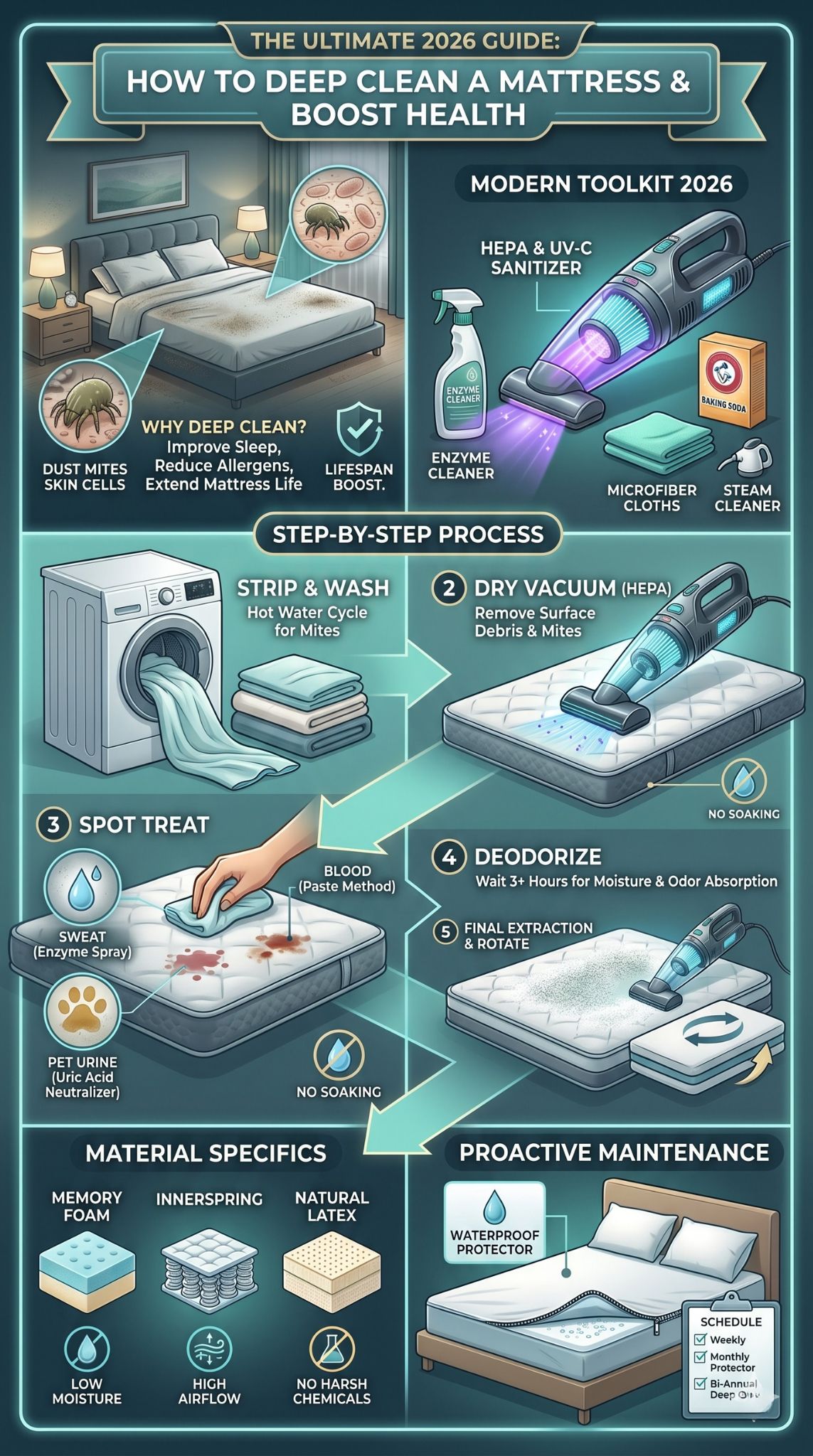
You cannot clean a dense chunk of solid memory foam the exact same way you clean a bouncy, traditional innerspring. Understanding what actually sits beneath the fabric cover dictates exactly how much moisture you can safely use during the spotting phase. Manufacturers design these beds with highly specific airflow patterns and material densities. Using too much liquid on the wrong material will destroy the internal support layers and instantly void your expensive warranty. Always check the manufacturer care tag attached to the back before applying any liquids.
Memory Foam Care
Memory foam acts exactly like a giant, dense kitchen sponge. If you pour liquid on it, the fluid travels straight down to the dark core and stays there indefinitely. You must strictly use the dry foam method. Mix a tiny bit of mild laundry detergent with water in a bowl and agitate it wildly until you have thick suds. Scoop only the dry suds onto the stain and gently rub. Ensure the room has heavy cross-ventilation, and use a desk fan aimed directly at the wet spot to force it to dry rapidly.
Innerspring and Hybrid Models
These highly popular beds combine rigid steel coils with soft top layers of memory foam or cotton padding. Because the metal coils create massive pockets of empty air space, these beds breathe much better than solid foam blocks. You still need to avoid soaking the delicate top layers, but they will dry much faster overall. Pay special attention to the deep quilted buttons and tufts on the top surface, as dead skin and dust heavily accumulate in those tiny valleys over time.
Natural Latex Mattresses
Latex is naturally resistant to dust mites and mold spores, which makes your maintenance job significantly easier. However, natural rubber breaks down very quickly when exposed to harsh chemicals or bright light. Never use bleach or heavy industrial solvents on a latex bed under any circumstances. Stick to heavily diluted white vinegar and water for spots. Also, never use a UV-C light wand directly on exposed latex foam, as concentrated ultraviolet rays degrade the rubber and cause it to dry out and crumble into dust.
|
Mattress Material |
Cleaning Characteristics |
Moisture Tolerance |
|
Memory Foam |
Traps water deeply, highly prone to mold |
Extremely Low |
|
Innerspring |
Good airflow through coils, dries relatively fast |
Moderate |
|
Hybrid |
Foam top needs care, coil base breathes well |
Low to Moderate |
|
Natural Latex |
Resists mites, highly sensitive to chemicals |
Low |
Maintenance Tips for Longevity
Going through a massive deep cleaning twice a year is great, but your simple daily habits dictate how dirty the bed gets in the first place. You can cut your heavy cleaning time completely in half by setting up a solid, proactive defense system. A little bit of preventative care stops dead skin, hair, and sweat from ever reaching the actual mattress fabric. Incorporating these simple, fast habits into your weekly routine ensures your sleeping environment stays pristine and your expensive mattress lasts a full decade without sagging. As sleep experts often remind us, ~A clean bed is the foundation of a healthy life.~
Daily and Weekly Habits
When you wake up in the morning, do not make your bed immediately. Pull the heavy duvet completely back and let the bottom sheets air out for at least thirty minutes while you shower. This simple act evaporates the sweat you left behind overnight, making the bed totally inhospitable to moisture-loving dust mites. Strip the bed and wash your sheets, pillowcases, and light blankets once a week in hot water to constantly reset your hygiene baseline.
Seasonal Cleaning Schedules
Invest in a high-quality, breathable, waterproof mattress protector immediately. This is a non-negotiable item for any modern bed. It acts as an impenetrable plastic shield against skin flakes, sweat, and accidental coffee spills. Wash this protector once a month in your machine. Then, aim to completely vacuum and deodorize the surface every six months, usually during your traditional spring and fall house cleaning routines. If you have dogs or cats that sleep in the bed with you, bump that heavy cleaning up to every three months to handle the extra dander.
|
Maintenance Task |
Frequency |
Primary Benefit |
|
Air out the bed |
Every morning |
Evaporates nighttime sweat |
|
Wash bed sheets |
Once a week |
Removes fresh skin cells |
|
Wash mattress protector |
Once a month |
Prevents buildup from reaching the bed |
|
Vacuum surface |
Every three months |
Keeps dust mite populations low |
|
Full deep clean |
Twice a year |
Sanitizes and restores the fabric |
Final Thoughts
Taking immediate control of your sleep environment changes how you feel and breathe every single day. When you dedicate time to deep clean mattress layers thoroughly, you actively protect your long-term respiratory health and protect a major financial investment. The smart tools available in 2026 make it incredibly simple to pull out years of hidden dust and neutralize stubborn, foul odors without relying on toxic household chemicals. Stick strictly to your seasonal maintenance schedule, keep that waterproof protector washed, and you will easily enjoy a fresh, supportive, and healthy bed for many years to come.
FAQs
Does a UV vacuum actually kill all the dust mites inside my bed?
No, UV-C light only penetrates the very top surface layer of the mattress fabric. It destroys bacteria, viruses, and mites on contact right at the top level. However, the ultraviolet light cannot reach the mites living two inches deep in the dark foam. That is why powerful HEPA suction is still required to physically pull them out of the internal structure.
Can I use a carpet shampooer to clean my mattress?
Absolutely not. Carpet cleaners dump a massive volume of water onto the surface and attempt to suck it back up. Mattresses are too thick and dense for the water extraction to work properly. The excess water will sink straight into the core, never dry, and create a massive, toxic mold problem within weeks.
Why does my mattress smell worse after I cleaned it?
If your bed smells like a damp towel or dirty gym socks a few days after cleaning, it means you used way too much liquid cleaner and the foam did not dry properly. Mildew is currently forming inside the bed. You need to immediately use baking soda to pull out the moisture and aim high-powered desk fans directly at the bed to dry it out.
Will ironing my mattress kill the bacteria?
Never iron a mattress. The intense, direct heat from an iron will instantly melt the synthetic fabric fibers in the mattress cover and permanently fuse or burn the delicate memory foam layers sitting underneath. Stick to gentle, indirect steam from a handheld garment steamer if you want to use heat safely.
How do I clean a mattress if I do not have a vacuum?
If you completely lack a vacuum, you can use an old-school carpet beater or a very clean sweeping broom. Take the mattress outside on a dry, sunny day, prop it up against a wall, and physically beat the dust out of it. The fresh air and natural sunlight also act as a fantastic natural deodorizer and mild sanitizer for the fabric.