
Let’s be honest for a second. We’ve all been there—standing in the shower, looking at those tiny dark spots in the corner of the ceiling or the pink slime on the drain, and feeling a sense of defeat. It feels like a losing battle. You scrub, it disappears, and then two weeks later, it’s back like it never left. As we move through 2026, the ways we handle our homes have changed. We have better tech, more awareness of air quality, and a shift away from harsh chemicals that do more harm than good.
If you want to know how to get rid bathroom mold once and for all, you have to stop looking at it as a stain and start looking at it as a biological problem. This isn’t just about making the bathroom look pretty; it’s about making your home a safe place to breathe.
|
Feature |
Details for 2026 |
|
Primary Goal |
Permanent eradication of fungal colonies |
|
Main Challenge |
High humidity and porous grout surfaces |
|
Best Natural Tool |
5% Acetic Acid (White Vinegar) |
|
Modern Tech |
Smart humidity-sensing exhaust systems |
|
Safety Gear |
N95 masks and non-porous gloves |
The Hidden Science Behind Bathroom Fungus
Before we grab the spray bottle, we need to understand what we are actually fighting. Mold isn’t just “dirt.” It’s a living organism that spreads through spores—tiny, invisible seeds floating in the air right now. In 2026, we know more than ever about how these spores react to indoor environments. They love your bathroom because it’s a buffet of moisture, warmth, and organic material like skin cells or soap scum.
The Biology of Fungal Growth
Mold doesn’t just sit on top of your tiles; it grows roots called hyphae. These roots can dig deep into porous materials like grout, drywall, and even some plastics. If you only clean the surface, the roots stay alive and wait for the next steam session to grow back. This is why most “quick fixes” fail so miserably.
Why Bathrooms are Mold Magnets
Your bathroom is a micro-climate. Every time you take a hot shower, you turn the room into a tropical rainforest. Without proper airflow, that water sits on surfaces for hours. In 2026, with many homes being built “tighter” for energy efficiency, natural airflow has actually decreased, making it even easier for mold to settle in.
|
Factor |
Description |
Impact Level |
|
Surface Porosity |
How deep roots can grow in materials |
High |
|
Air Exchange |
How fast humid air is replaced |
Critical |
|
Organic Load |
Amount of skin and soap residue |
Medium |
|
Temperature |
Ideal range is 60°F to 80°F |
High |
Health Risks: Why Ignoring Mold is Dangerous
It’s easy to think of mold as just an eyesore, but the health implications are real. Recent studies in 2026 have shown a direct link between indoor air quality and chronic fatigue. When you breathe in spores or mycotoxins, your immune system goes into overdrive. This can lead to persistent sneezing, itchy eyes, or even more serious respiratory issues.
Respiratory and Immune System Impact
For people with asthma or allergies, a moldy bathroom is a constant trigger. Even if you aren’t allergic, long-term exposure to certain types of mold can lead to “dampness-related respiratory health effects.” This isn’t just a cough; it can be a lifelong change in how your lungs function.
Read Also: How to Replace a Kitchen Faucet: Complete Step-by-Step
The Danger of Mycotoxins
Some mold species produce toxic compounds called mycotoxins. These are not always present, but when they are, they can be absorbed through the skin or inhaled. In 2026, medical professionals are more aware of “Sick Building Syndrome,” and the bathroom is often the primary source of these toxins in a household.
|
Health Issue |
Symptom |
Severity |
|
Allergic Rhinitis |
Sneezing, runny nose |
Moderate |
|
Asthma Triggers |
Shortness of breath, wheezing |
High |
|
Mycotoxin Exposure |
Brain fog, chronic fatigue |
Severe |
|
Dermatitis |
Skin rashes or irritation |
Moderate |
Identifying the Enemy: Common Types of Mold
Not all mold is created equal. Some are just annoying, while others require professional intervention. Knowing what you’re looking at helps you decide if you can handle the job yourself or if you need to call in the experts.
Black Mold (Stachybotrys chartarum)
This is the one everyone fears. It’s dark green or black and usually looks slimy. It loves extremely wet conditions, like a leaking pipe behind a wall. This species is often linked to the most severe health problems and should be treated with extreme caution.
Pink Mold and Mildew
Pink mold is actually a bacteria called Serratia marcescens. It’s that orange or pink film you see on your shower curtain or drain. It’s less dangerous than black mold but can still cause infections if it gets into an open wound. Mildew, on the other hand, is usually grey or white and stays on the surface, making it easier to clean.
|
Mold Type |
Typical Color |
Hazard Level |
|
Stachybotrys |
Black/Dark Green |
Very High |
|
Aspergillus |
Green/Yellow |
Moderate |
|
Cladosporium |
Brown/Grey |
Moderate |
|
Serratia |
Pink/Orange |
Low/Moderate |
Why You Can’t Get Rid of Bathroom Mold with Bleach
Most people reach for bleach immediately, but in 2026, we know this is a mistake. Bleach is mostly water. When you spray it on a porous surface like grout, the chlorine stays on top, while the water soaks in. You essentially “water” the mold roots while bleaching the surface white, giving you a false sense of security.
The Chemical Failure of Chlorine
Chlorine is too “fat” to get into the tiny holes of grout. It clears the color, so the mold looks gone, but the fungus is still alive underneath. Within days, it will use the water from the bleach to grow back even faster. To truly get rid bathroom mold, you need a liquid that can actually penetrate the material.
Surface Damage and Fumes
Bleach is also incredibly harsh on your bathroom fixtures. It can wear down the sealants on your tiles and damage your lungs if you use it in a small, unventilated space. There are much safer, more effective ways to get rid bathroom mold that don’t involve breathing in toxic fumes.
|
Comparison |
Bleach |
Vinegar/Peroxide |
|
Penetration |
Surface only |
Deep penetration |
|
Root Killing |
No |
Yes |
|
Toxicity |
High |
Low |
|
Material Safety |
Can damage sealants |
Generally safe |
The 2026 Protocol: How to Get Rid Bathroom Mold
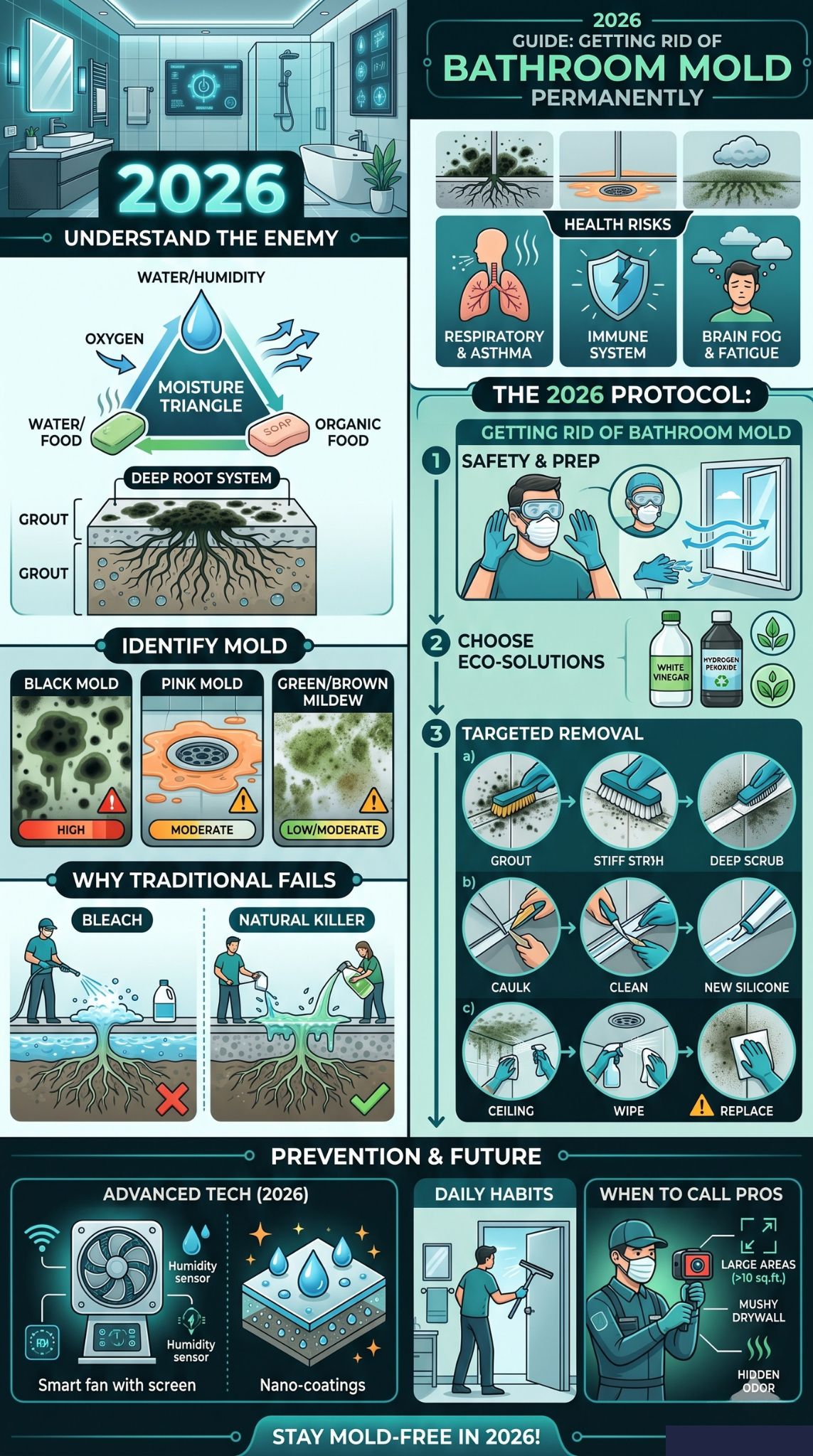
If you want to do this right, you need a plan. You can’t just spray and walk away. The 2026 method focuses on safety first, then deep-cleaning, and finally, sealing the surface so the mold can’t find a home again.
Step 1: Safety and Prep
Before you start, make sure you aren’t just spreading spores around. Turn off any central air so the spores don’t travel to the rest of the house. Wear a mask. If you have a window, open it, and keep the bathroom fan running the whole time you work.
Step 2: The Deep Soak
Spray undiluted white vinegar on the affected area. Let it sit for at least an hour. This gives the acetic acid time to soak into the grout and kill the roots. For really tough spots, you can follow this with a spray of 3% hydrogen peroxide, which will fizz and lift the dead mold out of the pores.
Step 3: Scrubbing and Drying
Use a stiff brush to scrub the area. Don’t use a wire brush, as this can scratch your tiles and create more places for mold to hide. Rinse with hot water and then—this is the most important part—dry the area completely with a microfiber cloth.
|
Step Number |
Action Item |
Tool Required |
|
1 |
Ventilation |
Exhaust fan/Window |
|
2 |
Application |
Vinegar/Spray Bottle |
|
3 |
Wait Time |
60 Minutes |
|
4 |
Scrub |
Nylon Brush |
|
5 |
Dry |
Microfiber Cloth |
Advanced 2026 Technology for Prevention
We’ve moved past just “turning on the fan.” Modern homes in 2026 use smart tech to keep humidity in check automatically. If you’re remodeling or just want to upgrade, these tools are the best way to get rid bathroom mold for the long haul.
Smart Humidity Sensors
Old fans required you to remember to flip a switch. New systems have built-in sensors that detect when the air gets too wet. They turn on automatically and stay on until the air is dry, not just until you leave the room. This removes the human error that usually leads to mold growth.
Antimicrobial Nano-Coatings
You can now buy sealants for your grout and tile that use nanotechnology to create a surface that mold literally cannot grip onto. These coatings are invisible and can last for years, making your weekly cleaning much faster and more effective.
|
Technology |
Benefit |
Installation Difficulty |
|
Smart Sensors |
Automatic moisture control |
Medium |
|
Nano-Coatings |
Repels water and spores |
Low |
|
HEPA Filtration |
Removes spores from air |
Easy |
|
UV-C Light |
Kills surface bacteria/mold |
Medium |
Daily Habits for a Clean Bathroom
Tech is great, but your daily routine is what keeps the mold from coming back. It only takes about a minute a day to maintain a mold-free environment. If you want to get rid bathroom mold permanently, you have to change how you treat the room after you use it.
The Squeegee Rule
After every shower, take 30 seconds to squeegee the walls and glass. This removes about 90% of the moisture that would otherwise evaporate into the air or sit in the grout. It is the single most effective habit you can adopt.
Airflow Management
Keep the bathroom door open after you’re done. If you have a shower curtain, pull it closed so it can dry flat. When it’s bunched up in the corner, water gets trapped in the folds, and that’s where the pink slime starts to grow.
|
Habit |
Frequency |
Time Required |
|
Squeegee Walls |
After every shower |
30 Seconds |
|
Open Door |
After every use |
2 Seconds |
|
Wash Mat |
Weekly |
10 Minutes |
|
Clean Fan Grille |
Monthly |
5 Minutes |
When to Call the Professionals
Sometimes, the problem is bigger than a spray bottle can handle. If the mold covers an area larger than 10 square feet, or if you can smell it but can’t see it, you likely have a leak inside the wall.
Structural Concerns
If your drywall feels soft or “mushy,” the mold has already eaten the structural integrity of the material. Cleaning the surface won’t help. A pro will need to cut out the damaged sections and treat the wooden studs behind them to prevent a total house infestation.
Specialized Equipment
Remediation experts use high-end gear like infrared cameras to find hidden moisture and industrial-strength dehumidifiers. In 2026, many pros also use “dry ice blasting” to remove mold from wood without adding more moisture to the environment.
|
Situation |
Action |
Recommendation |
|
Small Grout Spots |
DIY |
Vinegar/Peroxide |
|
Mushy Drywall |
Professional |
Replacement |
|
Musty Odor (Hidden) |
Professional |
Inspection |
|
Recurring Large Patches |
Professional |
Leak Detection |
Final Thoughts
The secret to how to get rid bathroom mold isn’t finding a magic chemical; it’s about consistency and understanding the environment. By ditching the bleach, using natural acids that actually kill roots, and embracing smart 2026 technology like humidity sensors, you can break the cycle of regrowth. Mold is a persistent opponent, but with the right tools and daily habits, you can keep your bathroom healthy and sparkling clean for years to come. Just remember: keep it dry, keep the air moving, and treat the roots, not just the stains.
FAQs
Is it safe to stay in the house while treating mold?
If you are treating small areas of surface mold with vinegar, it is generally safe as long as you have the fan running and wear a mask. However, if you are tearing out moldy drywall, the spore count will skyrocket, and you should keep vulnerable people and pets out of that area until the work is finished and the air is cleared.
Can I use essential oils to kill mold?
Tea tree oil and clove oil are known to have antifungal properties. While they aren’t as cheap as vinegar, adding a few drops to your cleaning solution can help leave a protective scent and barrier. However, they should be used as a supplement, not a primary replacement for a deep-cleaning acid.
Why does my bathroom smell like mold even when I don’t see any?
This is often a sign of “hidden mold.” It could be growing on the backside of the drywall, under the floor tiles, or inside the bathroom vanity. It could also be a buildup of biofilm in your drain. If a deep clean of the surfaces doesn’t fix the smell, you may need a professional inspection to find the hidden source.
Does a “mold-resistant” paint actually work?
Yes, modern antimicrobial paints contain fungicides that prevent spores from settling and growing on the surface. However, they only work if the surface was 100% clean and dry before the paint was applied. If you paint over existing mold, it will eventually push through.
How often should I change my bathroom exhaust fan filter?
Most people don’t realize their fans even have filters or grilles that need cleaning. In 2026, most high-efficiency fans should have their covers vacuumed every six months. If the fan is clogged with dust, it can’t pull the moist air out, which is a leading cause of mold growth.