
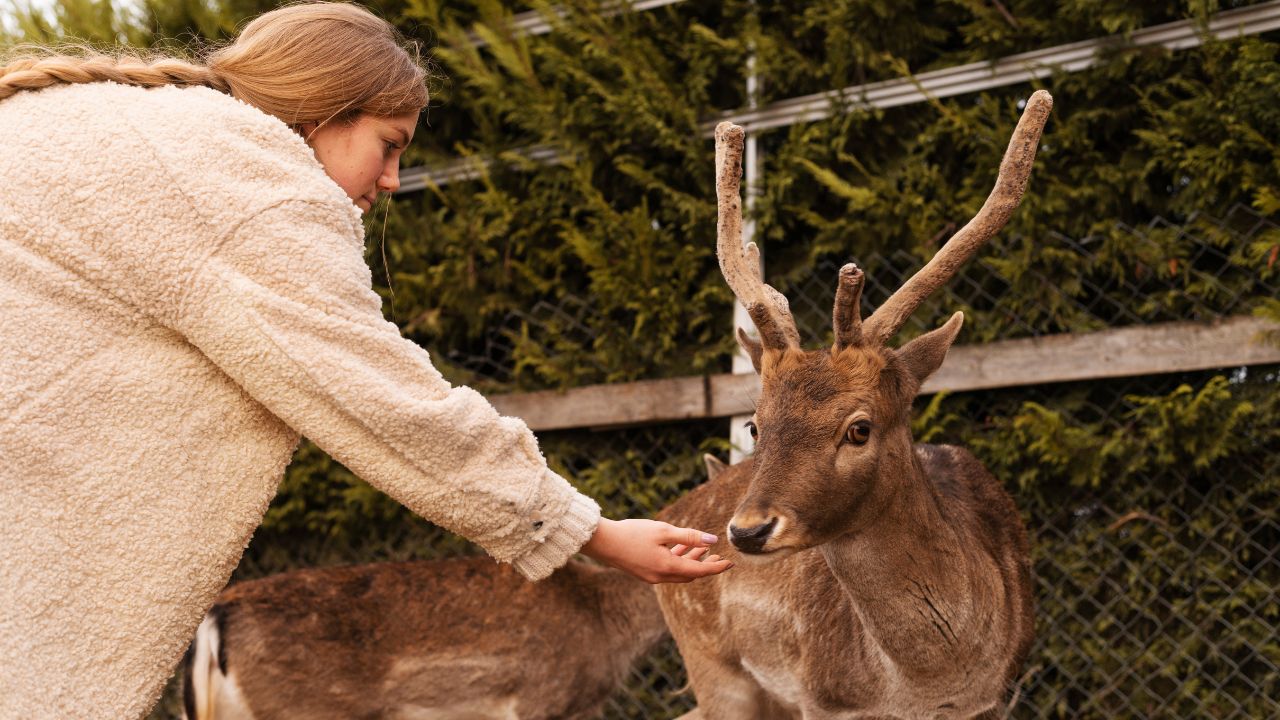
Finding your hostas chewed to the nubs or your young fruit trees stripped of bark is enough to make any gardener cry. You spend months digging, planting, and watering, only for a four-legged visitor to treat your yard like a midnight buffet.
If you want to keep deer out garden spaces without using toxic chemicals, you are in the right place. Natural methods are not only safer for your family and pets, but they also respect the local wildlife while drawing a firm line at your property edge. It takes a mix of psychology, physical barriers, and the right plants to win this battle.
Understanding Deer Behavior and Scouting Damage
Before you can stop them, you need to know who you are fighting and how they think. Deer are creatures of habit that follow the same paths every night, often bringing their fawns along to show them where the “good stuff” grows. They have incredible noses and can smell a tasty sprout from a long way off, especially in the early spring. Knowing their patterns helps you decide where to place your defenses and which plants need the most protection during the peak growing season.
|
Feature |
Description |
|
Feeding Time |
Mostly dawn and dusk (crepuscular). |
|
Jump Height |
Can clear 8 feet if they have a clear landing. |
|
Diet |
Herbivores; prefer nitrogen-rich, tender new growth. |
|
Signs of Presence |
Ragged plant edges, cloven hoofprints, and pellet droppings. |
Identifying Deer Damage vs. Other Pests
Deer do not have upper front teeth, so they cannot make a clean, scissor-like cut. When they eat a plant, they bite and pull, leaving a ragged or torn edge on the stem. Rabbits and groundhogs, on the other hand, leave clean, 45-degree angled cuts. If your hydrangea looks like it was ripped apart rather than clipped, you definitely have a deer problem.
Mapping Their Entry Points
Watch your yard for a few days to see where the deer enter. Usually, they have a specific gap in the hedge or a low spot in the terrain they prefer. Focusing your natural deterrents on these “high-traffic” zones is more effective than spreading them thinly across the whole yard.
Why They Love Your Yard Specifically
Your garden is often more attractive than the woods because you water and fertilize it. This makes your plants more succulent and nutrient-dense. To keep deer out garden areas, you have to make your yard less convenient and less tasty than the natural woods next door.
Best Ways to Keep Deer Out of Your Garden
If you want to keep deer out garden beds permanently, you have to look at physical barriers. While sprays and smells help, a physical wall is the only thing that works when a deer is truly hungry. Fencing is a big investment, but it saves you hundreds of dollars in replaced plants over time. You don’t always need a high-security metal fence; sometimes, simple netting or clever positioning can do the trick.
|
Fence Type |
Average Height |
Pro |
Con |
|
Poly Mesh |
7–8 Feet |
Virtually invisible from a distance. |
Can be torn by heavy bucks. |
|
Double Fence |
4–5 Feet (x2) |
Ruins deer depth perception. |
Takes up more ground space. |
|
Electric |
3–4 Feet |
High psychological deterrent. |
Requires power and maintenance. |
|
Solid Wood |
6 Feet |
Blocks their view of the “buffet.” |
Expensive and blocks your view too. |
The 8-Foot Standard
A white-tailed deer can jump incredibly high, but they won’t usually jump into a space if they can’t see where they will land. A fence that is 8 feet tall is the gold standard for keeping them out. If you go shorter, like 6 feet, you might find a particularly athletic deer still making it over if there is a prize like a vegetable patch on the other side.
Read Also: 12 Easy Vegetables to Grow for Beginners in 2026
Using the Double Fence Trick
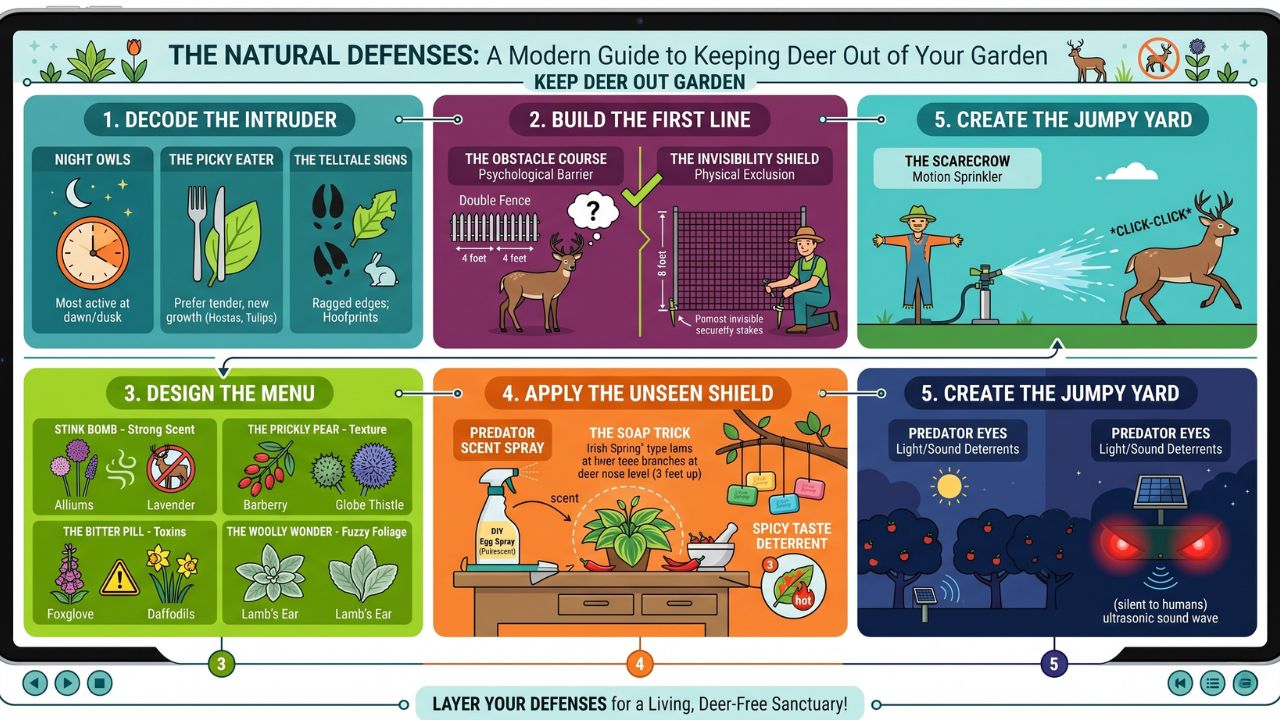
Deer have poor depth perception. If you can’t build an 8-foot fence due to local rules, try building two 4-foot fences about 3 to 5 feet apart. The deer sees the double barrier and gets confused. They aren’t sure if they can clear both, or if there is enough room to land in the middle. This psychological barrier is often more effective than a single tall fence.
Fishing Line Barriers
For a budget-friendly DIY hack, try stringing heavy-duty, 30-pound test fishing line around your garden beds. Position the lines at 12 inches and 30 inches off the ground. Because the line is clear, the deer can’t see it, but they feel it press against their legs. This invisible “ghost” barrier freaks them out, and they usually retreat.
Planting Deer-Resistant Varieties for Natural Protection
One of the smartest ways to keep deer out garden spaces is to change the menu. You can’t blame a deer for eating a salad bar you planted for them. By choosing plants that smell bad, feel fuzzy, or taste bitter to a deer, you make your yard much less appealing. This doesn’t mean your garden has to be ugly; many of the most beautiful perennials and shrubs are actually “deer-proof” because of their natural defenses.
|
Plant Category |
Examples |
Why Deer Hate Them |
|
Aromatic Herbs |
Lavender, Sage, Rosemary, Mint |
Strong scents overwhelm their nose. |
|
Fuzzy Leaves |
Lamb’s Ear, Dusty Miller |
Unpleasant texture in the mouth. |
|
Toxic/Bitter |
Foxglove, Bleeding Heart, Daffodils |
Natural chemicals that taste bad. |
|
Spiky/Thorny |
Barberry, Globe Thistle, Holly |
Physical irritation when eating. |
Scent-Heavy Flowers
Deer rely on their sense of smell to stay safe. Plants with heavy fragrances like Peonies, Lavender, and Alliums (ornamental onions) act as a natural “stink bomb” for deer. If you plant a thick border of Alliums around your more vulnerable tulips, the deer might never even smell the tulips through the onion scent.
Textured and Fuzzy Foliage
Think about eating a piece of sandpaper. That is what Lamb’s Ear or Yarrow feels like to a deer. They prefer smooth, tender leaves like Hostas or Roses. By filling your landscape with silvery, fuzzy, or leathery foliage, you are creating a garden that is physically uncomfortable for them to graze on.
The Power of Daffodils
If you love spring bulbs but hate seeing them eaten, switch from Tulips to Daffodils. Tulips are basically “deer candy,” but Daffodils contain a bitter alkaloid called lycorine. Deer won’t touch them. Planting Daffodils in the same hole as your more sensitive bulbs can sometimes protect the whole cluster.
Homemade and Natural Scent Repellents
When you can’t build a fence, you have to use their noses against them. Natural repellents work by making your plants smell like a predator or like something rotting. This triggers a flight response in the deer. The key to success here is consistency. You cannot spray once and expect it to work all summer; you have to reapply after rain and as new leaves grow.
|
Ingredient |
Role |
Effectiveness |
|
Putrescent Eggs |
Mimics predator/decay smell. |
Very High (Best DIY option). |
|
Garlic/Onion |
Strong, confusing scent. |
Medium (Good for borders). |
|
Cayenne Pepper |
Burns the mouth/nose. |
High (Must be reapplied often). |
|
Essential Oils |
Peppermint or Clove scent. |
Medium (Smells great to humans). |
The Rotten Egg Spray Recipe
This is the most famous DIY deer repellent for a reason: it works. Mix three raw eggs with a liter of water and a tablespoon of milk or yogurt. Let it sit in the sun for a day to get “fragrant,” then spray it on your plants. To a deer, it smells like a dead animal or a predator’s territory. To humans, the smell fades once it dries, but the deer will still catch the scent.
Using Strong Soaps
Many gardeners swear by hanging bars of Irish Spring soap from tree branches. The strong, artificial perfume is a major turn-off. You can put the bars in mesh bags or old socks and hang them at nose level (about 3 to 4 feet up). It is a cheap way to add another layer of defense to your fruit trees.
Spicy Pepper Sprays
Capsaicin is the chemical that makes peppers hot, and it works on deer just like it works on us. Mixing hot sauce or cayenne pepper into a soapy water spray creates a “hot” barrier. When a deer takes a test bite, their mouth burns, and they quickly learn that your garden isn’t worth the pain.
Using Technology and Motion Deterrents
Sometimes you need to add a little “jump scare” to your yard. Deer are jumpy animals that hate surprises. If something suddenly moves or makes a noise, they will bolt. High-tech solutions have become much more affordable and solar-powered, making them a great addition to a natural garden setup. These tools help keep deer out garden areas by making the environment feel unpredictable and dangerous.
|
Device |
How it Works |
Best Use Case |
|
Motion Sprinkler |
Blasts water when motion is felt. |
Protecting vegetable patches. |
|
Ultrasonic Unit |
High-pitched noise (human-silent). |
Small garden corners. |
|
Strobe Lights |
Flashes red lights at night. |
Deterring deer in dark orchards. |
|
Radio |
Human voices or music. |
Temporary use for ripening fruit. |
Motion-Activated Sprinklers
These are the heavy hitters of the tech world. Devices like the “Scarecrow” connect to your hose and fire a 3-second blast of water when they sense heat or movement. It doesn’t hurt the deer, but the sudden click-click-click sound and the splash of cold water are enough to send them running. It is a highly effective way to keep deer out garden zones without any chemicals.
Ultrasonic Sound Devices
These small units emit a high-frequency noise that humans can’t hear, but deer find incredibly annoying. They work best in smaller, enclosed areas. However, be aware that some pets like dogs or cats might also be sensitive to these sounds.
The “Eyes of the Predator”
Solar-powered LED lights that flash red at night are designed to look like the eyes of a coyote or wolf. Since deer are prey, they are hardwired to fear those glowing red dots in the brush. These work best if you move them around every few days so the deer don’t realize they aren’t real animals.
Seasonal Strategy and Maintenance
Your plan to keep deer out garden beds needs to change with the weather. In the spring, they want tender greens. In the winter, they are looking for woody stems to survive. If you only focus on your garden in the summer, you might lose your expensive shrubs and trees during the cold months when the deer are the most desperate.
|
Season |
Priority |
Action Item |
|
Spring |
Protect new growth. |
Apply repellents every 10 days. |
|
Summer |
Protect vegetables. |
Set up motion sprinklers. |
|
Fall |
Prevent “rut” damage. |
Wrap tree trunks with wire mesh. |
|
Winter |
Survival browsing. |
Use burlap wraps on evergreens. |
Protecting Tree Bark in the Fall
In late autumn, male deer (bucks) rub their antlers against young trees to remove “velvet” and mark territory. This “buck rub” can strip the bark and kill a tree overnight. Use plastic tree guards or a circle of sturdy wire mesh around the trunk to physically prevent them from touching the wood.
Winter Burlap Wraps
Evergreens like Arborvitae are a favorite winter snack. When the ground is covered in snow, deer will eat these right down to the wood. Wrapping them in burlap not only protects them from windburn but also hides them from hungry deer.
Final Thoughts
Managing wildlife in a residential area is all about persistence. You don’t need to turn your yard into a fortress, but you do need to be consistent. By combining physical fences, smart plant choices, and natural sprays, you can successfully keep deer out garden spaces and finally enjoy the fruits of your labor. Remember to switch up your tactics every few weeks so the deer don’t get used to your tricks. With a little effort, your garden can be a beautiful, deer-free sanctuary again.
FAQs
Do coffee grounds keep deer away?
Coffee grounds have a strong scent that may mask the smell of your plants, but they aren’t a foolproof deterrent. They are better used as fertilizer, though the smell might give a deer a moment of hesitation before they decide to eat anyway.
Will human hair or urine stop deer?
These are old-school remedies. Human hair from a barbershop can work briefly because of the human scent, but it loses its effectiveness quickly once it gets wet or settles into the soil.
Do deer eat marigolds?
Usually, no. Marigolds have a very pungent, bitter smell that deer dislike. However, if a deer is starving, they have been known to eat almost anything, including marigolds. They are still one of the safest “border” plants you can use.
How high can a deer actually jump?
A healthy deer can clear an 8-foot fence from a standing position if they are motivated. However, they rarely jump higher than 6 feet unless they can see exactly what is on the other side. This is why solid fences or double fences work so well even at lower heights.
Is Irish Spring soap safe for the garden?
Yes, it is generally safe to hang soap bars. Just make sure they aren’t dripping directly onto sensitive food crops, as the soap can contain perfumes and chemicals you might not want to ingest. Hang them in bags to be safe.