
Gardening saw a massive spike a few years ago, and the momentum has not slowed down at all. According to a 2026 Axiom marketing study, a record 64 percent of people plan to expand their gardens this year, with younger generations leading the charge. If you are looking at an empty patch of grass or a bare sunny balcony, you might be wondering how to join them without getting overwhelmed by the process.
The secret is simple. You just need to pick the right plants. Focusing on easy vegetables to grow for beginners gives you a massive head start. You skip the fussy plants that demand perfect soil or constant pruning and jump straight to the ones that genuinely want to grow. In this guide, I will walk you through everything you need to know to get your hands dirty, plant your first seeds, and harvest your own food this year.
Why Start a Vegetable Garden in 2026?
Growing your own food at home puts you completely in charge of what ends up on your dinner plate. You get to decide exactly how your food is treated, avoiding harsh chemical pesticides and expensive grocery store markups. Recent trends show that gardeners in 2026 are highly focused on creating small, productive kitchen gardens rather than massive farm plots. Spending time outdoors with your hands in the dirt also offers serious mental health benefits, lowering stress after a long workday. Sticking to easy vegetables to grow for beginners ensures that your early efforts actually pay off with a tangible, tasty reward.
The Surge in Home Growing
More people than ever are realizing that a perfectly manicured grass lawn does not do much for them. Replacing even a small section of grass with a raised bed or a few large pots turns dead space into a productive mini-farm. Gardeners are choosing compact, high-yielding varieties that fit perfectly into tight urban spaces and suburban backyards alike.
Health and Financial Perks
Store-bought produce often travels thousands of miles before it reaches your local shelf, losing flavor and nutrients along the way. When you pick a tomato right off the vine and eat it ten seconds later, the taste is entirely different. Plus, a packet of seeds costs just a few dollars but can produce hundreds of dollars worth of fresh food, helping you beat rising grocery costs.
Benefits of Gardening in 2026
|
Benefit |
Description |
|
Freshness |
Vegetables harvested at home retain maximum vitamins and natural sugars. |
|
Cost Savings |
A small initial investment in seeds yields a massive return in produce. |
|
Mental Health |
Outdoor activity reduces stress and provides a break from screens. |
|
Space Efficiency |
Modern gardening techniques allow high yields in small spaces. |
What Makes a Vegetable Easy to Grow?
Not every plant in the garden center is a good choice for someone just starting out. Some crops require strict temperature control, specific pruning techniques, or constant protection from local bugs. A true beginner-friendly plant has a high germination rate, meaning the seed is almost guaranteed to sprout if you just give it water and dirt. They also mature quickly, so you do not have to wait five months to see the results of your hard work. Finding easy vegetables to grow for beginners is all about prioritizing resilience over novelty.
Fast Germination and High Yields
You want plants that show signs of life quickly. Fast germinators pop out of the soil in just a few days, giving you instant positive feedback. High-yielding plants produce continuously over the season, so even if you lose a few leaves or fruits to a wandering bug, the plant keeps giving you food.
Pest Resistance and Forgiveness
New gardeners sometimes forget to water or accidentally overwater their pots. Forgiving plants bounce right back from these minor mistakes without wilting away. They also possess a natural hardiness against common garden pests, letting you avoid complex organic sprays or daily bug-picking routines.
Read Also: 10 Healthy Seed Oil Alternatives for Cooking Success in 2024
Criteria for Beginner-Friendly Crops
|
Trait |
Why It Matters |
|
High Germination |
Seeds sprout reliably without complex soaking or chilling requirements. |
|
Fast Maturity |
You get to harvest and eat the food quickly, keeping motivation high. |
|
Drought Tolerance |
The plant survives if you accidentally miss a watering session. |
|
Pest Resistance |
Natural defenses keep the plant alive without heavy intervention. |
12 Easy Vegetables to Grow for Beginners
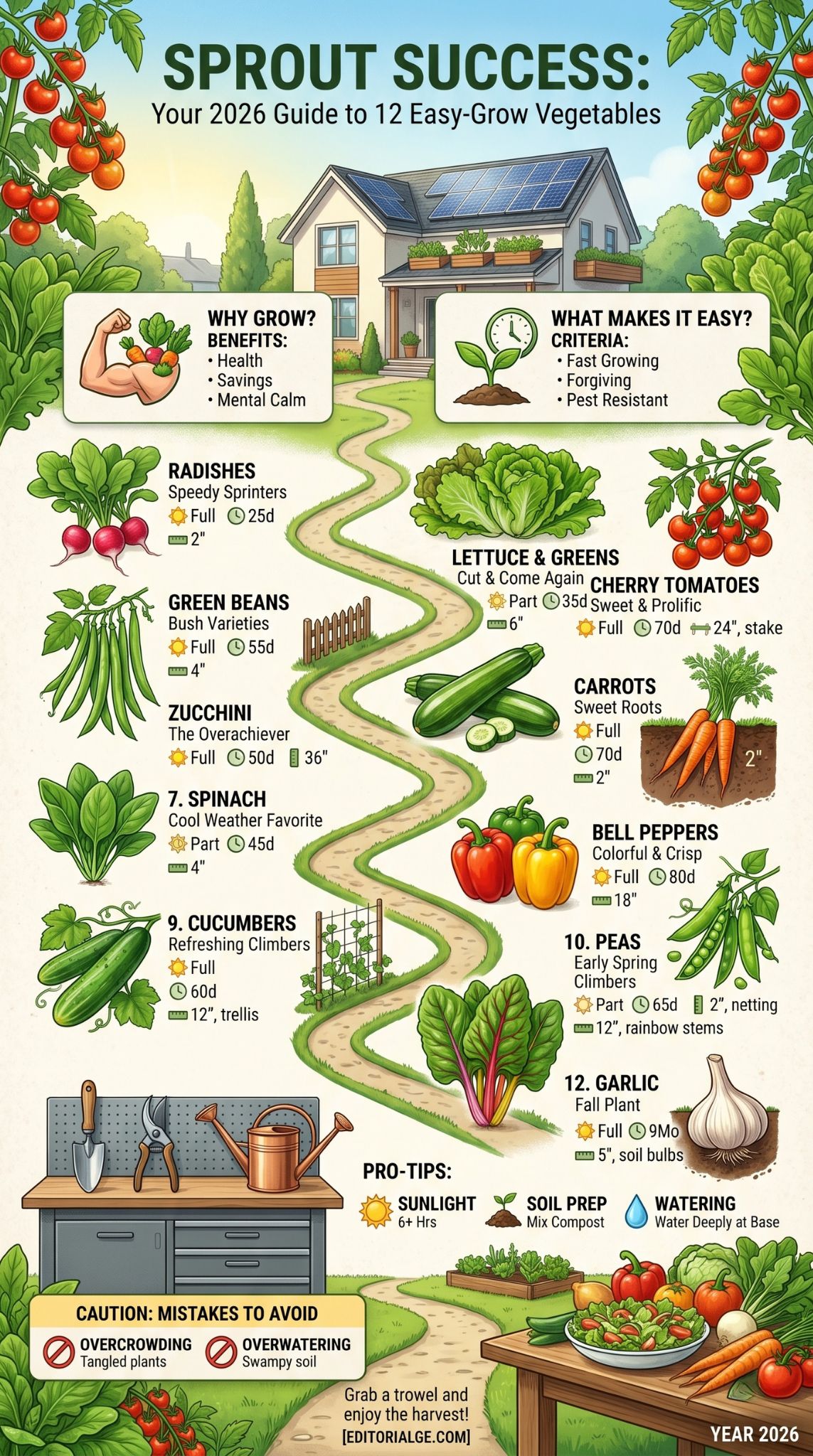
Building your first garden plan is exciting, but it is easy to buy too many seeds and run out of space. The key is to narrow your focus to reliable, heavy-producing crops that thrive in almost any climate. I always suggest mixing fast-growing root crops with leafy greens and a few climbing vines to maximize your layout. This specific list of easy vegetables to grow for beginners has been curated to give you a continuous, low-stress harvest from early spring all the way into the late fall. Let us look at the top contenders for your 2026 garden.
1. Radishes: The Speedy Sprinters
Radishes are the absolute fastest crop you can put in the ground. You plant the seed, and in roughly twenty-five to thirty days, you are pulling a fully mature, crisp radish out of the soil. They thrive in cooler weather, so they are perfect for the early spring before the summer heat arrives. You do not even need to start them indoors. Just drag your finger through the dirt to make a shallow line, drop the seeds in, and cover them up.
Because they grow so fast, radishes naturally dodge most seasonal pests. They also serve as great row markers. If you plant slow-growing carrots, toss a few radish seeds in the same row so you know exactly where the carrots will eventually appear.
2. Lettuce and Salad Greens: Cut and Come Again
Forget the sad, wilted plastic boxes of greens at the grocery store. Growing your own lettuce is incredibly simple and offers a massive upgrade in texture and flavor. Leaf lettuces like oakleaf, butterhead, and romaine grow very well in shallow soil, making them ideal for container gardening on a patio. They prefer cool weather and can even handle partial shade.
The best part about these greens is the cut-and-come-again harvest method. You do not have to pull the whole plant out of the ground. When the leaves are a few inches tall, just take a pair of scissors and snip the outer leaves off. The center of the plant will immediately push out fresh growth, giving you a steady supply of salad for weeks.
3. Cherry Tomatoes: Sweet and Prolific
While large heirloom tomatoes can be fussy and prone to cracking, cherry tomatoes are absolute weeds in the best way possible. They grow aggressively and produce hundreds of bite-sized, incredibly sweet fruits per plant. For a beginner, buying a small starter plant from a local nursery is much easier than growing them from seed.
Plant them deep in a spot that gets full sunlight all day. Most cherry tomatoes are indeterminate vines, which means they will keep growing taller and producing fruit until the winter frost kills them. You will definitely need a tall stake or a sturdy metal cage to keep the heavy vines from falling over onto the soil.
4. Green Beans: Bush and Pole Varieties
Green beans are famously reliable and rarely suffer from serious disease issues. They come in two distinct styles. Bush beans grow into short, compact plants that stand up on their own. Pole beans are aggressive climbers that need a tall trellis or fence to wrap around. Bush beans are slightly easier because you do not have to build anything for them to climb.
Wait until the soil is completely warm in the late spring before poking the large seeds into the dirt. They sprout quickly and start flowering in about a month. The trick to keeping a bean plant productive is to harvest constantly. If you let the beans get huge and tough, the plant thinks its job is done and stops making new flowers.
5. Zucchini: The Overachieving Squash
Zucchini plants are legendary for producing so much food that you will have to sneak it onto your neighbors porches in the middle of the night. This summer squash loves the heat and requires a lot of room to stretch out. Give each plant a few feet of personal space so the massive leaves can soak up the sun.
They drink a lot of water, so keep the soil consistently damp. Sometimes, beginners notice baby zucchinis falling off the plant before they grow. This just means local bees did not pollinate the flowers. You can easily fix this by planting bright flowers nearby to attract more pollinators to your yard.
6. Carrots: Sweet Roots for Loose Soil
Pulling a bright orange carrot out of the ground feels like a magic trick every single time. They can stay in the ground through light frosts, and the cold weather actually makes them taste much sweeter. The only trick with carrots is preparing the soil properly before you plant.
Carrots need loose, sandy soil to grow straight down. If your dirt is hard clay or full of rocks, the roots will split and bend into strange shapes. The seeds are very tiny, so once they sprout, you must thin them out. Pull out the weaker seedlings so the remaining carrots have a few inches of space to swell up.
7. Spinach: A Cool Weather Favorite
Spinach is packed with iron and vitamins, and it requires very little effort if you time it right. It strongly prefers cold weather. If you plant spinach in July, the heat will cause it to bolt, meaning it grows a tall flower stalk and the leaves turn bitter overnight. Plant it in early spring or late summer instead.
Like lettuce, it grows quickly and thrives in containers. Mix a little compost into the soil before planting because spinach needs nitrogen to build those dark green leaves. Harvest the outer leaves for fresh salads, or let them grow larger if you plan to cook them down.
8. Bell Peppers: Colorful and Crisp
Bell peppers bring a satisfying crunch to summer cooking. They grow slower than root vegetables but are incredibly tough and resilient against bugs. Because they need a long time to finish growing, buying small plants from a garden center in May is the smartest move for a beginner.
Peppers hate cold dirt. Wait until the nights are consistently warm before moving them outside. They need full, blazing sun and good drainage. A green bell pepper is actually just an unripe pepper. If you leave it on the plant for a few more weeks, it will turn red, yellow, or orange and become significantly sweeter.
9. Cucumbers: Refreshing and Climbing
Cucumbers are fast-growing vines that thrive in the peak heat of summer. They are great for beginners because they communicate their needs clearly. If the soil gets dry, the massive leaves will completely droop. Give them a deep soak with the hose, and they will perk back up in an hour.
You can grow them on the ground, but tying them to a trellis saves a ton of space. Getting the vines off the ground also prevents the fruit from rotting in wet soil. Keep a close eye on the vines once they start producing. A cucumber can go from tiny to overly massive in just three days.
10. Peas: Early Spring Climbers
Peas do not mind the cold at all. In fact, you can usually plant them outside while there is still a chance of a late snowstorm. Snap peas are the best variety for eating fresh because the entire pod is sweet and crunchy.
They are climbers, so push a piece of chicken wire or some sticks into the ground next to the seeds. The delicate vines will grab on and pull themselves up. Peas are unique because they pull nitrogen out of the air and put it into the soil, acting as a natural fertilizer for whatever you plant in that spot next year.
11. Swiss Chard: Beautiful and Resilient
Swiss chard is arguably the best-looking plant in the vegetable garden. The stems come in bright neon shades of pink, yellow, red, and white. It tastes very similar to spinach but is much tougher. While spinach dies in the summer heat, Swiss chard will easily survive the hottest months of the year.
It rarely suffers from diseases and bounces back quickly after you harvest it. Plant the seeds in full sun, water them a few times a week, and you will have a constant supply of healthy greens from May through November.
12. Garlic: Plant in Fall, Harvest in Summer
Garlic is entirely hands-off, but it operates on a totally different schedule than the rest of your garden. You actually plant garlic in the late fall, just before the ground freezes for the winter. You take a whole bulb, break it into individual cloves, and bury them pointy-side up.
The cloves sleep through the snow and are the very first things to sprout in the spring. You do not have to prune them or worry about pests because bugs hate the smell. When the bottom leaves turn brown in the middle of summer, you dig them up, let them dry in the shade, and bring them into the kitchen.
Snapshot of the 12 Vegetables
|
Vegetable |
Sunlight Needed |
Growth Speed |
Support Needed |
|
Radishes |
Full to Partial |
Very Fast |
None |
|
Lettuce |
Partial Sun |
Fast |
None |
|
Cherry Tomatoes |
Full Sun |
Moderate |
Cage or Stake |
|
Green Beans |
Full Sun |
Fast |
Trellis for Pole types |
|
Zucchini |
Full Sun |
Fast |
None |
|
Carrots |
Full Sun |
Moderate |
None |
|
Spinach |
Partial Sun |
Fast |
None |
|
Bell Peppers |
Full Sun |
Slow |
Small Stake |
|
Cucumbers |
Full Sun |
Fast |
Trellis |
|
Peas |
Full to Partial |
Fast |
Trellis or Netting |
|
Swiss Chard |
Full to Partial |
Fast |
None |
|
Garlic |
Full Sun |
Very Slow |
None |
Essential Gardening Tools for Beginners
Walking down the aisle of a hardware store can make gardening look incredibly complicated. You do not need expensive tillers, heavy machinery, or customized clothing to grow food. Keeping your tool kit simple saves money and keeps your shed organized. The right basic tools act as extensions of your own hands, making digging, watering, and harvesting much more efficient. Let us look at the absolute necessities you need to get started.
Digging and Planting Gear
A high-quality hand trowel is your best friend. Look for one made of solid steel so the handle does not snap off when you hit a buried rock. You will use it to dig holes for your tomato plants and scoop out stubborn weeds. A good pair of gardening gloves is also essential to protect your fingers from thorns, sharp stones, and rough dirt.
Watering and Pruning Equipment
Watering right out of a harsh hose nozzle will blast your delicate seedlings out of the dirt. Buy a watering can with a rose attachment on the spout, which breaks the water into a gentle rain shower. For harvesting, a pair of sharp bypass pruners will let you snip tough pepper stems and thick zucchini stalks without ripping the plant out by its roots.
Must-Have Beginner Tools
|
Tool Name |
Primary Function |
Buying Tip |
|
Hand Trowel |
Digging small planting holes |
Avoid cheap plastic handles. |
|
Bypass Pruners |
Cleanly harvesting vegetables |
Keep the blades sharp and clean. |
|
Watering Can |
Gentle watering for tiny seeds |
Get a metal one for durability. |
|
Gardening Gloves |
Protecting hands from soil and blisters |
Choose a breathable, washable fabric. |
Basic Gardening Tips for a Successful First Harvest
Even if you pick the toughest plants on the market, they still need a decent environment to survive. Setting up your garden correctly from day one eliminates a lot of headaches later in the summer. Plants rely on a combination of sunlight, good dirt, and steady moisture to build their leaves and fruits. Sticking to easy vegetables to grow for beginners helps a lot, but mastering these three basic principles guarantees a heavy harvest.
Choosing the Right Location
Vegetables are basically little solar panels. They need energy from the sun to create sugars and grow large fruits. Before you start digging, watch your yard for a full day. You want to place your garden in a spot that gets uninterrupted direct sunlight for at least six to eight hours a day. Avoid planting too close to large trees, as the tree roots will steal all the water and nutrients from your vegetables.
Preparing Your Soil
The dirt in your yard is probably quite compacted and lacking in nutrition. Before you plant a single seed, spread a thick layer of rich compost over your garden bed and mix it into the top few inches of soil. Compost feeds the helpful earthworms, holds onto moisture, and provides a slow release of gentle nutrients that will not burn your young plants.
Watering Effectively
More plants die from bad watering habits than from pests. The biggest mistake is spraying the leaves with water every single day. Instead, you should water deeply right at the base of the plant near the soil line, and only do it when the top inch of dirt feels dry to the touch. Deep watering forces the roots to grow far down into the earth, making the plant much stronger during July heatwaves.
Core Gardening Principles
|
Principle |
Action |
Result |
|
Sunlight |
Ensure 6 to 8 hours of direct sun |
Strong stems and heavy fruiting |
|
Soil Quality |
Mix compost into the dirt before planting |
Deep, healthy root systems |
|
Watering |
Water deeply at the base of the plant |
Drought-resistant plants |
|
Weeding |
Pull small weeds once a week |
Less competition for water and nutrients |
Common Beginner Gardening Mistakes to Avoid
Every gardener makes mistakes, even the professionals. The learning curve is part of what makes the hobby so interesting and rewarding over the years. However, some mistakes can completely wipe out your harvest before it even gets started. By learning what to avoid right now, you save yourself hours of frustration and wasted money. Keep these common traps in mind as you plan out your easy vegetables to grow for beginners.
Overcrowding Plants
When you look at a tiny seed, it is hard to believe it will turn into a massive bush. New gardeners often ignore the spacing instructions on the seed packet and plant everything right next to each other. When plants are completely crowded, they block each other from the sun and fight viciously for the water in the soil. Give your plants the space they need to breathe and stretch out.
Overwatering and Underwatering
Consistency is everything. Letting a potted plant dry out until the soil turns to dust will shock the roots. On the flip side, watering a plant so much that it sits in a muddy puddle will literally drown the roots and cause them to rot. Check the soil with your finger before reaching for the hose. If it is wet beneath the surface, walk away and check again tomorrow.
Gardening Mistakes and Fixes
|
Common Mistake |
Why It Happens |
How to Fix It |
|
Overcrowding |
Trying to fit too many plants in a small space |
Thin out weak seedlings early on. |
|
Shallow Watering |
Rushing the watering process |
Soak the soil deeply and less frequently. |
|
Ignoring Weeds |
Waiting until weeds are massive |
Spend five minutes pulling weeds twice a week. |
|
Planting Out of Season |
Ignoring local frost dates |
Check your local planting calendar before buying. |
Final Thoughts
Starting a garden from scratch does not have to be a stressful, highly technical project. You do not need to master soil chemistry or build elaborate greenhouses to put fresh food on your table. By intentionally selecting easy vegetables to grow for beginners, you stack the deck entirely in your favor. Plants naturally want to survive and reproduce. If you provide them with a sunny spot, some healthy compost, and consistent watering, they will do the heavy lifting for you. Grab a trowel, pick up a few seed packets, and enjoy the incredible satisfaction of harvesting your own backyard produce this season.
Frequently Asked Questions (FAQs)
When you start digging in the dirt for the first time, you are bound to run into a few confusing situations. Gardening has a lot of moving parts, and sometimes plants act in ways you do not expect. I have gathered some of the most common questions from new growers to help clear things up. Here are some quick answers to keep your garden on the right track.
What is the easiest vegetable to grow from seed?
Radishes and bush beans tie for the absolute easiest. Radish seeds germinate in a matter of days and are ready to eat in a month. Bush beans have large seeds that are very easy to handle, they sprout reliably, and they grow into sturdy plants that do not require any extra support structures.
When should I start planting my vegetable garden?
This completely depends on where you live. You need to find out your local last spring frost date. Cold-hardy plants like peas and spinach can go into the ground a few weeks before that date. Warm-weather plants like tomatoes and peppers must wait until all danger of freezing temperatures has completely passed.
Can I grow vegetables in pots or containers?
Yes, absolutely. Container gardening is incredibly popular and effective. As long as your pots have drainage holes at the bottom so excess water can escape, you can grow almost anything. Cherry tomatoes, lettuce, and peppers are especially great for patio pots. Just remember that containers dry out faster than the ground, so you will need to water them more often.
Why do my vegetable plants have flowers but no fruit?
This usually comes down to poor pollination or extreme heat. Vegetables like zucchini and cucumbers require bees to move pollen from male flowers to female flowers. If the bees are not around, the fruit will not form. Additionally, if the weather gets unusually hot, plants like tomatoes will naturally drop their blossoms to conserve energy.
Is it cheaper to grow from seeds or buy starter plants?
Growing from seed is significantly cheaper. A packet of fifty seeds usually costs less than a single starter plant at a nursery. However, buying starter plants for slow-growing vegetables like tomatoes and peppers saves you weeks of indoor growing time and is generally worth the extra few dollars for a beginner.