
We have all been there. You are hosting a nice dinner, the conversation is flowing, and suddenly, a hand gestures a bit too wildly. A glass of Cabernet tips, and time seems to slow down as a dark purple puddle expands into your off-white rug. It feels like a disaster, but it is not the end of the world. You can remove red wine carpet stains without calling in a professional crew or throwing the rug in the trash.
The secret is all about speed and chemistry. Red wine contains tannins—natural vegetable dyes found in grape skins—which bond quickly to porous fibers like wool and nylon. If you catch it while it is still wet, you have a massive advantage. Even if you find a crusty spot the next morning, there are ways to lift that pigment out. In this guide, we will break down five reliable ways to get your floors back to normal using things you already have in your pantry.
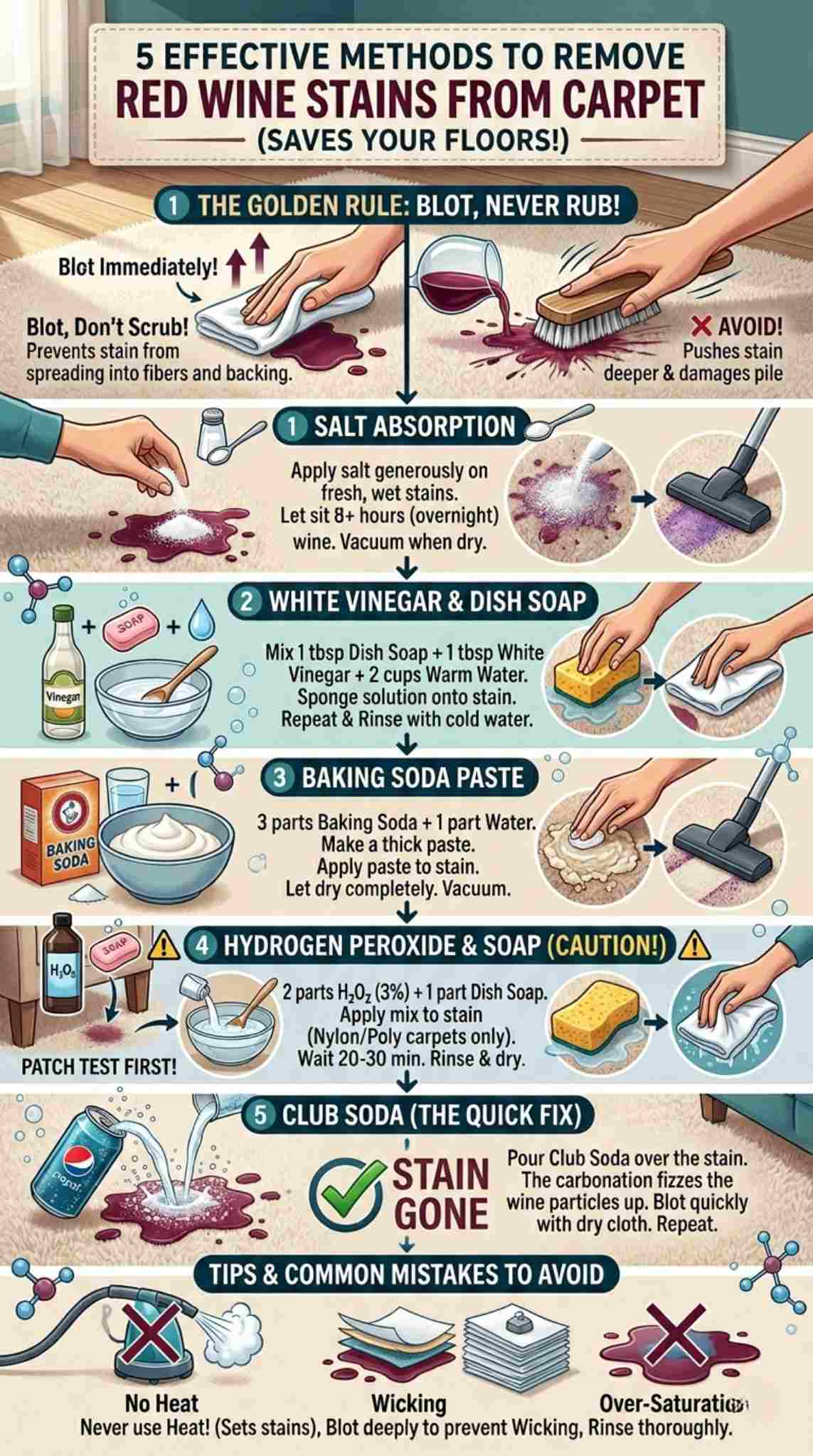
1. The Critical First Step: Blotting the Spill
Before you grab a single cleaning product, you have to handle the liquid sitting on the surface. If you skip this, any cleaner you pour on top will just spread the wine further into the fibers. The goal here is to pull as much wine up as possible before it reaches the carpet backing.
Why Blotting Matters
When you blot, you are using capillary action to move the liquid from the carpet into a cloth. Never, under any circumstances, should you scrub the area. Scrubbing frays the carpet fibers and pushes the wine deeper into the pad, which is how “ghost stains” reappear weeks later.
How to Blot Correctly
Take a clean, white cotton towel or a thick stack of paper towels. Start at the edges of the spill and work your way toward the center. Apply firm, downward pressure. If you have a shop vac that can handle liquids, that is even better. Keep moving to a clean section of the towel until no more red color shows up on the fabric.
|
Blotting Factor |
Recommendation |
Why it Matters |
|
Tool Choice |
White cotton cloth or paper towels |
Prevents dye transfer from the cloth to the carpet. |
|
Direction |
Outside to inside |
Keeps the stain from spreading horizontally. |
|
Pressure |
Firm and steady |
Pulls liquid from the base of the fibers. |
|
Motion |
Pressing only (No scrubbing) |
Protects carpet texture and prevents deep setting. |
2. Method 1: The Salt Absorption Technique
Salt is a miracle worker for fresh spills. It is cheap, safe, and incredibly effective at pulling moisture out of fabrics. It is best used on carpets that are still quite wet, as the salt needs moisture to do its job.
The Science of Salt
Salt is hygroscopic, meaning it attracts and holds water molecules. When you dump a pile of salt on a wine stain, it draws the liquid—and the red pigment—upward and away from the carpet. It essentially “drinks” the wine so your carpet doesn’t have to.
Steps to Use the Salt Method
After you have blotted the area, cover the entire stain with a thick layer of common table salt. You should not see any carpet through the salt pile. Let it sit for at least 8 hours or overnight. As the salt dries, it will turn pink or purple. Once it is totally dry and feels like a crust, vacuum it up thoroughly.
When to Avoid Salt
If the stain is already dry, salt won’t do much. You would need to re-wet the area with a little water first, but salt is truly the king of “active spill” management.
|
Feature |
Salt Method Details |
|
Best For |
Fresh, soaking wet spills. |
|
Waiting Time |
8 to 12 hours (Overnight is best). |
|
Required Tools |
Table salt, vacuum cleaner. |
|
Primary Pro |
Very cheap and zero chemical odor. |
|
Primary Con |
Can be messy to vacuum if the pile is deep. |
3. Method 2: White Vinegar and Dish Soap Mix
If the salt didn’t get it all, or if the stain has started to set, it is time to move to a chemical approach. White vinegar is acidic, which helps break down the tannins in the wine, while dish soap acts as a surfactant to lift the particles away from the fibers. This is one of the most reliable ways to remove red wine carpet marks from synthetic rugs.
Creating the Right Ratio
Don’t just pour vinegar on the floor. You need a balanced solution. Mix one tablespoon of clear dish soap (avoid the blue or green stuff if possible) and one tablespoon of white distilled vinegar with two cups of warm water. Warm water helps open the fibers, but make sure it isn’t boiling, as high heat can permanently set a stain.
The Application Process
Dip a sponge or cloth into your mix and dab it onto the stain. Let it sit for about five to ten minutes. You want the vinegar to react with the wine. After it has sat, blot the area with a dry cloth. You will likely see the red pigment transferring to your cloth. Keep repeating this until the stain is gone.
Rinsing is Key
Once the spot looks clean, sponge the area with plain cold water. If you leave soap in the carpet, it will act like a magnet for dirt, and you will end up with a dark “dirty” spot in a few weeks.
Read Also: How to Clean Stainless Steel Appliances Without Streaks
|
Component |
Amount |
Function |
|
White Vinegar |
1 Tablespoon |
Breaks down wine tannins and acidity. |
|
Dish Soap |
1 Tablespoon |
Lifts organic material from fibers. |
|
Warm Water |
2 Cups |
Dilutes the solution and opens carpet pile. |
|
Rinse Step |
Cold Water |
Removes soap residue to prevent future dirt buildup. |
4. Method 3: The Baking Soda Paste
Baking soda is a heavy hitter for stains that are starting to look a bit dull or brownish. It is excellent for deodorizing and lifting pigments that have settled. It works similarly to salt but is more effective at neutralizing the acidic nature of the wine.
Preparing the Paste
Mix a 3-to-1 ratio of baking soda to water. You want a thick, toothpaste-like consistency. If it is too runny, it will just soak into the pad. If it is too dry, it won’t react with the wine. Apply the paste directly over the blotted stain and gently press it into the carpet pile.
The Drying Phase
You must let the paste dry completely. This is not a fast process; it can take several hours. As the water evaporates, the baking soda pulls the wine into itself. Once the paste is a hard, dry crust, break it up slightly with a spoon and vacuum it away.
Why Professionals Use It
Baking soda is a mild abrasive and a natural whitener. It is often the safest bet for homeowners who are afraid of using harsher chemicals like bleach or peroxide on their expensive decor.
|
Step |
Action |
Expected Result |
|
Mixing |
3 parts baking soda, 1 part water |
A thick, spreadable paste. |
|
Application |
Spread over the stain and press in |
Deep penetration into the rug fibers. |
|
Waiting |
Let dry until hard |
Wine pigment is trapped in the soda crystals. |
|
Extraction |
Heavy vacuuming |
Clean, fresh-smelling carpet. |
5. Method 4: Hydrogen Peroxide (The Heavy Hitter)
When all else fails, hydrogen peroxide is the “nuclear option.” It is essentially a mild oxygen bleach. It is incredibly effective at killing the color of red wine, but it carries a risk: it can also kill the color of your carpet. You must use this with caution.
The Importance of the Patch Test
Before you use peroxide to remove red wine carpet stains, find a hidden spot (like inside a closet) and put a drop there. Wait 20 minutes. If your carpet changes color or turns white, do not use this method. If the color stays the same, you are good to go.
Using the Peroxide and Soap Combo
Mix two parts 3% hydrogen peroxide with one part dish soap. Gently dab the mixture onto the stain. You might see some tiny bubbles; that is the oxygen working to break down the wine molecules. Let it sit for about 20 minutes, then blot it up with a damp cloth. Keep the area away from direct sunlight while the peroxide is working, as UV rays can accelerate the bleaching process.
Fiber Compatibility
This method is usually safe for synthetic carpets like nylon or polyester. However, be extremely careful with natural fibers like wool or silk, as peroxide can weaken the protein fibers and cause permanent damage.
|
Safety Check |
Protocol |
Why? |
|
Concentration |
Use 3% Peroxide only |
Higher concentrations will definitely bleach the rug. |
|
Patch Test |
Test in a closet or corner |
Prevents accidental permanent white spots. |
|
Soap Choice |
Clear dish soap |
Prevents adding new dyes to the mess. |
|
Light Exposure |
Keep the room dim |
Prevents the peroxide from reacting too fast. |
6. Method 5: Using Club Soda
Club soda is the classic “party fix.” If you are in the middle of an event and don’t want to bring out the vacuum and baking soda, reach for the bar cart. The carbonation in club soda helps to fizz the wine particles up to the surface.
How Carbonation Helps
The bubbles (carbon dioxide) in club soda act as tiny scrubbers. They get underneath the wine molecules and lift them away from the carpet fibers. It also contains a small amount of sodium, which acts similarly to the salt method.
The Right Way to Pour
Don’t soak the whole floor. Pour just enough to cover the spot. You should see it fizzing. Immediately blot with a clean cloth. Repeat the “pour and blot” cycle three or four times. This is often enough to remove about 80-90% of the stain, making the final cleanup much easier the next day.
Is it Better than Water?
Yes. Plain water is okay, but it doesn’t have the lifting power of carbonation. Club soda is also less likely to leave a “ring” around the stain than tap water, which can sometimes contain minerals that react with the wine.
|
Attribute |
Club Soda Stats |
|
Effectiveness |
High for immediate action. |
|
Ease of Use |
Very easy; no mixing required. |
|
Residue |
Zero (if unflavored). |
|
Best Feature |
Carbonation lifts pigment to the surface. |
Understanding Different Carpet Fibers
Not all carpets are created equal. How you remove red wine carpet stains depends heavily on what your floor is made of. Before you start pouring chemicals, take a second to identify your rug.
Synthetic Fibers (Nylon, Polyester, Triexta)
Most modern wall-to-wall carpets are synthetic. These are built to be stain-resistant. They can usually handle vinegar, soap, and even peroxide quite well. They are non-porous, meaning the wine sits on the outside of the fiber for a little while before soaking in.
Natural Fibers (Wool, Cotton, Sisal)
Wool is a protein fiber. It is very porous and will soak up red wine like a sponge. Wool is also sensitive to high pH levels. You should never use harsh detergents or bleach on wool. Stick to a very diluted vinegar solution or club soda. If you have an expensive Oriental rug made of silk, don’t try DIY methods—call a pro.
The “Wicking” Problem
Sometimes you clean a stain, it looks great, and then two days later, it’s back. This is called wicking. It happens when the wine has soaked into the carpet pad. As the carpet dries, the moisture from the pad travels up the fibers to the surface, bringing the stain back with it. To prevent this, always place a heavy weight on a stack of towels over the cleaned area to draw out deep moisture.
Dealing with Old or Dried Wine Stains
What if you didn’t see the spill until the next day? Dried wine is a different beast because the tannins have chemically bonded with the carpet. You need to “re-activate” the stain.
Rehydrating the Pigment
The best way to start is by spraying the spot with a little bit of warm water or a specialized wine remover. Give it a few minutes to soften the crusty wine. Once it is wet again, you can use the Vinegar or Baking Soda methods.
Glycerin and Shaving Cream
Some pros swear by using a bit of glycerin to soften old stains. Others use plain white foam shaving cream (not the gel). The foam has a lot of air and surfactants that can penetrate dried-on wine. Apply the foam, let it sit for 15 minutes, and then wipe it away with a damp cloth.
|
Dried Stain Tip |
Method |
Why it works |
|
Softening |
Warm water mist |
Breaks the bond of the dried sugars. |
|
Agitation |
Soft-bristled brush |
Gently loosens dried particles from the pile. |
|
Chemical Lift |
Enzymatic cleaners |
Breaks down the organic proteins in the wine. |
Common Mistakes to Avoid
Even if you are careful, a few common errors can make a temporary spill a permanent eyesore.
- Using Hot Water: Heat is the enemy. It “cooks” the proteins and tannins into the fiber. Always use lukewarm or cool water.
- Too Much Liquid: If you soak the carpet, the wine will just travel down into the subfloor. Once it’s in the wood or concrete under the carpet, you’ll never get the smell or the shadow out.
- Colored Cleaners: Never use a dish soap that has a strong dye (like dark blue or orange). You might end up replacing a red stain with a blue one.
- Giving Up Too Soon: Wine removal often takes three or four “passes.” If it doesn’t come up the first time, let it dry slightly and try again.
Final Thoughts
Spilling a drink doesn’t have to be the end of your carpet’s life. Whether you use the salt method for a fresh splash or the vinegar mix for a stubborn mark, the key to remove red wine carpet stains is patience and the right technique. Most of these methods rely on basic science—neutralizing acids, absorbing moisture, or lifting pigments with bubbles.
The most important thing is to keep a cool head. Don’t start scrubbing like crazy, and don’t pour half a gallon of bleach on your rug. Take it step by step, start with the gentlest method first, and move up to the stronger stuff only if you need to. With a little effort, your carpet will look as good as new, and you can get back to enjoying your evening.
FAQs: Uncommon Wine Stain Questions
Can I use white wine to get out red wine?
This is a bit of an old wives’ tale. While the alcohol in white wine can help dilute the red pigment, you are essentially just adding more sugar and fruit acid to the carpet. It’s better to use water or club soda which doesn’t leave a sticky residue.
Does salt ruin the carpet backing?
In small amounts, no. But if you leave a massive pile of salt for a week, it can draw moisture from the air and potentially damage the latex glue that holds the carpet together. Always vacuum it up within 24 hours.
What if my carpet is “Stain-Master” treated?
If your carpet has a factory coating, you have a huge head start. Most of these treatments are designed to keep liquids from penetrating the fiber for up to 15-20 minutes. If you blot it immediately, you might not even need any chemicals at all.
Why did my stain turn blue or black?
This is a chemical reaction. Some red wines react with the alkaline nature of certain soaps or baking soda, shifting the color from red to blue/gray. Don’t panic; it just means the pH level changed. Applying a mild acid like vinegar usually flips the color back and helps lift it.
Is vodka effective for wine stains?
Actually, yes. High-proof, clear alcohol like vodka can act as a solvent for the pigments in wine. It’s better than white wine because it doesn’t have the sugars. Just pour a little on a cloth and dab.