
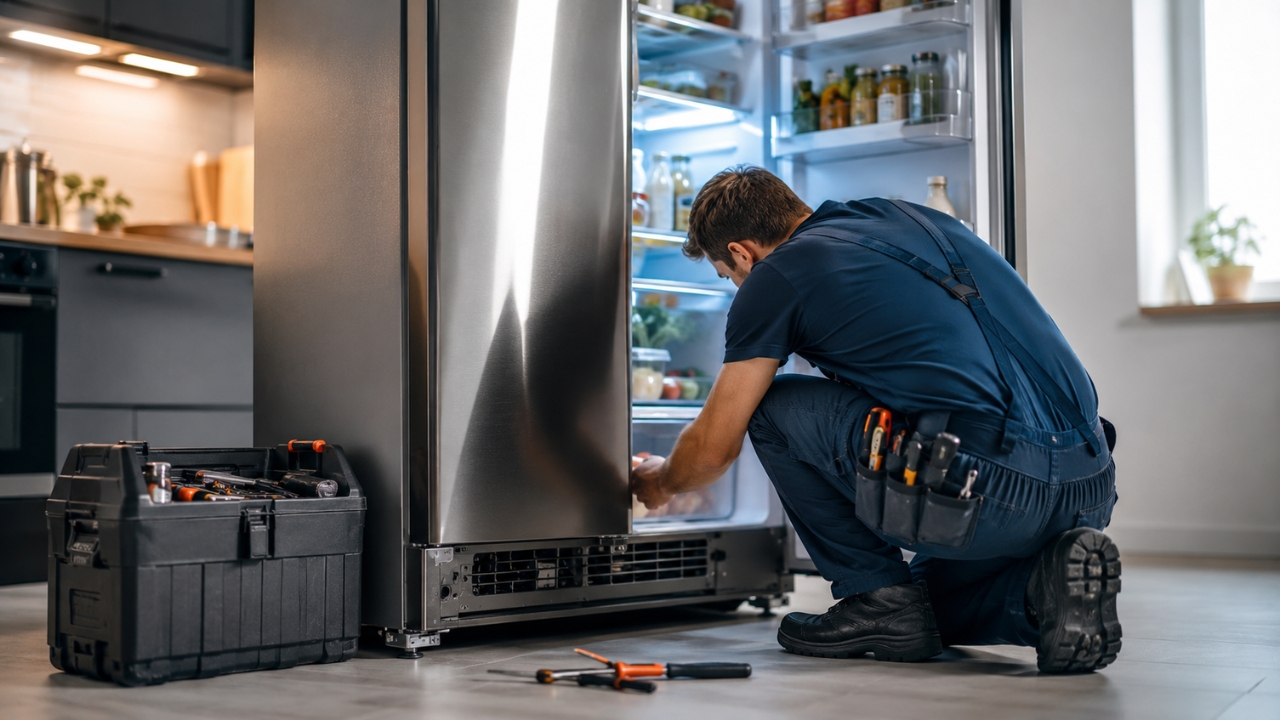
A refrigerator should run. That’s its job. But when a running refrigerator wont stop, something feels off. You hear the same low hum all day. The sides may feel warm. The freezer may start frosting up. The fresh food section may feel too warm, too cold, or just inconsistent.
And then there’s the power bill.
The good news is simple: a fridge that runs nonstop doesn’t always mean the compressor is dying. Most of the time, the cause is easier to fix. Dirty coils, blocked vents, weak door seals, wrong temperature settings, poor airflow, or a hot kitchen can all make your fridge work harder than it should.
This guide walks you through the checks in the right order. Start with the simple fixes. Then look for signs that point to a faulty part or a repair call.
Check Food Safety First
Before you troubleshoot the machine, check the food.
A refrigerator problem can become a food safety problem faster than most people think. The fridge should stay at 40°F or below. For regular daily use, 35°F to 38°F is a good target. The freezer should stay around 0°F.
Don’t trust the display alone. Some fridge controls show the setting, not the real inside temperature. A small appliance thermometer gives a much better answer.
Put one thermometer in the middle of the fridge. Put another in the freezer. Wait a few hours before checking the readings.
|
What to Check |
Safe or Normal Range |
What It Means |
|
Fresh food section |
35°F to 40°F |
Food should stay safe and fresh |
|
Freezer |
Around 0°F |
Frozen food should stay solid |
|
Fridge above 40°F |
Not safe for long |
Cooling issue needs attention |
|
Freezer above 10°F |
Not ideal |
Check airflow, frost, fan, or cooling system |
|
Burning smell |
Never normal |
Turn it off if safe and call a technician |
If perishable food has stayed above 40°F for more than two hours, don’t take risks. Meat, seafood, dairy, cooked leftovers, and cut fruit can spoil quickly.
Why a Running Refrigerator Wont Stop
A fridge keeps running when it can’t reach or hold the right temperature.
That usually happens for one of two reasons.
Warm air keeps getting in. This can happen when the door gasket is dirty, loose, cracked, or not sealing. A door that doesn’t close fully can do the same thing.
Or the fridge can’t get rid of heat properly. Dirty condenser coils, poor ventilation, a hot kitchen, or a failing fan can trap heat around the appliance.
There’s one more thing to know. Some newer refrigerators run longer by design. Variable-speed compressors may run for long stretches at a lower speed. That can be normal if the fridge and freezer temperatures stay steady.
So don’t judge by sound alone. Judge by temperature, cooling performance, and warning signs.
|
Possible Cause |
Common Sign |
First Fix |
|
Dirty condenser coils |
Fridge runs long and feels warm outside |
Clean the coils |
|
Weak door seal |
Frost, moisture, or loose gasket |
Clean or replace the gasket |
|
Blocked vents |
Uneven cooling |
Move food away from vents |
|
Setting too cold |
Compressor works too hard |
Adjust temperature |
|
Hot food inside |
Fridge runs for hours |
Let it recover |
|
Poor clearance |
Heat gets trapped |
Improve airflow around the fridge |
|
Faulty fan |
Weak airflow or odd noise |
Call a repair technician |
|
Defrost issue |
Frost keeps building up |
Technician may need to test parts |
|
Compressor issue |
Runs but does not cool well |
Professional diagnosis needed |
A running refrigerator wont stop when the appliance keeps fighting heat, air leaks, frost, or bad temperature signals.
Start With the Temperature Settings
This is the easiest place to begin.
If the temperature is set too cold, the compressor may run longer than needed. If the setting is too warm, the fridge may keep trying to catch up.
For most homes, set the fridge near 37°F. Set the freezer near 0°F. Then leave it alone for a while.
Refrigerators don’t respond instantly. After you change the setting, wait several hours before judging the result. If the fridge was just installed, moved, cleaned, or packed with groceries, it may need 24 hours or more to settle.
|
Situation |
What Happens |
What to Do |
|
Fridge set too cold |
Compressor runs longer |
Raise the setting slightly |
|
Freezer set too cold |
Unit works harder |
Set freezer near 0°F |
|
New installation |
Cooling takes time |
Wait 24 hours |
|
Big grocery load |
Interior warms up |
Avoid opening the door often |
|
Hot leftovers added |
Fridge works harder |
Store food in shallow containers |
|
Cooling Off or Demo Mode |
Fridge may not cool |
Check the manual and turn cooling on |
Don’t keep lowering the temperature again and again. That usually makes the fridge run longer and hides the real problem.
Use a thermometer. Make one small adjustment. Then give the fridge time.
Clean the Condenser Coils
Dirty condenser coils are one of the biggest reasons a refrigerator runs too much.
The coils help release heat from the fridge. When dust, lint, grease, or pet hair covers them, heat gets trapped. The compressor then runs longer because the fridge has to work harder to stay cold.
The coils may sit behind the fridge, underneath it, or behind the lower front grille. Some newer models have covered coils or different cleaning needs, so check the owner’s manual if you’re not sure.
|
Coil Cleaning Step |
What to Do |
|
Turn off power |
Unplug the fridge or switch off the breaker |
|
Find the coils |
Look behind, underneath, or behind the lower grille |
|
Use safe tools |
Vacuum, soft brush, or coil brush |
|
Be gentle |
Don’t bend fins or pull water lines |
|
Clean around it |
Vacuum the floor and wall area too |
|
Turn it back on |
Replace panels and restore power |
|
Watch results |
Monitor temperature and run time for 24 hours |
Clean the coils every 6 to 12 months. Do it more often if you have pets, heavy dust, or a kitchen that gets greasy.
This small job can make a real difference. It helps the fridge cool better, lowers strain, and may reduce wasted energy.
Check the Door Seal
A bad door seal can quietly ruin refrigerator performance.
The rubber strip around the door is called the gasket. It keeps cold air in and warm air out. If it gets dirty, cracked, loose, or warped, warm air slips inside. The fridge then keeps running to replace the lost cold air.
Try the paper test. Close the door on a sheet of paper or a dollar bill. Pull it out slowly. You should feel light resistance.
Test several spots around the door, not just one.
|
Door Problem |
What You May Notice |
Fix |
|
Dirty gasket |
Paper slips out easily |
Clean with mild soap and water |
|
Cracked gasket |
Gaps or visible damage |
Replace the gasket |
|
Door not level |
Door swings open |
Adjust the leveling legs |
|
Food blocking door |
Door won’t shut fully |
Move items back |
|
Light stays on |
Heat builds inside |
Check the door switch |
|
Weak magnetic seal |
Moisture near the edge |
Clean or replace the seal |
Clean the gasket with warm water and mild dish soap. Dry it well. Sticky spills, crumbs, and grease can stop the seal from gripping.
Also check shelves, bins, and food packages. A drawer that sticks out half an inch can keep the door from closing properly.
A fridge should usually lean back just a little so the door closes on its own. Check your manual before adjusting the feet.
Read Also: How to Grow Herbs Indoors Year-Round: Complete Guide
Fix Blocked Airflow Inside the Fridge
Cold air needs space to move.
If containers, bags, or boxes block the vents, the fridge can’t cool evenly. One section may freeze while another stays too warm. The thermostat may keep telling the compressor to run because the cold air isn’t reaching the right area.
This is common after a big grocery trip. People push food against the back wall or pack the freezer too tightly.
|
Airflow Issue |
What You May Notice |
Fix |
|
Blocked fridge vent |
Warm spots inside fridge |
Move items away from vents |
|
Blocked freezer vent |
Soft frozen food |
Rearrange freezer items |
|
Overpacked shelves |
Poor air circulation |
Leave gaps between items |
|
Almost empty fridge |
Temperature swings faster |
Add water bottles if needed |
|
Frost on freezer wall |
Ice may block airflow |
Defrost and inspect the cause |
Don’t overfill the fridge. But don’t keep it nearly empty either. A moderately stocked fridge holds temperature better.
Keep vents open. Don’t push plastic bags, large containers, pizza boxes, or trays against the back wall.
If heavy frost appears on the inside back wall of a frost-free freezer, that may point to a defrost problem. If the frost returns after you clear it, call a technician.
Look at the Fridge Location
Your refrigerator may be working too hard because of where it sits.
Heat makes a fridge run longer. If the unit is beside an oven, dishwasher, sunny window, radiator, or tight cabinet, it has to fight extra warmth all day.
Garages can also cause trouble. Some refrigerators are not made for extreme heat or cold. A regular kitchen fridge may struggle in a hot garage during summer.
|
Placement Problem |
Why It Matters |
Better Setup |
|
Near oven or stove |
Adds heat |
Move it if possible |
|
Direct sunlight |
Warms the cabinet |
Use shade or relocate |
|
Tight wall clearance |
Traps heat |
Leave proper space |
|
Hot garage |
Makes cooling harder |
Use a garage-ready model |
|
Blocked top space |
Limits ventilation |
Keep space open |
|
Dust behind fridge |
Holds heat |
Vacuum behind and underneath |
Pull the fridge forward carefully and check behind it. Clean the floor, wall, rear cover, and vent area.
Also check clearance. Different models need different space around the sides, back, and top. Built-in and counter-depth models may vent differently from freestanding units.
Good airflow around the outside helps the inside stay cold.
When Long Run Time Is Actually Normal
Here’s the part many people miss.
A fridge that runs often is not always broken.
Modern refrigerators don’t always work like older models. Some high-efficiency units run longer at lower power. Some variable-speed compressors may run most of the time, except during defrost cycles.
That can be normal if the temperature stays stable.
|
Situation |
Is Longer Running Normal? |
What to Watch |
|
New high-efficiency fridge |
Often, yes |
Stable temperature |
|
Variable-speed compressor |
Often, yes |
Low, steady sound |
|
Hot weather |
Can be normal |
Fridge still below 40°F |
|
Big grocery load |
Normal for a while |
Should settle within 24–48 hours |
|
Door opened often |
Normal response |
Reduce door opening |
|
Runs nonstop and food warms |
Not normal |
Troubleshoot or call a technician |
If your fridge is cold, the freezer is near 0°F, and there are no warning signs, it may simply be doing its job.
But if the fridge runs constantly and still can’t cool well, that’s not normal.
Parts That Can Make a Fridge Run Constantly
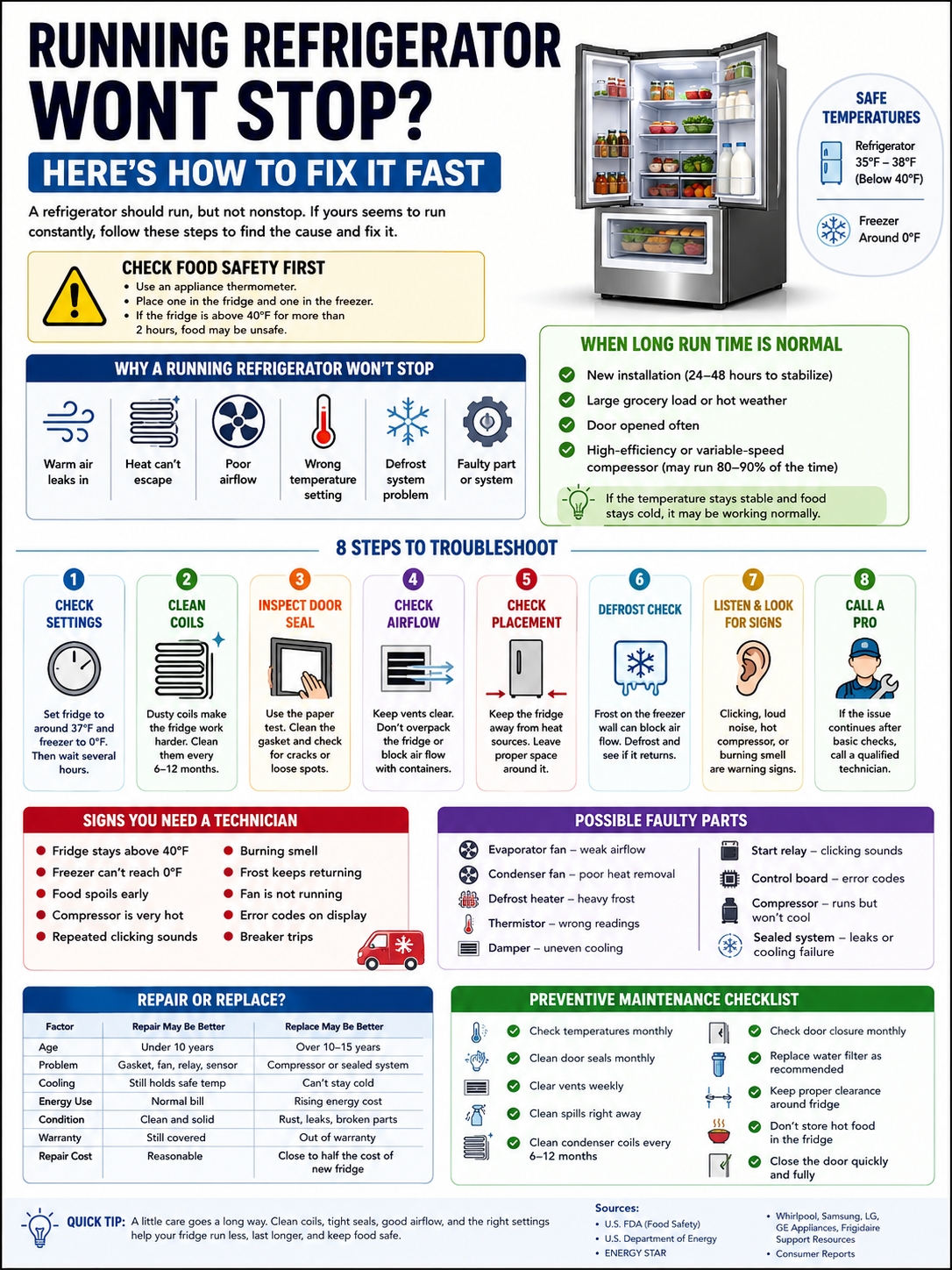
If the simple fixes don’t help, a part may be failing.
Don’t start replacing parts blindly. Several problems can look the same from the outside. That’s why diagnosis matters.
|
Part or System |
What It Does |
Warning Sign |
|
Evaporator fan |
Moves cold air inside |
Freezer cold, fridge warm |
|
Condenser fan |
Helps remove heat |
Compressor area gets very hot |
|
Defrost heater |
Melts frost from coils |
Heavy frost on freezer wall |
|
Defrost sensor or thermostat |
Controls defrost cycle |
Frost keeps coming back |
|
Thermistor |
Reads temperature |
Random warm or freezing spots |
|
Damper |
Controls cold air flow |
Fridge too warm or too cold |
|
Start relay |
Helps compressor start |
Repeated clicking sound |
|
Control board |
Manages cooling parts |
Error codes or strange behavior |
|
Compressor or sealed system |
Moves refrigerant |
Runs but barely cools |
A defrost problem often shows up as frost on the freezer’s back wall. That frost can block airflow and make the refrigerator section warm.
A fan problem may cause weak airflow or odd noises. A start relay problem may cause clicking. A sealed system problem is more serious and needs professional repair.
When to Call a Repair Technician
Some refrigerator fixes are safe for homeowners. Others are not worth the risk.
You can clean coils, check the gasket, clear vents, adjust settings, and improve clearance. Those are simple and safe for most people.
But electrical testing, refrigerant work, compressor repair, and control board work need a trained technician.
Call a repair technician if you notice any of these signs:
- The fridge stays above 40°F.
- The freezer cannot reach 0°F.
- Food spoils early.
- The compressor feels extremely hot.
- You hear repeated clicking.
- You smell burning.
- Frost keeps returning after defrosting.
- A fan does not run.
- The display shows error codes.
- The breaker trips.
- The fridge is still under warranty.
|
Symptom |
Best Next Step |
Why |
|
Dirty coils |
Clean them yourself |
Simple and low risk |
|
Weak gasket |
Clean or replace it |
Common and fixable |
|
Blocked vents |
Rearrange food |
Quick fix |
|
Heavy frost behind panel |
Call a technician |
Defrost parts may need testing |
|
Repeated clicking |
Call a technician |
Could be relay or compressor |
|
Warm fridge after basic checks |
Call a technician |
Deeper cooling issue possible |
|
Burning smell |
Stop using it and call a technician |
Safety risk |
If your fridge is under warranty, don’t open sealed panels or try complex repairs. You may void the warranty.
Repair or Replace: What Makes More Sense?
A running refrigerator wont stop problem can be a cheap fix. It can also be a sign that the fridge is nearing the end.
Age matters. So does the repair cost.
If the fridge is under 10 years old and the issue is a gasket, fan, relay, sensor, or defrost part, repair often makes sense.
If the fridge is older, noisy, inefficient, rusty, leaking, or facing a compressor repair, replacement may be smarter.
|
Factor |
Repair May Be Better |
Replacement May Be Better |
|
Age |
Under 10 years |
Over 10–15 years |
|
Fault |
Gasket, fan, relay, sensor |
Compressor or sealed system |
|
Cooling |
Still holds safe temperature |
Cannot stay cold |
|
Energy use |
Bill looks normal |
Bill keeps rising |
|
Condition |
Clean and solid |
Rust, leaks, broken bins |
|
Warranty |
Still covered |
Out of warranty |
|
Repair cost |
Reasonable |
Close to half the cost of a new fridge |
Do not replace a fridge just because it runs often. Check temperatures first. Then check coils, seals, vents, and placement.
But don’t keep spending money on an old fridge that can’t cool safely. At that point, replacement may save stress and energy.
How to Keep the Problem From Coming Back
A refrigerator doesn’t need much attention. But it does need some.
Small habits can prevent long run times, food spoilage, and costly repairs.
|
Maintenance Task |
How Often |
Why It Helps |
|
Check fridge temperature |
Monthly |
Protects food safety |
|
Check freezer temperature |
Monthly |
Confirms proper freezing |
|
Clean door seals |
Monthly |
Stops air leaks |
|
Clear vents |
Weekly |
Improves airflow |
|
Clean spills |
Right away |
Prevents sticky seals and odors |
|
Clean condenser coils |
Every 6–12 months |
Helps release heat |
|
Check door closure |
Monthly |
Prevents warm air leaks |
|
Replace water filter |
As the manual says |
Helps dispenser and ice maker |
|
Check outside clearance |
Twice a year |
Stops trapped heat |
Also make it a house rule: close the door fully.
Don’t stand with the fridge open while deciding what to eat. Don’t push food against vents. Don’t place hot pots straight into the fridge. Use shallow containers and let steam escape safely first.
These small things help the fridge work less.
Final Thoughts
When a running refrigerator wont stop, don’t panic. And don’t assume the compressor is dead.
Start with the simple checks. Measure the real temperature. Clean the condenser coils. Check the door seal. Clear the vents. Make sure the fridge has enough space around it. Review recent changes, like a large grocery load or hot weather.
Many nonstop-running fridge problems come from airflow, heat, or door seal issues. Those are often easy to fix.
But don’t ignore warning signs. If the fridge stays above 40°F, the freezer won’t reach 0°F, frost keeps returning, or you hear clicking or smell burning, call a technician.
Your fridge works every day without much attention. Give it clean coils, tight seals, open vents, and the right settings. That’s often enough to stop the extra running and keep your food safe.
Uncommon FAQs About a Refrigerator That Keeps Running
Can the fridge light make it run nonstop?
Yes. If the light stays on after the door closes, it adds heat inside the fridge. That heat can make the compressor run longer. Check the door switch if the bulb feels hot or you suspect it stays on.
Can a refrigerator catch fire if it runs nonstop?
It’s rare, but electrical problems can be dangerous. If you smell burning, see smoke, hear buzzing from the outlet, or notice a hot plug, stop using the fridge and call a technician.
Why is my freezer cold but the refrigerator warm?
This often means cold air is not moving into the fridge section. A blocked vent, bad evaporator fan, stuck damper, or frost buildup can cause it.
Should I unplug the fridge to reset it?
Only do this if your manual recommends it or if you need to clean it safely. Keep food safety in mind. A long power-off period can spoil food.
Can too much food make a fridge run nonstop?
Yes. Overpacking blocks airflow. The fridge may run longer because cold air can’t move around properly.
Can too little food make a fridge run longer?
Sometimes. A nearly empty fridge can have faster temperature swings. A few bottles of water can help stabilize the temperature.
Is it normal for the side of the fridge to feel warm?
Mild warmth can be normal. Refrigerators release heat as part of the cooling process. But if the sides feel very hot and the fridge is not cooling well, check the coils, clearance, and condenser fan.
Can a smart fridge app find this issue?
Sometimes. A smart fridge may show error codes or temperature alerts. But it may not detect simple problems like dirty coils, blocked vents, poor leveling, or a weak door seal.