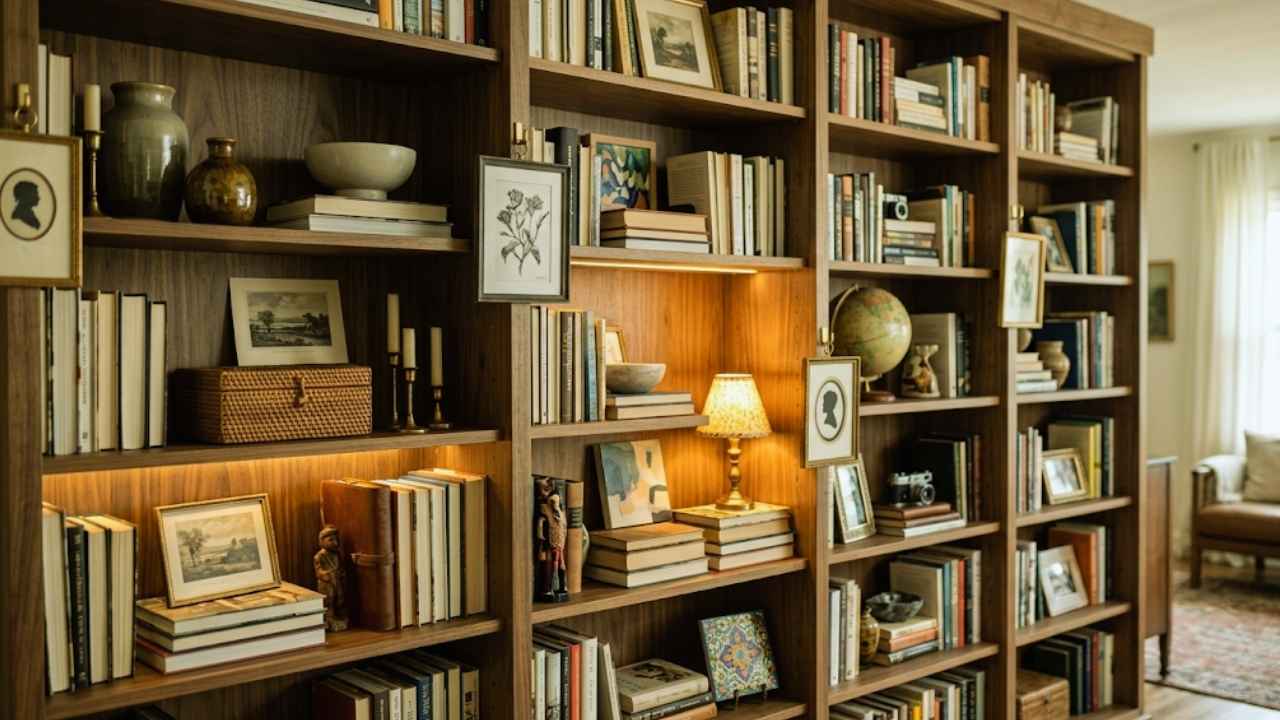
Imagine your living room is a conversation. If the sofa is the greeting and the coffee table is the small talk, your bookshelf is the deep, late-night discussion where things actually get interesting. In recent years, we have moved past the idea that a shelf is just a wooden plank meant to hold paper. Today, it is a curated gallery. It is a visual autobiography of where you have been, what you love, and how you think.
Whether you are working with a massive wall-to-wall library or a couple of floating shelves in a tiny apartment, the goal is always the exact same thing ~ balance. A savvy homeowner understands that modern bookshelf styling 2026 is not about filling every square inch of space with random items. It is about the art of curation taken to a professional level.
We are looking for that perfect mix of height, texture, and personality that makes a room feel completely finished. This guide will walk you through the exact steps designers use to create those effortless, high-end looks you see in magazines, all while keeping things functional and deeply personal.
Why Bookshelf Styling Matters in 2026
Home design has become much more intentional lately. Since many of us spend more time at home than we used to, every single corner needs to pull its weight. A messy, overloaded shelf creates mental noise, while a sterile, empty one feels cold and uninviting. Mastering modern bookshelf styling 2026 allows you to control the energy of your entire room. It turns a boring storage unit into a focal point that draws people in and makes them want to stay.
We are moving away from mass-produced clutter and leaning into items that feel handmade or have a specific story behind them. A well-styled shelf acts as a display case for these treasures, showing off your taste without shouting about it. If you are staging a home to sell, a professionally styled shelf suggests a high-end lifestyle to buyers. It makes the architecture of the house look more expensive and thoughtful. Plus, since our homes are now our offices, a smart bookshelf is the ultimate professional background for video calls.
|
Feature |
Why It Matters Today |
Design Impact |
|
Personal Branding |
Reflects your personality and interests |
Makes the space feel authentic |
|
Mental Clarity |
Reduces visual clutter in the room |
Creates a more peaceful environment |
|
Room Balance |
Adds vertical interest to flat walls |
Draws the eye upward to make ceilings look high |
|
Video Backdrop |
Replaces fake digital backgrounds |
Shows colleagues you are organized |
Core Principles of Professional Shelf Styling
Designers do not just throw things onto a shelf and hope for the best. They follow a set of invisible rules that help the human eye move comfortably across the display. These principles ensure that your shelves look balanced from across the room.
The Rule of Thirds and Visual Weight
Visual weight is a concept that describes how much space an object seems to take up in your mind. A dark, heavy book naturally feels much heavier than a light-colored glass vase of the exact same size. To get this right, you want to avoid putting all your heavy items on one side of the shelf, which makes the whole unit look like it might tip over. Use the rule of thirds to place your most important pieces slightly off-center.
Imagine a grid over your shelves and place your focal points where those grid lines cross. This technique keeps the look dynamic and prevents it from feeling too rigid or perfectly symmetrical. You should always anchor the bottom shelves with your visually heaviest pieces, like oversized art books or large wooden storage bins. As you move upward, the items should gradually become lighter and more delicate. This diagonal zig-zag balancing act ensures that visual weight is evenly distributed across the entire structure.
|
Object Type |
Visual Weight Level |
Ideal Shelf Placement |
|
Large Woven Baskets |
Very Heavy |
Bottom shelves only |
|
Thick Art Books |
Heavy |
Lower to middle shelves |
|
Ceramic Bowls |
Medium |
Middle shelves, off-center |
|
Glass Vases |
Light |
Top shelves |
Negative Space as a Design Element
One of the hardest lessons for most people to learn is that empty space is not wasted space. We often feel a strong urge to fill every single gap with a trinket or a book. You need to stop doing that immediately if you want a designer look. Negative space is the empty air around your objects, and it is just as important as the objects themselves. It gives the eye a place to rest and makes the items you do choose to display look much more important.
If a shelf is packed completely full from edge to edge, it registers in the brain as simple storage. If it is only partially full, it registers as a deliberate design choice. You should aim to leave roughly one-third of your total shelf space entirely empty. This empty space acts as a frame, elevating your belongings from mere clutter to curated art.
|
Space Type |
Purpose in Design |
Expected Visual Outcome |
|
Empty Shelf Ends |
Prevents a crammed look |
Makes the unit feel wider |
|
Gaps Between Groups |
Provides a visual break |
Highlights individual objects |
|
Top Clearance |
Stops books from touching the next shelf |
Creates an airy, open feeling |
|
Bare Middle Shelf |
Acts as a central focal point |
Draws attention to one hero item |
The 70/30 Vertical to Horizontal Ratio
If every single book on your shelf is standing straight up, it looks exactly like a traditional public library. While that is highly functional, it lacks visual interest and feels very stiff. On the flip side, if every book is stacked flat, it looks like a warehouse waiting for inventory. The magic golden ratio that designers use is roughly seventy percent vertical arrangements and thirty percent horizontal stacks.
You use your vertical rows to provide structure and height to the display. Then, you use your horizontal stacks to act as built-in pedestals for smaller decorative items. A tiny vintage brass figurine placed directly on the wooden shelf might look completely lost. However, placing that same figurine on top of three stacked hardcover books gives it immediate presence and importance. This mix of lines creates a natural rhythm that feels high-end.
|
Stacking Method |
Visual Effect |
Best Used For |
|
Vertical Rows |
Adds height and structure |
Storing novels and reading materials |
|
Horizontal Stacks |
Breaks up vertical monotony |
Creating pedestals for small decor |
|
Leaning Books |
Adds a casual, relaxed vibe |
Displaying beautiful book covers |
|
Bookended Groups |
Creates distinct, separate zones |
Highlighting a specific book series |
Top Bookshelf Design Trends for 2026
Interior design trends come and go, but the ones sticking around this year focus heavily on nature and tactile warmth. We are seeing a huge move away from fast furniture and sterile environments.
Biophilic Design and Organic Integration

Plants are absolutely no longer optional when it comes to interior design. Bringing the outdoors inside is a critical component of modern bookshelf styling 2026. We are tucking live vines, trailing pothos, and hearty succulents into the small gaps between book stacks. This is part of biophilic design, which connects our indoor spaces to the natural world. A trailing plant on a top shelf creates a beautiful, cascading organic line that perfectly softens the hard, rigid edges of the wooden bookcase.
Furthermore, these organic elements extend to the decor objects themselves. You will see plenty of dried botanicals, branches of curly willow, and pieces of natural driftwood used as sculptural accents. These natural elements introduce unpredictable shapes that beautifully contrast with the sharp, rectangular edges of your books.
|
Plant Type |
Placement Strategy |
Maintenance Level |
|
Trailing Pothos |
Top shelves to drape downward |
Low maintenance, weekly watering |
|
Small Succulents |
Atop horizontal book stacks |
Very low maintenance, bright light |
|
Dried Willow Branches |
Tall vases on middle shelves |
Zero maintenance, lasts forever |
|
Air Plants |
Tucked into natural stone bowls |
Medium maintenance, requires misting |
Warmer Tones and Chunky Wood Profiles
The era of pale, cool-toned ash and stark white floating shelves is officially over. Homeowners are now fully embracing rich walnut, dark oak, and deep espresso-stained woods. These darker backdrops provide incredible contrast, allowing light-colored ceramics and the creamy pages of books to pop vividly. Additionally, the physical profile of the shelving itself is changing dramatically.
Flimsy, thin boards are being replaced by thick, chunky wood profiles that look architectural and completely custom-built. When you are styling these substantial shelves, your decor needs to match the grand scale. Delicate, tiny items will look entirely out of place on a thick walnut slab. You need objects with enough physical presence to hold their own against the heavy, dark wood.
|
Wood Finish |
Room Vibe Created |
Best Accent Decor Colors |
|
Dark Walnut |
Moody, sophisticated, and rich |
Creams, whites, and brass |
|
Warm Oak |
Cozy, inviting, and natural |
Sage greens, terracotta, and matte black |
|
Espresso |
Traditional, heavy, and formal |
Silver, crystal, and stark white |
|
Reclaimed Pine |
Rustic, textured, and relaxed |
Wrought iron, natural linen, and slate |
Curved Lines and Feng Shui Harmony
Everything used to be designed with sharp corners and harsh ninety-degree angles. Now, we are seeing a massive shift toward arched bookshelves and rounded decorative objects. This trend is all about promoting flow and comfort within the home, drawing heavy inspiration from modern Feng Shui principles. Sharp corners are believed to create visual tension, while curves promote a gentle, relaxing flow of energy.
While your actual bookshelf might still be rectangular, you can easily introduce this calming trend through your styling choices. Incorporate objects with rounded silhouettes, such as spherical stone vases, circular marble bookends, or beautifully curved brass sculptures. These soft shapes provide immediate visual relief and make the entire display feel much more welcoming.
|
Object Shape |
Energy Provided |
Example Decor Item |
|
Spherical |
Wholeness and continuous flow |
Round marble bookends |
|
Arched |
Softness and gentle transition |
Arched ceramic vases |
|
Wavy |
Movement and calm energy |
Sculptural curved driftwood |
|
Oval |
Balance and grounding focus |
Oval wooden picture frames |
The Step-by-Step Designer Process
If you want to achieve a professional look, you have to be willing to make a temporary mess. You cannot properly style a shelf that is already full of old mail and dusty trinkets. You need a completely clean slate to start.
Step One: The Complete Edit and Declutter
You cannot effectively style anything until you remove every single item from your shelves. Empty them completely. Wipe down the wood thoroughly, and stand back to look at the blank canvas. Take all the items you just removed and lay them out on the floor or a large dining table. This forces you to actually evaluate every single piece. Create three distinct zones for your items.
Zone one is for items you love and definitely want to display. Zone two is for items that are functional but ugly. Zone three is for items you simply no longer need. Functional but ugly items, like torn paperbacks or old plastic binders, must be relocated to closed storage cabinets. Only the pieces you genuinely love should ever make it back onto the open shelves.
|
Pile Category |
Action Required |
Final Destination |
|
Keep and Display |
Wipe down and prep for styling |
Back on the open shelves |
|
Functional but Ugly |
Remove from the visual display |
Hidden in closed cabinets |
|
Donate or Sell |
Pack into boxes immediately |
Thrift store or online marketplace |
|
Trash or Recycle |
Discard broken or useless items |
Recycling bin or trash can |
Step Two: Categorizing and Sorting Your Collection
Before placing a single book back onto the shelf, you need to sort your entire collection. Depending on the specific aesthetic you want to achieve, you can sort them in a few different ways. You might group them by exact color, which creates a highly curated, modern look.
Alternatively, you can sort them by size and subject matter for a more traditional feel. This is also the exact time to make hard decisions about your dust jackets. Many designers prefer to completely remove paper dust jackets from hardcover books. Underneath the glossy, chaotic marketing covers, you will usually find beautiful, solid-colored linen bindings. Exposing these neutral spines instantly elevates the sophistication of your collection.
|
Sorting Method |
Visual Style Achieved |
Ideal For |
|
By Color Hue |
Bold, modern, and highly graphic |
Contemporary living rooms |
|
By Book Size |
Clean, organized, and structured |
Home offices and formal spaces |
|
By Subject |
Functional and highly practical |
Avid readers and reference libraries |
|
Naked Spines |
Neutral, textured, and cohesive |
Minimalist and calm environments |
Step Three: Placing the Heavy Anchors
Always start the styling process with your absolute largest and heaviest items. These are your anchors. Place large storage baskets or heavy wooden crates on the very bottom shelf to ground the entire unit. Next, distribute your largest art, photography, and architecture books. Do not put all the heavy items on one side of the bookcase.
You need to zig-zag them as you move up the shelves. If you place a heavy stack of horizontal books on the bottom left, place the next heavy element on the middle right, and the next on the upper left. This diagonal balancing act ensures that your visual weight is evenly distributed so the shelves do not feel top-heavy.
|
Anchor Item |
Weight Category |
Visual Purpose |
|
Woven Baskets |
Extremely Heavy |
Grounds the bottom of the unit |
|
Coffee Table Books |
Heavy |
Provides sturdy horizontal bases |
|
Large Sculptures |
Medium-Heavy |
Fills large vertical gaps |
|
Thick Storage Boxes |
Heavy |
Hides clutter while adding weight |
Step Four: Layering Books and Art
Once your heavy anchors are firmly set, begin filling in the remaining books. Alternate between vertical rows and horizontal stacks to keep the eye moving. Make sure some books are pushed all the way to the back wall of the shelf, while others are pulled forward to align perfectly with the front edge.
This variation in depth creates beautiful shadows and makes the display feel truly three-dimensional. This is also the stage where you introduce framed artwork. Lean a framed painting or a black-and-white photograph against the back wall, allowing it to sit slightly behind a short stack of books. Layering art behind objects adds incredible depth and gives the impression of a worldly collection.
|
Layering Technique |
Depth Created |
Example Pairing |
|
Leaning Art |
Background Depth |
Framed sketch behind a low bowl |
|
Pushing Books Back |
Mid-ground Depth |
Vertical books pushed back two inches |
|
Pulling Items Forward |
Foreground Depth |
A decorative box aligned with the edge |
|
Overlapping Shapes |
Complex Depth |
A round vase sitting in front of a square frame |
Step Five: Adding Sculptural Decor and Plants
The final layer consists of your decorative objects and live plants. These items are essentially the jewelry of your bookshelf. Place small, interesting objects directly on top of your horizontal book stacks. Add your trailing plants to the top shelves, ensuring the green leaves drape naturally over the wooden edges.
Use heavy bookends to secure your vertical rows, choosing bookends that double as actual art pieces, like raw geodes or carved marble blocks. As you place these final finishing items, you must be incredibly mindful of your negative space. Resist the urge to fill every single gap you see, and know when to step away.
|
Decor Type |
Best Placement |
Style Impact |
|
Trailing Plants |
Top corners |
Softens hard edges and adds life |
|
Small Sculptures |
On horizontal books |
Acts as a visual focal point |
|
Heavy Bookends |
Edges of vertical rows |
Keeps books tidy while adding art |
|
Decorative Bowls |
Center of a shelf |
Fills space without adding height |
Essential Decor Items to Elevate Your Shelves
Books alone can feel a bit monotonous, and relying entirely on cheap, mass-produced trinkets will make your home look like a generic catalog. To achieve a high-end look, you need a specific mix of materials.
Natural Stone and Ceramic Vessels
Tactile, earthy materials are absolutely crucial this year. You want to incorporate objects made from raw, unglazed clay, rough travertine, smooth marble, or dark soapstone. A handcrafted ceramic bowl with an imperfect, organic shape brings incredible warmth and authenticity to a rigid wooden shelf.
Stone objects naturally carry a lot of visual weight, making them excellent choices for anchoring the middle and lower sections of your bookcase. You do not always need to fill these vessels with flowers or branches. An empty, beautifully crafted ceramic jug is a stunning work of art in its own right and deserves to be displayed proudly.
|
Material |
Texture Profile |
Best Fit Style |
|
Rough Travertine |
Porous and earthy |
Mediterranean and organic modern |
|
Smooth Marble |
Cold and highly polished |
Traditional and luxury contemporary |
|
Unglazed Clay |
Matte and slightly gritty |
Bohemian and warm minimalist |
|
Soapstone |
Dense and dark |
Moody, industrial, and masculine |
Meaningful Vintage Finds
To prevent your newly styled shelves from looking like they were purchased entirely from a single big-box store in one afternoon, you must introduce patina and history. Vintage items bring a distinct sense of soul and character that brand-new items simply cannot replicate.
Look for vintage brass magnifying glasses, antique wooden jewelry boxes, tarnished silver trays, or old, faded globes. These items act as incredible conversation starters when guests come over. When you mix old, vintage items with crisp modern books and clean architecture, you create a beautiful transitional style that feels both timeless and deeply personal.
|
Vintage Item |
Room Aesthetic |
Conversation Value |
|
Brass Magnifying Glass |
Classic and intellectual |
High begs to be picked up |
|
Antique Wooden Box |
Rustic and mysterious |
Medium great for hiding small items |
|
Faded Desktop Globe |
Worldly and traveled |
High sparks travel stories |
|
Tarnished Silver Tray |
Elegant and historic |
Low serves mostly as a base |
Advanced Styling Techniques
Once you master the basic rules of balance and weight, you can start experimenting with the advanced techniques that interior stylists use for editorial photoshoots.
Color Blocking vs Textural Grouping
Color blocking involves grouping your books and objects strictly by their hue. You might transition from deep navy blues on the bottom left, moving through forest greens in the center, and fading to soft whites and creams on the top right. This creates a bold rainbow effect that is highly striking and photographs beautifully for social media.
If color blocking feels a bit too vibrant or contrived for your everyday taste, try textural grouping instead. Group items by their material finish rather than their color. Create a dark vignette using only matte black objects mixed with worn leather books. This approach is highly sophisticated and incredibly calm.
|
Grouping Strategy |
Visual Volume |
Effort Required |
|
Strict Color Blocking |
Very Loud and Bold |
High requires many books of one color |
|
Gentle Color Fading |
Moderate and Soothing |
Medium easier to blend mixed colors |
|
Material Textures |
Quiet and Sophisticated |
High requires curated decor shopping |
|
Monochromatic |
Minimal and Clean |
Low simply stick to one neutral shade |
Removing Dust Jackets for a Cohesive Look
As mentioned during the sorting phase, removing paper dust jackets is a favorite trick of modern bookshelf styling 2026. However, you can take this entire concept a step further by turning some of your books completely backward. This means the paper pages face outward into the room rather than the colorful spines.
While this is highly controversial among avid readers because it makes finding a specific title nearly impossible, turning books backward creates a uniform, creamy, textural block of paper. This is an excellent technique to use sparingly when you have a set of brightly colored books that violently clash with your room’s calm color palette.
|
Jacket Strategy |
Final Look Achieved |
Pros & Cons |
|
Keep Jackets On |
Busy, colorful, and loud |
Pro: Easy to find books. Con: Looks messy. |
|
Remove Jackets |
Clean, textured, and classic |
Pro: Looks expensive. Con: Spines may fade. |
|
Turn Books Backward |
Ultra-minimalist and neutral |
Pro: Perfect color match. Con: Cannot read titles. |
|
Cover in Craft Paper |
Uniform and highly controlled |
Pro: Exact color choice. Con: Takes hours to do. |
Common Bookshelf Styling Mistakes to Avoid
Even with the absolute best intentions, it is very easy to fall into certain styling traps. Knowing exactly what to avoid is just as important as knowing what to do.
Creating a Flat Horizon Line
The most frequent mistake people make when styling is placing objects of the exact same height right next to each other. If you have a row of uniform books, and you place a glass vase of the exact same height next to them, you create a flat, static horizon line. Good design desperately requires peaks and valleys to keep things interesting.
Your eye wants to naturally travel up and down as it moves horizontally across the shelf. Always pair tall items with short, squat items. If a section looks too flat, grab a small stack of books to elevate one of the objects and break that boring horizon line.
|
Horizon Issue |
Simple Fix |
Visual Result |
|
Two items same height |
Put one item on a book stack |
Creates a high-low dynamic |
|
Long row of same books |
Lean the last three books |
Breaks the rigid vertical line |
|
Short decor on tall shelf |
Place decor on a display box |
Fills the awkward empty top space |
|
Everything is small |
Swap three small items for one large |
Changes the overall scale |
Overcrowding with Tiny Objects
Many people try to display absolutely every small memento they have ever collected in their entire life. A dozen tiny porcelain figurines spread randomly across a large shelf reads as cheap clutter, not thoughtful decor. Small items completely lack the physical presence needed to make a visual impact from across the room.
Instead of scattering tiny objects everywhere, group them tightly together on a small wooden tray or drop them inside a decorative stone bowl. This instantly turns five tiny, insignificant things into one large visual element that actually commands attention.
|
Clutter Type |
Designer Solution |
Space Freed |
|
Loose photo prints |
Place in one thick album |
Entire shelf segment |
|
Tiny souvenirs |
Group together in a glass jar |
Creates massive negative space |
|
Small paperbacks |
Put in a woven storage basket |
Cleans up messy visual lines |
|
Random loose coins/keys |
Drop into a heavy stone bowl |
Makes junk look intentional |
Final Thoughts
At the end of the day, modern bookshelf styling 2026 is an ongoing exercise in balance, restraint, and personal expression. By understanding the core principles of visual weight, the rule of thirds, and the critical importance of leaving negative space, you can transform any basic shelving unit into a stunning architectural feature.
Embrace the current trends of biophilic integration and warmer, tactile materials to ground your space and make it feel alive. Remember that styling is never a race. Take everything off, lay it out, and slowly build your composition layer by layer. Step back frequently to view your work from a distance, and do not be afraid to edit mercilessly. Ultimately, your shelves should be a curated reflection of your life, offering both visual beauty and a sense of peaceful harmony in your home.
Frequently Asked Questions (FAQs) About Style Bookshelf Designer
How do I style a bookshelf with mostly paperbacks?
Paperbacks can be tricky because they often have mismatched, bright spines that look messy. To make them look designer-quality, try grouping them tightly by color. You can also mix them in with horizontal stacks of larger hardcover books to give them some much-needed structure. If the colors are really clashing, some people turn the spines toward the back wall so only the cream-colored pages show.
What is the best way to clean and maintain styled shelves?
Dust is the absolute enemy of a great display. Use a dry microfiber cloth once a week to do a quick wipe-down around the edges. Every few months, it is a very good idea to take everything completely off and do a deep clean of the wood. This also gives you a perfect chance to refresh the styling and move things around so the look does not get stale.
Can I style a bookshelf if I actually use the books frequently?
Absolutely, because good design should always be functional. The trick is to keep your most-read books right at eye level and in vertical rows, which makes them much easier to grab. Use the very top and very bottom shelves for the heavy reference books you do not reach for as often.
How do I choose a color palette for my bookshelf?
Start by looking at the colors already present in your room. If you have a dark blue rug, try to incorporate some blue book spines or a navy vase. If you want a foolproof look, stick entirely to neutrals ~ whites, creams, blacks, and wood tones ~ and then add just one pop of color with a live trailing plant.
What should I do with empty space on a very large bookshelf?
Do not panic and rush out to buy more cheap stuff. Use larger items you already own, like big storage baskets, large pieces of framed art, or even a row of identical magazine files to fill the visual space. You can also simply spread your books out more and increase the amount of negative space, which looks airy and intentional.