
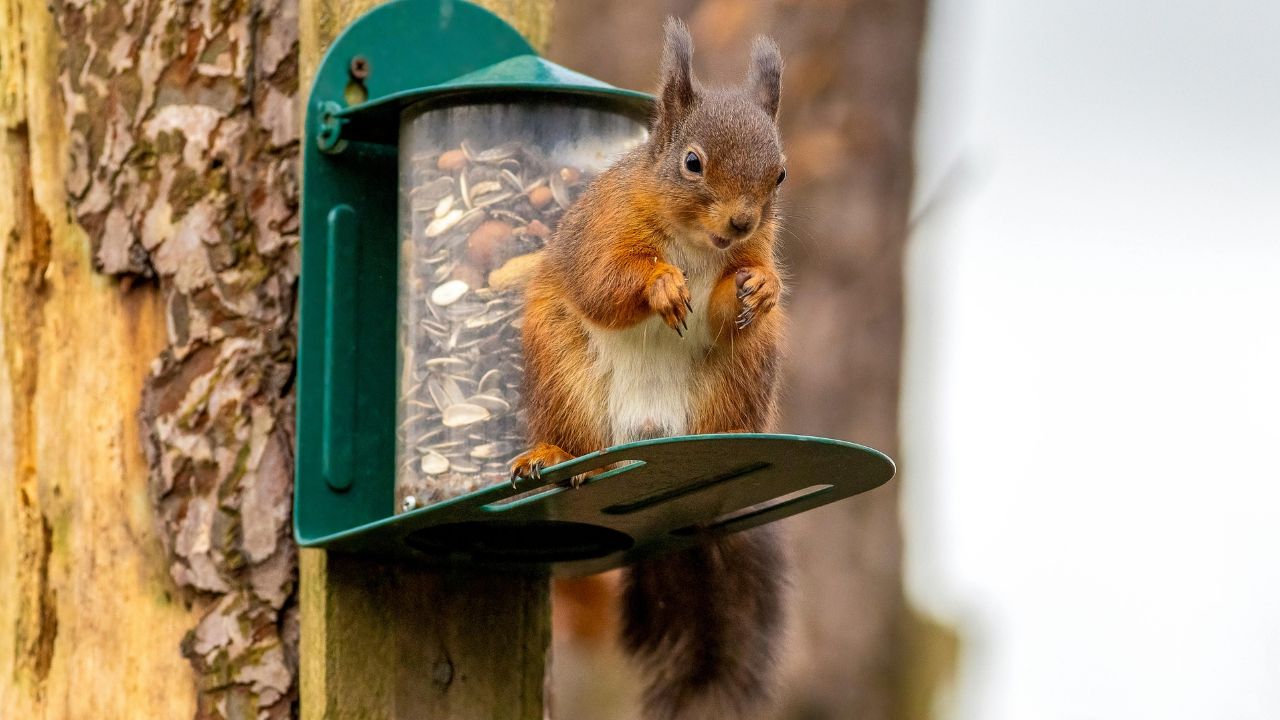
You know the feeling. You just filled your expensive tube feeder with premium sunflower seeds, hoping to see a glimpse of a Blue Jay or a Northern Cardinal. Ten minutes later, a fuzzy, gray gymnast is hanging by one toe, scarfing down the entire supply. It is enough to make any bird lover want to pull their hair out. If you want to stop squirrels bird feeder raids, you are not alone. It is a constant battle of wits between humans and one of nature’s most persistent acrobats.
Squirrels are not just hungry; they are smart. They have excellent spatial memory and can solve complex physical puzzles to reach a reward. However, they are also creatures of habit and biology. By understanding their physical limits and their taste buds, you can reclaim your yard. This guide will walk you through the most effective, humane, and tested methods to keep your bird seed for the birds and your sanity intact.
Why You Need to Stop Squirrels from Eating Bird Seed
Allowing squirrels to take over your feeding station is more than just a minor annoyance. It is a drain on your wallet. A single squirrel can eat up to 1.5 pounds of seeds and nuts per week. At current prices for high-quality bird food, that adds up to a significant amount of wasted money every month. Beyond the cost, squirrels are often aggressive, chasing away smaller songbirds and even damaging feeders with their powerful teeth.
Furthermore, once a squirrel identifies your yard as a primary food source, they will invite their friends. A yard overpopulated with squirrels can lead to nests in your attic or chewed-through electrical wires. Keeping them away from the bird seed is the first step in maintaining a healthy balance in your backyard ecosystem.
Impact of Squirrels on Feeding Stations
|
Problem Type |
Impact Level |
Description |
|
Seed Consumption |
High |
Can empty a standard feeder in less than 24 hours. |
|
Equipment Damage |
Medium |
Chewing through plastic ports, wooden roofs, and mesh. |
|
Bird Displacement |
High |
Large squirrels physically intimidate smaller birds like finches. |
|
Property Risk |
Low |
Encourages squirrels to nest closer to your home or attic. |
Master the 5-7-9 Rule for Feeder Placement
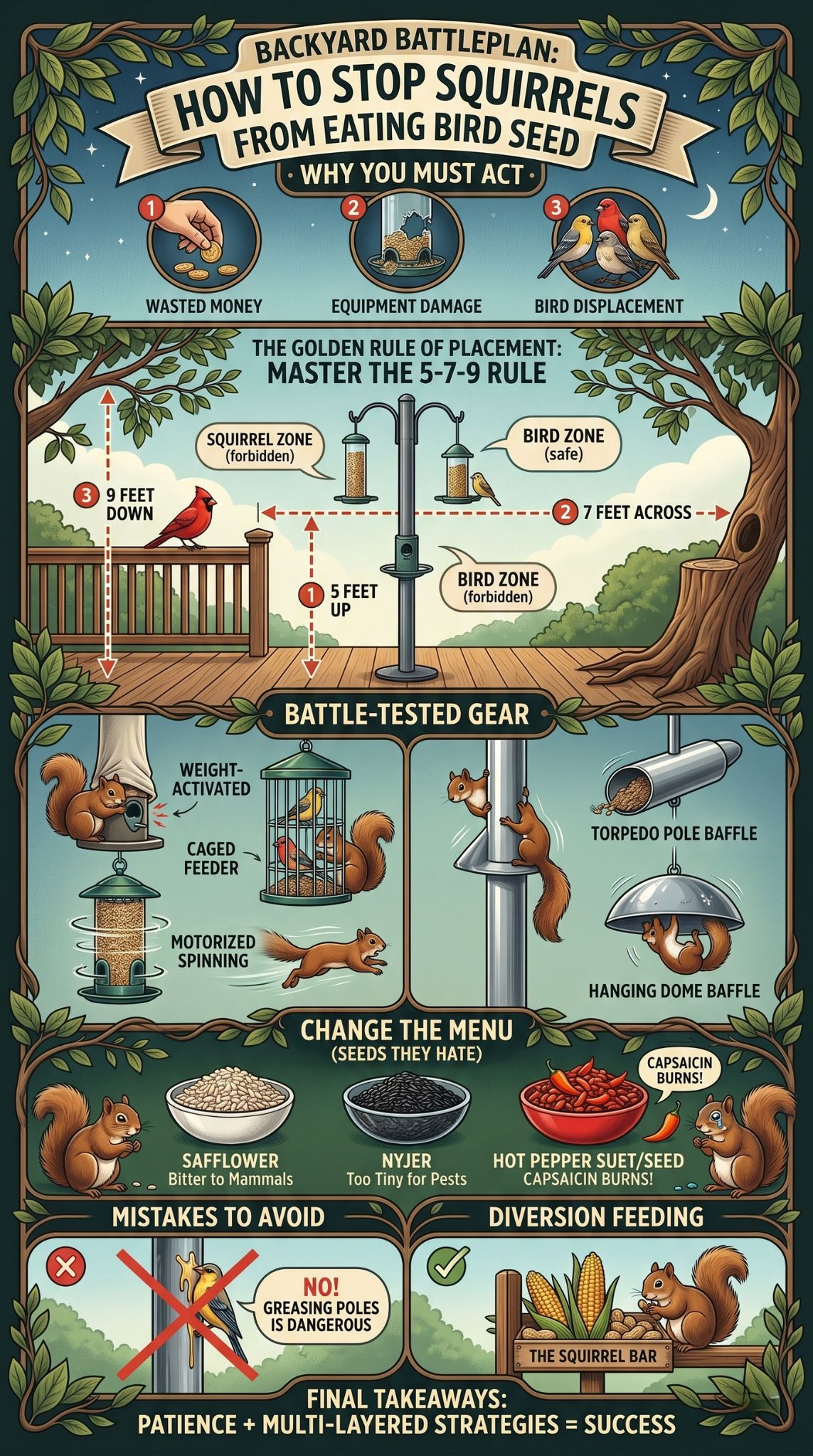
The most common reason people fail to stop squirrels bird feeder theft is poor placement. You can buy the most expensive gear in the world, but if it is too close to a tree or a fence, a squirrel will find a way. Biologists and birding experts rely on the 5-7-9 rule. This is based on the maximum jumping and reaching capabilities of an average adult squirrel.
First, your feeder must be at least 5 feet off the ground. Squirrels can leap vertically higher than you might think. Second, keep the feeder at least 7 feet away from any horizontal launchpad like a porch railing, a fence, or a tree trunk. Finally, ensure there are no overhanging branches within 9 feet above the feeder. Squirrels are more than willing to perform a “leap of faith” from a high branch to land on a feeder below.
The 5-7-9 Distance Breakdown
|
Direction |
Minimum Distance |
Reason |
|
Ground (Vertical) |
5 Feet |
Prevents squirrels from jumping straight up from the grass. |
|
Horizontal |
7 Feet |
Prevents “gliding” jumps from railings, walls, or trunks. |
|
Overhead |
9 Feet |
Prevents squirrels from dropping down from branches. |
Invest in a Specialized Stop Squirrels Bird Feeder
If your yard doesn’t have the perfect spot to follow the 5-7-9 rule, you need to rely on mechanical engineering. A dedicated stop squirrels bird feeder is designed to use the animal’s own weight against it. These feeders are built with moving parts that close off access to the seed when something heavier than a bird lands on the perch.
Weight-Activated Feeders
These are the gold standard. When a squirrel climbs onto the feeder, its weight pulls down a metal shroud that covers the feeding holes. Because birds weigh only a fraction of an ounce, they don’t trigger the mechanism. Look for brands that allow you to adjust the tension so you can also exclude larger, “bully” birds like grackles if needed.
Caged Feeders for Smaller Birds
These feeders are essentially a seed tube inside a sturdy wire cage. The gaps in the cage are just large enough for a chickadee or a nuthatch to slip through but far too small for a squirrel’s head or body. These are great because they have no moving parts to break or freeze during the winter months.
Motorized Spinning Feeders
These are a bit more high-tech. When a squirrel grabs the perch, a battery-powered motor starts spinning. The squirrel gets a dizzying ride until it eventually lets go and flies off (harmlessly) into the grass. They are highly effective and provide a bit of backyard entertainment for the homeowner.
Feeder Type Comparison
|
Feeder Type |
Best For |
Pros |
Cons |
|
Weight-Activated |
General use |
Highly reliable; adjustable |
Can be expensive; needs cleaning |
|
Caged |
Small songbirds |
Durable; no moving parts |
Excludes larger birds like Woodpeckers |
|
Motorized |
Stubborn squirrels |
High success rate |
Requires batteries or charging |
Install High-Quality Baffles as a Second Line of Defense
A baffle is a physical shield that stops a squirrel from climbing up a pole or down a wire. Even if you have a squirrel-proof feeder, a baffle provides an extra layer of security. If a squirrel can’t even get close to the feeder, they won’t spend time trying to chew through it.
Pole-Mounted Baffles
If your feeders are on a shepherd’s hook or a metal pole, you need a torpedo-style or dome baffle. These sit about 4 feet up the pole. When a squirrel tries to climb, it hits the “roof” of the baffle and can’t find a way around the smooth, slippery edges. Make sure the baffle is wide enough; a 15-to-18-inch diameter is usually enough to stop them.
Hanging Baffles
If your feeder hangs from a tree, a hanging baffle is your best bet. These look like large, inverted bowls that sit on the wire above the feeder. When a squirrel scurries down the wire, it lands on the baffle, which tilts and wobbles, causing the squirrel to slide right off.
Baffle Types and Effectiveness
|
Baffle Style |
Placement |
Material |
Effectiveness |
|
Torpedo |
On the pole |
Steel/Metal |
Excellent for climbing squirrels. |
|
Dome/Umbrella |
On the pole/wire |
Plastic/Metal |
Good for both climbing and dropping. |
|
DIY Slinky |
On the pole |
Metal |
Temporary/Moderate; can rust over time. |
Switch to Seeds and Suet That Squirrels Hate
Did you know that squirrels actually have very specific taste preferences? While they love sunflower seeds and peanuts, they find other common bird seeds quite bitter. If you want to stop squirrels bird feeder visits without changing your hardware, just change the menu.
Safflower Seed
Often called “the miracle seed,” safflower is a small white seed that is a favorite of Cardinals, Chickadees, and Titmice. However, squirrels (and grackles) find it bitter and hard to crack. Many people find that switching to 100% safflower seed for a few weeks causes the squirrels to lose interest and leave the area.
Nyjer (Thistle)
Nyjer is a tiny, needle-like seed that requires a special mesh or tiny-port feeder. Squirrels generally ignore it because the seeds are so small that the caloric payoff isn’t worth the effort. It is the perfect choice if you primarily want to attract Goldfinches.
Hot Pepper Bird Seed
This is a game-changer. Mammals, including squirrels and humans, have receptors that react to capsaicin—the stuff that makes chili peppers hot. Birds, however, do not have these receptors. You can buy suet and seed blends coated in hot pepper oil. The birds eat it happily, but a squirrel will take one bite and immediately look for a drink of water. It is a safe, natural way to teach them a lesson.
Seed Preference Comparison
|
Seed Type |
Birds Love It? |
Squirrels Love It? |
Recommendation |
|
Black Oil Sunflower |
Yes (All) |
Yes (Addicted) |
Use only in protected feeders. |
|
Safflower |
Yes (Cardinals) |
No (Bitter) |
Great for open platform feeders. |
|
Nyjer |
Yes (Finches) |
No (Too small) |
Use in mesh sock feeders. |
|
Hot Pepper Seed |
Yes (All) |
No (Painful) |
Most effective chemical deterrent. |
Common Mistakes When Trying to Stop Squirrels Bird Feeder
In their frustration, many backyard birders turn to “old wives’ tales” or DIY tricks that can actually be dangerous. One of the most common mistakes is greasing the feeder pole with Vaseline or WD-40. While it makes for a funny video when the squirrel slides down, it is incredibly harmful to birds. If grease gets on a bird’s feathers, they lose their ability to insulate and waterproof themselves, which can be fatal in cold weather.
Another mistake is using sticky traps or glues. These are inhumane and can trap small birds or beneficial insects. You should also avoid using “unprotected” plastic feeders. Squirrels have teeth that can chew through most plastics in minutes. If you are going to use plastic, ensure it is high-impact polycarbonate or protected by a metal shroud.
Common Myths vs. Reality
|
Method |
Myth |
Reality |
|
Greasing the Pole |
It’s a harmless prank. |
It’s toxic and ruins bird feathers. |
|
Ultrasonic Devices |
It scares them away. |
Squirrels get used to the noise in days. |
|
Irish Spring Soap |
The smell keeps them away. |
Squirrels often ignore or even eat it. |
|
Fake Owls |
It scares them. |
Only works for a few hours until they realize it’s plastic. |
Use a Diversion Feeding Area to Distract Them
Sometimes, the best way to handle a problem is to give the squirrels what they want—just not where you want them to have it. This is called diversion feeding. By setting up a “squirrel bar” on the far side of your yard, you can often draw them away from your expensive bird feeders.
Fill a sturdy platform feeder or a “squirrel bungee” with whole corn on the cob, raw peanuts, or cheap striped sunflower seeds. Squirrels are lazy; if they have an easy, obstacle-free meal of their favorite treats 50 feet away from the bird feeders, they will usually choose the path of least resistance. Just make sure to keep the diversion feeder well-stocked, or they will head right back to the bird seed.
Diversion Feeding Options
|
Food Item |
Cost |
Squirrel Appeal |
Bird Appeal |
|
Corn on the Cob |
Low |
Very High |
Low (Blue Jays might take some) |
|
Whole Peanuts |
Medium |
Extremely High |
High (Jays and Woodpeckers) |
|
Striped Sunflower |
Medium |
High |
High (Larger birds) |
Maintenance and Yard Hygiene Strategies
Squirrels aren’t just attracted to the feeder itself; they are often drawn by the mess on the ground. Birds are messy eaters and often toss aside hulls or “filler” seeds to find the good stuff. This creates a buffet on the grass that invites squirrels and other rodents like mice and rats.
To stop squirrels bird feeder visits, try using “no-waste” or “shelled” seed blends. These are seeds that have already had the hulls removed. Not only does this mean less cleanup for you, but it also means there is nothing left on the ground to rot or attract pests. Additionally, consider using a seed tray attached to the bottom of your feeder to catch falling debris before it hits the lawn.
Cleaning and Maintenance Schedule
|
Task |
Frequency |
Benefit |
|
Raking under feeders |
Weekly |
Removes old seed and prevents rot/rodents. |
|
Washing feeders |
Every 2 weeks |
Prevents mold and avian diseases. |
|
Checking baffles |
Monthly |
Ensures they haven’t slipped or become loose. |
|
Rotating seed types |
Seasonally |
Keeps squirrels from getting too comfortable. |
Takeaways
Winning the battle against backyard squirrels requires a mix of strategy, the right gear, and a bit of patience. You don’t have to give up on bird watching just because you have a few furry intruders. By applying the 5-7-9 rule, you create a physical barrier that most squirrels simply cannot cross. If your yard is small or crowded, investing in a high-quality, weight-activated feeder is the most reliable way to stop squirrels bird feeder raids for the long haul.
Remember to avoid harmful DIY tricks like greasing poles and focus on natural deterrents like hot pepper seeds or safflower. If you are feeling generous, a diversion feeder can keep everyone happy and turn a source of frustration into a peaceful backyard experience. Stay consistent with your tactics, keep your feeders clean, and you’ll find that the birds will soon have the yard all to themselves again.
FAQs
Can squirrels chew through metal bird feeders?
Generally, no. Most high-quality squirrel-proof feeders are made of powder-coated steel or heavy-duty aluminum. While a squirrel might try to gnaw on the metal, they won’t be able to break through. Avoid feeders with thin mesh or soft wooden components if you have aggressive squirrels.
Will motion-activated sprinklers work to stop squirrels?
Yes, they can be very effective. Squirrels hate being startled by a sudden blast of water. However, these can be tricky to set up and might accidentally soak your birds or yourself if you forget they are on.
Do squirrels ever give up?
They don’t “give up” in the sense of losing interest in food, but they do learn efficiency. If a feeder proves to be too difficult or too painful (in the case of hot pepper seed) over several days, they will stop checking it and move to a different yard where the food is easier to get.
Can squirrels jump from the roof of my house?
Yes. Squirrels are excellent jumpers and can drop significant distances without getting hurt. If your feeder is within 10 feet of your roofline, a squirrel will likely try to drop onto it.
Is it safe to feed squirrels peanuts?
Yes, but only raw or roasted unsalted peanuts. Never give squirrels or birds salted nuts, as their kidneys cannot process the high sodium content.