
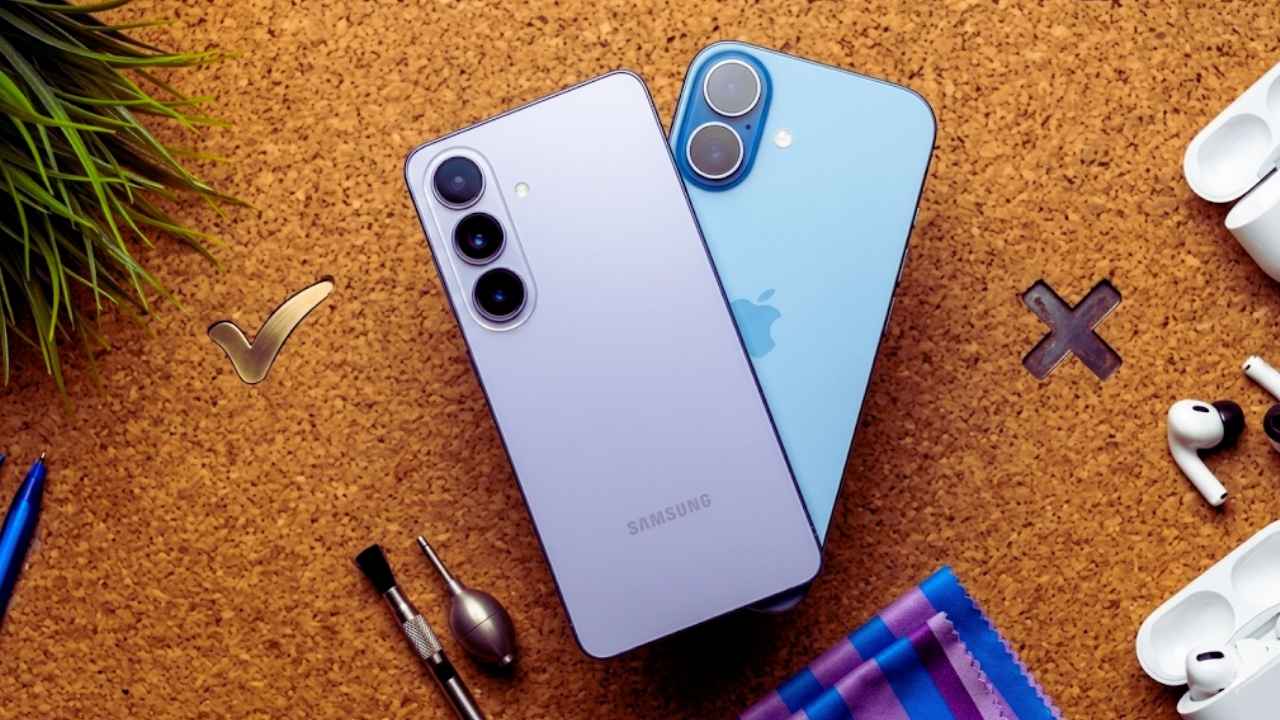
Choosing a new smartphone is a heavy commitment. You use it for work, capturing memories, banking, and staying connected with everyone you know. The battle between Apple and Samsung remains the most critical tech decision you will make this year.
For 2026, the standard flagship models from both companies bring massive upgrades that finally blur the line between base models and their high-end Pro or Ultra siblings. The iPhone 17 vs Samsung Galaxy S26 matchup represents the default choice for millions of users looking for top-tier performance without spending over a thousand dollars. Let’s break down exactly how these two titans stack up against each other so you can spend your money wisely.
The 2026 Flagship Showdown
The smartphone market has shifted dramatically. People are holding onto their phones for four or five years, meaning the device you buy today needs to perform perfectly well into the late 2020s. The iPhone 17 vs Samsung Galaxy S26 debate is no longer just about green bubbles versus blue bubbles. It comes down to fundamentally different philosophies in hardware design, camera science, and artificial intelligence integration.
We have seen Apple finally adopt the 120Hz ProMotion display for its base model, entirely changing how smooth the iPhone 17 feels during daily use. Meanwhile, Samsung continues to push the boundaries of sheer power with the Snapdragon 8 Elite Gen 5 processor and an industry-leading seven-year software commitment. Both phones now share a 6.3-inch screen size, making this the most direct, head-to-head comparison we have had in years. You are getting flagship specs across the board without the titanium price tags.
|
Feature Overview |
Apple iPhone 17 |
Samsung Galaxy S26 |
|
Screen Size |
6.3 inches |
6.3 inches |
|
Processor |
A19 Bionic (3nm) |
Snapdragon 8 Elite Gen 5 / Exynos 2600 |
|
Refresh Rate |
1-120Hz ProMotion |
1-120Hz Dynamic AMOLED 2X |
|
Starting Price |
$799 |
$799 |
Design and Build Quality
The physical design of a phone dictates how it feels in your hand, how well it survives a careless drop onto the pavement, and how easily it slips into your front pocket. Both manufacturers have heavily refined their design languages for 2026, creating devices that feel incredibly premium, robust, and comfortable to hold all day. You interact with the physical chassis every single time you pick up the device, making build quality just as important as the internal specs. We see distinct approaches here, with one favoring sleek, rounded curves and the other sticking to sharper, flat edges.
Materials and Durability
Apple equips the iPhone 17 with a recycled aerospace-grade aluminum frame and a gorgeous color-infused matte glass back. The front uses Apple’s new Ceramic Shield 2, a material they claim offers up to three times better drop and scratch resistance than previous generations. It carries a robust IP68 rating, ensuring it survives accidental dunks in the pool or heavy rainstorms, rated for up to 6 meters underwater for 30 minutes. The phone feels dense and premium, giving you confidence that it can handle the rigors of daily life without instantly shattering if it slips from your grip.
Samsung takes a slightly different but equally tough route with the Galaxy S26. It features an upgraded Armor Aluminum 2 frame that resists bending and utilizes Corning Gorilla Glass Victus 2 on both the front display and the back panel. Samsung engineers managed to make the device slightly thinner at 7.2 mm and noticeably lighter at 167 grams. It also holds an IP68 dust and water resistance rating. While both phones are built like tanks, the Galaxy S26 feels slightly more hollow and lightweight, which some users prefer for extended one-handed use, whereas the iPhone carries a satisfying, solid heft.
Aesthetics and Ergonomics
Aesthetics remain highly subjective, but the visual differences hit you immediately when comparing the iPhone 17 vs Samsung Galaxy S26 side by side. The iPhone 17 maintains the pill-shaped Dynamic Island cutout on the front, integrating system alerts directly into the notch. The back features a vertical dual-camera layout that nods to classic iPhone designs while enabling spatial video capture. Apple offers the device in a subdued, pastel-leaning palette, including Black, White, Mist Blue, Sage, and Lavender. The flat edges provide a secure grip, though they can dig into your palm during long gaming sessions.
The Galaxy S26 retains a hyper-minimalist approach. It uses a tiny, circular hole-punch cutout for the front camera, giving you maximum screen real estate. On the back, individually housed rear camera lenses sit flush against the glass, eliminating the bulky camera island look entirely. Samsung provides deeper, more saturated color options like Cobalt Violet, Sky Blue, Black, White, Silver Shadow, and Pink Gold. The slight curvature of the side rails makes the Galaxy S26 incredibly ergonomic, resting naturally in the curve of your hand.
|
Design Specifications |
iPhone 17 |
Galaxy S26 |
|
Frame Material |
Recycled Aluminum |
Armor Aluminum 2 |
|
Front Glass |
Ceramic Shield 2 |
Gorilla Glass Victus 2 |
|
Water Resistance |
IP68 (6 meters for 30 mins) |
IP68 (1.5 meters for 30 mins) |
|
Weight |
177 grams |
167 grams |
|
Dimensions |
147.6 x 71.6 x 7.95 mm |
147.0 x 70.6 x 7.2 mm |
Display Technology
The screen is the primary way you interact with your phone. You spend hours looking at this glowing rectangle every single day, so color accuracy, brightness, and smooth scrolling are non-negotiable for a modern flagship. The massive gap between standard and pro models has finally closed this year, giving base model buyers the absolute premium visual experience they deserve. Both screens are utterly gorgeous, sharp, and vibrant, but they rely on different underlying panel technologies tuned to distinct visual styles.
Super Retina XDR vs Dynamic AMOLED 2X
For the first time ever, Apple brought its ProMotion technology down to the base model. The iPhone 17 features a 6.3-inch LTPO Super Retina XDR OLED display with a fully adaptive 1-120Hz refresh rate. This means scrolling through social media, navigating the home screen, and playing supported games feels incredibly fluid. When you read static text, the screen drops down to 1Hz to save battery. The resolution sits at 1206 by 2622 pixels, delivering a crisp viewing experience with Apple’s trademark strict color accuracy. Photos and movies look exactly as the creators intended.
Samsung answers back with a 6.3-inch Dynamic LTPO AMOLED 2X display, also featuring that crucial adaptive 1-120Hz refresh rate. The resolution lands slightly lower at 1080 by 2340 pixels, but the difference is practically invisible to the naked eye unless you use a magnifying glass. Samsung panels are famous for delivering slightly punchier, more saturated colors out of the box, making games and animated movies pop off the screen. While Apple focuses on clinical color realism, Samsung gives you an incredibly vivid, cinematic viewing experience that many users find more appealing for daily entertainment.
Brightness and Outdoor Visibility
Using your phone in direct sunlight is a crucial test for modern displays. We all know the frustration of squinting at a dark screen while trying to read a text message at the beach. The iPhone 17 tackles this by pushing its peak outdoor brightness to a staggering 3,000 nits. It also features a brand-new anti-reflective coating baked into the glass that drastically cuts down on annoying screen glare. You can comfortably read directions, frame photos, and watch videos even under harsh midday sunlight.
The Galaxy S26 is right behind it, achieving a massive peak brightness of 2,600 nits. While the iPhone 17 reaches a slightly higher peak number on a spec sheet, both displays are exceptionally bright and completely capable of handling the brightest outdoor environments without breaking a sweat. Samsung also uses advanced anti-reflective tech, making both screens incredibly legible. Your days of seeking shade just to see who is calling you are officially over, regardless of which phone you choose.
|
Display Features |
iPhone 17 |
Galaxy S26 |
|
Panel Type |
LTPO Super Retina XDR OLED |
Dynamic LTPO AMOLED 2X |
|
Refresh Rate |
1-120Hz Adaptive ProMotion |
1-120Hz Adaptive |
|
Peak Brightness |
3,000 nits |
2,600 nits |
|
Resolution |
1206 x 2622 pixels |
1080 x 2340 pixels |
|
Anti-Reflective Coating |
Yes, built-in |
Yes, built-in |
Performance and Hardware
Internal components dictate how fast apps open, how well the phone handles heavy multitasking, and how long the device remains usable before it starts feeling sluggish. We expect a flagship phone to fly through basic daily tasks and handle heavy 3D gaming or 4K video rendering without stuttering. Both the iPhone 17 and Samsung Galaxy S26 pack industry-leading silicon built on hyper-efficient manufacturing processes. The real difference lies in how their respective operating systems utilize that raw hardware power.
Apple A19 vs Snapdragon 8 Elite Gen 5 (and Exynos 2600)
Apple continues its dominant tradition of designing custom silicon with the A19 chip, built on a cutting-edge 3-nanometer manufacturing process. It features a 6-core CPU, a 5-core GPU, and an upgraded 16-core Neural Engine designed specifically to handle on-device artificial intelligence tasks locally. The tight optimization between Apple’s custom hardware and its iOS software ensures the iPhone 17 feels incredibly snappy. You tap an app, and it opens instantly. Games load in seconds, and thermal management keeps the phone from getting uncomfortably hot during heavy use.
Samsung takes a dual-chip approach depending on where you live. In the US and a few other markets, the Galaxy S26 runs on the beastly Qualcomm Snapdragon 8 Elite Gen 5. In other global markets, it utilizes Samsung’s own Exynos 2600. The Snapdragon variant, in particular, offers phenomenal graphics rendering that often beats Apple in sustained gaming benchmarks. It features advanced ray-tracing hardware for realistic lighting in mobile games. In daily usage—swiping, texting, and browsing—both the Apple and Samsung chips operate with absolute zero lag, representing overkill for the average user.
RAM and Storage Configurations
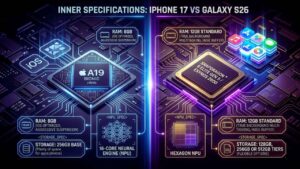
Memory management is an area where the two tech giants diverge completely. The iPhone 17 comes equipped with 8GB of RAM. While this sounds low compared to any Android competitor, Apple’s iOS handles memory completely differently. It aggressively suspends background apps, requiring far less physical RAM to keep the operating system running smoothly. Apple finally listened to consumers and bumped the base storage to 256GB, providing plenty of room for apps, photos, and system updates without forcing you into an immediate paid iCloud upgrade.
The Galaxy S26 steps up the raw memory hardware with 12GB of RAM standard across all models. Android is an inherently heavier operating system that allows true background multitasking, making this massive amount of memory necessary. This huge RAM buffer allows the phone to keep heavy applications suspended in the background for hours without needing to reload them from scratch. Samsung offers flexible storage options starting at 128GB and going up to 256GB or 512GB. If you rapidly switch between a dozen heavy apps all day, the extra RAM on the Galaxy provides a noticeable comfort buffer.
|
Hardware Specifications |
iPhone 17 |
Galaxy S26 |
|
Processor System |
Apple A19 Bionic (3nm) |
Snapdragon 8 Elite Gen 5 / Exynos 2600 |
|
Standard RAM |
8GB |
12GB |
|
Base Storage Tier |
256GB |
128GB or 256GB |
|
Maximum Storage |
512GB |
512GB |
|
NPU / AI Engine |
16-core Neural Engine |
Hexagon NPU |
Camera Systems
Cameras are almost always the deciding factor for smartphone buyers looking to upgrade their daily driver. The hardware and software approach each company takes here is wildly different, offering distinct advantages depending on your personal photography style. We look at everything from color science and low-light performance to optical zoom capabilities and video stabilization. Whether you shoot quick snaps of your dog for social media or record professional-grade vlog footage, these camera modules are incredibly capable tools.
Main Sensors and Image Processing
The iPhone 17 features a streamlined dual-camera setup, heavily relying on a massive 48-megapixel main sensor. Apple’s newest Photonic Engine uses machine learning to capture multiple exposures instantly, combining them to preserve perfect detail and true-to-life color accuracy. The resulting photos feature excellent dynamic range without looking overly processed. The main sensor utilizes advanced sensor-shift optical image stabilization to keep low-light nighttime shots completely sharp, even if your hands are shaking slightly.
The Galaxy S26 fires back with an excellent 50-megapixel main sensor. Samsung’s image processing science traditionally leans toward punchier, more vibrant colors and higher contrast. The phone’s Scene Optimizer excels at making blue skies pop and green grass look incredibly lush without needing any Instagram filters. Both main cameras serve as phenomenal point-and-shoot devices. Apple favors strict, sometimes flat realism, while Samsung favors highly shareable, heavily saturated imagery that grabs attention immediately.
Ultrawide and Telephoto Capabilities
Apple gave the iPhone 17 a massive upgrade by introducing a new 48-megapixel sensor for the ultrawide camera. This allows for incredibly detailed, sweeping landscape shots and pin-sharp macro photography when you get close to a subject. However, the standard iPhone 17 still lacks a dedicated physical telephoto lens. Instead, it relies on a high-resolution digital crop from the center of the main 48MP sensor to achieve a 2x optical-quality zoom. It looks great, but it has physical limits.
This is exactly where the Galaxy S26 gains its biggest hardware advantage. Alongside its 12-megapixel ultrawide camera, it includes a dedicated 10-megapixel telephoto lens providing true 3x optical zoom. If you frequently take photos of distant subjects—like your kids playing soccer on a large field, wildlife, or a concert stage—the physical optical zoom on the Galaxy S26 produces noticeably sharper, cleaner results than the digital sensor crop on the iPhone. You simply cannot beat physical glass.
Videography and Selfie Cameras
Apple has maintained an iron grip on the smartphone videography crown for years, and the iPhone 17 easily continues that trend. It records incredibly stable, cinematic 4K video at 60 frames per second, featuring seamless, invisible transitions as you zoom between the main and ultrawide lenses. The front features a sharp 18-megapixel camera that takes excellent, natural-looking selfies and handles tricky, backlit lighting during FaceTime calls with incredible ease.
The Galaxy S26 pushes spec boundaries by offering 8K video recording at 30 frames per second. While 8K sounds impressive, it produces massive file sizes and requires an 8K television to actually appreciate. More practically, its 4K video is excellent, with great digital stabilization and vibrant color rendering. The front-facing 12-megapixel camera produces sharp, bright self-portraits. However, Apple’s superior video processing, lower noise in dark environments, and incredibly smooth stabilization still give it a noticeable edge for serious video content creators.
|
Camera Specifications |
iPhone 17 |
Galaxy S26 |
|
Main Wide Sensor |
48MP (f/1.6) |
50MP (f/1.8) |
|
Ultrawide Sensor |
48MP (120-degree FOV) |
12MP (120-degree FOV) |
|
Telephoto Lens |
None (Uses 2x digital sensor crop) |
10MP (3x true optical zoom) |
|
Front Selfie Camera |
18MP autofocus |
12MP autofocus |
|
Maximum Video Res |
4K at 60fps |
8K at 30fps |
Battery Life and Charging
A dead phone is a useless piece of metal and glass, no matter how powerful the processor or how bright the screen might be. Battery capacity and the raw efficiency of the internal components dictate how much actual screen time you get each day before desperately reaching for a charging cable. We need phones that confidently survive a long day of GPS navigation, YouTube streaming, and constant messaging without inducing battery anxiety by 4 PM. Let’s look at how these two devices manage their power reserves.
Battery Capacity and Real-World Endurance
The iPhone 17 houses a roughly 3,692 mAh battery. If you look purely at the numbers, this is significantly smaller than almost every Android device on the market. However, specs are deceiving here. The extreme, unmatched efficiency of the A19 chip combined with the heavily optimized iOS operating system means the phone easily lasts a full, heavy day. The device routinely hits the 14 to 15-hour mark in active screen-on benchmark tests. Idle drain is practically nonexistent; you can leave the phone unplugged overnight and wake up to find it only dropped a single percentage point.
The Galaxy S26 packs a much larger 5,000 mAh physical battery inside its slim frame. Because Android inherently demands more power to run background tasks, Samsung needs this massive cell to stay competitive. Thankfully, the new Snapdragon and Exynos processors are highly efficient. The Galaxy S26 pushes slightly past the 15-hour mark in active use tests, giving it a tiny edge in raw endurance. Both phones will comfortably get you from breakfast all the way to bedtime without needing a mid-day panic charge.
Charging Speeds and Wireless Options
Charging technology on both devices is strictly adequate but certainly not industry-leading when compared to hyper-fast charging Chinese competitors. The iPhone 17 supports USB-C Power Delivery fast charging, granting you roughly a 50 percent charge in 20 to 25 minutes. It also fully supports the new Qi2 standard and features 25W MagSafe wireless charging, allowing accessories like wallets and battery packs to snap magnetically right onto the back of the device.
The Galaxy S26 supports 25W wired fast charging, getting you from zero to 50 percent in about 30 minutes. It supports 15W standard wireless charging. However, Samsung holds a great utility advantage by including reverse wireless charging. You can literally turn the Galaxy S26 over, place your dying wireless earbuds or smartwatch on the back glass, and use the phone’s battery to charge your accessories. Neither company includes a charging brick in the box anymore, so you will need to buy your own USB-C adapter.
|
Battery and Charging |
iPhone 17 |
Galaxy S26 |
|
Battery Capacity |
3,692 mAh |
5,000 mAh |
|
Wired Charging Speed |
25W Fast Charging |
25W Fast Charging |
|
Wireless Charging |
25W MagSafe / Qi2 |
15W Qi Wireless |
|
Reverse Wireless |
No |
Yes (PowerShare) |
|
Charger in Box |
No |
No |
Software and Ecosystem
Hardware tells only half the story when you buy a modern smart device. The operating system dictates exactly how you interact with the phone every single day. It manages your notifications, secures your private banking data, and determines what apps you can install. Choosing between these two phones almost always comes down to which software philosophy you align with more closely. One offers a beautiful, strictly controlled walled garden of seamless integration, while the other offers endless customization and an open file management system.
iOS 26 vs Android 16 (One UI 8.5)
The iPhone 17 runs right out of the box on iOS 26. Apple’s operating system is globally famous for its incredibly fluid animations, strict privacy controls, and seamless integration with the rest of the Apple hardware lineup. If you own a Mac, an iPad, or an Apple Watch, the iPhone acts as the perfect hub. Features like AirDrop and iMessage are heavily ingrained in daily culture. The software is intuitive, straightforward, and highly secure. You cannot change much about how it looks or acts, but it works flawlessly.
The Galaxy S26 runs on Android 16, heavily layered with Samsung’s proprietary One UI 8.5 software. This entire experience is built around deep, granular customization. You can change almost every aspect of the interface, from downloading custom icon packs to applying system-wide color themes and rearranging your app grid. Samsung also includes hardcore power-user features like Samsung DeX, a software mode that allows you to plug the phone into a monitor and use it exactly like a traditional desktop computer. If you like to tinker and personalize your tech, Android is the absolute winner.
Long-Term Software Support
Smartphone longevity is directly tied to consistent, reliable software updates from the manufacturer. If a phone stops getting security patches, it becomes a liability. The Samsung Galaxy S26 completely changed the game by offering an industry-leading promise: seven major Android OS upgrades and seven years of continuous security patches. A phone bought in 2026 will theoretically receive official software support all the way until 2033, making it an incredible long-term purchase.
Apple does not provide a strict, written number of guaranteed years for updates. However, historically, iPhones receive five to six years of major iOS feature updates and several more years of critical security patches. An iPhone bought today will absolutely stay relevant and secure through the end of the decade. Both companies provide excellent long-term support, ensuring your heavy financial investment remains safe from malware and software obsolescence.
|
Software and Ecosystem |
iPhone 17 |
Galaxy S26 |
|
Operating System |
iOS 26 |
Android 16 (One UI 8.5) |
|
Update Guarantee |
5 to 6 years |
7 years (OS and Security) |
|
Desktop Mode |
No |
Yes (Samsung DeX) |
|
Customization |
Limited to widgets/lock screen |
Complete system-wide themes |
|
Key Ecosystem Perks |
iMessage, AirDrop, FaceTime |
Quick Share, Link to Windows |
Artificial Intelligence Integration
In 2026, artificial intelligence is no longer a fun party trick; it is deeply woven right into the core operating systems of both devices. We use AI daily to remove photobombers from pictures, draft professional work emails, and translate foreign languages on the fly during vacations. Both tech giants have poured billions of dollars into making their digital assistants smarter, faster, and much more proactive. The iPhone 17 vs Samsung Galaxy S26 debate heavily features these smart tools, though they take radically different approaches to user data privacy.
Apple Intelligence
Apple’s approach to AI, branded simply as “Apple Intelligence,” focuses obsessively on user privacy and on-device processing. The A19 chip’s massive Neural Engine handles the vast majority of the heavy lifting locally, meaning your personal text messages and emails rarely leave the physical phone to be processed on a cloud server. The system seamlessly summarizes long, unread email threads, rewrites your messy text messages to sound more professional, and creates custom generative images based on quick text prompts. Siri finally received a massive overhaul, becoming highly conversational and capable of remembering context across a dozen different requests.
Galaxy AI Features
Samsung’s Galaxy AI relies on a hybrid approach, using both the phone’s hardware and powerful cloud servers to handle complex tasks. It leans heavily into workplace productivity and real-time translation. Features like Live Translate instantly translate live phone calls back and forth, making international business or booking a hotel abroad completely effortless. The Note Assist feature takes your messy meeting scribbles and automatically formats, summarizes, and spell-checks them into a clean document. They also feature Google’s incredibly popular “Circle to Search,” allowing you to circle any image or text on your screen to instantly find it online without switching apps.
|
Artificial Intelligence |
Apple Intelligence |
Galaxy AI |
|
Processing Method |
Primarily On-Device |
Hybrid (On-Device & Cloud) |
|
Voice Assistant |
Radically upgraded Siri |
Bixby and Google Assistant |
|
Translation Tools |
Text and basic voice |
Live two-way phone call translation |
|
Image Editing |
Clean Up, Generative Fill |
Generative Edit, Object Eraser |
|
Smart Search |
Enhanced Siri context |
Circle to Search |
Pricing and Value Proposition
Price is usually the ultimate deciding factor for most consumers looking to upgrade their dying phone. We all want the absolute best possible hardware without feeling like we got ripped off or overpaid for gimmick features we rarely use. Both base models aim directly for that sweet spot between mid-range affordability and ultra-premium luxury. When comparing the iPhone 17 vs Samsung Galaxy S26, you must look well beyond the initial sticker price at Best Buy and consider long-term trade-in values and base storage tiers to figure out the true cost of ownership.
Base Models and Storage Upgrades
The base model iPhone 17 starts at roughly $799 for the standard 256GB version. By completely eliminating the old 128GB tier and doubling the entry-level storage, Apple made the base model a much stronger value proposition this year. You get a massive amount of space for your 4K videos right out of the box. If you want to move up to the 512GB model, you will pay a steep premium, usually around an extra $200.
The Samsung Galaxy S26 also starts at an approximate price of $799. However, depending on your region, the base storage might start at 128GB. The huge saving grace here is that Samsung frequently offers massive promotional deals during the pre-order window, giving you a free storage upgrade. This makes it incredibly easy to grab the 256GB or even 512GB model for the exact same base price if you time your purchase correctly.
Long-Term Value and Trade-Ins
When analyzing total financial value, the iPhone historically holds its cash resale value significantly better over the course of three to four years. If you plan to sell the phone yourself on eBay or Swappa later, the iPhone consistently yields a much higher return on your investment. However, Samsung counters this by aggressively offering massive carrier trade-in deals and accessory bundles. It is not uncommon to get a free pair of Galaxy Buds or a heavy discount on a smartwatch when you buy the Galaxy S26 at launch, easing the initial blow to your wallet.
|
Pricing and Value |
iPhone 17 |
Galaxy S26 |
|
Starting Retail Price |
$799 |
$799 |
|
Base Storage Tier |
256GB |
128GB (promos often upgrade to 256GB) |
|
Used Resale Value |
High retention over 3 years |
Moderate, drops faster |
|
Launch Promo Bundles |
Extremely Rare |
Very Frequent |
Final Thoughts
Choosing a winner in the iPhone 17 vs Samsung Galaxy S26 battle comes down to your existing tech ecosystem, your specific camera needs, and how you prefer to organize your digital life. You should buy the iPhone 17 if you are already heavily invested in the Apple ecosystem with a Mac or iPad. It is the perfect choice if you prioritize industry-leading video recording, prefer realistic photo color processing, and want an operating system that is simple, perfectly secure, and incredibly smooth. The long-awaited addition of the 120Hz ProMotion display finally makes the base iPhone a zero-compromise device.
You should absolutely buy the Samsung Galaxy S26 if you prefer a lighter device and demand a dedicated optical zoom lens to capture distant subjects. It is the clear winner for anyone who prefers the deep, granular customization options of Android and appreciates genuine power-user features like reverse wireless charging and desktop DeX support. The ironclad guarantee of seven full years of software updates makes it an incredibly safe long-term financial investment. Both smartphones represent the absolute pinnacle of mobile tech for 2026, ensuring you get a blazing-fast, highly capable device no matter which path you choose.
Frequently Asked Questions (FAQs) About iPhone 17 vs Galaxy s26
Does the iPhone 17 have a better camera than the Galaxy S26?
It depends entirely on what you shoot most often. The iPhone 17 excels in cinematic video recording and realistic, natural color processing, and it features a heavily upgraded 48-megapixel ultrawide lens perfect for landscapes. However, the Galaxy S26 is definitively better for distant photography because it includes a dedicated physical telephoto lens with a 3x optical zoom, a crucial hardware feature completely missing from the standard iPhone 17.
Will the Samsung Galaxy S26 get more software updates than the iPhone 17?
Yes, based on official promises from the manufacturers. Samsung legally guarantees seven major Android operating system upgrades and seven years of vital security patches for the entire Galaxy S26 lineup. Apple does not explicitly state a hard, written number, but they consistently provide five to six years of major software updates. While Samsung technically wins on paper, both phones offer excellent, long-lasting software support that will outlive the battery.
Which phone is better for heavy mobile gaming?
Both phones handle high-end mobile gaming flawlessly. The Snapdragon 8 Elite Gen 5 inside the Galaxy S26 features incredible GPU performance and dedicated ray-tracing capabilities, making it a graphical powerhouse for intense 3D titles. The Apple A19 chip is fiercely competitive and benefits massively from developers heavily optimizing their game ports specifically for iOS. You will not experience lag on either device, though the iPhone tends to run slightly cooler in your hands during extended, hour-long gaming sessions.
Can I use my old chargers with these new 2026 phones?
Yes, you absolutely can. Both the iPhone 17 and Samsung Galaxy S26 utilize the universal USB-C port for standard wired charging. You can safely use any standard USB-C cable and power brick you already own to charge them. However, to achieve their maximum fast-charging speeds and top up quickly, you will need to ensure your old power adapter is rated for 25W or higher. Neither phone comes with a charging brick in the box.
Why does the Galaxy S26 have more RAM than the iPhone 17?
The Galaxy S26 features 12GB of RAM compared to the iPhone 17’s 8GB because their operating systems handle memory differently. Android allows apps to run freely in the background, requiring a larger pool of physical RAM to keep everything running without slowing down. Apple’s iOS strictly limits background app activity, automatically suspending apps you aren’t actively viewing. This efficiency allows the iPhone to achieve identical, lightning-fast performance while using significantly less hardware RAM.