
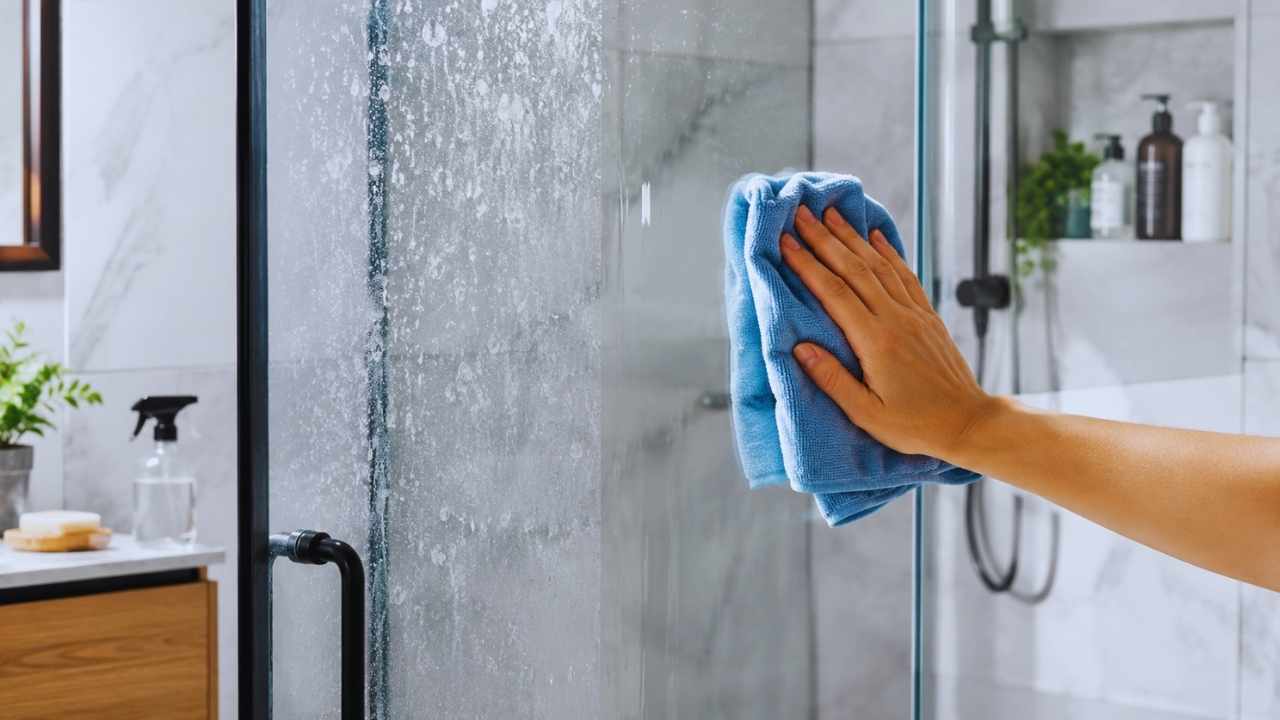
Cloudy shower glass can make a clean bathroom look older than it really is. You may scrub the tiles, rinse the floor, wipe the faucet, and still feel annoyed because the shower door looks foggy after it dries. That white film is usually not regular dirt. It is often caused by hard water minerals that stay behind when water droplets evaporate.
If you want to know how to get rid of hard water stains on glass shower doors, the best approach is not harder scrubbing. It is using the right cleaner, giving it enough time to work, and drying the glass properly afterward. Most stains can be handled with common household items like white vinegar, baking soda, lemon juice, or citric acid. Older stains may need a stronger hard water cleaner, but even then, the method should be careful and controlled.
The bigger lesson is prevention. If water dries on the glass every day, the stains will keep coming back. This guide explains what causes those stains, how to remove them safely, what mistakes to avoid, and how to keep shower doors clear for longer.
What Causes Hard Water Stains on Glass Shower Doors?
Hard water stains form when mineral-rich water dries on glass. Hard water usually contains minerals such as calcium and magnesium. These minerals are not always visible while the glass is wet, but once the water evaporates, they remain on the surface. Over time, the deposits build up and create white spots, cloudy patches, or rough areas that do not wipe away with plain water. Shower doors are especially prone to this because they deal with daily water exposure, soap, shampoo, body oils, steam, and bathroom humidity. A quick rinse after showering may remove loose soap, but it does not remove minerals that have already dried onto the glass. This is why many people clean the bathroom and still feel like the shower door looks dirty. The longer the deposits sit, the harder they become to remove.
Hard Water Stains vs. Soap Scum
Hard water stains and soap scum often appear together, but they are not the same problem. Hard water stains come from minerals left behind by water. Soap scum forms when soap, oils, skin residue, and minerals mix into a sticky film. On glass shower doors, these two problems can overlap and make the surface look dull, cloudy, or greasy. That is why regular glass cleaner often disappoints people. It may remove fingerprints or light streaks, but it usually does not break down mineral scale or thick soap film.
Common Signs of Hard Water Buildup
You may notice white dots after the glass dries. The door may look clear when wet but cloudy again a few minutes later. The lower part of the shower door may feel rough when you run your hand over it. Handles, hinges, tracks, and corners may show chalky buildup. If you also see spots on faucets, sinks, dishes, or glassware, hard water may be a broader household issue.
|
Sign on Shower Glass |
What It Usually Means |
Best First Step |
|
White spots after drying |
Mineral deposits from hard water |
Use vinegar and warm water |
|
Cloudy glass film |
Minerals mixed with soap scum |
Use vinegar, then gentle scrubbing |
|
Rough lower edge |
Older scale buildup |
Try baking soda paste or citric acid |
|
Chalky track buildup |
Minerals, soap, and trapped moisture |
Clean with brush and rinse well |
|
Stains around handles |
Water collecting near hardware |
Wipe with cleaner on cloth |
|
Foggy look after cleaning |
Residue, mineral film, or etching |
Rinse, dry, and reassess |
Before Cleaning, Check the Glass and Nearby Surfaces
Before you spray anything, take a minute to check what kind of shower you have. This simple step can prevent scratches, dull spots, damaged coatings, or stained stone. Not every cleaner is safe for every bathroom surface. Vinegar, lemon juice, and citric acid can help dissolve mineral deposits on glass, but they may damage natural stone such as marble, limestone, or travertine. Some shower doors also have protective coatings that help water bead off the surface. Harsh scrubbers, abrasive powders, and razor blades can damage those coatings. Metal handles and frames may also react poorly if acidic cleaners sit on them for too long. Rubber seals and door sweeps need gentle cleaning because they can crack, loosen, or wear out. A careful start saves trouble later.
Check for Coated Glass
Many modern shower doors come with a protective glass coating. This coating helps reduce water marks and makes cleaning easier. If your glass has a coating, avoid aggressive scrubbing unless the manufacturer says it is safe. A soft cloth, non-scratch sponge, and mild cleaner are better choices. If you are unsure, test the cleaner in a small corner first.
Protect Natural Stone and Metal
If your shower has marble, limestone, travertine, or other natural stone nearby, do not spray vinegar directly around those surfaces. Acidic cleaners can dull or etch stone. Metal finishes also need care. Instead of spraying cleaner directly onto handles or hinges, spray it onto a cloth and wipe the area gently. Rinse and dry the metal afterward.
Do a Small Test First
A small test patch is useful when using a new cleaner. Choose a hidden area near the edge of the door. Apply the cleaner, wait briefly, rinse, and dry. If the surface looks fine, continue with the rest of the door.
|
Surface or Part |
Safe Cleaning Approach |
What to Avoid |
|
Plain shower glass |
Vinegar spray, microfiber cloth, soft sponge |
Steel wool and harsh scraping |
|
Coated glass |
Mild cleaner approved for coated glass |
Abrasive pads and razor blades |
|
Natural stone nearby |
pH-neutral stone-safe cleaner |
Vinegar, lemon juice, citric acid |
|
Metal handles |
Cleaner on cloth, quick rinse, dry finish |
Letting acid sit too long |
|
Rubber seals |
Mild dish soap and soft brush |
Strong chemicals and rough pulling |
|
Door tracks |
Soft brush and careful rinsing |
Metal scraping tools |
How to Get Rid of Hard Water Stains on Glass Shower Doors With Vinegar
White vinegar is one of the easiest and most affordable ways to remove light to moderate hard water stains. It works because its acidity helps loosen mineral deposits from the glass surface. The key is contact time. Many people spray vinegar and wipe it away too quickly, then assume it does not work. Vinegar needs a few minutes to soften the buildup before you scrub. Warm vinegar can work even better on stubborn stains because warmth helps the cleaner act faster. Still, you should not boil it or use it carelessly around stone or metal. Vinegar is best for regular maintenance, fresh stains, and cloudy glass that has not been neglected for months. If the glass has thick scale, vinegar may still help, but you may need repeated treatments.
Basic Vinegar Spray Method
Mix equal parts white vinegar and warm water in a spray bottle. Spray the glass generously from top to bottom. Let it sit for 5 to 10 minutes, but do not allow it to dry completely. Wipe the glass with a microfiber cloth or non-scratch sponge. Rinse with warm water. Dry the surface fully with a clean microfiber cloth or squeegee.
Warm Vinegar Method for Tougher Spots
For older spots, warm the vinegar slightly before mixing it with water. Spray the stained areas and let the solution sit longer. If the solution runs down too quickly, soak paper towels in the mixture and press them against the glass. This keeps the cleaner in contact with the stains. After several minutes, remove the towels, scrub gently, rinse, and dry.
When Vinegar May Not Be Enough?
If the glass still feels rough after a vinegar treatment, the buildup may be thicker than it looks. Try a second round before switching cleaners. If that still does not work, use baking soda paste, citric acid, or a commercial hard water stain remover.
|
Situation |
Why Vinegar May Not Work Fully |
Better Next Step |
|
Stains have been sitting for months |
Minerals have hardened on the glass |
Repeat vinegar treatment, then try baking soda paste |
|
Glass still feels rough after cleaning |
Scale buildup is thicker than surface spots |
Use citric acid or a glass-safe hard water remover |
|
White film returns quickly |
Water is drying on the glass after every shower |
Use a squeegee daily and clean weekly |
|
Orange or brown marks appear |
Iron or rust may be mixed with mineral deposits |
Use a cleaner made for calcium, lime, and rust |
|
Bottom edge has crusty buildup |
Water collects and dries in the same area |
Soak longer, scrub gently, and dry after rinsing |
|
Vinegar smell is too strong |
The method may be unpleasant for regular use |
Try lemon juice or citric acid solution carefully |
Use Baking Soda Paste for Stubborn Cloudy Areas
Baking soda is helpful when vinegar softens the stain but does not fully remove the cloudy layer. It adds gentle scrubbing power without being as harsh as many abrasive cleaners. This makes it useful for lower glass edges, corners, and areas around handles where buildup is thicker. The goal is not to grind the stain away with force. Light pressure is enough. Too much pressure can create fine scratches, especially if the glass has a coating. Baking soda can also leave a white residue if it is not rinsed well. For best results, use it after vinegar has had time to loosen the mineral layer. This combination often works well for shower glass that has a mix of soap scum and hard water stains.
Baking Soda and Vinegar Method
First, spray the glass with a vinegar and water solution. Let it sit for 5 to 10 minutes. Mix baking soda with a small amount of water until it becomes a spreadable paste. Apply the paste to stubborn spots with a damp microfiber cloth. Rub gently in small circles. Rinse thoroughly with warm water. Dry the glass completely.
Where Baking Soda Works Best?
Baking soda paste works best on cloudy patches that feel slightly rough. It is useful around the bottom edge of the door, near handles, around hinges, and in corners. These areas often hold water longer, so mineral buildup becomes thicker there. Use a soft toothbrush for tight spots, but do not scrub aggressively.
When to Avoid Baking Soda?
Avoid baking soda if your shower door care guide warns against abrasive products. Do not use dry baking soda directly on glass. Always make a paste and keep the surface damp while cleaning. If you are cleaning coated glass, test it first.
|
Baking Soda Use |
Best Area |
Why It Helps |
Caution |
|
Paste with water |
Cloudy patches |
Adds gentle scrubbing power |
Use light pressure |
|
Paste after vinegar |
Mineral film and soap scum |
Vinegar loosens, paste lifts residue |
Rinse very well |
|
Soft toothbrush method |
Corners and edges |
Reaches narrow areas |
Do not scrub seals too hard |
|
Spot treatment |
Rough stains |
Focuses cleaning where needed |
Avoid overusing on coated glass |
|
Final rinse |
Whole cleaned area |
Removes powdery residue |
Dry to prevent new spots |
Try Lemon Juice or Citric Acid for Mineral Deposits
Lemon juice and citric acid are useful alternatives for mineral deposits because they are acidic. Lemon juice is milder and smells fresher than vinegar, but it is not as strong on heavy buildup. Citric acid is stronger and can be very useful for hard water scale when used correctly. These cleaners work best when stains are mineral-based, not just oily soap scum. Like vinegar, they need time to sit on the surface before wiping. They also need careful rinsing because any leftover cleaner can leave streaks or residue. Acidic cleaners should not be used on natural stone. If your shower has stone tile, stone flooring, or a stone curb, keep these cleaners away from those areas.
Lemon Juice for Mild Stains
Lemon juice can help with fresh water spots and light cloudiness. Apply it to the stained glass, wait a few minutes, wipe gently, rinse, and dry. It is a good option for people who dislike the smell of vinegar. However, it may not be strong enough for thick mineral buildup.
Citric Acid for Stronger Mineral Marks
Citric acid powder can be mixed with warm water and used as a spray. Start with a mild solution rather than making it too strong. Spray it on the glass, allow short contact time, scrub gently, rinse well, and dry. Citric acid can work well on visible limescale, but it should be handled carefully.
Choosing Between Lemon Juice and Citric Acid
Use lemon juice for light stains and mild cleaning. Use citric acid when vinegar does not fully remove mineral spots but you still want a non-commercial option. If the stain is very old, a store-bought hard water remover may work faster.
|
Cleaner |
Best For |
Strength Level |
Main Advantage |
Main Caution |
|
Lemon juice |
Fresh spots and light stains |
Mild |
Better smell than vinegar |
Weak on heavy buildup |
|
White vinegar |
Regular hard water stains |
Medium |
Affordable and easy |
Avoid stone surfaces |
|
Citric acid |
More visible mineral deposits |
Medium to strong |
Useful for limescale |
Must be diluted and rinsed |
|
Baking soda paste |
Cloudy residue and rough patches |
Gentle abrasive |
Helps lift residue |
Use light pressure |
|
Commercial remover |
Thick old scale |
Strong |
Faster on severe stains |
Follow label carefully |
When to Use a Commercial Hard Water Stain Remover?
DIY cleaners are useful, but they are not always enough. If a shower door has months or years of buildup, a commercial hard water stain remover may be more effective. These products are often designed to target calcium, lime, rust, and mineral scale. They can save time, but they also require more caution. Not every product is safe for coated glass, stone, metal, grout, or rubber seals. Read the label before using it. Do not assume that a cleaner made for bathroom surfaces is safe for every bathroom material. A good product should clearly say whether it is safe for glass shower doors. Use gloves, ventilate the bathroom, and never mix commercial cleaners with vinegar, bleach, ammonia, or other cleaning products.
Signs You Need a Stronger Cleaner
You may need a commercial cleaner if vinegar and baking soda only make a small difference. Thick white scale near the lower edge of the door is another sign. Orange or brown stains near metal fixtures may also need a stronger product. If the glass still feels gritty after repeated cleaning, the deposit is likely heavy.
How to Choose the Right Product?
Look for a cleaner made for hard water stains, calcium deposits, lime scale, or shower glass. Choose a non-abrasive formula if your shower glass is coated. Check whether it is safe for nearby surfaces. If the label warns against stone or certain metals, use extra care.
Safe Use Method
Apply the cleaner according to the label. Let it sit only for the recommended time. Scrub gently with a soft pad if needed. Rinse thoroughly. Dry the glass immediately so fresh minerals do not settle again.
|
Product Feature |
Why It Matters |
What to Check |
|
Glass-safe label |
Helps protect the shower door |
Look for shower glass approval |
|
Calcium and lime claim |
Targets mineral buildup |
Avoid vague all-purpose claims |
|
Non-abrasive formula |
Reduces scratch risk |
Important for coated glass |
|
Clear dwell time |
Prevents overexposure |
Do not exceed label time |
|
Surface compatibility |
Protects stone, metal, and grout |
Read warnings carefully |
|
Ventilation guidance |
Improves safety during cleaning |
Use fan or open window |
Clean Shower Door Tracks, Handles, Hinges, and Seals
The glass panel may be the most visible part, but the edges often create the biggest cleaning problem. Water collects in tracks, runs down hinges, sits around handles, and gathers at the bottom seal. These areas hold soap residue, minerals, hair, and grime. If you clean only the main glass panel, the door may still look dirty around the edges. Tracks can also become sticky, rough, or unpleasant if they are ignored. Handles and hinges can develop white crust where water dries around the base. Rubber seals may trap residue and moisture, which can lead to odor or staining. A complete shower door cleaning routine should include all these smaller parts, not just the flat glass.
How to Clean Door Tracks?
Spray the track lightly with vinegar and water if the surrounding surfaces are safe for vinegar. Let it sit for a few minutes. Scrub with an old toothbrush or soft detail brush. Wipe with a microfiber cloth. Rinse carefully, then dry the track so water does not sit there again.
How to Clean Handles and Hinges?
Do not soak metal hardware with acidic cleaner. Spray cleaner onto a cloth and wipe the stained area. Use a soft toothbrush around the base if needed. Rinse with a damp cloth and dry fully. This helps prevent cleaner residue and water spots.
How to Clean Rubber Seals?
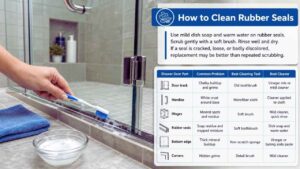
Use mild dish soap and warm water on rubber seals. Scrub gently with a soft brush. Rinse well and dry. If a seal is cracked, loose, or badly discolored, replacement may be better than repeated scrubbing.
|
Shower Door Part |
Common Problem |
Best Cleaning Tool |
Best Cleaner |
|
Door track |
Chalky buildup and grime |
Old toothbrush |
Vinegar mix or mild cleaner |
|
Handles |
White crust around base |
Microfiber cloth |
Cleaner applied to cloth |
|
Hinges |
Mineral spots and residue |
Soft brush |
Mild cleaner, quick rinse |
|
Rubber seals |
Soap residue and trapped moisture |
Soft toothbrush |
Dish soap and warm water |
|
Bottom edge |
Thick mineral buildup |
Non-scratch sponge |
Vinegar or baking soda paste |
|
Corners |
Hidden grime |
Detail brush |
Mild cleaner |
How to Prevent Hard Water Stains From Coming Back?
Cleaning the glass once is not enough if water keeps drying on it every day. Hard water stains return because droplets sit on the glass, evaporate, and leave minerals behind. Prevention is mostly about removing water before it dries. The easiest tool is a squeegee. It takes less than a minute, but it makes a real difference. A microfiber cloth is also useful for wiping the bottom edge, where water often collects. Good ventilation helps because moisture dries faster and does not sit on the glass as long. Weekly cleaning prevents light spots from turning into heavy scale. If hard water stains appear on faucets, dishes, sinks, and appliances too, the issue may be larger than the shower door. In that case, water testing or a water softener may be worth considering.
Use a Squeegee After Every Shower
Keep a squeegee inside the shower where everyone can reach it. Pull it from top to bottom after each shower. This removes most droplets before they dry. The habit is small, but it prevents a lot of future scrubbing.
Dry the Bottom Edge
The bottom edge of the shower door often has the worst buildup. Water collects there and dries slowly. A quick wipe with a microfiber cloth can stop heavy deposits from forming.
Improve Airflow
Run the exhaust fan during and after showers. Open the bathroom door or window when possible. Better airflow helps reduce humidity and slows down buildup.
Clean Weekly
A light weekly cleaning is easier than a heavy monthly scrub. Use vinegar spray, a mild shower cleaner, or another glass-safe product. Rinse and dry afterward.
|
Prevention Habit |
Time Needed |
Why It Works |
Best Frequency |
|
Squeegee glass |
30 to 60 seconds |
Removes droplets before minerals dry |
After every shower |
|
Wipe bottom edge |
30 seconds |
Stops thick buildup near the base |
After every shower |
|
Run exhaust fan |
15 to 30 minutes |
Lowers bathroom humidity |
During and after shower |
|
Weekly vinegar spray |
10 to 15 minutes |
Removes light buildup early |
Once a week |
|
Daily shower spray |
About 1 minute |
Slows soap and mineral film |
Daily or as needed |
|
Water softener check |
Varies |
Reduces whole-home mineral issues |
If hard water is severe |
How Often Should You Clean Glass Shower Doors?
The right cleaning schedule depends on how often the shower is used and how hard your water is. A guest bathroom may stay clean for longer because it gets less water exposure. A family shower used several times a day will need more care. Waiting until the glass looks heavily stained makes the job harder. Fresh mineral spots are much easier to remove than old scale. A daily squeegee, weekly cleaner, and monthly detail clean is a practical routine for most homes. If you live in a hard water area, you may need to clean more often. If your shower has coated glass, follow the manufacturer’s care guide and avoid harsh products. A simple schedule keeps the glass clear without turning cleaning into a major chore.
Daily Routine
After showering, use a squeegee on the glass. Wipe the lower edge if water collects there. Leave the shower door slightly open when possible. Turn on the exhaust fan. These habits reduce fresh stains.
Weekly Routine
Spray the glass with vinegar and water or a safe shower cleaner. Let it sit for a few minutes. Wipe gently, rinse, and dry. This prevents buildup from hardening.
Monthly Routine
Clean tracks, hinges, seals, handles, and corners. Treat stubborn patches with baking soda paste, citric acid, or a commercial cleaner if needed. Check for worn seals or damaged sweeps.
|
Cleaning Schedule |
Task |
Best Tool |
Why It Helps |
|
Daily |
Squeegee glass |
Shower squeegee |
Prevents fresh spots |
|
Daily |
Wipe bottom edge |
Microfiber cloth |
Stops lower-edge buildup |
|
Weekly |
Spray and wipe glass |
Vinegar mix or mild cleaner |
Removes early mineral film |
|
Weekly |
Clean handle area |
Soft cloth |
Prevents crust around hardware |
|
Monthly |
Detail tracks and seals |
Toothbrush or detail brush |
Removes hidden grime |
|
As needed |
Treat stubborn stains |
Citric acid or commercial cleaner |
Handles older buildup |
Mistakes to Avoid When Removing Hard Water Stains
Hard water stains can be frustrating, and that frustration often leads to bad cleaning choices. Scrubbing harder is not always better. In fact, it can make the glass worse if you scratch the surface or damage a coating. Another common mistake is using regular glass cleaner and expecting it to dissolve minerals. Glass cleaner may remove light streaks, but it usually does not break down calcium and lime deposits. Some people also let vinegar or commercial cleaner dry on the glass, which can leave new streaks or residue. Mixing cleaning products is the most dangerous mistake. Bleach, vinegar, ammonia, and certain commercial cleaners should never be mixed. Another overlooked issue is surface compatibility. A cleaner that works on glass may damage stone, metal, or rubber parts nearby.
Using Only Glass Cleaner
Glass cleaner is good for mirrors, fingerprints, and light smudges. It is not the best option for mineral deposits. If the stain comes from hard water, use a cleaner that can break down minerals.
Scrubbing Too Aggressively
Harsh pads can scratch glass. Rough scrubbing can also damage protective coatings. Let the cleaner sit longer instead of using more force.
Mixing Products
Never mix vinegar with bleach. Never mix bleach with ammonia. Avoid combining commercial cleaners unless the label clearly says it is safe. Use one cleaner at a time.
Ignoring Rinsing and Drying
If you do not rinse well, cleaner residue can leave streaks. If you do not dry the glass, new water spots can form almost immediately.
|
Mistake |
Why It Is a Problem |
Better Choice |
|
Using only glass cleaner |
Does not remove mineral deposits |
Use vinegar or hard water cleaner |
|
Heavy scrubbing |
Can scratch or damage coating |
Use more contact time |
|
Letting cleaner dry |
Leaves streaks or residue |
Rinse before it dries |
|
Mixing cleaners |
Can create unsafe fumes |
Use one product at a time |
|
Ignoring stone surfaces |
Acid can dull or etch stone |
Protect nearby materials |
|
Skipping final drying |
Spots return quickly |
Dry with microfiber cloth |
Can Hard Water Stains Permanently Damage Glass?
Most hard water stains can be removed when treated early. The problem gets harder when mineral deposits sit for months or years. Old deposits can bond more tightly to the surface and may leave the glass looking dull even after cleaning. In some cases, what looks like a stain may actually be etching or surface damage. A stain sits on top of the glass. Etching changes the surface itself. If the glass remains cloudy after several careful cleaning attempts, the issue may not be simple mineral buildup anymore. This is why prevention matters as much as cleaning. Removing fresh droplets every day is much easier than fighting old scale later. If the shower door is expensive, coated, or part of a custom bathroom, professional cleaning may be safer than experimenting with harsh methods.
How to Tell the Difference Between Stains and Etching?
If the cloudy marks improve after vinegar or a hard water remover, they are probably mineral stains. If nothing changes after several careful treatments, the glass may be etched. Etching can look like permanent haze or dullness. It may need professional polishing.
When to Call a Professional?
Call a professional if the glass is expensive, coated, or badly clouded. Professional cleaners may have better tools and products for restoring shower glass. This is also a smart choice if natural stone surrounds the shower and you do not want to risk damage.
How to Reduce Long-Term Damage?
Use a squeegee daily. Clean lightly every week. Avoid harsh tools. Treat stains early. If hard water affects the whole home, consider water testing.
|
Glass Condition |
Likely Issue |
What to Try First |
|
Light white spots |
Fresh mineral stains |
Vinegar spray |
|
Cloudy film |
Minerals plus soap residue |
Vinegar and gentle sponge |
|
Rough patches |
Older scale buildup |
Baking soda paste or citric acid |
|
Permanent haze |
Possible etching |
Professional assessment |
|
Stains return quickly |
Ongoing hard water exposure |
Daily drying and prevention |
|
Heavy lower-edge crust |
Long-term mineral buildup |
Commercial hard water cleaner |
How to Get Rid of Hard Water Stains on Glass Shower Doors: Quick Routine?
A simple routine works better than random scrubbing. Start with the mildest method and move up only when needed. This keeps the glass safer and helps you understand how stubborn the stain really is. Most average shower doors do not need harsh cleaners right away. Vinegar and warm water can handle many fresh stains. Baking soda paste can help when the glass still looks cloudy or feels rough. Citric acid or commercial hard water removers are better for heavier buildup. The final drying step matters more than many people realize. If you rinse the glass and walk away, hard water can start leaving new spots almost immediately. The best routine cleans the stain, rinses away residue, and removes water before it dries.
Quick 20-Minute Method
Spray vinegar and warm water on the glass. Let it sit for 5 to 10 minutes. Wipe gently with a non-scratch sponge. Add baking soda paste only on stubborn areas. Rinse the door well. Dry the glass fully with a microfiber cloth. Finish with a squeegee for a streak-free look.
For Heavy Buildup
Repeat the vinegar treatment before moving to something stronger. If stains remain, try citric acid or a commercial hard water remover. Follow the label carefully. Do not use sharp blades or rough tools unless the glass manufacturer allows it.
For Weekly Maintenance
After the door is clear, clean it weekly. Use a mild cleaner or vinegar spray. Squeegee daily. This prevents small spots from becoming thick scale.
|
Cleaning Level |
Best Method |
Time Needed |
Best For |
|
Light spots |
Vinegar spray |
10 minutes |
Fresh water marks |
|
Moderate cloudiness |
Warm vinegar and soft sponge |
15 to 20 minutes |
Regular buildup |
|
Rough patches |
Baking soda paste |
20 to 30 minutes |
Stubborn spots |
|
Heavy scale |
Commercial hard water remover |
Follow label |
Old deposits |
|
Prevention |
Squeegee and dry |
Under 1 minute |
Daily care |
Natural Cleaners vs. Store-Bought Cleaners
Natural cleaners and store-bought cleaners both have a place. Vinegar, baking soda, lemon juice, and citric acid are good for routine cleaning and mild to moderate stains. They are inexpensive and easy to find. Store-bought cleaners are usually better for heavy buildup, old scale, or stains that DIY methods cannot remove. The safest choice depends on your shower materials, the age of the stain, and whether the glass has a protective coating. Natural does not always mean safe for every surface. Vinegar and lemon juice can damage natural stone. Commercial cleaners can also cause problems if used incorrectly. The best approach for most homes is balanced. Use mild cleaners for regular care and keep stronger products for occasional deep cleaning.
When Natural Cleaners Are Enough?
Natural cleaners are usually enough when the stains are new or moderate. They work well for weekly maintenance. They are also useful when you want to avoid strong chemical smells. Just remember to rinse and dry well.
When Store-Bought Cleaners Make Sense?
Store-bought cleaners make sense when the stains are old, thick, or rough. They may also help when there are rust-colored marks near metal fixtures. Always follow the instructions and test first.
Best Practical Approach
Use a mild method first. If it works, keep using it regularly. If it only partly works, try a stronger but glass-safe option. This protects the shower while still getting results.
|
Cleaner Type |
Best Use |
Main Benefit |
Main Limitation |
|
Vinegar |
Weekly hard water cleaning |
Cheap and effective |
Strong smell, not for stone |
|
Baking soda |
Stubborn cloudy areas |
Gentle scrubbing help |
Can leave residue |
|
Lemon juice |
Fresh light spots |
Fresher scent |
Not strong enough for heavy scale |
|
Citric acid |
Mineral buildup |
Strong DIY-style option |
Must be diluted and rinsed |
|
Commercial remover |
Heavy hard water stains |
Fast on old deposits |
Needs careful handling |
|
Daily shower spray |
Prevention |
Slows buildup |
Does not replace deep cleaning |
Best Tools for Cleaning Hard Water Stains Safely
The cleaner matters, but the tool matters too. The wrong scrubber can scratch glass, damage coatings, or wear down hardware. A microfiber cloth is one of the safest tools because it cleans without rough abrasion. A non-scratch sponge is useful for larger stained areas. A soft toothbrush helps with tracks, hinges, and corners. A plastic scraper can help lift softened buildup, but it should be used carefully and only on safe surfaces. A squeegee is not mainly a cleaning tool. It is a prevention tool that stops water from drying on the glass. Gloves are useful when handling vinegar, citric acid, or commercial cleaners. A spray bottle also helps apply cleaner evenly instead of wasting product.
Tools Worth Keeping in the Bathroom
Keep a squeegee in the shower. Store microfiber cloths nearby. Keep a soft brush or old toothbrush for weekly detail cleaning. Use a spray bottle for vinegar or mild cleaner. These simple tools cover most shower door cleaning needs.
Tools to Use Carefully
Plastic scrapers and stronger scrub pads should be used only when needed. Always use light pressure. If the glass is coated, check care instructions first.
Tools to Avoid
Avoid steel wool, rough scouring pads, and sharp metal tools. They may remove stains, but they can also leave permanent scratches.
|
Tool |
Best Use |
Safety Note |
|
Microfiber cloth |
Wiping and drying glass |
Safe for regular use |
|
Non-scratch sponge |
Gentle stain removal |
Use light pressure |
|
Soft toothbrush |
Tracks, corners, hinges |
Do not scrub seals too hard |
|
Spray bottle |
Even cleaner application |
Label if storing cleaner |
|
Squeegee |
Daily prevention |
Use after every shower |
|
Plastic scraper |
Softened thick buildup |
Use carefully |
|
Rubber gloves |
Skin protection |
Helpful with stronger cleaners |
Final Thoughts
Learning how to get rid of hard water stains on glass shower doors is less about one perfect product and more about the right routine. Start with vinegar and warm water if the stains are light or moderate. Use baking soda paste for cloudy patches that need gentle scrubbing. Try citric acid or a commercial hard water remover when the buildup is older, rougher, or harder to break down.
The most important step comes after cleaning. Dry the glass. A squeegee and a microfiber cloth can prevent most new spots from forming. It sounds too simple, but it works because hard water stains start when water is allowed to dry on the glass.
Be careful with coated glass, natural stone, metal frames, and rubber seals. Do not mix cleaners. Do not scrub aggressively. Give the cleaner time to work, rinse well, and dry the door properly. If you want your shower glass to stay clear, make the routine easy. Keep the squeegee in the shower, clean lightly once a week, and deal with spots before they turn into stubborn scale. That small habit can save you from a much harder cleaning job later.
Frequently Asked Questions (FAQs) About Hard Water Stains on Glass Shower Doors
Can toothpaste remove hard water stains from shower glass?
Toothpaste may remove very light spots because it has mild abrasive ingredients. However, it is not the best option for a full shower door. It can leave residue and may be too abrasive for coated glass.
Can a magic eraser clean hard water stains on glass?
A melamine sponge may help with some residue, but it can be risky on certain coated glass surfaces. Test it first in a hidden spot. Use very light pressure if you decide to try it.
Why does my shower glass still look cloudy after cleaning?
The glass may still have mineral residue, soap scum, cleaner residue, or possible etching. Rinse again and dry completely. If the haze does not improve after several careful cleaning attempts, the glass may have surface damage.
Does rain repellent help prevent hard water stains on shower doors?
Some water-repellent products can help water bead and slide off glass. Only use products labeled safe for shower glass. Never apply them to shower floors because they can create a slipping risk.
Can hard water stains come back after one day?
Yes, they can come back quickly if hard water droplets dry on the glass after each shower. That is why daily squeegeeing matters. Prevention is usually easier than repeated deep cleaning.