
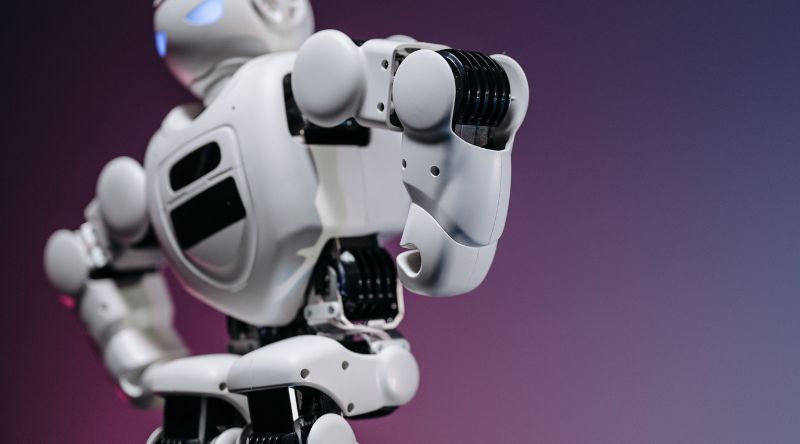
For decades, walking, talking androids were a staple of Hollywood sci-fi. But over the last year, science fiction officially turned into factory floor reality. If you visit an advanced automotive assembly line today, you might spot an all-electric bipedal machine moving pallets, carrying auto parts, or sorting components into bins. This brings us to a pressing question: How Do Humanoid Robots Actually Work in 2026?
The answer doesn’t lie in rigid, pre-programmed code. Instead, it is found in a massive convergence of physical engineering and artificial intelligence. Today’s humanoids learn tasks by watching human demonstrations, adapt to messy real-world environments on the fly, and use custom electric motors that mimic human muscle groups.
Let’s lift the metal hood and break down the exact tech, hardware, and AI models driving this robotic revolution.
Core Technologies: An Overview
Before diving deep into individual models, it helps to understand the baseline tech that makes these machines functional. Humanoids are no longer jerky, experimental lab projects; they are integrated systems combining high-output batteries, rapid inference processors, and fluid mechanics.
|
Core Component |
Primary Function in 2026 |
Real-World Impact |
|
Embodied AI (Foundation Models) |
Processes vision and converts natural language into physical actions. |
Allows the robot to understand commands like “pick up that red bin” without custom code. |
|
High-Torque Electric Actuators |
Custom electric motors that serve as joints (shoulders, knees, elbows). |
Replaces heavy hydraulics with lightweight, precise, and energy-efficient motion. |
|
Dexterous Hands (End-Effectors) |
Multi-jointed hands outfitted with tactile sensors. |
Enables the machine to handle delicate objects, like fresh eggs or power tools, without breaking them. |
|
Autonomous Power Management |
High-density battery packs coupled with self-charging capabilities. |
Guarantees up to 4 to 5 hours of continuous industrial work per cycle. |
Top 5 Platforms: How Do Humanoid Robots Actually Work in 2026?
To truly grasp how these machines operate, we need to examine the leading commercial models deploying across industries. Here is a breakdown of the top five platforms leading the charge.
Item #1: Tesla Optimus (Gen 2 / V2.5)
Tesla Optimus operates as a direct extension of Tesla’s automotive DNA. It doesn’t use internet-dependent cloud computing for its core movements. Instead, it runs an onboard neural network trained on massive data centers, deploying an adapted version of the Full Self-Driving (FSD) computer found in Tesla vehicles.
Optimus relies entirely on a vision-first architecture. A suite of cameras feeds visual data into its neural net, which instantly calculates spatial depth and identifies objects. Its custom-designed actuators give it smooth, human-like walking speeds of up to 8 km/h. The robot’s hands feature 11 degrees of freedom alongside tactile sensors, allowing it to dynamically adjust its grip pressure when handling fragile objects.
[Vision Cameras] -> [Onboard AI5 Chip]
|
v
[Tactile Sensors] -> [Dynamic Actuators (Adjusts Grip/Stride)]
|
Feature |
Specification / Capability |
|
Height & Weight |
173 cm (5’8″) | 57 kg (125 lbs) |
|
Key Advantage |
Vision-first neural networks and massive manufacturing scale. |
|
Primary Use Case |
Parts logistics, data collection, and assembly tasks inside Gigafactories. |
Item #2: Boston Dynamics Electric Atlas
Boston Dynamics shocked the robotics world by retiring its famous hydraulic Atlas and replacing it with a fully commercial, all-electric powerhouse. Where other humanoids focus purely on mimicking human constraints, Atlas breaks past them with 56 degrees of freedom and fully rotational joints.
Atlas works by blending raw physical intelligence (proprioception) with advanced perception models. Because its joints can spin 360 degrees, it doesn’t need to turn around to walk backward; it simply flips its torso and moves. This reduces cycle times dramatically on heavy factory floors.
Furthermore, Atlas resolves the industry’s biggest bottleneck: downtime. When its battery runs low, it autonomously walks to a dock, swaps out its own battery pack, and returns to work within minutes.
|
Feature |
Specification / Capability |
|
Lifting Capacity |
50 kg (110 lbs) instantaneous | 30 kg (66 lbs) sustained |
|
Key Advantage |
360-degree rotational joints and autonomous battery swapping. |
|
Primary Use Case |
Heavy material handling and automotive manufacturing (deployed with Hyundai). |
Item #3: Figure 02
Figure 02 stands out as a prime example of what happens when advanced hardware meets cutting-edge natural language processing. Developed via a close partnership with OpenAI, Figure 02 works by translating verbal speech into physical actions in real-time.
The robot utilizes a “learn by watching” approach driven by its proprietary Helix AI foundation model. An operator doesn’t need to program individual coordinates for a task. Instead, they can show the robot a video of a human picking up a component, or guide it through a few physical demonstrations. Figure 02 processes this visual data, runs it through simulation to fix any posture errors, and maps it directly onto its own electric actuators.
|
Feature |
Specification / Capability |
|
Battery Life |
Approximately 5 hours of continuous operational time |
|
Key Advantage |
OpenAI-powered conversational reasoning and fluid task imitation. |
|
Primary Use Case |
Tactile assembly, warehouse picking, and pilot operations at BMW plants. |
Item #4: Agility Robotics Digit
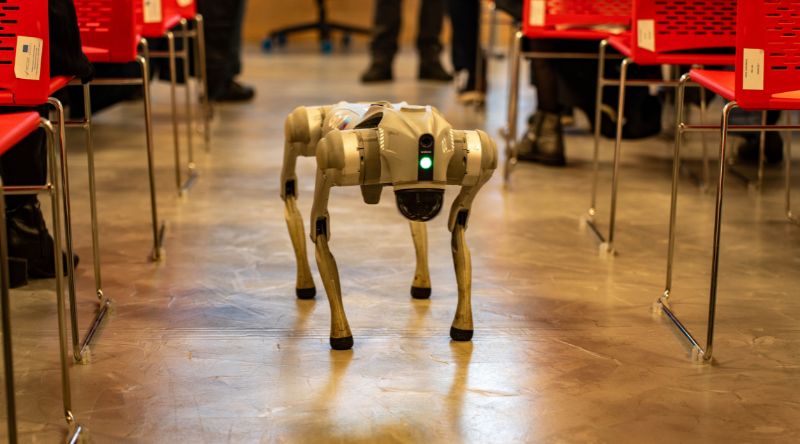
Digit is built for a singular, intense focus: logistics and warehouse supply chains. Unlike traditional humanoids that try to look exactly like humans, Digit features a unique, backward-curved leg design (digitigrade legs).
This specific lower-body engineering allows Digit to squat deeply, turn tightly in narrow warehouse aisles, and maintain perfect balance while carrying bulky storage bins. Digit operates via a highly specialized control layer that integrates seamlessly with existing warehouse management software. It is currently the most battle-tested humanoid platform in terms of total real-world operational hours, thanks to active commercial fleets running inside Amazon fulfillment centers.
|
Feature |
Specification / Capability |
|
Design Focus |
Purpose-built for tote manipulation and conveyor belt integration. |
|
Key Advantage |
High stability lower-body mechanics; logged more warehouse hours than any competitor. |
|
Primary Use Case |
Moving bulk totes, unloading pallets, and cross-docking logistics. |
Item #5: Unitree G1
The Unitree G1 represents the democratization of the humanoid market. While industrial giants build platforms costing hundreds of thousands of dollars, Unitree utilizes highly optimized mass-production techniques to offer an ultra-affordable, compact platform.
The G1 works by utilizing advanced reinforcement learning models. It is highly dynamic, capable of running over uneven terrain, recovering from violent kicks or shoves, and performing high-speed maneuvers like backflips. It serves primarily as an open-source development platform, allowing university labs and software startups to test their own AI models on real physical hardware without bankrupting their budgets.
|
Feature |
Specification / Capability |
|
Price Point |
Starts at an accessible ~$16,000 range |
|
Key Advantage |
High agility, low unit cost, and open-source software compatibility. |
|
Primary Use Case |
Academic research, AI model testing, and light service automation. |
Mechanical vs. AI Brains: The Two Scaling Philosophies
As we analyze How Do Humanoid Robots Actually Work in 2026?, a clear philosophical divide emerges among the world’s top engineering teams. The industry has split into two distinct pathways to achieve scale.
- The School of the Brain (AI-First): Championed by teams like Tesla and Figure. This approach prioritizes vision-based foundation models and massive end-to-end neural networks. They believe that if the AI brain is smart enough and has digested enough data, it can figure out how to control any physical hardware, even if the motors are basic.
- The School of the Body (Hardware-First): Championed by Boston Dynamics. This philosophy emphasizes decades of deep mechanical expertise, structural integrity, and physical feedback loops (proprioception). They ensure the robot can physically master its balance, load distribution, and joint rotation flawlessly before layering complex linguistic AI on top.
Ultimately, both strategies are rushing toward a common middle ground where heavy-duty, ultra-reliable hardware is controlled by an adaptive, self-learning AI agent.
Uncommon FAQs
How do humanoid robots handle the “Sim-to-Real” data gap?
Robots cannot safely learn every physical task via trial and error in the real world—crashing a $100,000 machine into a wall to learn balance isn’t viable. Instead, engineers use physics engines (like NVIDIA Isaac) to train robots in hyper-accelerated virtual simulations first. The AI completes millions of conceptual cycles in a matter of hours, learning how to handle friction, gravity, and object weight before the software policy is flashed onto the physical robot’s onboard processor.
Why don’t modern humanoids use hydraulic limbs anymore?
Hydraulics provide massive raw power, but they are incredibly complex, heavy, prone to fluid leaks, and loud. The transition to all-electric actuation was driven directly by the electric vehicle (EV) industry. High-torque density permanent magnet motors, planetary gearboxes, and compact strain-gauge sensors now deliver comparable physical strength with vastly superior energy efficiency, near-silent operation, and minimal maintenance overhead.
What happens when a humanoid robot loses its internet connection?
Critical locomotion, safety protocols, and vision-based obstacle avoidance are handled entirely by edge compute—meaning they run on the robot’s local, onboard processors. If a humanoid loses its local Wi-Fi or cellular connection, it won’t fall over or freeze. It will continue navigating its immediate surroundings safely and executing its current physical loop. However, it may temporarily lose high-level cloud communication, fleet data logging, or complex semantic parsing commands.
Conclusion
Understanding How Do Humanoid Robots Actually Work in 2026? reveals a fascinating truth: we are witnessing the birth of true physical AI. By combining high-density EV motor tech with generalized vision foundation models, these machines have successfully crossed the chasm from experimental research novelties to valuable industrial assets.
They are solving severe structural labor shortages, stepping into hazardous environments, and optimizing supply chains worldwide. While widespread household consumer humanoids are still a few years away, the foundational hardware and software models operating right now prove that the bipedal automation era has arrived.