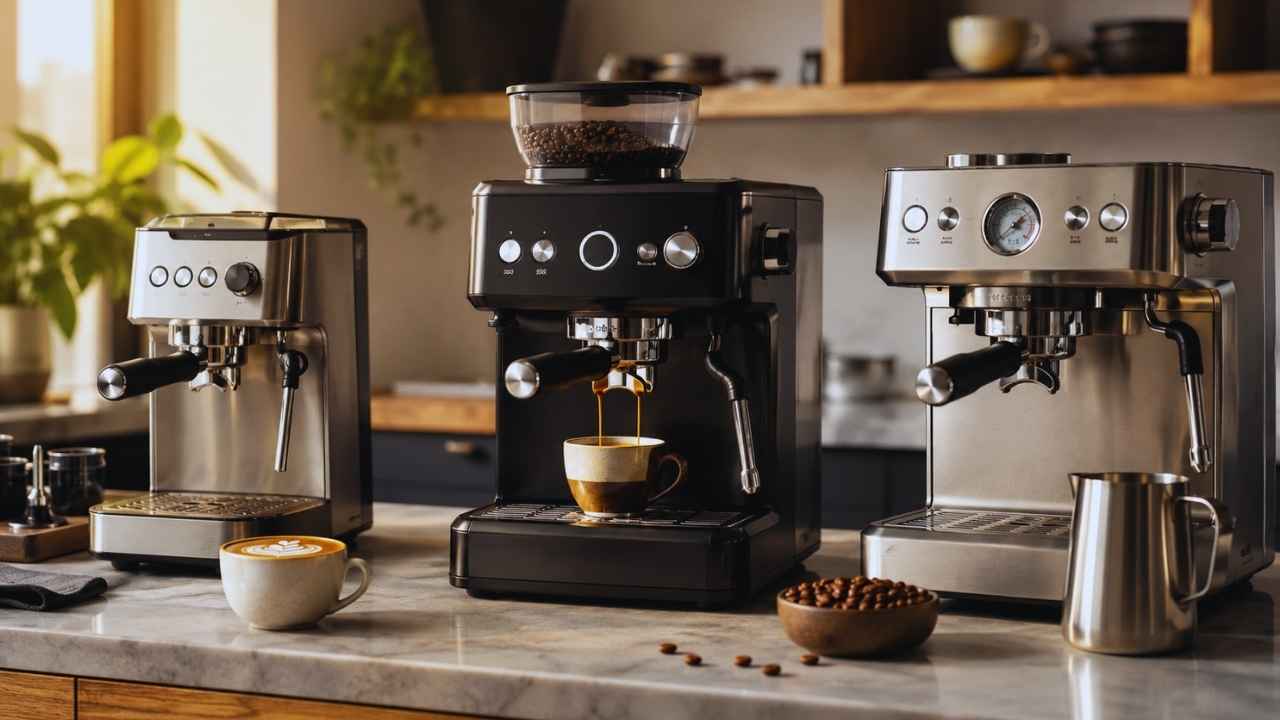
Buying an espresso machine in 2026 feels easier than it used to. You no longer need to be a full-time coffee nerd to pull a decent shot at home. Today’s machines heat faster. Many guide you through grind size, dosing, and milk frothing. Some even make espresso, drip coffee, cold brew, and hot water from one setup.
That’s why the search for best espresso machines home 2026 makes sense. More people want café-style espresso, latte, cappuccino, flat white, americano, and iced coffee without leaving the kitchen. But here’s the catch. The best machine is not the same for every home.
A beginner needs forgiveness. A latte drinker needs strong milk support. A straight espresso fan needs stable temperature and pressure. A busy family may need one machine that handles different drinks without drama. This guide gives you the practical version. No overblown coffee language. No confusing specs without context. Just clear advice based on current coffee trends, expert reviews, and official product details.
|
Quick Buying Question |
Why It Matters |
Best Direction |
|
Do you want easy espresso? |
Beginners need help with grind, dose, and milk. |
Choose guided or assisted machines. |
|
Do you want full control? |
Manual control gives better learning and more tuning. |
Choose semi-automatic machines. |
|
Do you drink lattes daily? |
Milk texture matters as much as espresso quality. |
Pick strong steam or auto milk frothing. |
|
Do you already own a grinder? |
Espresso needs a fine, consistent grind. |
If not, buy all-in-one or budget for a grinder. |
|
Is your kitchen small? |
Some machines are deep and heavy. |
Choose compact machines first. |
|
Do several people use it? |
Mixed drink habits need flexibility. |
Consider hybrid or super-automatic machines. |
Best Espresso Machines Home 2026: Quick Shortlist
The best espresso machines home 2026 buyers should look at are not all built for the same person. That’s a good thing. The market now has strong options for beginners, hobbyists, families, and convenience-first users.
If you want a compact machine, the Breville Bambino Plus is still one of the safest picks. It is small, quick, and easy to live with. If you want guidance, the De’Longhi La Specialista Touch makes more sense because it helps with grinding, dosing, brewing, and milk.
If you want to learn real espresso, the Gaggia Classic E24 gives you a more traditional setup. If you already know you care about shot quality, the Profitec GO is a better step-up choice. For family kitchens, the Ninja Luxe Café Pro is more practical because it handles espresso, coffee, cold brew, and hot water.
The key is to match the machine to your real routine. Do not buy a complicated machine if you hate tinkering. Do not buy a fully automatic machine if you want to learn shot control. Do not spend everything on the machine and forget the grinder.
Read Also: Best Soundbars Under $300 in 2026: Tested and Ranked
|
Machine |
Best For |
Type |
Why It Stands Out |
Main Trade-Off |
|
Breville Bambino Plus |
Best compact overall |
Semi-automatic |
Fast heat-up, small body, auto milk |
Needs separate grinder |
|
De’Longhi La Specialista Touch |
Best guided machine |
Assisted semi-automatic |
Touchscreen, Bean Adapt, auto milk |
Larger footprint |
|
Breville Barista Express Impress |
Best beginner all-in-one |
Assisted semi-automatic |
Built-in grinder and assisted tamping |
Less upgrade freedom |
|
Gaggia Classic E24 |
Best for learning espresso |
Semi-automatic |
Brass boiler and 58mm portafilter |
Needs practice |
|
Profitec GO |
Best step-up machine |
Semi-automatic |
PID, pressure gauge, adjustable pressure |
Single boiler |
|
Rancilio Silvia |
Best classic workhorse |
Semi-automatic |
Durable build and traditional feel |
Steeper learning curve |
|
Ninja Luxe Café Pro |
Best family hybrid |
Hybrid espresso and coffee machine |
Espresso, drip, cold brew, hot water |
Not for purists |
|
De’Longhi Dedica Duo |
Best slim budget pick |
Compact manual |
Thin body and cold extraction support |
Needs separate grinder |
|
Smeg BCC13 |
Best one-touch design pick |
Super-automatic |
Bean-to-cup drinks and integrated milk |
Less manual control |
|
Fellow Espresso Series 1 |
Best premium control pick |
Semi-automatic |
Pressure profiling and modern controls |
Expensive and mixed reviews |
Breville Bambino Plus: Best Compact Pick
The Breville Bambino Plus is one of the easiest machines to recommend for small kitchens. It does not take over the counter. It heats quickly. It also gives beginners a friendlier milk workflow with automatic milk texturing.
This machine is a smart choice if you want real espresso but do not want a large all-in-one setup. It works especially well for people who drink cappuccinos, lattes, and flat whites.
The biggest catch is the grinder. The Bambino Plus does not include one, so you need to buy a proper espresso grinder separately. That adds cost, but it also gives you more upgrade freedom later.
De’Longhi La Specialista Touch: Best Guided Machine
The De’Longhi La Specialista Touch is for people who want help without giving up the hands-on feel. It grinds, doses, brews, and froths while giving real-time guidance.
Its Bean Adapt feature helps users adjust grind, dose level, pre-infusion, and brewing temperature. That is useful because most poor espresso starts before the water even hits the coffee.
It also has preset drink recipes and automatic milk frothing with different froth and temperature levels. That makes it a strong choice for homes where several people want different drinks.
Breville Barista Express Impress: Best All-in-One for Beginners
The Barista Express Impress is a friendly bridge between café coffee and home espresso. It includes a grinder, intelligent dosing, and assisted tamping.
That assisted tamping system matters. Beginners often tamp unevenly, use the wrong dose, or make a mess while learning. This machine removes some of that pain.
It is not as flexible as buying a separate machine and grinder. But for many first-time buyers, convenience matters more than future upgrades.
Why Home Espresso Is Bigger in 2026
Home espresso is growing because coffee habits have changed. Coffee is still a daily drink for a huge number of adults, and specialty coffee has become a normal part of everyday life.
Current U.S. coffee data shows that coffee remains one of the most popular beverages. Specialty coffee is also strong, and espresso-based drinks have gained ground since 2022. Lattes and espresso are no longer occasional café orders for many people. They are part of daily routines.
At-home preparation also matters. Many coffee drinkers still make coffee at home, which makes better home equipment more useful. Instead of buying a latte every morning, people want a machine that can make a solid version in their own kitchen.
This does not mean everyone needs a luxury machine. It means buyers are more aware. They care about fresh beans, milk texture, grinder quality, and convenience. They want good coffee without turning the morning into a science project.
|
2026 Coffee Trend |
What It Means for Buyers |
Why It Matters |
|
Coffee remains a daily habit |
More homes want better coffee equipment. |
Espresso machines are now mainstream kitchen appliances. |
|
Specialty coffee keeps growing |
People care more about freshness and flavor. |
Grinder quality and temperature stability matter more. |
|
Espresso drinks are popular |
Lattes, cappuccinos, and iced espresso drinks are common. |
Milk systems and shot consistency matter. |
|
At-home coffee stays strong |
People want café-style drinks without café costs. |
Durable, easy-clean machines are more attractive. |
|
Cold coffee is now normal |
Iced lattes and cold brew are not just summer drinks. |
Hybrid machines with cold modes have more appeal. |
|
Beginners want less guesswork |
Espresso can be frustrating at first. |
Guided machines are becoming more useful. |
Coffee Drinkers Want More Control
A home machine gives you control over the beans, milk, sweetness, drink size, and strength. That is a big reason people move away from daily café drinks.
You can use oat milk. You can make a smaller latte. You can use decaf. You can pull a stronger shot. You can try different roasts without waiting for a café menu to change. That control is one of the real joys of home espresso.
Cost Still Matters
A good espresso machine costs money upfront. So does a grinder. So do beans and cleaning supplies.
But if someone buys café drinks often, a home setup can make financial sense over time. The payback depends on how often you use the machine and how much you usually spend outside. The smart move is not to buy the most expensive machine. It is to buy a machine you will actually use.
Convenience Is Changing the Market
Not every buyer wants a manual routine. Many people want fresh-ground coffee with fewer steps.
That is why assisted machines, hybrid machines, and super-automatic machines are getting more attention. They lower the learning curve and make daily use easier.
How to Choose the Right Espresso Machine Type
Before choosing a brand, choose the type of machine. This one step can save you from buying the wrong thing. Some machines are built for control. Some are built for speed. Some are built for families. Some are built for people who just want one-touch coffee and no mess.
If you enjoy learning, a semi-automatic machine can be fun. If you want coffee quickly, an assisted or super-automatic machine may be better. If your household drinks many coffee styles, a hybrid machine may make the most sense.
The goal is not to impress anyone with your setup. The goal is to make coffee you enjoy without hating the process.
|
Machine Type |
Control Level |
Ease of Use |
Best For |
Main Drawback |
|
Manual lever |
Very high |
Low |
Skilled hobbyists |
Hard to learn |
|
Semi-automatic |
High |
Medium |
Home baristas and learners |
Needs grinder and practice |
|
Assisted semi-automatic |
Medium |
High |
Beginners who want guidance |
Less flexible long term |
|
Super-automatic |
Low to medium |
Very high |
Busy users and families |
Less shot control |
|
Compact manual |
Medium |
Medium |
Small kitchens |
Slower for many drinks |
|
Hybrid machine |
Medium |
High |
Mixed coffee households |
Less traditional espresso feel |
|
Capsule machine |
Very low |
Very high |
Speed and low cleanup |
Less fresh and less flexible |
Semi-Automatic Machines
Semi-automatic machines give you control over the main espresso steps. You grind the beans, dose the basket, tamp the puck, lock in the portafilter, and start the shot.
This type suits people who want to learn and improve. It also gives better long-term flexibility because you can upgrade your grinder, baskets, tamper, and technique.
The Breville Bambino Plus, Gaggia Classic E24, Profitec GO, Rancilio Silvia, and Fellow Espresso Series 1 fall into this broad group.
Assisted Semi-Automatic Machines
Assisted machines help with the parts beginners often get wrong. They may guide the grind, dose, tamp, extraction, milk texture, or drink recipe.
The De’Longhi La Specialista Touch and Breville Barista Express Impress are good examples. They still feel like espresso machines, but they remove a lot of early frustration.
Choose this type if you want fresh coffee and a real portafilter, but you do not want to guess your way through every shot.
Super-Automatic Machines
Super-automatic machines do almost everything. They grind, dose, brew, and often froth milk with one touch.
This type is ideal for busy users who want coffee fast. You lose some manual control, but you gain speed and simplicity.
A good super-automatic machine works well in homes where people want cappuccinos and lattes without learning barista skills.
Hybrid Machines
Hybrid machines are built for homes where everyone drinks something different. One person wants espresso. Another wants a big cup of coffee. Someone else wants cold brew.
The Ninja Luxe Café Pro is a strong example because it covers espresso, drip coffee, cold brew, hot water, grinding, dosing, and tamping.
This type may not satisfy espresso purists, but it makes sense for many real kitchens.
Detailed Reviews of the Best Espresso Machines
Specs are helpful, but daily use matters more. A machine can look amazing online and still annoy you every morning.
The machines below stand out because they match clear buyer needs. Some are compact. Some teach you proper espresso. Some make milk drinks easier. Some give you one-touch convenience.
A good review should not just say “buy this.” It should tell you who should buy it and who should skip it. That is what this section does.
|
Machine |
Best Match |
Key Strength |
Best Drink Style |
|
Breville Bambino Plus |
Small kitchen beginner |
Speed and auto milk |
Latte, cappuccino, espresso |
|
De’Longhi La Specialista Touch |
Guided home barista |
Bean Adapt and presets |
Latte, flat white, cold brew |
|
Barista Express Impress |
Beginner all-in-one |
Grinder and assisted tamping |
Espresso, cappuccino |
|
Gaggia Classic E24 |
Skill builder |
Brass boiler and 58mm system |
Espresso, cappuccino |
|
Profitec GO |
Serious step-up buyer |
PID and pressure control |
Straight espresso |
|
Rancilio Silvia |
Traditional home barista |
Durable build and strong steam |
Espresso, milk drinks |
|
Ninja Luxe Café Pro |
Family kitchen |
Multi-drink versatility |
Espresso, drip, cold brew |
|
Smeg BCC13 |
One-touch convenience |
Bean-to-cup milk drinks |
Cappuccino, latte macchiato |
|
Fellow Series 1 |
Premium experimenter |
Pressure profiling |
Light roast espresso |
Gaggia Classic E24: Best for Learning Real Espresso
The Gaggia Classic E24 is a strong machine for people who want to learn. It has a brass boiler, brass group head, and 58mm stainless-steel portafilter.
Those details matter because they make the machine feel closer to traditional espresso equipment. You get a more hands-on workflow and more room to improve.
It does not include a grinder. It does not have a touchscreen. It does not automate the hard parts. That is exactly why many home baristas like it. You learn dosing, grind size, shot timing, tamping, and steaming.
Profitec GO: Best Step-Up Machine
The Profitec GO is compact but serious. It has PID temperature control, a pump pressure gauge, and an expansion valve for brewing pressure adjustment.
That makes it more useful for people who want to understand extraction. You can see pressure behavior and tune the machine more carefully.
It is a single-boiler machine, so it does not brew and steam at the same time. For one or two drinks, that is usually fine. For a line of lattes, it may feel slow. Buy it if you already know espresso is part of your daily routine.
Rancilio Silvia: Best Classic Workhorse
The Rancilio Silvia has been around for a long time because it does the basics well. It is sturdy, traditional, and built for people who do not mind learning.
It has a brass brewing group, strong steam wand, and commercial-style portafilter design. It does not offer much hand-holding.
That means it can frustrate casual users. But for patient buyers, it still makes sense. The Silvia works best with a good grinder and a consistent routine.
Ninja Luxe Café Pro: Best for Families
The Ninja Luxe Café Pro is not a purist espresso machine. It is more like a complete coffee station.
It can brew espresso, drip coffee, cold brew, and hot water. It also has a built-in conical burr grinder, guided grind recommendations, weight-based dosing, and integrated tamping.
That mix makes it useful for homes where people drink different styles of coffee. If you want to study every espresso variable, choose something else. If you want one machine that handles a busy household, this is a smart pick.
Smeg BCC13: Best One-Touch Design Pick
The Smeg BCC13 is a fully automatic bean-to-cup machine. It grinds beans fresh and makes several coffee and milk drinks with a one-touch approach.
It also has an integrated milk system, hot water function, adjustable drink settings, and a compact design.
This machine is not for people who want to tamp and time shots. It is for people who want good-looking convenience. Choose it if you want fresh-ground drinks with minimal effort.
Fellow Espresso Series 1: Best Premium Control Pick
The Fellow Espresso Series 1 is one of the more interesting premium machines in 2026. It offers pressure profiling, fast warm-up, a heated group head, assisted milk steaming, app support, and a 58mm bottomless portafilter.
Pressure profiling lets users adjust how pressure changes during the shot. That can help with flavor clarity, sweetness, and lighter roast espresso.
Still, it is not the safest beginner pick. Reviews are mixed. Some testers love the control and design. Others feel it needs refinement for the price. Buy it if you like experimenting. Skip it if you want a simple, proven first machine.
Features That Actually Matter
Espresso machines come with a lot of marketing language. Some features improve your coffee. Some only make the product page look better.
The most important features are simple: good grinding, stable temperature, controlled pressure, proper milk support, easy cleaning, and reliable parts.
A machine does not need every premium feature to be good. A compact beginner machine can make great coffee if it has stable heat and you pair it with a good grinder. At the same time, a premium machine can disappoint if you use stale beans, poor water, or a weak grinder.
|
Feature |
Importance |
Why It Matters |
|
Espresso-capable grinder |
Very high |
Grind size controls extraction. |
|
PID temperature control |
High |
Helps shots taste consistent. |
|
Stable brew pressure |
High |
Supports balanced extraction. |
|
58mm portafilter |
Medium to high |
Gives more basket and accessory options. |
|
Auto milk frothing |
High for beginners |
Makes lattes easier. |
|
Manual steam wand |
High for hobbyists |
Gives more control over milk texture. |
|
Pressure gauge |
Useful |
Helps diagnose fast or slow shots. |
|
Adjustable brew pressure |
Useful for enthusiasts |
Allows more shot tuning. |
|
Fast heat-up |
Useful daily |
Saves time in the morning. |
|
Easy cleaning cycle |
Very useful |
Keeps coffee tasting fresh. |
|
Cold brew mode |
Useful for some homes |
Helps iced coffee drinkers. |
|
Touchscreen |
Optional |
Helpful only if the guidance is good. |
Grinder Quality Comes First
A good grinder can make a basic machine perform better. A bad grinder can make an expensive machine taste average.
Espresso needs a fine and consistent grind. Tiny changes in grind size can change the flavor fast. If you buy a machine without a grinder, plan for one. If you buy a machine with a built-in grinder, check the number of grind settings and how easy it is to adjust.
Temperature Stability Changes the Cup
Espresso is sensitive to heat. If the water is too cool, the shot can taste sour. If it is too hot, the shot can taste bitter or harsh.
PID control helps keep temperature steadier. It is especially useful if you drink straight espresso or use lighter roasts. Beginners may not notice this at first, but consistency matters more as your taste improves.
Pressure Claims Can Mislead Buyers
Many machines advertise 15-bar or 19-bar pumps. That sounds impressive, but it is not the full story.
Traditional espresso is usually extracted around 9 bars at the coffee puck. What matters is controlled pressure during brewing, not the largest pump number printed on the box.
A stable machine with sensible pressure control is better than one that only shouts about bar pressure.
Best Espresso Machine by Buyer Type
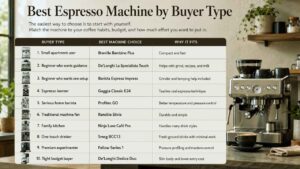
The easiest way to choose is to start with yourself. How do you drink coffee? How much effort do you want to put in? How many people will use the machine?
A person who drinks one espresso every morning should not buy the same machine as a family that makes lattes, iced coffee, and drip coffee. A beginner who wants help should not start with a machine that demands perfect technique from day one.
This section gives practical matches by buyer type.
|
Buyer Type |
Best Machine Choice |
Why It Fits |
|
Small apartment user |
Breville Bambino Plus |
Compact and fast |
|
Beginner who wants guidance |
De’Longhi La Specialista Touch |
Helps with grind, recipes, and milk |
|
Beginner who wants one setup |
Barista Express Impress |
Grinder and tamping help included |
|
Espresso learner |
Gaggia Classic E24 |
Teaches real espresso technique |
|
Serious home barista |
Profitec GO |
Better temperature and pressure control |
|
Traditional machine fan |
Rancilio Silvia |
Durable and simple |
|
Family kitchen |
Ninja Luxe Café Pro |
Handles many drink styles |
|
One-touch drinker |
Smeg BCC13 |
Fresh-ground drinks with minimal work |
|
Premium experimenter |
Fellow Series 1 |
Pressure profiling and modern control |
|
Tight budget buyer |
De’Longhi Dedica Duo |
Slim body and lower entry cost |
For Beginners
Beginners should prioritize ease. That does not mean buying a weak machine. It means buying a machine that helps you avoid early mistakes.
The Breville Bambino Plus is great if you can buy a separate grinder. The Barista Express Impress is better if you want everything in one machine. The De’Longhi La Specialista Touch is better if you want more guidance and drink variety.
For Serious Learners
If you want to learn espresso properly, look at the Gaggia Classic E24, Profitec GO, or Rancilio Silvia.
These machines ask more from you. They reward better technique. You will learn grind size, timing, puck prep, and steaming. That learning curve can be annoying, but it also makes the coffee more satisfying.
For Families
Families need flexibility. One person may want a cappuccino. Another may want black coffee. Someone else may want cold brew.
The Ninja Luxe Café Pro fits that kind of home better than a traditional espresso-only machine. It is not the purest pick, but it is practical.
For Convenience Seekers
If you want fresh-ground coffee with very little effort, choose a super-automatic machine like the Smeg BCC13.
You will lose manual control, but you gain speed and simplicity. That is the right trade-off for many busy homes.
Budget Guide for Home Espresso Machines
A good espresso setup costs more than the machine. That is where many buyers get caught. You may need a grinder, scale, tamper, milk pitcher, knock box, cleaning tablets, descaler, and water filter. You also need fresh beans.
If you spend the whole budget on the machine and ignore the grinder, your espresso will suffer. A balanced setup gives better results. Prices change often, especially during sales. So it is better to think in budget ranges than exact prices.
|
Budget Range |
What You Can Expect |
Best Buyer Match |
|
Under $300 |
Entry compact machines and basic manual models |
Casual users |
|
$300 to $600 |
Strong beginner machines |
First serious setup |
|
$600 to $1,000 |
Guided and all-in-one machines |
Beginners who want less guessing |
|
$1,000 to $1,500 |
Prosumer machines and higher-end automatics |
Daily espresso drinkers |
|
Above $1,500 |
Pressure profiling, luxury automation, dual boilers |
Enthusiasts and premium buyers |
Best Value Zone
For most buyers, the best value sits between $300 and $1,000. This range includes compact machines, assisted machines, and some strong all-in-one choices.
You can get very good home espresso in this range if you choose carefully. The biggest rule is simple: save money for the grinder.
When Spending More Makes Sense
Spend more if you already know you care about espresso quality and will use the machine often.
Machines like the Profitec GO and Fellow Espresso Series 1 make more sense for users who notice temperature, pressure, shot timing, and roast differences. If you drink mostly milk drinks, you may also want stronger steam performance.
When Spending Less Makes Sense
Spend less if you are unsure whether you will use the machine daily. A compact machine is better than a large expensive machine that sits untouched after two weeks.
Start with a setup that fits your habits now. Upgrade later if the hobby sticks.
Essential Accessories for Better Espresso
Espresso is not just machine plus beans. The accessories matter more than beginners expect. You do not need every fancy tool on social media. But a few basics make a huge difference.
A grinder and scale are the two big ones. They help you control the dose, grind, and shot yield. Without them, you are mostly guessing.
|
Accessory |
Priority |
Why It Helps |
|
Espresso grinder |
Essential |
Gives fresh, fine, consistent grounds |
|
Digital scale |
Essential |
Helps track dose and yield |
|
Tamper |
Essential |
Compresses coffee evenly |
|
Milk pitcher |
Essential for milk drinks |
Needed for steaming and pouring |
|
Dosing funnel |
Helpful |
Reduces mess while filling basket |
|
WDT tool |
Helpful |
Breaks up clumps before tamping |
|
Knock box |
Optional but useful |
Makes puck disposal easier |
|
Cleaning tablets |
Essential |
Removes coffee oils |
|
Descaler |
Essential in hard-water areas |
Protects boiler and water lines |
|
Water filter |
Very useful |
Improves taste and reduces scale risk |
The Grinder Is Not Optional
If you want real espresso, use an espresso-capable grinder. A blade grinder will not do the job.
Espresso needs small grind adjustments. Too coarse, and the shot runs fast and sour. Too fine, and it runs slow and bitter. A good grinder makes the whole process easier.
A Scale Saves Coffee
A scale sounds fussy until you use one. Then it becomes obvious. You can measure how much coffee goes in and how much espresso comes out. That helps you repeat good shots and fix bad ones.
A common starting point is an 18-gram dose and a 36-gram espresso yield. From there, you can adjust by taste.
Cleaning Supplies Matter
Cleaning tablets and descaler are not exciting, but they protect the machine and the flavor.
Old coffee oils taste bitter. Scale can block water flow and affect heat. A clean machine makes better espresso.
Common Buying Mistakes to Avoid
Espresso machines are easy to overbuy. They are also easy to underbuy.
Some buyers chase the biggest pressure number. Some ignore the grinder. Some buy a manual machine when they really want convenience. Others buy a fully automatic machine and then feel disappointed because they cannot control the shot.
The best way to avoid regret is to be honest about your routine. If you want speed, buy for speed. If you want control, buy for control. If you want a family machine, buy for flexibility.
|
Mistake |
Why It Hurts |
Better Move |
|
Spending all the money on the machine |
Leaves no budget for a grinder |
Split the budget wisely |
|
Buying only by brand |
Not every model fits every user |
Match the machine to your routine |
|
Chasing 15-bar claims |
Pump pressure alone does not prove quality |
Look for stable extraction |
|
Ignoring cleaning |
Leads to bad taste and breakdowns |
Check maintenance before buying |
|
Buying too manual |
Causes frustration |
Choose guided if you want ease |
|
Buying too automatic |
Limits learning |
Choose semi-automatic if you want skill |
|
Forgetting counter space |
Machine may not fit |
Measure width, depth, and height |
|
Ignoring milk workflow |
Lattes become annoying |
Check steam and milk cleaning steps |
Measure Your Counter First
This sounds boring, but it matters. Check the machine’s width, depth, and height before buying.
Also check how the water tank comes out. If the tank lifts from the back or top, it may be annoying under low cabinets. Do not trust product photos alone. Machines often look smaller online.
Be Honest About Cleaning
Every espresso machine needs care. Steam wands need wiping. Drip trays need emptying. Portafilters need rinsing. Milk systems need proper cleaning.
If that sounds like too much, choose a simpler machine. A machine you can clean easily is better than a fancy one you avoid using.
Do Not Buy for Looks Alone
A beautiful machine can still be frustrating. A plain machine can make excellent coffee.
Design matters if the machine sits on your counter every day. But performance, usability, and maintenance matter more.
Cleaning and Maintenance Guide
Good espresso needs a clean machine. There is no way around it. Coffee oils build up. Milk residue spoils. Hard water creates scale. Old grounds sit in baskets, grinders, and drip trays.
If you clean a little every day, maintenance stays easy. If you ignore it for weeks, the machine becomes harder to fix and the coffee starts tasting stale. A good routine protects both flavor and machine life.
|
Cleaning Task |
How Often |
Why It Matters |
|
Wipe steam wand |
After every milk drink |
Stops milk from drying on the wand |
|
Purge steam wand |
After every milk drink |
Clears milk from inside the tip |
|
Rinse portafilter |
Daily |
Removes old grounds and oils |
|
Empty drip tray |
Daily or as needed |
Prevents smell and overflow |
|
Backflush if supported |
Weekly or as instructed |
Cleans group head oils |
|
Clean grinder chute |
Weekly to monthly |
Keeps grounds flowing evenly |
|
Clean burrs |
Monthly or as needed |
Helps grind consistency |
|
Descale |
Based on water hardness |
Prevents mineral buildup |
|
Clean milk system |
As instructed |
Stops clogs and sour smells |
|
Replace water filter |
As recommended |
Protects taste and machine parts |
Water Quality Matters
Hard water can damage espresso machines over time. It leaves mineral scale inside boilers, thermoblocks, tubes, and valves.
Filtered water can help, but not all bottled water is good for espresso machines. Some bottled water has high mineral content too. Follow the machine brand’s water and descaling guidance.
Milk Systems Need Extra Care
Milk residue spoils quickly. If your machine has a milk tube, milk carafe, or automatic frother, clean it properly.
Plant-based milk can also leave residue. Oat milk often steams well, but it still needs cleanup. If you drink milk drinks daily, choose a machine with a milk system you will actually clean.
Best Machines by Drink Style
Your favorite drink should guide your purchase. A straight espresso drinker and an iced latte drinker need different features.
For straight espresso, prioritize grinder quality, temperature control, pressure stability, and portafilter design. For milk drinks, prioritize steam power or automatic milk texture. For iced drinks, look for cold brew support or easy hot espresso over ice. If a household drinks many styles, do not force everyone into a purist machine. A hybrid machine may be the smarter choice.
|
Drink Style |
Best Machine Match |
Why It Works |
|
Straight espresso |
Profitec GO, Gaggia Classic E24, Fellow Series 1 |
Better control over extraction |
|
Cappuccino |
Bambino Plus, La Specialista Touch, Rancilio Silvia |
Strong milk support |
|
Latte |
Bambino Plus, La Specialista Touch, Smeg BCC13 |
Easier milk texture |
|
Flat white |
Bambino Plus, Profitec GO, Gaggia Classic E24 |
Good espresso base and milk control |
|
Americano |
De’Longhi La Specialista Touch, Ninja Luxe Café Pro, Fellow Series 1 |
Espresso plus hot water |
|
Iced latte |
Ninja Luxe Café Pro, La Specialista Touch |
Cold drink support |
|
Drip coffee and espresso |
Ninja Luxe Café Pro |
Handles both drink styles |
|
One-touch cappuccino |
Smeg BCC13 |
Automatic milk workflow |
If You Drink Mostly Milk Drinks
Do not ignore steam performance. A weak steam wand can make lattes frustrating. Beginners may prefer automatic milk frothing. It gives better results with less practice.
Hobbyists may prefer manual steam because it gives more control and helps with latte art.
If You Drink Mostly Straight Espresso
Focus on grind, temperature, pressure, and puck prep. Milk automation does not matter much here. You are better off with a machine that gives stable extraction and pairs well with a good grinder.
The Profitec GO, Gaggia Classic E24, and Fellow Series 1 fit this group better than most fully automatic machines.
If Your Home Drinks Everything
Choose flexibility. This is where the Ninja Luxe Café Pro makes sense.
It is not the most traditional espresso machine, but it can keep a mixed household happy.
Final Thoughts
The best espresso machines home 2026 buyers should consider depend on one thing above all: how you actually drink coffee. If you want a compact, reliable starter machine, choose the Breville Bambino Plus. If you want guidance, choose the De’Longhi La Specialista Touch. If you want an all-in-one beginner setup, choose the Breville Barista Express Impress.
If you want to learn real espresso, the Gaggia Classic E24 is a strong pick. If you want more control, look at the Profitec GO or Rancilio Silvia. If your family drinks many coffee styles, the Ninja Luxe Café Pro is one of the most useful choices.
For one-touch convenience, the Smeg BCC13 makes sense. For premium buyers who like pressure profiling and experimentation, the Fellow Espresso Series 1 is interesting, but it is not the safest first machine for everyone.
My advice is simple.
Buy for your real routine. Leave room in the budget for a grinder. Pick a machine you will clean. Use fresh beans. Improve one step at a time. Good espresso at home is not about buying the most expensive machine. It is about choosing the right setup and using it well.
Frequently Asked Questions (FAQs) About Best Espresso Machines Home 2026
Is 15-Bar Pressure Better Than 9-Bar Pressure?
No. A bigger pump pressure number does not mean better espresso. What matters is the pressure at the coffee puck during extraction. A stable extraction around traditional espresso pressure is more useful than a big marketing number.
Do I Need a Grinder for Espresso?
Yes, if you want good results. Espresso needs a fine and consistent grind. Pre-ground coffee goes stale faster and rarely matches your machine perfectly. A grinder gives you control and makes dialing in much easier.
Is a Built-In Grinder Worth It?
For beginners, yes. Built-in grinders save space and reduce setup confusion. For serious users, a separate grinder is usually better. It gives more control, better upgrade options, and more flexibility across machines.
Can I Use Regular Coffee Beans for Espresso?
Yes. Espresso is a brewing method, not a specific bean. Medium and medium-dark roasts are usually easier for beginners. Light roasts can taste great, but they often need more careful grinding and temperature control.
Why Does My Espresso Taste Sour?
Sour espresso usually means under-extraction. The grind may be too coarse, the shot may run too fast, the dose may be off, or the machine may not be hot enough. Try grinding finer, pulling a longer shot, or improving puck prep.
Why Does My Espresso Taste Bitter?
Bitter espresso often means over-extraction. The grind may be too fine, the shot may run too long, or the brew temperature may be too high. Try grinding slightly coarser or stopping the shot earlier.
What Is the Best Machine for a Small Kitchen?
The Breville Bambino Plus is one of the best compact choices. It is small, fast, and strong for milk drinks. The De’Longhi Dedica Duo is another slim option for tight counters, but it needs more skill and a separate grinder.
What Is the Best Machine for a Family?
The Ninja Luxe Café Pro is one of the best family picks because it handles espresso, drip coffee, cold brew, hot water, and milk drinks. It is not the purest espresso machine, but it is very practical.