
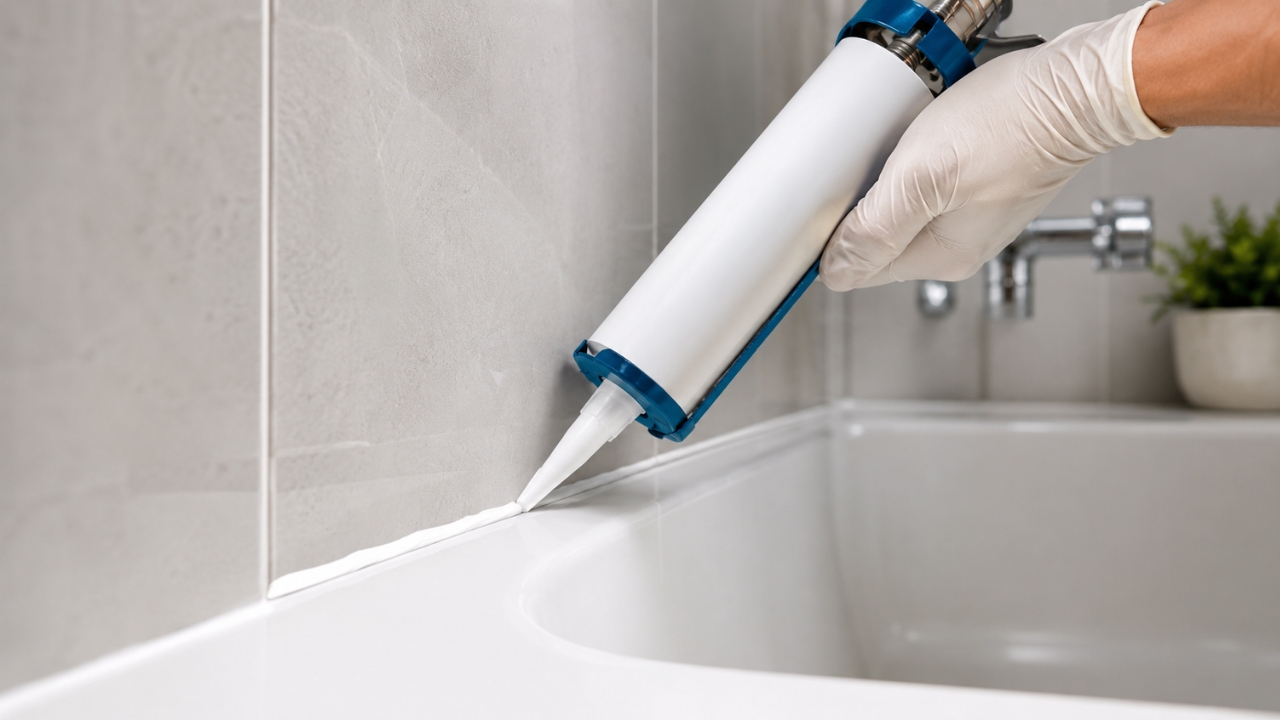
A messy caulk line can ruin the look of a clean bathroom. Worse, it can let water sneak behind the tub. That’s when small gaps turn into stains, mold, soft drywall, and expensive repairs.
The good news? You can fix it yourself.
This caulk bathtub guide walks you through the job in plain English. No fancy tools. No contractor talk. Just the right steps, the right caulk, and a little patience.
Most failed caulk jobs have one thing in common: people rush them. They squeeze new caulk over old caulk. They skip the cleaning. They shower before the seal cures. Then the bead peels, cracks, or turns black again.
Do it the right way once, and the result looks cleaner and lasts longer.
Quick Facts Before You Start
Caulking a bathtub is simple, but the prep matters more than the squeeze. A smooth bead won’t help if the surface underneath is dirty, wet, or moldy.
|
Key Point |
What It Means |
|
Best caulk type |
100% silicone kitchen and bath caulk |
|
Main job |
Seal the gap between tub and wall |
|
Biggest mistake |
Caulking over old caulk |
|
Surface condition |
Clean, dry, and mold-free |
|
Cure time |
Follow the product label |
|
Skill level |
Beginner-friendly |
|
Average supplies needed |
Caulk, caulk gun, scraper, tape, rags, cleaner |
A bathtub seam gets wet every day. It also moves a little when the tub fills with water or someone steps in. That’s why you need a flexible waterproof seal, not a hard filler.
Why Bathtub Caulk Matters
Bathtub caulk does more than make the edge look neat. It blocks water from getting behind tile, wall panels, flooring, and fixtures.
That tiny seam around the tub takes a lot of abuse. Water hits it. Soap builds up on it. Heat and moisture sit on it. Over time, weak caulk cracks or pulls away.
Once that happens, water finds a path.
|
What Caulk Protects |
Why It Matters |
|
Wall edges |
Stops water from reaching drywall or backer board |
|
Tile joints |
Reduces leaks behind the wall |
|
Flooring |
Helps prevent swelling and water stains |
|
Tub corners |
Blocks water from sitting in hidden gaps |
|
Fixtures |
Keeps water from slipping behind spouts and handles |
Caulk Is Not the Same as Grout
This part confuses a lot of beginners.
Grout goes between tiles. Caulk goes where two surfaces meet and move.
The seam where the tub meets the wall needs caulk because the tub can flex. Grout is hard. It can crack in that spot. Caulk stays flexible, so it handles movement better.
Signs Your Bathtub Needs New Caulk
You don’t need to wait until the whole bead falls apart. Replace it when you see early warning signs.
Look for:
- Cracks in the caulk line
- Peeling or lifted edges
- Gaps between the tub and wall
- Black stains that keep coming back
- Soft or gummy old caulk
- Water sitting behind the bead
- A musty smell near the tub
- Swollen trim, loose tile, or stained walls
A little surface stain doesn’t always mean the caulk has failed. Soap scum can sit on top. But if the caulk is loose, split, or moldy underneath, cleaning won’t solve it.
You’ll need to remove it and start fresh.
Caulk Bathtub Guide: Tools and Materials You Need
You don’t need a professional kit. But you do need the right basics.
The removal tools matter just as much as the caulk itself. If old caulk stays behind, the new bead won’t bond well.
|
Tool or Material |
Why You Need It |
|
Bathroom silicone caulk |
Creates the waterproof seal |
|
Caulk gun |
Gives better control |
|
Utility knife |
Cuts old caulk loose |
|
Caulk removal tool |
Helps lift stubborn caulk |
|
Plastic scraper |
Removes residue with less scratching |
|
Painter’s tape |
Helps make clean lines |
|
Isopropyl alcohol |
Removes final oils and residue |
|
Clean rags or paper towels |
Handles wiping and cleanup |
|
Gloves |
Keeps hands clean |
|
Smoothing tool |
Shapes the bead neatly |
|
Fan or open window |
Helps with ventilation and drying |
Choose the Right Caulk
For most bathtub seams, use 100% silicone kitchen and bath caulk. It handles moisture well and stays flexible after curing.
Look for labels like:
- Kitchen and bath
- Tub and tile
- Shower and tub
- Waterproof
- Mold-resistant
- Mildew-resistant
- 100% silicone
Avoid regular painter’s caulk inside the tub area. It works on trim and dry gaps, but it usually doesn’t hold up well in wet seams.
Pick the Right Color
White is the safest pick for most white tubs and white tile. Clear works better around glass, stone, or patterned tile. Almond, beige, or gray can match warmer bathroom finishes.
|
Caulk Color |
Best Use |
|
White |
White tubs, white tile, classic bathrooms |
|
Clear |
Glass, stone, mixed surfaces |
|
Almond or beige |
Warm-toned tile and off-white tubs |
|
Gray |
Modern tile, stone, or darker grout lines |
Don’t choose clear just because it feels neutral. If the gap behind it is dark or dirty, clear caulk can make the seam look worse.
Buy a Cartridge, Not Just a Squeeze Tube
A squeeze tube is fine for a tiny patch. For a full bathtub, use a cartridge with a caulk gun.
It gives you better control, a steadier bead, and less hand strain. A basic dripless caulk gun makes the job easier.
Step 1: Remove the Old Caulk
This step is messy. It’s also the step that decides whether the job lasts.
New caulk does not stick well to old caulk. It also won’t bond to soap scum, mildew, body oil, or damp residue.
|
Removal Step |
What to Do |
|
Cut the old bead |
Score the top and bottom edges |
|
Pull loose strips |
Peel slowly by hand |
|
Scrape residue |
Use a plastic scraper when possible |
|
Soften stubborn caulk |
Use caulk remover if needed |
|
Clean loose debris |
Vacuum or wipe the seam |
|
Inspect the gap |
Look for damage or trapped moisture |
How to Remove Silicone Caulk
Use a sharp utility knife to cut along both sides of the old bead. Keep the blade shallow so you don’t scratch the tub or cut into the wall.
Once the edges are loose, pull the caulk out in strips. If it breaks, scrape the leftover pieces.
Fiberglass tubs scratch easily, so don’t dig hard with metal tools. A plastic scraper is safer.
Don’t Caulk Over Mold
If the old caulk is moldy, remove it. Then clean the surface before adding new caulk.
For mold on hard surfaces, scrub with detergent and water. Dry the area fully before sealing. Wear gloves and keep the bathroom ventilated.
Never mix bleach with ammonia or other cleaners. That can create dangerous fumes.
If the wall feels soft, tiles move, or the smell is strong, stop and inspect deeper. Caulk can’t fix hidden water damage.
Step 2: Clean and Dry the Seam
Once the old caulk is gone, clean the joint well.
Wash it with mild soap and warm water. Rinse it. Dry it with clean towels. Then let it air-dry.
After that, wipe the seam with isopropyl alcohol. This helps remove leftover oils and residue.
|
Cleaning Task |
Why It Matters |
|
Wash with soap and water |
Removes grime and soap scum |
|
Rinse well |
Clears cleaner residue |
|
Dry with towels |
Removes surface moisture |
|
Air-dry |
Lets hidden dampness escape |
|
Wipe with alcohol |
Removes final oils |
|
Check corners |
Moisture often hides there |
The Seam Must Be Dry
Don’t rush this part.
If the seam feels damp, wait. If water was trapped behind the old caulk, wait longer. A fan can help, but don’t blow dust into the open joint.
Caulk sticks best to a clean, dry surface. Moisture under the bead can weaken the seal.
Should You Fill the Tub Before Caulking?
For acrylic or fiberglass tubs, yes, it can help.
These tubs may flex slightly when full. If you caulk the tub while it’s empty, the seam can stretch later when someone bathes or showers.
Fill the tub with water before caulking. Apply the bead. Let it cure as directed on the label. Then drain the tub after the cure time.
This step is less important for heavy cast iron or steel tubs, but it’s still useful if your tub moves a little.
Read Also: How to Replace a Showerhead Without Calling a Plumber
Step 3: Tape the Edges
Painter’s tape is optional, but beginners should use it. It gives you clean edges and keeps extra caulk off the tub and wall.
Place one strip above the seam and one strip below it. Leave a gap wide enough for the bead to cover the joint.
|
Taping Tip |
Best Practice |
|
Use painter’s tape |
It removes more cleanly |
|
Keep the gap even |
Helps the bead look straight |
|
Press edges down |
Stops caulk from bleeding under |
|
Work in sections |
Easier to control |
|
Remove tape while wet |
Prevents tearing the bead |
How Wide Should the Caulk Line Be?
Most tub seams look good with a bead around 3/16 inch to 1/4 inch wide.
The bead should cover the joint and touch both surfaces. It should not look like a thick rope sitting on top.
If the gap is wide or deep, don’t fill the whole thing with caulk. Use backer rod first.
Step 4: Cut the Caulk Tube
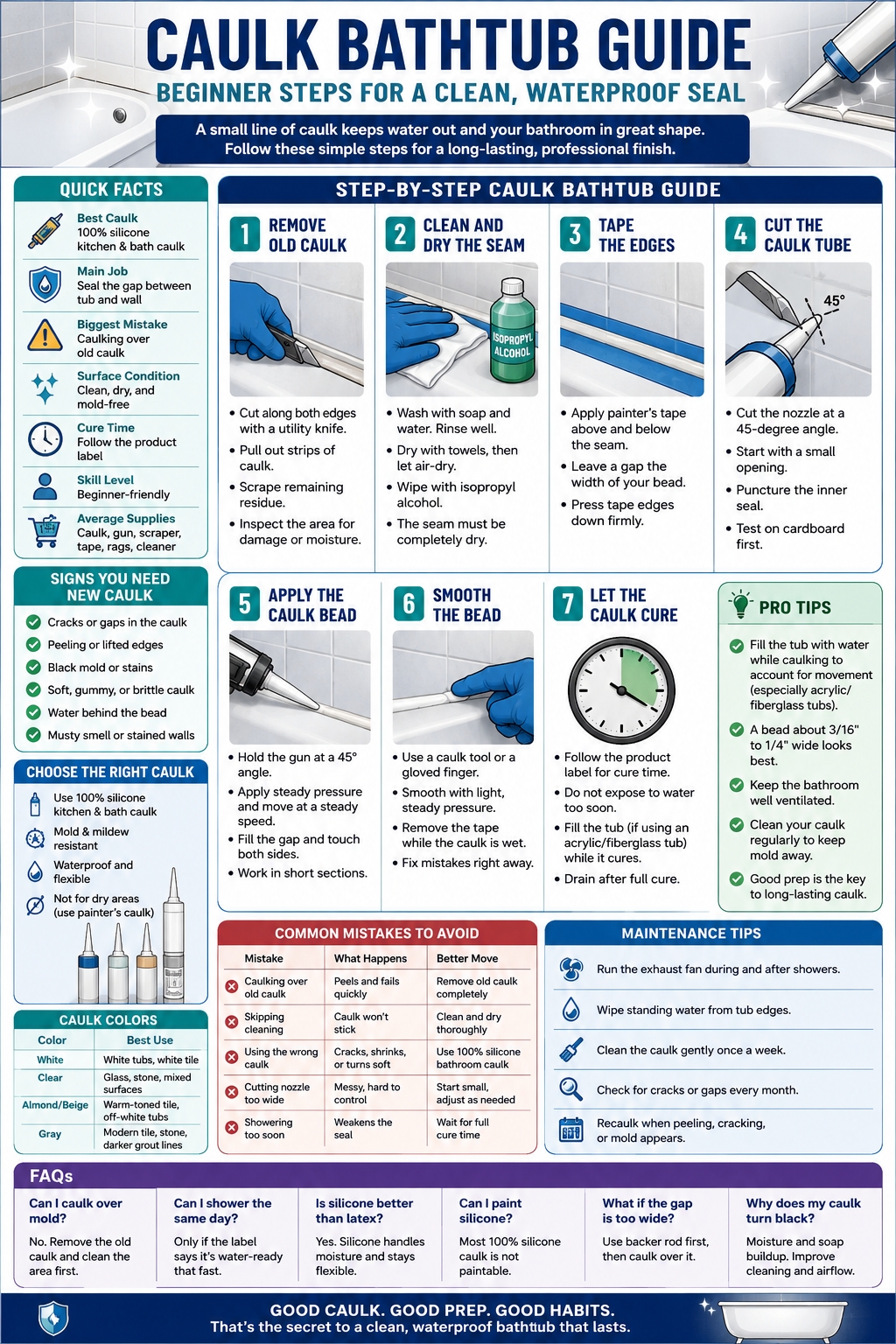
The nozzle controls the bead. Cut it too wide, and you’ll fight a messy line. Cut it too small, and the caulk won’t fill the joint.
Cut the tip at a 45-degree angle. Start small. You can always cut more if needed.
|
Tube Prep Step |
Why It Helps |
|
Cut at 45 degrees |
Helps the nozzle glide |
|
Start with a small hole |
Gives more control |
|
Pierce the inner seal |
Lets the caulk flow |
|
Load the gun properly |
Prevents uneven pressure |
|
Test on cardboard |
Helps you feel the flow |
Test Before You Start
Load the tube into the caulk gun. Squeeze gently until caulk reaches the tip.
Before touching the tub, test the bead on cardboard. This gives you a feel for the pressure and speed.
Most beginners do better by pulling the gun toward themselves. It lets you see the bead as it forms.
Step 5: Apply the Caulk Bead
Now you’re ready to seal the seam.
Hold the caulk gun at about 45 degrees. Place the nozzle at one end of the joint. Squeeze with steady pressure and move at a steady speed.
Don’t stop and start too often. That creates blobs.
|
Application Rule |
What to Do |
|
Keep steady pressure |
Prevents thin spots |
|
Move slowly |
Lets caulk fill the gap |
|
Keep the tip close |
Helps the bead stay neat |
|
Work in short sections |
Easier to smooth before skinning |
|
Use enough caulk |
The bead must touch both sides |
|
Avoid overapplying |
Thick beads collect dirt |
Start With the Long Back Seam
If your tub has three walls, start with the long back seam. Then do the side seams.
Apply one section, smooth it, then move to the next. Silicone can skin over quickly, so don’t caulk the whole tub before tooling.
How Much Caulk Is Enough?
The bead should fill the joint and seal both edges. It should not sit like a fat mound.
Too little caulk leaves gaps. Too much caulk looks messy and takes longer to cure.
Aim for a smooth, slightly curved bead.
Step 6: Smooth the Bead
Smoothing is called tooling. It pushes the caulk into the joint and shapes the surface.
Use a caulk smoothing tool or a gloved finger. Keep light, steady pressure.
|
Smoothing Method |
Best For |
|
Caulk tool |
Clean, even bead |
|
Gloved finger |
Better feel and control |
|
Damp finger |
Works with some latex formulas |
|
Paper towel |
Wiping excess from tools |
|
Light pressure |
Keeps the bead from thinning out |
Remove the Tape While the Caulk Is Wet
Pull the tape off before the caulk cures. Pull slowly and away from the bead.
If the tape leaves a small ridge, smooth the bead lightly again right away.
Don’t wait too long. Once silicone skins over, touching it can ruin the finish.
Fix Mistakes Right Away
If you see a gap, fill it now. If you see a blob, smooth it now. If a section looks rough, fix it before the caulk starts to skin.
If the whole line looks bad, wipe it off while wet and redo that section. That’s better than living with a messy seal.
Step 7: Let the Caulk Cure
This is where many people ruin a good job.
The caulk may look dry on the outside, but that doesn’t mean it has fully cured. Water too soon can weaken the seal.
|
Cure Factor |
Why It Matters |
|
Product formula |
Different caulks cure at different speeds |
|
Bead thickness |
Thicker beads take longer |
|
Temperature |
Cold rooms slow curing |
|
Humidity |
Some silicone formulas need moisture to cure |
|
Ventilation |
Helps odor and moisture control |
|
Water exposure |
Early water can damage the seal |
Read the Label
Don’t trust one random cure-time rule.
Some products are water-ready fast. Others need 24 hours or more. Some may need 48 hours for a full cure, especially if the bead is thick or the room is cool.
The tube tells you what to do. Follow it.
For a beginner, the safest plan is simple: caulk the tub when nobody needs to shower until the next day.
Common Bathtub Caulking Mistakes
Most caulking mistakes are easy to avoid. Slow down and follow the order.
|
Mistake |
What Happens |
Better Move |
|
Caulking over old caulk |
New bead peels |
|
|
Skipping cleaning |
Caulk won’t bond |
|
|
Caulking over mold |
Mold comes back |
|
|
Using wrong caulk |
Seal cracks or softens |
|
|
Cutting nozzle too wide |
Bead gets messy |
|
|
Applying too much |
Dirt collects on the bead |
|
|
Smoothing too late |
Finish looks rough |
|
|
Showering too soon |
Don’t Use Grout at the Tub Edge
The tub-to-wall joint needs flexibility. Grout is too hard for that spot.
If someone used grout there and it cracked, remove the failed material and use bathroom caulk instead.
Don’t Blame the Caulk for a Damp Bathroom
If mold keeps coming back, the room may stay wet too long.
Run the exhaust fan during showers and after. Leave the curtain or door open so the tub dries faster. Wipe standing water from ledges. Fix leaks right away.
Good caulk helps. Good moisture control makes it last.
How to Keep New Caulk Clean
Fresh caulk still needs care. Mold-resistant does not mean mold-proof.
Soap scum, shampoo residue, body oil, and standing water can stain the surface over time.
|
Maintenance Task |
How Often |
|
Run the bathroom fan |
During and after showers |
|
Wipe standing water |
After heavy use |
|
Clean the seam gently |
Weekly or as needed |
|
Check for cracks |
Monthly |
|
Fix small gaps |
As soon as you see them |
|
Recaulk |
When peeling, cracking, or deep staining appears |
Clean Gently
Use a mild bathroom cleaner and a soft cloth or soft brush. Don’t scrape caulk with sharp tools.
Rinse the area well. Then let it dry.
If black stains return quickly, check the bead. Mold may be behind loose caulk, not just on the surface.
Use the Fan
Bathroom ventilation matters. A fan helps pull moist air out of the room.
The fan should vent outdoors, not into an attic or hidden space. Trapping moist air somewhere else can create a new mold problem.
Troubleshooting Failed Bathtub Caulk
If your caulk failed fast, don’t just add more on top. Find the cause first.
|
Problem |
Likely Cause |
Fix |
|
Caulk peels away |
Surface was dirty, wet, or oily |
Remove and recaulk |
|
Caulk cracks |
Wrong product or tub movement |
Use flexible silicone |
|
Mold returns fast |
Moisture or soap buildup |
Improve cleaning and airflow |
|
Caulk stays sticky |
Cure problem or expired tube |
Remove and use fresh caulk |
|
Bead looks lumpy |
Uneven pressure |
Apply less and smooth sooner |
|
Gaps appear |
Bead too small or gap too wide |
Use more support or backer rod |
|
Tape tears bead |
Tape removed too late |
Pull tape while wet |
Can You Add New Caulk Over Old Caulk?
You can try, but it usually fails.
Fresh caulk needs a clean surface. Old caulk may be loose, oily, stained, or already separating.
Remove the old bead. Clean the seam. Dry it. Then recaulk.
What If the Gap Is Too Wide?
If the gap is deeper or wider than about 1/4 inch, use backer rod before caulking.
Backer rod supports the seal and keeps you from stuffing too much caulk into a hollow space. A thick blob of caulk is weaker and takes longer to cure.
If the tub or wall has shifted badly, inspect the area before sealing.
Final Thoughts
Caulking a bathtub is not a hard DIY job. But it does punish shortcuts.
Remove the old caulk. Clean the seam. Let it dry. Use bathroom-rated silicone. Apply a steady bead. Smooth it while wet. Remove the tape early. Then let the caulk cure before water touches it.
That’s the simple formula.
Follow this caulk bathtub guide step by step, and your tub will look cleaner, seal better, and stay protected from sneaky water damage.
FAQs About This Caulk Bathtub Guide
These questions come up a lot when people recaulk a tub for the first time.
|
Question |
Quick Answer |
|
Can I caulk over mold? |
No, clean and dry first |
|
Can I shower the same day? |
Only if the label allows it |
|
Is silicone best? |
Usually yes for wet tub seams |
|
Do I need tape? |
It helps beginners a lot |
|
Can I paint silicone? |
Most 100% silicone is not paintable |
|
Should I seal fixtures? |
Yes, if water can get behind them |
|
Can renters recaulk? |
Ask the landlord first |
Can I caulk a bathtub without removing old caulk?
You shouldn’t. New caulk bonds best to clean, dry surfaces. Old caulk can cause peeling and weak spots.
Can I shower after 30 minutes?
Only if the caulk label says it is water-ready that fast. If you’re unsure, wait longer.
Is silicone harder to use than latex caulk?
Yes, silicone is stickier and harder to clean. But it performs better in wet bathtub seams.
Painter’s tape and a smoothing tool make it much easier.
Why does my bathtub caulk turn black?
Moisture, soap film, and poor airflow are common causes. Mold can also grow under failed caulk if water gets behind the bead.
Clean the seam often and improve ventilation.
Should I caulk around the tub spout?
Yes, if there is a gap where water can enter the wall. Apply a neat bead around the base unless the fixture instructions say to leave a small drain opening.
Can I use clear caulk on a white tub?
You can, but white usually looks cleaner on a white tub. Clear caulk works better around glass, stone, or mixed finishes.
Do I need to caulk where the tub meets the floor?
Yes, if water can enter the gap. But check for existing damage first. Soft flooring, swelling, or stains may point to a bigger leak.
Why is my caulk still soft after 24 hours?
The bead may be too thick. The room may be cold. The product may be old. Or moisture may be trapped under the seal.
Check the label. If it never cures, remove it and start again with a fresh tube.
Is a caulk smoothing tool better than using a finger?
For beginners, yes. A smoothing tool gives a cleaner, more even bead. A gloved finger also works if you keep steady pressure.