
Few things in a kitchen feel as disappointing as opening the door to your dishwasher, expecting the fresh scent of clean plates, only to get hit in the face by a wall of foul odor. It feels like a total paradox. Your appliance is specifically designed to wash things, so how does it become the dirtiest smelling object in the room? The harsh reality is that dishwashers face a daily barrage of food grease, starchy residues, and dirty water. Over time, these nasty elements find hiding places in the dark, damp crevices of the machine, creating a perfect environment for odors to thrive.
When you need to clean smelly dishwasher machines, the thought of spending hours scrubbing the interior can feel incredibly daunting. Most people put off this specific chore because they assume it will take up their entire afternoon. The process does not have to be a miserable, time-consuming ordeal. By targeting the exact areas where food and bacteria accumulate, you can solve the problem with just ten minutes of active, hands-on work. The machine itself will handle all the heavy lifting during its wash cycles.
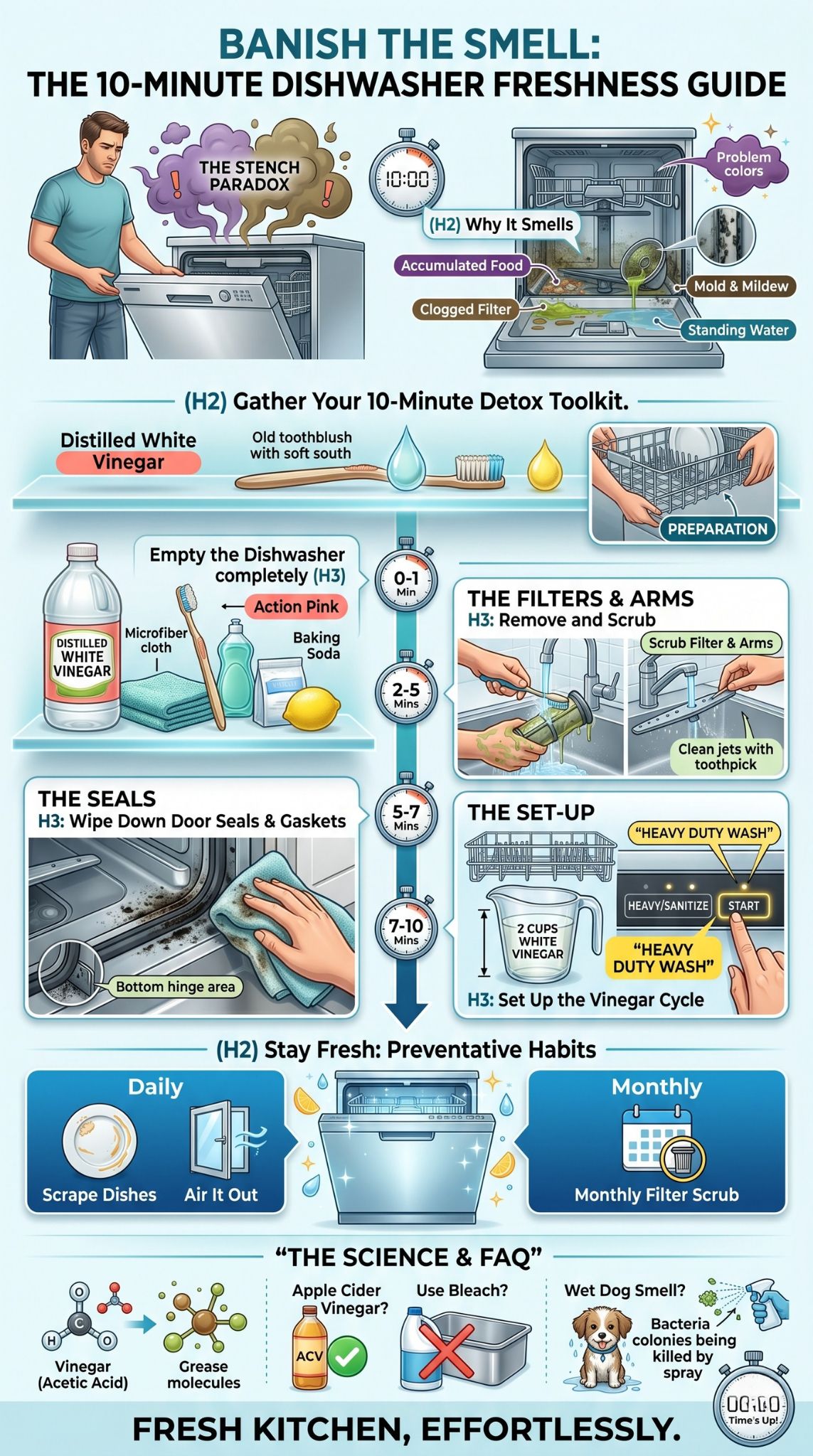
This guide walks you through everything you need to eliminate these stubborn odors for good. You will learn the exact step-by-step process for a ten-minute deep clean, the underlying reasons why these smells develop, and the best preventative measures to keep your kitchen fresh. Whether your machine smells like a wet dog, stagnant water, or rotten eggs, this simple routine restores it to pristine condition.
Why Does My Dishwasher Smell So Bad?
Before you tackle the odor, you need to understand exactly where it originates. Nasty smells do not just appear out of nowhere in your kitchen appliances. They are usually a clear symptom of a hidden issue somewhere inside the machine. Finding the specific root cause helps you fix the current mess and stop it from ever coming back. Let us look at the most common reasons your appliance smells like a swamp.
|
Cause of Odor |
Primary Location |
Typical Smell |
Quick Fix Indicator |
|
Rotting Food |
Bottom floor |
Sour compost |
Check under the bottom rack |
|
Clogged Filter |
Center base |
Swampy trash |
Remove and scrub the cylinder |
|
Mold Growth |
Rubber seals |
Musty earth |
Wipe down the door edges |
|
Mineral Buildup |
Walls and arms |
Stale chalk |
Run an acid wash cycle |
|
Standing Water |
Drain area |
Rotten eggs |
Clear the drain hose |
Accumulated Food Particles and Debris
The most common culprit behind a terrible dishwasher odor is simply rotting food. Every time you load a plate that you did not thoroughly scrape, tiny fragments of food wash off and circulate through the machine. The dishwasher drains most of these particles away, but heavier debris like bits of pasta, rice, and chunks of meat settle at the bottom of the tub. The interior remains warm and moist long after a cycle finishes, which causes these leftovers to decompose rapidly. This decomposition process releases gases that smell incredibly unpleasant, turning your appliance into a mini compost bin.
Clogged Dishwasher Filters
Modern dishwashers usually feature a manual filter rather than a loud, motorized hard food disposer. These manual filters are brilliant for keeping the appliance running quietly, but they require regular human intervention to stay clean. The filter sits at the lowest point of the tub, acting as a net to catch debris before the water recirculates or drains out. When you neglect to empty this filter, it becomes heavily clogged with a slimy mixture of fat, grease, and decaying food. Water passes through this filthy barrier during a wash cycle, essentially bathing your dishes in contaminated water while producing a pervasive, sour smell.
Mold and Mildew in the Door Gasket
Take a really close look at the rubber seal that lines the perimeter of your dishwasher door. This gasket prevents water from leaking onto your kitchen floor, but it is also a notorious breeding ground for mold and mildew. Water naturally splashes against these seals during a cycle, and because you close the door immediately after unloading, the moisture never fully evaporates from the tiny folds. Mildew spores flourish in this perpetually damp and dark environment. Mildew brings a distinct, earthy, musty odor that easily wafts into your kitchen every time you unlatch the door.
Hard Water Mineral Buildup
Depending on where you live, the tap water flowing into your home might contain high levels of calcium and magnesium. Heating this hard water inside the dishwasher leaves behind chalky white mineral deposits known as limescale. Limescale does not smell terrible on its own, but it creates a rough, porous surface on the interior walls and heating elements. This microscopic texture acts like a sponge, gripping onto food grease, soap scum, and bacteria. This mixture of minerals and organic waste creates a stale, unpleasant scent that is difficult to wash away with regular detergent.
Drainage Issues and Standing Water
If you constantly notice a small puddle of grayish water lingering at the bottom of your tub after a cycle completes, you are dealing with a drainage issue. Dishwashers connect directly to your kitchen sink drain or garbage disposal. A partial blockage in the drain hose means the dirty wash water cannot completely exit the appliance. Standing water turns stagnant very quickly, allowing anaerobic bacteria to multiply fast. These bacteria release hydrogen sulfide gas, which perfectly mimics a dreaded rotten egg smell.
Read Also: How to Clean Tile Grout Without Scrubbing for Hours
The Preparation: What You Need for the 10-Minute Deep Clean
Efficiency is the absolute key to completing this chore in just ten minutes of active work. Before you start pulling the appliance apart, you need to gather all your supplies in one spot. You do not need expensive, specialized chemicals to clean smelly dishwasher units effectively. The absolute best tools are probably already sitting right in your pantry.
|
Cleaning Item |
Purpose |
Application Area |
|
White Vinegar |
Cuts grease and scale |
Top rack bowl |
|
Liquid Dish Soap |
Lifts stubborn grime |
Filter and seals |
|
Soft Brush |
Reaches tiny crevices |
Mesh filter screen |
|
Microfiber Cloth |
Wipes without scratching |
Rubber door gaskets |
|
Baking Soda |
Absorbs lingering odors |
Bottom of the tub |
Essential Cleaning Supplies
Distilled white vinegar is the absolute best weapon against dishwasher odors. It is a mild acetic acid that cuts through heavy grease, dissolves hard water limescale, and naturally neutralizes alkaline odors without leaving behind toxic chemical residues. You will need about two cups of it. A few drops of standard grease-cutting liquid dish soap help lift stubborn grime from the physical components you remove from the machine. You also need an old toothbrush or a dedicated kitchen scrubbing brush to get into the tiny crevices of the filter. Finally, grab a clean microfiber cloth or a soft sponge to wipe down the delicate rubber seals.
Optional Additions for Extra Freshness
Baking soda is a fantastic abrasive and deodorizer that excels at pulling lingering smells out of plastic tub interiors. You can use it as a secondary step if the smell is exceptionally stubborn. If you genuinely dislike the temporary smell of vinegar, keeping lemon juice on hand is a great alternative. It infuses the appliance with a natural, bright citrus scent at the very end of the cleaning process while providing a mild acidic cleaning action.
Step-by-Step Guide to Clean Smelly Dishwasher Parts in 10 Minutes
This ten-minute timeframe accounts for the actual physical labor you need to perform. The dishwasher runs through its cycles on its own time, allowing you to walk away and focus on better things. You must follow these steps precisely to ensure you target every hidden source of odor. Doing this methodically prevents you from having to repeat the process. Let us break down the exact workflow.
|
Step Number |
Action |
Time Required |
Key Focus Area |
|
Step 1 |
Empty the dishwasher |
1 Minute |
Clear out all dishes |
|
Step 2 |
Scrub the filter |
3 Minutes |
Mesh screen and cylinder |
|
Step 3 |
Wipe seals and gaskets |
2 Minutes |
Door edges and bottom hinge |
|
Step 4 |
Clean the spray arms |
2 Minutes |
Tiny water jet holes |
|
Step 5 |
Check the drain |
1 Minute |
Hose and standing water |
|
Step 6 |
Run vinegar cycle |
1 Minute |
Setup only |
Step 1: Empty the Dishwasher Completely
You cannot deep clean an appliance if there are physical obstacles in your way. Start by unloading all the clean dishes and putting them away. Remove the bottom dish rack entirely by rolling it forward and lifting it out of the tub. Set it aside on your kitchen counter or floor so you have unrestricted access to the floor of the dishwasher. Look around the floor for any stray pieces of silverware, plastic lids, or large chunks of food that might have fallen during previous washes and remove them immediately.
Step 2: Remove and Scrub the Filter
Look at the bottom center of the dishwasher tub to find the circular plastic filter assembly. Grasp the top of the cylindrical filter, twist it counterclockwise to unlock it, and pull it straight up. Take the cylinder and the flat mesh screen beneath it straight to your kitchen sink. Run them under hot water to dislodge loose debris, then apply a few drops of dish soap to your soft-bristled brush. Gently scrub the fine mesh to remove solidified grease, rinse thoroughly, and lock the components back into place inside the tub.
Step 3: Wipe Down the Door Seals and Gaskets
Take your damp microfiber cloth and apply a tiny drop of dish soap to it. Open the dishwasher door fully and inspect the rubber gasket running along the sides and top of the tub opening. Gently wipe the cloth up and down the length of the seal, using your fingers to carefully pry open the folds and remove hidden black slime. Pay special attention to the bottom edge of the dishwasher door near the hinges. This dead zone rarely sees water during a wash cycle, meaning old food spills sit there for months and smell awful.
Step 4: Inspect and Clean the Spray Arms
The spinning spray arms blast water throughout the appliance to clean your dishes. If the tiny holes in these arms become clogged with seeds, rice, or hard water scale, the water pressure drops dramatically. Examine the lower spray arm and remove it by pulling it straight up or unthreading the central nut. Use a toothpick or a piece of stiff wire to carefully push any blockages out of the water jet holes. Rinse the arm under the faucet to ensure water flows freely, then snap it back into its housing and give it a spin.
Step 5: Check the Drain and Clear Blockages
Verify that the area underneath the filter is completely clear of debris before you start the cleaning cycle. If you noticed standing water earlier, check the connection where the dishwasher drain hose meets your garbage disposal. Running your garbage disposal for a few seconds with hot water often clears a smelly backup in the shared drain line. Ensure absolutely no physical obstructions block the drain pump at the bottom of the tub so dirty water can exit smoothly.
Step 6: Set Up the Vinegar Deodorizing Cycle
Replace the bottom dish rack inside the machine. Take a dishwasher-safe bowl and fill it with two cups of plain white vinegar. Place this bowl upright firmly on the top rack of the empty dishwasher and close the door. Select the hottest, longest wash cycle available on your control panel, press start, and walk away. The hot water slowly splashes the vinegar out of the bowl, distributing the acid evenly to melt away grease buildup, dissolve mineral deposits, and neutralize the foul odors completely.
Deep Cleaning Alternatives and Add-Ons
While the vinegar method proves incredibly reliable, you have other techniques available depending on the severity of the odor. Sometimes a basic wash is not quite enough for appliances neglected for years. You might need a multi-step approach to break down truly hardened grime. Let us explore some powerful alternatives. These extra steps ensure your kitchen smells perfect.
|
Method |
Best Used For |
Primary Ingredient |
Application |
|
Odor Neutralization |
Lingering fish smells |
Baking soda |
Sprinkle on bottom |
|
Citrus Finish |
Vinegar sensitivity |
Lemon juice |
Bowl on top rack |
|
Heavy Descaling |
Severe mineral buildup |
Commercial cleaner |
Follow package |
The Baking Soda Method for Odor Neutralization
If a faint odor persists after the vinegar cycle, baking soda is your next logical step. Wait until the vinegar cycle finishes and the interior is relatively dry. Sprinkle one cup of baking soda generously across the entire bottom floor of the dishwasher tub. Close the door and run a short, hot water wash cycle. The baking soda acts as a gentle scouring powder, physically lifting stubborn stains from the tub floor while chemically absorbing any lingering smells.
Using Lemon Juice for a Citrus Finish
Vinegar has a distinct, pungent smell that some people find highly offensive. If you want to clean smelly dishwasher appliances without the strong vinegar scent, you can easily substitute it with lemon juice. Place one cup of concentrated lemon juice in a bowl on the top rack and run a hot cycle just like you would with vinegar. Lemon juice contains citric acid, which breaks down hard water stains and leaves behind a highly pleasant, natural citrus fragrance.
Commercial Dishwasher Cleaners vs. Natural Remedies
Wandering down the cleaning aisle reveals dozens of commercial dishwasher cleaning tablets and liquids. These products contain strong surfactants and synthetic fragrances designed to power through grime and mask odors simultaneously. Many homeowners prefer natural remedies like vinegar and baking soda because they are significantly cheaper and better for the environment. However, if you face a severe buildup of hard water scale that natural acids cannot dissolve, utilizing a heavy-duty commercial descaler once a year is a very smart intervention.
How to Prevent Future Dishwasher Odors
Once you invest the time to refresh your appliance, you want to keep it smelling pristine for as long as possible. Odor prevention is entirely about changing a few daily habits regarding how you load the machine. Small changes make a massive difference in hygiene over time. It takes virtually no extra effort to do things the right way. Here is how you keep the bad smells away permanently.
|
Prevention Habit |
Frequency |
Benefit |
|
Scrape plates |
Every load |
Stops filter clogs |
|
Air out the tub |
After every cycle |
Prevents mold growth |
|
Run hot water |
Before starting |
Melts grease faster |
|
Clean the filter |
Once a month |
Removes trapped rotting food |
Scrape, Do Not Pre-Rinse
Modern dishwasher detergents contain advanced enzymes specifically engineered to latch onto food proteins. If you rinse your plates perfectly clean before loading them, the detergent has nothing to interact with, leading to soapy residue on your glassware. You absolutely must scrape your plates thoroughly, though. Use a fork to push all solid food fragments, bones, and thick sauces straight into the trash can. Leaving only a thin film of food residue prevents large pieces of rotting food from clogging the filter.
Air It Out After Every Cycle
Moisture acts as the absolute worst enemy of a fresh-smelling kitchen. When a wash cycle finishes, the interior of your dishwasher turns into a hot, humid swamp. Leaving the door locked tight traps that moisture inside, providing the perfect breeding ground for mold and musty odors. Develop a daily habit of cracking the dishwasher door open by an inch or two as soon as the cycle ends. Allowing fresh air to circulate dries out the damp walls and dramaticallty reduces mildew growth.
Run Hot Water Before Starting the Dishwasher
Your dishwasher draws water directly from the same hot water line as your kitchen sink. If you have not used hot water recently, the water sitting in the pipes has cooled down to room temperature. Starting the dishwasher means the first few minutes of the wash run on cold water, which fails miserably at dissolving grease. Turn on the hot water faucet at your kitchen sink for a minute until the water runs steaming hot before you press start on the appliance.
Regular Maintenance Schedule
You must establish a simple maintenance routine to avoid the need to clean smelly dishwasher systems constantly. Mark your calendar to empty and scrub the bottom filter once a month, which takes less than two minutes. This quick task is the single most important thing you can do for the longevity of the appliance. Run a monthly maintenance cycle with a bowl of white vinegar on the top rack to stop grease and minerals from ever reaching the point of smelling bad.
The Science Behind Dishwasher Odors
Understanding the basic biology and chemistry inside your appliance demystifies the entire cleaning process. It highlights exactly why certain methods work better than others. Science proves that a dishwasher is basically a biological incubator if left uncleaned. Knowing how bacteria act helps you destroy them efficiently. Let us look at the actual science of dirty dishes.
|
Scientific Factor |
Description |
Resulting Odor |
|
Anaerobic Bacteria |
Microbes living without oxygen |
Rotten eggs |
|
Fungal Spores |
Mold thriving in dampness |
Musty earth |
|
Chemical Bonding |
Fats mixing with hard water |
Rancid soap scum |
|
Heat Incubation |
Warmth speeding up decay |
Sour garbage |
Bacterial Growth in Warm, Damp Environments
Bacteria thrive in environments that easily provide warmth, moisture, and a reliable food source. A recently run dishwasher provides all three of these necessities in massive abundance. The residual heat keeps the tub warm, standing water provides moisture, and microscopic food particles serve as an endless buffet. Shutting the door creates a dark incubator where anaerobic bacteria digest the food waste and release hydrogen sulfide gas. Vinegar works so well because its acidic nature lowers the pH, making it totally impossible for bacterial colonies to survive.
Chemical Reactions Between Food Grease and Detergent
Liquid oils and animal fats congeal and solidify into a stubborn, waxy substance as they cool down inside the dishwasher. Alkaline dishwashing detergents break down fats, but they often react with hard water minerals to create a sticky substance known as soap scum. This soap scum binds with congealed grease to create a hardened layer of bio-film on the internal walls. Acidic cleaners like vinegar or lemon juice are absolutely required to break the chemical bonds of this bio-film and lift it away from the plastic surfaces.
Common Mistakes People Make When Cleaning Dishwashers
Desperation over a terrible smell often leads people to reach for the strongest chemicals they own. Using the wrong cleaning agents permanently damages the appliance and wastes your time. You have to be careful about what you dump into an expensive kitchen machine. Mixing the wrong things together creates a bigger mess. Avoid these highly common and destructive mistakes.
|
Mistake |
Consequence |
Better Alternative |
|
Using bleach |
Pits and rusts stainless steel |
White vinegar |
|
Mixing acid and base |
Neutralizes cleaning power |
Use them separately |
|
Ignoring spray arms |
Leaves dishes dirty |
Clean jets with a toothpick |
|
Wire brush on filter |
Tears the delicate mesh |
Soft-bristled toothbrush |
Using Bleach on Stainless Steel Interiors
Bleach serves as an incredibly powerful disinfectant, making it seem logical to use it to kill mold inside a smelly machine. However, if your dishwasher features a stainless steel interior tub, bleach is strictly forbidden. The harsh sodium hypochlorite in bleach reacts violently with the protective chromium oxide layer of the metal. Prolonged exposure strips this layer away, causing the walls to rust, pit, and discolor permanently while degrading the rubber seals.
Mixing Vinegar and Baking Soda Directly
Internet cleaning tutorials often recommend pouring vinegar and baking soda together to create a massive bubbling reaction. While this volcanic reaction looks super impressive, it is scientifically counterproductive for deep cleaning. Vinegar acts as an acid, and baking soda acts as a base. Mixing them makes them immediately neutralize each other, leaving behind nothing but salty water. You must use them sequentially in separate wash cycles to get their actual cleaning benefits.
Ignoring the Spray Arm Clogs
Many homeowners focus all their cleaning attention on the filter and the bottom tub, completely ignoring the spray arms. If the holes in the spray arms clog with scale or debris, the appliance cannot distribute the cleaning agent properly. You could use the most expensive cleaner in the world, but if the arms cannot spray the solution onto the walls, the machine remains dirty. You must inspect the water jets as a mandatory part of your deep cleaning routine.
When to Call a Professional Appliance Repair Technician
The ten-minute deep clean easily solves the vast majority of normal odor problems in a kitchen. However, certain situations indicate a severe mechanical failure that requires professional expertise. You cannot fix a broken motor with a bowl of vinegar. Knowing when to surrender and call for backup saves you from causing water damage to your home. Watch out for these serious red flags.
|
Warning Sign |
Probable Cause |
Required Action |
|
Smell returns instantly |
Hidden debris in pump |
Call technician |
|
Tub won’t empty |
Failed drain pump |
Replace part |
|
Grinding noises |
Failing wash motor |
Stop using immediately |
|
Electrical burning smell |
Short circuit |
Turn off breaker |
Persistent Smells Despite Deep Cleaning
If you meticulously scrub the filter, wipe the seals, run multiple vinegar cycles, and the foul odor still returns within two days, you likely have a hidden plumbing problem. Food debris sometimes bypasses a damaged filter and lodges deep inside the internal drain pump or the circulation hoses. Reaching these hidden components requires pulling the heavy dishwasher out from under the counter and dismantling the motor assembly, which a licensed technician should handle.
Unresolved Drainage Failures
You might clear the drain hose connection under the sink and clean the interior filter, only to find water stubbornly refusing to drain from the tub. This strongly indicates your drain pump has failed entirely. A broken impeller inside the pump simply cannot push the heavy water up and out of the appliance. Stagnant water inevitably causes a terrible smell, and replacing a drain pump requires specialized electrical and plumbing knowledge.
Mechanical Noises Accompanied by Odors
If the bad smell in your dishwasher pairs up with loud grinding, squealing, or buzzing noises during the wash cycle, stop using the appliance immediately. A burning smell or an electrical odor mixed with heavy grinding usually indicates a failing wash motor. Continuing to run the machine in this degraded state easily leads to severe internal damage or an electrical fire. Unplug the unit and contact a reputable repair service right away.
Final Thoughts
Nobody wants to spend their limited free time scrubbing kitchen appliances, but ignoring a foul odor never makes it go away. Now that you know how to clean smelly dishwasher problems fast, it transforms from an intimidating chore into a simple addition to your monthly routine. Focusing your active effort on the filter, gaskets, and spray arms takes just ten minutes of actual work. Letting natural acids like white vinegar handle the chemical breakdown during a hot wash cycle eliminates the bacteria and grease effortlessly.
Maintaining a fresh kitchen guarantees the appliance you rely on to sanitize your eating utensils stays perfectly clean itself. Adopt the daily habits of scraping plates thoroughly, clearing the mesh filter regularly, and allowing the machine to air out after every use. By using these preventative measures alongside your deep cleaning strategy, you ensure your dishwasher always smells neutral, fresh, and ready for the next load of dirty dishes.
Frequently Asked Questions (FAQs)
How often should I clean my dishwasher filter to stop smells?
You need to remove and rinse your dishwasher filter at least once a month. If you run the appliance daily or frequently wash heavily soiled pots without scraping them well, increase this frequency to once every two weeks to prevent rotting food odors.
Can I use apple cider vinegar instead of white vinegar?
Yes, apple cider vinegar contains a similar level of acetic acid and easily breaks down grease. However, it carries a sweet, fermented smell of its own and contains natural coloring. Distilled white vinegar works best because it is totally clear and leaves no residual odor behind.
Why do my clean dishes smell like wet dog?
A smell resembling a wet dog usually comes from a buildup of organic bacteria and decaying food trapped in the filter or the door gaskets. Deep cleaning the filter and running a hot vinegar cycle kills the bacterial colonies causing the wet dog scent on your plates.
Is it safe to leave the dishwasher door open overnight?
It is perfectly safe and highly recommended to leave the door slightly ajar overnight. Cracking the door allows trapped humidity to escape and fresh air to circulate, which keeps the interior dry and completely hostile to mold and mildew growth.
Can I put bleach in my dishwasher to kill the odor?
You should only use bleach if your dishwasher features a plastic interior. If you have a stainless steel tub, bleach strictly damages the metal, causing irreversible pitting and rust. Always stick to gentle acids like vinegar for stainless steel machines.