Window tracks are easy to ignore. They sit low, collect dirt quietly, and usually get attention only when the window starts dragging. Then you look closer. Dust is packed into the corners. Dead bugs are stuck in the grooves. Pollen has turned into yellow-gray grime. Maybe there’s even a musty smell near the sill.
That’s when it’s time to clean window tracks the right way.
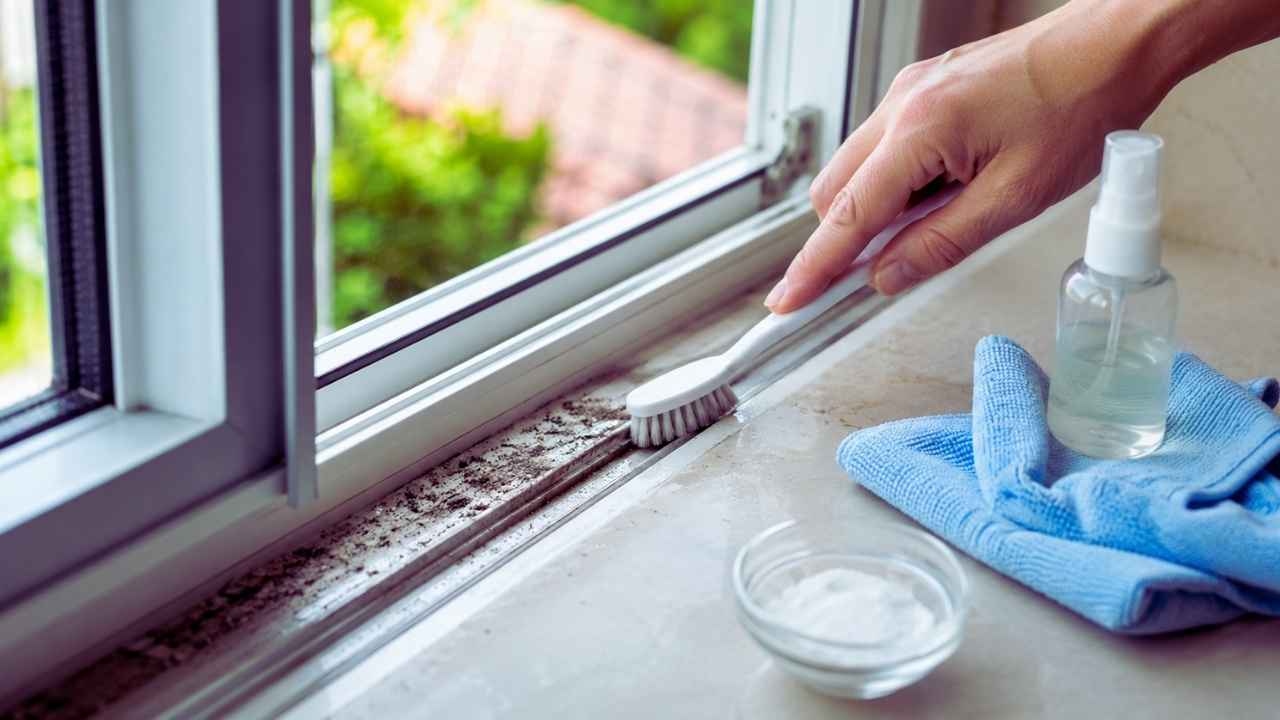
You don’t need a special kit. You don’t need harsh chemicals. Most tracks clean up well with a vacuum, warm soapy water, baking soda, white vinegar, an old toothbrush, cotton swabs, and a microfiber cloth.
The order matters more than the products. Start dry. Vacuum first. Brush loose dirt out of corners. Then use cleaner. Scrub the grooves. Wipe everything clean. Dry the track fully. Finally, clear the small drain openings, also called weep holes. That simple routine makes windows slide better. It also helps stop musty smells, mold spots, and dirt buildup from coming back too quickly.
Quick Answer: The Fastest Way to Clean Window Tracks
The fastest way to clean window tracks is to vacuum loose debris first, sprinkle baking soda on dirty spots, mist white vinegar lightly, wait about five minutes, scrub with an old toothbrush, wipe with a damp cloth, and dry the track well.
Current cleaning guidance from top home-care sources follows this same basic order. Dry dirt should come out before any liquid touches it. If you spray first, dust turns into muddy paste. That makes the job messier and slower. A normal window track usually takes about 10 to 15 minutes. A neglected track may take longer, especially if dirt is packed under the sash or stuck inside narrow corners.
|
Step |
What to Do |
Why It Helps |
|
1 |
Open the window fully |
Gives you space to reach the full track |
|
2 |
Vacuum dry dirt |
Keeps dust from turning into mud |
|
3 |
Brush dry debris |
Loosens packed dirt in corners |
|
4 |
Sprinkle baking soda |
Adds gentle scrubbing power |
|
5 |
Mist white vinegar |
Helps loosen sticky grime |
|
6 |
Wait five minutes |
Lets the grime soften |
|
7 |
Scrub with a toothbrush |
Reaches tight grooves |
|
8 |
Wipe with a damp cloth |
Removes dirty residue |
|
9 |
Dry with microfiber |
Helps prevent mildew |
|
10 |
Clear weep holes |
Lets water drain outside |
This quick method works best for dusty, sticky, or lightly muddy tracks. Use it on most vinyl and aluminum tracks when the frame is in good condition. For older painted wood, use less liquid and dry the area right away. Don’t rush the vacuum step. It does half the work. A crevice tool can pull out loose dirt, sand, pollen, pet hair, and dead insects before they smear.
Use baking soda lightly. A thin dusting is enough. Too much baking soda creates thick paste that gets stuck in corners. Mist vinegar instead of soaking the track. The fizz helps loosen dirt, but the toothbrush still does the real work. After wiping, dry the track with a clean microfiber cloth. A damp track grabs dust faster and can smell musty in humid rooms.
Why Window Tracks Get Dirty So Fast?
Window tracks act like tiny gutters. They collect anything that falls, blows, or drips near the window. Dust settles there every day. Pollen comes through screens. Pet hair floats in from nearby furniture. Dead bugs collect in corners. Rain and condensation mix with dry dirt and turn it into sticky grime.
That grime can make the window harder to open and close. It can also hide early problems, such as blocked drain holes, damaged seals, or water stains.
Moisture is the biggest issue. The EPA says indoor humidity should stay below 60 percent when possible, and the ideal range is 30 to 50 percent. It also says condensation on windows can be a sign of high indoor humidity. That matters because damp tracks can support mold and mildew.
|
Dirt Source |
Where It Comes From |
What It Does |
|
Dust |
Indoor air, roads, construction, open windows |
Settles into grooves and corners |
|
Pollen |
Trees, grass, flowers, open screens |
Sticks to damp tracks |
|
Pet hair |
Cats, dogs, bedding, fabric |
Packs into narrow corners |
|
Dead insects |
Screens, open windows, outdoor light |
Adds odor and debris |
|
Moisture |
Rain, condensation, humidity |
Turns dust into sticky grime |
|
Mold spores |
Damp dirt and organic matter |
Can grow when moisture stays |
|
Sand and grit |
Wind, roads, coastal air |
Makes windows drag |
|
Smoke or pollution |
Traffic, cooking, outdoor air |
Leaves a sticky film |
If you live near a busy road, construction site, garden, or dusty area, your tracks will get dirty faster. The same is true if you keep windows open during pollen season. Pets also change the cleaning schedule. Pet hair mixes with damp dirt and forms clumps that block corners and drainage paths.
Rainy and humid climates add another problem. Even a clean-looking track can hold moisture. If water sits there after rain, check the weep holes. Clean tracks help windows work better. They also make it easier to see what’s really going on around the frame.
Tools and Supplies You’ll Need
You can clean window tracks with simple household items. Small tools work better than large brushes because window tracks have narrow grooves and sharp corners. Start with a vacuum and a dry brush. These remove loose dirt before it gets wet. Then use mild cleaner only where you need it.
Most window makers recommend gentle cleaning. Pella advises warm soapy water for frames and warns against power washing and abrasive chemicals. Andersen also recommends mild cleaning methods and warns against harsh abrasive cleaners and oily products in certain moving areas.
|
Tool or Supply |
Best Use |
Easy Substitute |
|
Vacuum with crevice tool |
Removes dry dust, bugs, and sand |
Handheld vacuum |
|
Old toothbrush |
Scrubs tight grooves |
Small detail brush |
|
Soft paintbrush |
Loosens dry debris |
Makeup brush or pastry brush |
|
Microfiber cloth |
Wipes and dries |
Soft cotton rag |
|
Baking soda |
Adds gentle scrubbing power |
Mild dish soap |
|
White vinegar |
Loosens light grime |
Warm soapy water |
|
Cotton swabs |
Cleans tight seams |
Cloth-wrapped butter knife |
|
Pipe cleaner |
Clears weep holes |
Straw brush |
|
Spray bottle |
Controls liquid |
Small cup and spoon |
|
Gloves |
Keeps hands clean |
Reusable cleaning gloves |
For everyday dirt, warm water and mild dish soap are enough. Mix one cup of warm water with a few drops of dish soap. Use a damp cloth, not a soaked one. For stubborn grime, use baking soda and white vinegar. Sprinkle baking soda lightly, mist vinegar, wait, scrub, and wipe.
For delicate tracks, skip vinegar at first. Use warm soapy water and a soft cloth. This is safer for painted wood, old frames, peeling paint, and unknown finishes. For mold spots, use one cleaner at a time. Do not mix vinegar, bleach, hydrogen peroxide, or other products. Mixing cleaners can create dangerous fumes.
Keep a dry microfiber cloth nearby. Drying is not optional. It helps protect the frame and reduces the chance of mildew.
Safety First: Cleaners You Should Never Mix
Cleaning window tracks is simple, but cleaner safety matters. Some common household products become dangerous when mixed.
Never mix bleach with vinegar. Never mix bleach with ammonia. Never mix bleach with other cleaning products. The CDC warns that bleach mixed with other cleaners can release harmful vapors. This matters because many people use vinegar for dirt and bleach for mold. Both can be useful in the right situation, but not together.
|
Cleaner Combination |
Safe or Unsafe |
What to Know |
|
Bleach and vinegar |
Unsafe |
Can release chlorine gas |
|
Bleach and ammonia |
Unsafe |
Can release toxic chloramine fumes |
|
Bleach and other cleaners |
Unsafe |
Can create dangerous vapors |
|
Hydrogen peroxide and vinegar |
Unsafe to mix |
Can form irritating acid |
|
Dish soap and water |
Safe |
Best for routine cleaning |
|
Baking soda and vinegar |
Safe for light grime |
Use lightly and wipe well |
|
One cleaner at a time |
Best choice |
Safer and easier to control |
If you use bleach for mold, follow CDC-style dilution guidance: no more than one cup of bleach in one gallon of water. Use fresh air. Wear gloves. Rinse and dry the surface after cleaning. For most window tracks, bleach is not needed. Dish soap, water, baking soda, vinegar, and scrubbing handle normal dirt.
Use less liquid around old wood, damaged caulk, loose paint, or window parts you cannot fully dry. If a cleaner has a strong smell, stop and ventilate the room. More cleaner does not mean a better clean.
Step-by-Step Method to Clean Window Tracks Quickly
This is the main method to clean window tracks when they are dusty, sticky, or lightly muddy. Open the window fully. Remove the screen only if it is safe and easy. Look at the full track before you start. Check the inner groove, outer groove, corners, weep holes, weatherstripping, and bottom sill.
Vacuum first. Use the crevice tool and move slowly. Focus on corners because that is where bugs, sand, pollen, and pet hair usually collect. Brush dry debris next. Use an old toothbrush or soft paintbrush to loosen packed dirt. Push the debris toward the center, then vacuum again.
|
Step |
Action |
Helpful Detail |
|
1 |
Open the window |
Do not force stuck windows |
|
2 |
Remove the screen if safe |
Gives better access to the track |
|
3 |
Vacuum loose dirt |
Start with corners and grooves |
|
4 |
Brush dry debris |
Loosen packed dirt before spraying |
|
5 |
Add baking soda |
Use a thin layer only on grime |
|
6 |
Mist vinegar |
Avoid soaking the frame |
|
7 |
Wait five minutes |
Let the grime soften |
|
8 |
Scrub with a toothbrush |
Work dirt toward the center |
|
9 |
Wipe and dry |
Remove residue and moisture |
After vacuuming, sprinkle baking soda over the dirtiest spots. Don’t cover the entire track with a thick layer. You only need enough to help scrub. Mist white vinegar over the baking soda. Let it fizz for about five minutes. The fizz helps loosen dirt, but it does not replace scrubbing.
Scrub with an old toothbrush. Use short strokes. Work along the grooves and corners. Rinse the brush if it gets too dirty. Use cotton swabs for tight corners. For long narrow grooves, wrap a microfiber cloth around a butter knife or plastic scraper and slide it gently through the track.
Wipe with a damp cloth. Rinse the cloth often so you do not smear dirt back into the track. Wipe again with plain water. Then dry the track fully with a clean microfiber cloth. Finish by checking the weep holes. If they are blocked, use a pipe cleaner or small straw brush to pull debris out gently.
How to Clean Window Tracks by Material Type?
Not every window track should be cleaned the same way. The safest starting point is warm water, mild dish soap, a soft brush, and a microfiber cloth. Vinyl can usually handle basic cleaning well. Aluminum is durable but can scratch. Painted wood needs less moisture. Older windows need patience because seals, paint, and hardware may be fragile.
Window-care guidance from major manufacturers points in the same direction: use mild soap, water, and soft cloths. Avoid abrasive cleaners, strong solvents, razor blades, and pressure washing unless your window manufacturer says otherwise.
|
Track Material |
Best Cleaner |
Avoid |
|
Vinyl |
Mild dish soap and water |
Abrasive pads and strong solvents |
|
Aluminum |
Mild soap and water |
Steel wool and metal scraping |
|
Painted wood |
Damp cloth and mild soap |
Soaking and harsh cleaners |
|
Fiberglass |
Mild soap and microfiber cloth |
Abrasive cleaners |
|
Older tracks |
Vacuum, dry brush, careful wiping |
Heavy pressure |
|
Moldy tracks |
One mold-safe cleaner at a time |
Mixing products |
|
Tracks with seals |
Mild soap and soft brush |
Pulling or cutting weatherstripping |
Vinyl tracks are common and easy to clean. Vacuum first. Use warm soapy water. Use baking soda and vinegar only when grime is stuck. Aluminum tracks may collect gray dust and mineral film. Use mild soap first. If you use vinegar, apply it lightly and wipe it off soon after.
Painted wood needs the most care. Use a damp cloth instead of spraying cleaner directly. Dry the track right away. If the wood feels soft or the paint is peeling, stop scrubbing. Fiberglass and composite tracks usually respond well to mild soap and microfiber cloths. Avoid rough pads that can dull the finish.
If the window is old, work slowly. Dirt may hide around brittle seals or damaged caulk. Clean the track, then inspect the frame for cracks, swelling, rust, or loose parts.
How to Clean Mold from Window Tracks Safely?
Mold in window tracks usually means moisture is sitting too long. It may come from condensation, blocked weep holes, rainwater, poor airflow, or a leak. Clean the visible mold, but don’t stop there. Find out why the track stayed damp. If you miss the moisture problem, mold can return.
For light mildew, warm soapy water or vinegar may work. For tougher mold on non-porous surfaces, diluted bleach may be used carefully. Use one cleaner only. Never mix bleach with vinegar, ammonia, or other cleaners.
|
Mold Situation |
What It Means |
Best Action |
|
A few small spots |
Light surface mildew |
Clean, rinse, and dry fully |
|
Musty smell |
Moisture is staying nearby |
Clean track and improve airflow |
|
Mold returns quickly |
Source problem remains |
Check condensation and drainage |
|
Mold near drywall |
Possible water damage |
Inspect wall and sill |
|
Large mold patch |
Bigger cleanup risk |
Get professional help |
|
Mold plus soft wood |
Possible rot |
Stop scrubbing and inspect |
|
Mold in rainy season |
Drainage may be blocked |
Clear weep holes |
Put on gloves before cleaning mold. Open nearby windows or doors for fresh air. Use a small brush and work gently so you do not spread debris. After cleaning, wipe with a damp cloth. Then dry the track completely. A dry finish matters more than people think.
If mold keeps coming back within days, the track is not the main issue. Look for condensation, blocked weep holes, poor ventilation, damaged caulk, or a leaking frame. Call a professional if mold covers a large area, the wall feels soft, the room smells musty after cleaning, or someone in the home has asthma, severe allergies, or a weakened immune system.
How to Clean Window Weep Holes?
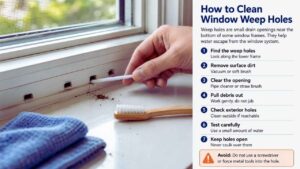
Weep holes are small drain openings near the bottom of some window frames. They help water escape from the window system. When weep holes clog, water can sit in the track. That water mixes with dust and creates grime. It can also lead to musty smells, mold spots, staining, and drainage problems.
The Department of Energy’s Building America guidance recommends clearing weep holes gently with a pipe cleaner or small drain brush. Andersen also advises using a pipe cleaner or small brush to remove debris from weep holes.
|
Step |
What to Do |
Tool to Use |
|
1 |
Find the weep holes |
Look along the lower frame |
|
2 |
Remove surface dirt |
Vacuum or soft brush |
|
3 |
Clear the opening |
Pipe cleaner or straw brush |
|
4 |
Pull debris out |
Work gently, do not jab |
|
5 |
Check exterior holes |
Clean outside if reachable |
|
6 |
Test carefully |
Use only a small amount of water |
|
7 |
Keep holes open |
Never caulk over them |
Look for small slots or round openings along the bottom frame. Some windows have covers or flaps. Do not break or remove parts unless they are designed to open. Use a pipe cleaner, straw brush, cotton swab, or small soft brush. Push gently into the opening and pull debris out.
Do not use a screwdriver. Do not force metal tools into the hole. You can damage the frame or drainage channel. Never caulk over weep holes. They are not random gaps. They are part of the window’s drainage system. If water still sits in the track after you clear the holes, the window may have a seal, caulk, frame, or installation issue.
How Often Should You Clean Window Tracks?
Most homes should vacuum window tracks once a month and deep clean them two to four times a year. Homes with pets, pollen, road dust, high humidity, or frequent rain need more frequent cleaning.
Current home-care guidance also points to seasonal cleaning. Spring removes pollen, insects, and winter dust. Fall clears grit, leaves, and buildup before cooler weather and condensation season.
Better Homes & Gardens notes that window cleaning frequency depends on factors like trees, insects, weather, traffic, hard water, pollution, kids, and pets. The same logic applies to tracks because those same things create buildup.
|
Home Situation |
Quick Vacuum |
Deep Clean |
Extra Tip |
|
Low-dust home |
Monthly |
Twice a year |
Clean in spring and fall |
|
Pet-friendly home |
Every 1 to 2 weeks |
3 to 4 times a year |
Remove hair before spraying |
|
Near road or construction |
Weekly or biweekly |
Every 2 to 3 months |
Clean screens often |
|
Humid or rainy climate |
Every 2 weeks |
3 to 4 times a year |
Check weep holes often |
|
Allergy-sensitive home |
Weekly |
Every 2 to 3 months |
Clean screens and sills too |
|
Pollen-heavy area |
Weekly in season |
After peak pollen |
Vacuum before wiping |
|
Coastal or windy area |
Every 2 weeks |
3 to 4 times a year |
Watch for grit and salt film |
If the window opens daily, clean the track more often. Open windows invite pollen, insects, and outdoor dust. If you rarely open a window, the track still needs cleaning. Dust settles even when windows stay closed.
For allergy-sensitive homes, clean tracks and screens together. Pollen often sits on screens before it lands in the track. A simple reminder helps. Vacuum tracks when you clean the glass. Deep clean them at the start of spring and fall.
Clean the Screens Too
A dirty screen will make a clean track dirty again. Screens hold pollen, dust, mildew, insect debris, and outdoor grime. When wind blows through the screen, some of that mess drops into the track.
Current screen-cleaning guidance recommends cleaning screens at least twice a year. Homes with heavy pollen, road dust, pets, or allergy concerns may need more frequent cleaning.
|
Screen Problem |
What to Do |
Why It Helps |
|
Dusty screen |
Vacuum or brush both sides |
Removes loose debris |
|
Pollen buildup |
Wash with mild soapy water |
Reduces allergens |
|
Mildew spots |
Clean gently and dry fully |
Cuts musty odor |
|
Delicate screen |
Use a soft brush only |
Prevents tearing |
|
Fixed screen |
Vacuum and wipe in place |
Better than skipping it |
|
Pet hair on screen |
Use vacuum and soft brush |
Stops hair falling into track |
|
Bug debris |
Brush first, then wash |
Keeps track cleaner |
Remove the screen if it is safe. Brush or vacuum both sides first. Then wash with mild dish soap and water. Rinse gently with low-pressure water. Let the screen dry fully before putting it back. Do not use a pressure washer. Strong pressure can stretch or tear mesh.
If the screen does not come out, vacuum it in place. Then wipe gently with a damp microfiber cloth. Clean tracks after cleaning screens. That way, any dust that falls from the screen gets removed before you finish.
Common Mistakes to Avoid
Most window-track cleaning problems come from rushing. People spray too soon, use too much water, mix cleaners, or leave the track damp. The best method is slower at the start and faster at the end. Dry dirt should come out dry. Cleaner should be used only after vacuuming and brushing.
Window makers also warn against abrasive tools and power washing. Harsh cleaning can scratch finishes, damage seals, or force water into places you cannot dry.
|
Mistake |
Why It’s a Problem |
Better Choice |
|
Spraying cleaner first |
Turns dry dust into mud |
Vacuum first |
|
Using too much water |
Can seep into hidden areas |
Use a damp cloth |
|
Leaving tracks wet |
Encourages mildew |
Dry with microfiber |
|
Using metal tools |
Scratches frames and seals |
Use soft brushes |
|
Mixing cleaners |
Can release toxic fumes |
Use one cleaner at a time |
|
Pressure washing frames |
Can force water into gaps |
Hand-clean gently |
|
Ignoring weep holes |
Water may sit in the track |
Clear them regularly |
|
Skipping screens |
Dirt returns faster |
Clean screens too |
Do not spray cleaner on a track packed with dust. Vacuum first. Brush second. Spray third. Do not flood the track. A damp cloth usually does enough. Too much water can sit under the sash or inside corners. Do not scrape with a screwdriver or knife. Use a toothbrush, cotton swab, pipe cleaner, or cloth-wrapped tool instead.
Do not close the window while the track is wet. Give it a final dry wipe. Do not assume every black spot is simple dirt. If it looks fuzzy, smells musty, or returns quickly, treat it as a moisture issue.
Best Method by Window Track Problem
Different messes need different methods. Dust does not need vinegar. Grease needs soap. Mold needs moisture control. Mud should dry before you clean it.
Match the method to the problem. That saves time and protects the window.
|
Problem |
Best Method |
Time Needed |
|
Loose dust |
Vacuum and dry brush |
3 to 5 minutes |
|
Pollen |
Vacuum and wipe with microfiber |
5 to 10 minutes |
|
Sticky grime |
Baking soda, vinegar, toothbrush |
10 to 15 minutes |
|
Greasy dirt |
Warm water and dish soap |
10 minutes |
|
Pet hair |
Vacuum, then damp cloth |
5 to 10 minutes |
|
Mud |
Let dry, vacuum, then wipe |
10 to 20 minutes |
|
Mold spots |
One safe cleaner, scrub, dry |
15 to 30 minutes |
|
Blocked weep holes |
Pipe cleaner or straw brush |
5 minutes |
|
Hard corners |
Cotton swabs and toothbrush |
5 to 10 minutes |
For dusty tracks, vacuum and wipe. No cleaner is needed. For pollen, vacuum first. Then wipe with a damp microfiber cloth. Dry the track afterward. For sticky grime, use baking soda and vinegar. Wait five minutes, scrub, wipe, and dry. For greasy grime, use dish soap and warm water. Dish soap works better on oily film than vinegar alone.
For muddy tracks, wait if possible. Dry mud vacuums better than wet mud. Then clean the leftover stain with soapy water. For pet hair, vacuum first. Then run a damp microfiber cloth through the groove. Hair sticks to the cloth. For mold spots, clean safely and dry fully. Then fix moisture, or the mold may return.
How to Keep Window Tracks Clean Longer?
A clean track stays clean longer when you control dust and moisture. Vacuum monthly. Wipe condensation when you see it. Clean screens. Keep weep holes open. Use exhaust fans in kitchens and bathrooms. Check seals before rainy seasons.
The EPA recommends keeping indoor humidity below 60 percent when possible and ideally between 30 and 50 percent. That range helps reduce mold risk and condensation.
|
Habit |
How Often |
Why It Helps |
|
Vacuum tracks |
Monthly |
Stops dirt from packing down |
|
Wipe condensation |
As needed |
Reduces moisture buildup |
|
Clean screens |
Twice a year or more |
Keeps dirt from blowing in |
|
Clear weep holes |
Before rainy seasons |
Helps water drain |
|
Use exhaust fans |
During cooking and bathing |
Lowers indoor humidity |
|
Check seals |
Seasonally |
Spots leaks early |
|
Dry after storms |
After heavy rain |
Prevents musty buildup |
|
Use a humidity meter |
In damp rooms |
Helps track moisture levels |
If your windows fog often, check indoor humidity. A small humidity meter is cheap and useful. Run bathroom fans during showers. Use kitchen exhaust fans while cooking. Open windows briefly when weather allows. Use a dehumidifier in damp rooms.
Watch the track after heavy rain. If water sits there, check weep holes. If the holes are clear and water still collects, inspect the frame and seal. Clean tracks before they look terrible. A quick monthly vacuum prevents the thick buildup that takes real scrubbing.
Final Thoughts
You don’t need a full cleaning day to clean window tracks. Most tracks only need a vacuum, mild dish soap, baking soda, white vinegar, a toothbrush, cotton swabs, and a microfiber cloth. The winning order is simple. Vacuum first. Brush dry dirt. Use cleaner only where needed. Scrub the grooves. Wipe everything clean. Dry the track fully. Clear the weep holes. Clean the screen too.
That small routine keeps windows sliding better. It also cuts down on musty smells, sticky buildup, pollen, and moisture trouble. For most homes, vacuum tracks once a month and deep clean them two to four times a year. Clean more often if you have pets, heavy pollen, road dust, rainy weather, or regular condensation.
A clean track may not look exciting. But once you see how much dirt comes out, you’ll know it was worth the effort.
Frequently Asked Questions (FAQs) About Clean Window Tracks
Can I clean window tracks without vinegar?
Yes. Warm water and mild dish soap work well for routine dirt. This is also the safer choice for painted wood, older windows, delicate finishes, and unknown materials.
Can I use baking soda alone?
Yes. Baking soda works as a gentle scrub. Sprinkle a small amount, scrub with a damp toothbrush, wipe clean, and dry the track.
Is vinegar safe for all window tracks?
Not always. Vinegar is acidic. Use it lightly and wipe it away. Avoid leaving it on damaged wood, delicate finishes, or surfaces where the window maker warns against acidic cleaners.
Can I use bleach on moldy window tracks?
You can use diluted bleach on some non-porous surfaces, but be careful. Use fresh air. Wear gloves. Never mix bleach with vinegar, ammonia, or any other cleaner. For most light mildew, soapy water or vinegar may be enough.
Why is there water in my window track?
The weep holes may be clogged. Clear them with a pipe cleaner or small brush. If water still collects, the window may have a seal, caulk, frame, or installation problem.
Should I lubricate window tracks after cleaning?
Only if your window manufacturer recommends it. Some oily lubricants attract dirt and make the track dirty again faster. Clean first, then check the product manual.