
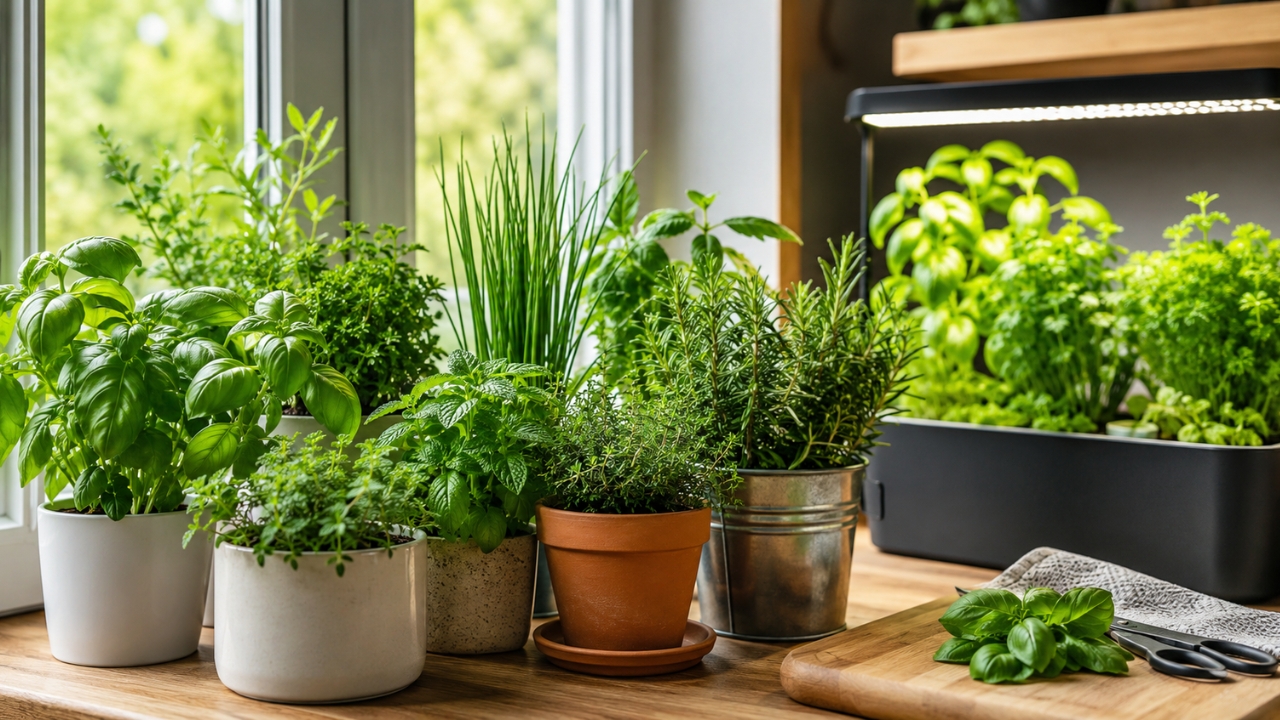
Fresh herbs change the way food tastes. A few basil leaves can wake up pasta. Mint can turn plain tea into something fresh. Chives can make eggs taste brighter. The best part? You don’t need a backyard to grow them.
You can grow herbs indoors year-round with a sunny window, the right pots, loose soil, and a simple care routine. It’s not about having a perfect setup. It’s about getting a few basics right.
Most indoor herb problems start with the same mistakes. The pot has no drainage. The plant sits in a dark corner. Basil gets watered every day. Rosemary gets treated like mint. Then the leaves turn yellow, the stems stretch, and the whole thing looks sad within two weeks.
I’ve seen it happen often. Indoor herbs look easy because they’re small. But they still need light, air, space, and the right amount of water.
This guide keeps things practical. You’ll learn which herbs grow best indoors, how much light they need, how to water them, when to harvest, and how to keep your little herb garden alive through every season.
Why Growing Herbs Indoors Makes Sense
Indoor herbs are useful, simple, and satisfying. You don’t have to buy a whole pack of parsley when you only need a handful. You don’t have to watch basil go black in the fridge. You just snip what you need and let the plant keep growing.
That saves money. It also cuts waste.
Indoor herbs also give you more control. Outdoor herbs deal with frost, heat, pests, wind, and heavy rain. Indoors, you control the pot, soil, water, light, and temperature.
This makes indoor herb gardening perfect for renters, apartment dwellers, busy families, and home cooks with limited space. A windowsill, kitchen shelf, plant stand, or grow-light corner can become a small edible garden.
You don’t need a fancy smart garden to begin. Those systems can help, but a basic pot with drainage still works well when you care for the plant properly.
|
Benefit |
Why It Helps |
Simple Example |
|
Fresher flavor |
Fresh-cut herbs taste stronger |
Basil on pasta |
|
Less waste |
You harvest only what you need |
No wilted bunches |
|
Small-space friendly |
You don’t need a garden |
Kitchen windowsill |
|
Year-round use |
Weather matters less indoors |
Winter parsley |
|
Better control |
You manage water, soil, and light |
Healthier herbs |
How to Grow Herbs Indoors
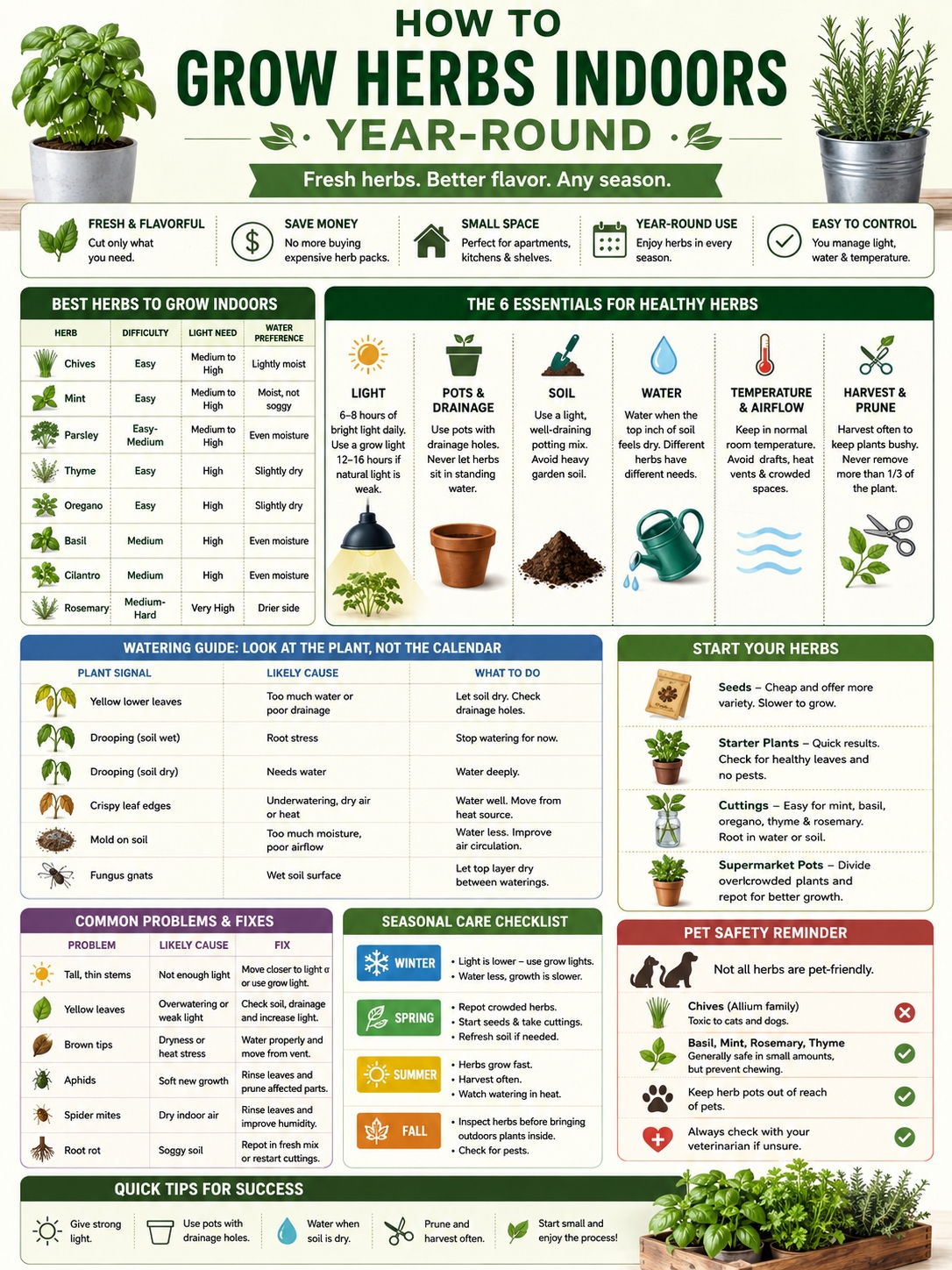
To grow herbs indoors, start with four things: bright light, drainage, good potting mix, and the right herb choices.
Skip one of these, and the plants will struggle.
A dark shelf won’t support strong growth. A closed pot without holes can drown roots. Heavy garden soil can compact in containers and hold too much water. Too many herbs in one small pot will fight for space.
Use pots with drainage holes. Place a saucer underneath to catch extra water. Fill the pot with a light indoor potting mix, not outdoor garden soil. Then place the herb where it gets the strongest light you have.
A south-facing window usually gives the best natural light in the Northern Hemisphere. East and west-facing windows can also work. A north-facing window often needs help from a grow light.
Start small. Three to five herbs are enough for beginners. You’ll learn faster when you don’t have ten different plants begging for attention.
|
Indoor Herb Need |
Best Choice |
Avoid |
|
Light |
Sunny window or grow light |
Dark shelf |
|
Pot |
Drainage holes |
Closed decorative pot |
|
Soil |
Light potting mix |
Garden soil |
|
Watering |
Check soil first |
Daily watering by habit |
|
Placement |
Stable indoor spot |
Vents and cold glass |
Best Herbs to Grow Indoors
Some herbs handle indoor life better than others. Choose forgiving herbs first. Once you get the rhythm, try the trickier ones.
Chives are one of the easiest herbs to grow indoors. They don’t need much space, and they regrow after cutting.
Mint also grows well, but it needs its own pot. It spreads fast and can crowd out other herbs.
Parsley grows steadily once it settles in. It takes more patience at first, but it rewards you with regular harvests.
Thyme and oregano do well in bright light and well-drained soil. They don’t like soggy roots, so don’t overwater them.
Basil is popular, but it can be fussy indoors. It wants warmth, strong light, and steady moisture. If your kitchen is cold or dark, basil may sulk.
Rosemary is even pickier. It needs bright light, good airflow, and soil that dries a little between waterings. Many people kill rosemary by watering it too often.
Cilantro grows fast, but it doesn’t last forever. Instead of trying to keep one plant alive for months, sow new seeds every few weeks.
|
Herb |
Difficulty |
Light Need |
Water Preference |
Best Use |
|
Chives |
Easy |
Medium to high |
Lightly moist |
Eggs, soups, potatoes |
|
Mint |
Easy |
Medium to high |
Moist, not soggy |
Tea, drinks, sauces |
|
Parsley |
Easy-medium |
Medium to high |
Even moisture |
Soups, salads, garnish |
|
Thyme |
Easy |
High |
Slightly dry |
Roasts, stews |
|
Oregano |
Easy |
High |
Slightly dry |
Pizza, sauces |
|
Basil |
Medium |
High |
Even moisture |
Pasta, pesto |
|
Cilantro |
Medium |
High |
Even moisture |
Salsa, curry |
|
Rosemary |
Medium-hard |
Very high |
Drier side |
Bread, potatoes, roasts |
Light Is the Real Dealbreaker
Light makes or breaks an indoor herb garden. Most culinary herbs need 6 to 8 hours of bright light each day. Indoors, that’s not always easy.
A room may look bright to you but still feel dim to a plant. Windows reduce light. Winter days are shorter. Nearby buildings, trees, curtains, and tinted glass can make things worse.
Weak light causes leggy growth. That means the plant grows tall, thin, pale, and stretched. Basil, cilantro, parsley, and mint often do this when they’re not getting enough sun.
A full-spectrum LED grow light can solve the problem. Many herbs do well under supplemental light for 12 to 16 hours a day. Use a timer so you don’t have to remember.
Keep the light close enough to help the plant, but not so close that it burns the leaves. If stems stretch, the light may be too weak or too far away. If leaves dry out or scorch, move the light higher.
Rotate window-grown herbs every few days. Plants lean toward the light, so turning the pot keeps growth more balanced.
|
Light Situation |
What It Means |
Best Fix |
|
South-facing window |
Strongest natural option |
Best for most herbs |
|
East-facing window |
Gentle morning light |
Good for parsley and mint |
|
West-facing window |
Strong afternoon light |
Watch heat near glass |
|
North-facing window |
Usually too weak |
Add grow light |
|
Tall, thin stems |
Not enough light |
Move closer to light |
|
Pale leaves |
Weak growth |
Increase light exposure |
Choose Pots and Soil That Let Roots Breathe
Pretty pots are nice. Drainage matters more.
Herb roots need water, but they also need oxygen. When soil stays wet for too long, roots can rot. That’s why pots with drainage holes are non-negotiable.
If you love decorative planters, use them as outer pots. Keep the herb in a plastic or terracotta pot with holes. Place that inside the decorative container. After watering, dump out any extra water sitting at the bottom.
Use a light potting mix made for containers. Don’t dig soil from the garden and bring it indoors. Garden soil can compact in pots, drain poorly, and bring pests with it.
Pot size matters too. A huge pot can hold too much moisture around small roots. A tiny pot dries too fast and limits growth. Most starter herbs do well in 6- to 8-inch pots.
Terracotta dries faster. It works well for rosemary, thyme, oregano, and sage. Plastic or glazed pots hold moisture longer. They can suit basil, parsley, cilantro, and mint.
|
Herb Type |
Better Pot Choice |
Soil Habit |
|
Basil, parsley, cilantro |
Plastic or glazed pot |
Evenly moist |
|
Mint |
Separate medium pot |
Moist but drained |
|
Thyme, oregano, sage |
Terracotta pot |
Slightly dry |
|
Rosemary |
Deep terracotta pot |
Very well-drained |
|
Chives |
Standard container |
Lightly moist |
Water Indoor Herbs Without Drowning Them
Overwatering kills many indoor herbs. It usually happens slowly. You water a little too often, the soil stays damp, roots lose oxygen, and the plant starts to decline.
Don’t water by the calendar. Water by the soil.
Push your finger into the top inch of soil. If it feels dry, water. If it still feels damp, wait.
When you water, do it properly. Pour slowly until a little water drains from the bottom. Then empty the saucer. Never let herbs sit in standing water.
Different herbs want different moisture levels. Basil, parsley, cilantro, and mint like steady moisture. Rosemary, thyme, oregano, and sage prefer soil that dries a little between waterings.
Your watering routine will also change with the seasons. Herbs often need less water in winter because they grow more slowly. In summer, they may dry out faster near sunny windows.
|
Plant Signal |
Likely Cause |
What To Do |
|
Yellow lower leaves |
Too much water or poor drainage |
Let soil dry and check holes |
|
Drooping with wet soil |
Root stress |
Stop watering for now |
|
Drooping with dry soil |
Needs water |
Water deeply |
|
Crispy edges |
Dry soil, dry air, or heat |
Water well and move from vent |
|
Mold on soil |
Too much moisture |
Water less and improve airflow |
|
Fungus gnats |
Wet soil surface |
Let top layer dry |
Keep Herbs Comfortable Indoors
Most herbs like the same temperatures people like. If the room feels comfortable to you, it’s usually fine for many herbs.
But herbs hate sudden stress.
Keep them away from heating vents, air conditioners, fireplaces, and drafty windows. Basil is especially sensitive to cold. If basil leaves touch cold glass overnight, they can blacken or wilt.
Dry indoor air can also cause trouble, especially in winter. Basil and parsley may appreciate a bit more humidity. You can group plants together, use a pebble tray, or place a small humidifier nearby.
Airflow matters too. Crowded, damp plants invite mildew and pests. Leave a little space between pots. Prune thick growth when plants get too dense.
Don’t mist herbs all day. Wet leaves plus poor airflow can create more problems than it solves.
|
Indoor Factor |
Good Habit |
Warning Sign |
|
Temperature |
Keep herbs in normal room conditions |
Cold-damaged basil |
|
Humidity |
Add light humidity if air is dry |
Crispy leaf tips |
|
Airflow |
Leave space between pots |
Mold or mildew |
|
Drafts |
Avoid cold windows and doors |
Drooping leaves |
|
Heat vents |
Keep plants away |
Fast-drying soil |
Feed Herbs Lightly
Herbs don’t need heavy feeding. Too much fertilizer can push soft, weak growth. It can also reduce the strong aroma you want from culinary herbs.
If your potting mix already contains fertilizer, wait a few weeks before feeding. During active growth, use a diluted balanced liquid fertilizer. For most indoor herbs, light feeding every 4 to 6 weeks is enough.
Leafy herbs like basil, parsley, mint, cilantro, and chives need a little more food because you harvest them often. Woody herbs like rosemary, thyme, oregano, and sage prefer a lighter touch.
Don’t feed a stressed plant right away. If the plant looks weak, yellow, or droopy, check the basics first. Look at light, watering, drainage, and pests. Fertilizer won’t fix soggy roots or a dark windowsill.
|
Herb Group |
Feeding Need |
Simple Plan |
|
Basil, parsley, mint |
Moderate |
Diluted feed during active growth |
|
Cilantro, chives |
Light to moderate |
Feed lightly if harvested often |
|
Thyme, oregano |
Low |
Feed sparingly |
|
Rosemary, sage |
Low |
Avoid heavy feeding |
|
Winter herbs |
Lower need |
Reduce or pause feeding |
Start With Seeds, Plants, or Cuttings
You can start indoor herbs in three ways: seeds, starter plants, or cuttings.
Seeds are cheap and give you more variety. Basil, cilantro, dill, parsley, and chives can all grow from seed. The downside is time. Parsley can be slow, so don’t panic if it takes a while.
Starter plants are faster. Buy a small plant, bring it home, repot if needed, and start harvesting sooner. Just inspect it first. Avoid plants with yellow leaves, soggy soil, insects, or roots wrapped tightly around the pot.
Cuttings are great for herbs like basil, mint, oregano, thyme, and rosemary. Cut a healthy stem, remove the lower leaves, and root it in water or moist potting mix. Once roots grow, move it into a pot.
Supermarket herb pots can work, but they’re often overcrowded. A small basil pot may hold many seedlings packed together. Split them gently into smaller groups and repot them. They’ll have a much better chance.
|
Method |
Best For |
Pros |
Cons |
|
Seeds |
Basil, cilantro, parsley, dill |
Cheap and flexible |
Slower |
|
Starter plants |
Mint, thyme, rosemary |
Fast harvest |
May bring pests |
|
Cuttings |
Mint, basil, oregano |
Free new plants |
Needs rooting time |
|
Supermarket herbs |
Basil, parsley, mint |
Easy to find |
Often overcrowded |
Harvest Herbs So They Grow Back Better
Harvesting isn’t just for cooking. It also shapes the plant.
Cut herbs the right way, and they grow fuller. Cut them badly, and they slow down.
For basil, cut just above a pair of leaves. This encourages side shoots and gives you a bushier plant. Pinch off flower buds early if you want more leaves.
For parsley and cilantro, harvest the outer stems first. Leave the center alone so the plant keeps growing.
For chives, snip leaves near the base. They usually regrow well.
For thyme, oregano, and rosemary, cut small sprigs. Don’t remove too much woody growth at once. These herbs grow more slowly indoors, so harvest gently.
A simple rule helps: don’t take more than one-third of the plant at one time. Leave enough leaves so the plant can keep feeding itself.
|
Herb |
Best Harvest Method |
Growth Tip |
|
Basil |
Cut above leaf nodes |
Pinch often |
|
Mint |
Cut stems regularly |
Keep it contained |
|
Parsley |
Take outer stems |
Leave center growth |
|
Cilantro |
Harvest outer leaves |
Sow new seeds often |
|
Chives |
Snip near base |
Cut cleanly |
|
Thyme |
Clip tender stems |
Don’t overcut |
|
Rosemary |
Take small sprigs |
Harvest lightly |
|
Oregano |
Trim stems |
Cut before flowering |
Fix Common Indoor Herb Problems
Indoor herbs usually show warning signs before they die. Pay attention early, and you can save many plants.
Tall, thin stems usually mean weak light. Move the herb closer to a bright window or add a grow light.
Yellow leaves can mean overwatering, poor drainage, weak light, or nutrient stress. Check the soil first. If it’s wet and the pot has no drainage, you’ve likely found the problem.
Brown, crispy tips can come from dry soil, dry air, or heat from a vent.
Fungus gnats often appear when the soil surface stays wet. Let the top layer dry before watering again.
Aphids and spider mites can show up indoors too. Check under leaves and along soft new stems. If you catch them early, rinse the plant and prune badly affected parts.
Root rot is more serious. If the plant wilts even though the soil is wet, check the roots. Dark, mushy roots are a bad sign. Repot into fresh mix if there are healthy roots left. If not, take cuttings from healthy stems and start over.
|
Problem |
Likely Cause |
Fix |
|
Tall, thin growth |
Not enough light |
Add stronger light |
|
Yellow leaves |
Overwatering or weak light |
Check soil and drainage |
|
Brown tips |
Dryness or heat stress |
Water properly and move from vent |
|
Fungus gnats |
Wet soil surface |
Let top soil dry |
|
Aphids |
Soft new growth |
Rinse and prune |
|
Spider mites |
Dry indoor air |
Rinse leaves and improve care |
|
Root rot |
Soggy soil |
Repot or restart cuttings |
Adjust Your Herb Care by Season
Indoor herbs still respond to the seasons. They may live inside, but they notice changes in light and temperature.
Winter is the hardest season. Days are shorter. Window light gets weaker. Indoor heat can dry the air. Use grow lights if herbs stretch or slow down. Water less often if growth slows.
Spring is a good reset season. Repot crowded herbs, start seeds, divide plants, and take cuttings.
Summer brings stronger light and faster growth. Herbs near sunny windows may dry out quickly. Harvest often to keep plants compact.
Fall is the time to prepare. If you bring outdoor herbs inside, inspect them closely first. Look under leaves, around stems, and near the soil. You don’t want to bring pests indoors.
|
Season |
Main Focus |
Best Habit |
|
Winter |
Low light |
Add grow lights and reduce watering |
|
Spring |
Fresh growth |
Repot and start seeds |
|
Summer |
Fast growth and heat |
Harvest often and watch watering |
|
Fall |
Indoor transition |
Check for pests |
|
Year-round |
Steady production |
Rotate, prune, and monitor soil |
Smart Indoor Gardens vs Regular Pots
Smart indoor gardens can help, especially if your home lacks sunlight. Many come with built-in grow lights, water reservoirs, seed pods, and reminders.
They’re neat, compact, and beginner-friendly. They work well for busy people who want fresh herbs without thinking too much about light schedules.
But you don’t need one to grow herbs indoors.
Regular pots cost less and give you more freedom. You can choose your own seeds, soil, containers, and herb varieties. You can repot plants as they grow. You can also adjust care more easily.
Smart systems still need work. You must refill water, add nutrients, clean the unit, prune plants, and replace tired herbs. They make things easier, but they don’t remove the need for care.
|
Option |
Best For |
Advantage |
Drawback |
|
Regular pots |
Budget growers |
Cheap and flexible |
Needs more attention |
|
Self-watering pots |
Busy people |
Helps prevent missed watering |
Can stay too wet |
|
Grow-light shelf |
Serious beginners |
Strong light control |
Needs space |
|
Hydroponic kit |
Small kitchens |
Clean and compact |
Costs more |
|
Smart garden system |
Convenience seekers |
Built-in lights and reminders |
Ongoing supplies |
Keep Herbs Safe Around Pets
If you have cats or dogs, choose herbs carefully. Don’t assume every kitchen herb is safe.
Chives are not safe for cats or dogs. They belong to the Allium family, like onions and garlic. Keep them out of reach, or skip them if your pet chews plants.
Basil, mint, thyme, and rosemary are common home herbs, but pets can still get an upset stomach if they chew too much. The safest move is simple: keep herb pots away from curious animals.
Before growing any plant around pets, check a trusted veterinary source. It only takes a minute and can prevent a real problem.
|
Herb or Plant Group |
Pet Safety Note |
Best Action |
|
Chives |
Toxic to cats and dogs |
Avoid or keep fully out of reach |
|
Basil |
Commonly grown at home |
Prevent chewing |
|
Mint |
Can attract pets |
Keep controlled |
|
Rosemary |
Strong scent |
Place safely |
|
Thyme |
Common culinary herb |
Prevent over-chewing |
|
Allium family |
Risky for pets |
Avoid around plant-chewing animals |
Final Thoughts
You don’t need a perfect setup to grow herbs indoors. You need light, drainage, the right soil, and a little patience.
Start with easy herbs like chives, parsley, mint, thyme, oregano, or basil. Place them where they get the strongest light. Use pots with holes. Water only when the soil needs it. Harvest often, but don’t strip the plant bare.
Your first herb garden may not look perfect. That’s normal. A yellow leaf or leggy stem doesn’t mean you failed. It means the plant is telling you something.
Once you learn your space, indoor herbs become much easier. You’ll know which window works, which pot dries fastest, and which herbs fit your cooking style.
That’s how you grow herbs indoors year-round in a real home. Not perfectly. Not with guesswork. Just with steady, simple care.
|
Main Lesson |
Best Practice |
|
Light matters most |
Use bright windows or grow lights |
|
Drainage prevents rot |
Choose pots with holes |
|
Watering needs vary |
Check soil first |
|
Pruning helps growth |
Harvest regularly |
|
Start small |
Grow 3–5 herbs first |
FAQs About Growing Herbs Indoors
Can I grow herbs indoors without direct sunlight?
Yes, but you’ll probably need a grow light. Some herbs tolerate lower light better than others, but most still need bright conditions. Mint, parsley, and chives are more forgiving than basil or rosemary.
Why do my indoor herbs grow tall and weak?
They need more light. Tall, thin growth usually means the plant is stretching toward the strongest light source. Move it closer to a bright window or use a full-spectrum LED grow light.
Can I plant different herbs in one pot?
Yes, but it’s often easier to grow herbs in separate pots. If you mix them, group herbs with similar needs. Basil and parsley like more moisture. Rosemary, thyme, oregano, and sage prefer drier soil.
How long do indoor herbs last?
It depends on the herb. Basil and cilantro are often short-lived indoors. Parsley usually lasts one good growing cycle. Mint, chives, thyme, oregano, sage, and rosemary can last longer with good care.
Why does indoor basil taste bitter?
Basil can turn bitter when it flowers or gets stressed. Pinch off flower buds early. Give it strong light, steady moisture, and regular harvesting.
Can I use garden soil for indoor herbs?
It’s better not to. Garden soil can compact in pots, hold too much water, and bring pests indoors. Use a light potting mix made for containers.
Do indoor herbs need fertilizer?
Yes, but only lightly. Use a diluted balanced fertilizer during active growth. Don’t overfeed. Too much fertilizer can make herbs weak and less flavorful.
Should I grow herbs in soil or water?
Soil works better for most long-term indoor herb growing. Water is useful for rooting cuttings. Hydroponic systems can also work if you manage water, nutrients, and cleaning properly.
|
FAQ Topic |
Quick Answer |
|
No sunlight |
Use grow lights |
|
Weak growth |
Increase light |
|
Mixed containers |
Match herb needs |
|
Herb lifespan |
Varies by plant |
|
Bitter basil |
Prevent flowering |
|
Garden soil |
Avoid indoors |
|
Fertilizer |
Use lightly |
|
Soil vs water |
Soil is better for most pots |