
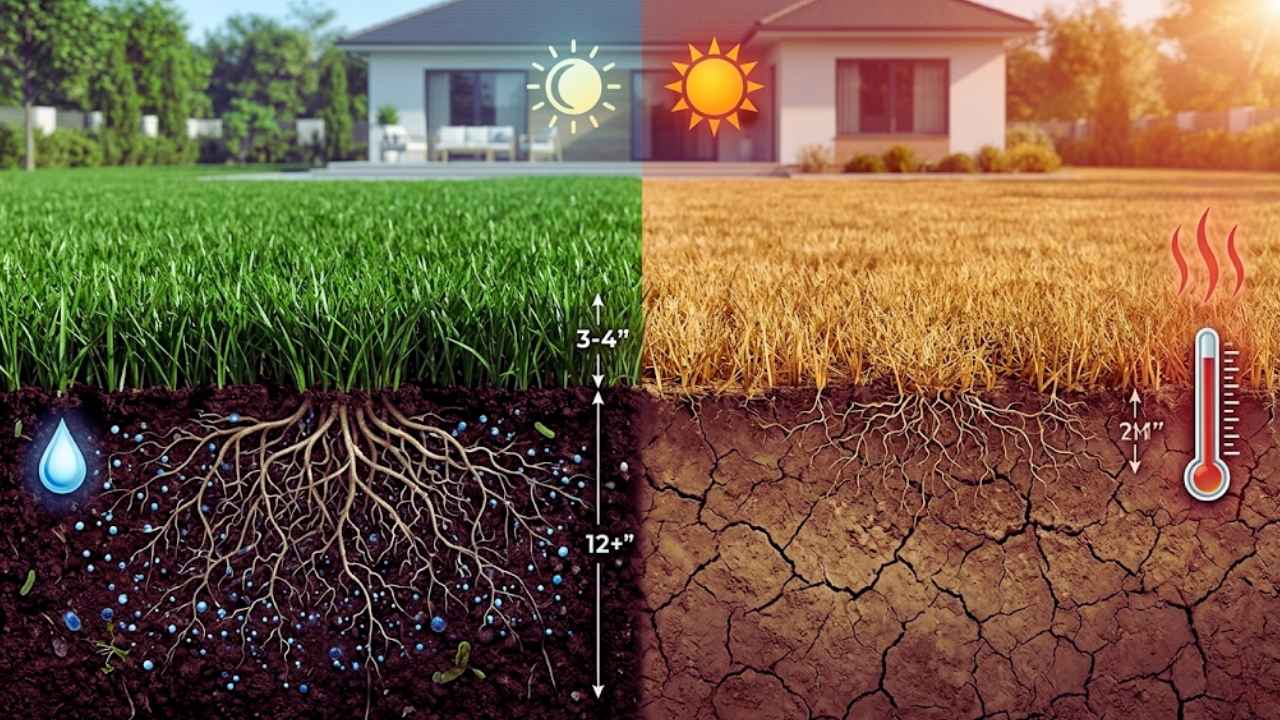
Getting your yard through a brutal summer requires a massive shift in your mindset from rapid growth to basic survival. When the sun beats down and rain stops falling for weeks, your grass naturally wants to slow down to protect itself. Trying to force rapid, bright green growth during a heatwave always backfires, leading to burnt blades and exhausted roots.
By adjusting your expectations and your daily maintenance schedule, you give your yard exactly what it needs to handle high temperatures. You have to accept that a summer yard might not look like a perfect golf course in the middle of August. Some natural browning or a slower growth rate is completely normal and healthy. Instead of chasing a perfect color with extra chemicals, shift your focus entirely to keeping the root system healthy and deep. A strong root system survives a heatwave easily and bounces back quickly as soon as the weather cools down. Smart summer lawn care is about patience, protection, and working with the current climate rather than fighting it.
|
Maintenance Area |
Spring Focus |
Summer Focus |
Best Practice |
|
Watering |
Frequent light watering |
Deep soaking |
Water one to two times a week |
|
Mowing Height |
Lower for spreading |
High for shade |
Keep blades at three to four inches |
|
Fertilization |
Heavy nitrogen |
Minimal slow release |
Avoid feeding during severe droughts |
|
Weed Control |
Pre-emergent sprays |
Spot treatments |
Pull weeds by hand when possible |
Understanding Heat Stress on Your Grass
Heat stress happens when the outside temperature gets too high for the grass to function normally, and the plant loses moisture faster than the roots can replace it. When grass gets stressed, the blades change color, taking on a dull, grayish-blue tint before eventually turning yellow or brown. The grass blades might also look folded, spiked, or curled as the plant attempts to conserve moisture by shrinking its own surface area.
Paying attention to these early warning signs lets you adjust your routine before serious, permanent damage occurs. How your yard reacts to the heat depends heavily on the specific type of grass growing in your dirt. Cool-season grasses prefer the mild temperatures of spring and naturally want to sleep during the summer. Warm-season grasses actually love the heat and grow rapidly during the summer months if they get enough water. Knowing your grass type helps you set realistic expectations for your overall summer lawn care routine.
|
Heat Stress Indicator |
Visual Sign |
Recommended Action |
Time to Recovery |
|
Color Change |
Dull grayish-blue tint |
Check soil moisture immediately |
A few days after watering |
|
Blade Shape |
Folded or curled edges |
Increase watering depth |
Next morning |
|
Rebound Rate |
Footprints stay flat |
Water early the next day |
24 to 48 hours |
|
Growth Rate |
Grass stops growing entirely |
Stop fertilizing immediately |
Varies based on temperature |
The Footprint Test
One of the easiest ways to check if your yard suffers from dehydration is the footprint test. Walk across a patch of grass in the late afternoon and look behind you. If the grass springs back up immediately, it has plenty of moisture and internal water pressure. If your footprints remain flat and visible in the turf for more than a few minutes, the grass needs a deep soaking soon.
Cool-Season vs. Warm-Season Grasses
Cool-season grasses like fescue and Kentucky bluegrass slow down their growth and enter a resting state to survive July and August. Warm-season grasses like Bermuda and Zoysia thrive in the heat and spread quickly. You have to identify your grass type to understand if a brown patch is a sign of normal dormancy or a sign of dead roots.
Watering Strategies for High Temperatures
Watering your yard when the temperature spikes is about working smarter, not just running the hose for a longer time. You want to train your grass to survive dry spells by forcing the root system to grow much deeper into the soil. A shallow root system dries out immediately during a heatwave, leaving your grass struggling to survive the afternoon sun. Implementing smart irrigation habits saves you money on water bills and creates a much tougher, drought-resistant yard over time.
The most common watering mistake is giving the yard a light sprinkling every single day. Shallow watering keeps the moisture right at the surface of the soil, so the roots stay short and vulnerable. When a heatwave strikes, the surface soil dries out fast, leaving those shallow roots with absolutely nothing to drink. Providing a heavy soaking one or two days a week encourages the root system to reach deep into the earth where the soil stays cool and moist.
|
Watering Practice |
Result on Lawn |
Recommendation |
Water Volume |
|
Daily light sprinkling |
Shallow roots and weak grass |
Avoid entirely |
Less than half an inch |
|
Deep watering twice a week |
Deep roots and tough grass |
Best practice |
One to one and a half inches |
|
Evening watering |
Fungal growth and disease |
Avoid in high humidity |
Varies |
|
Early morning watering |
Low evaporation and dry nights |
Ideal schedule |
Full weekly amount |
The Importance of Deep and Infrequent Watering
Providing a heavy soaking one or two days a week forces the root system to grow deep into the earth to find moisture. Deep roots stay insulated from the hot sun and have access to water stored further underground. This single habit makes the entire plant significantly more drought-resistant.
The Best Time of Day to Water
The absolute best time to water your yard is in the early morning, ideally between four and ten o clock. Watering at this time allows the moisture to soak deeply into the dirt before the afternoon sun evaporates it. It also gives the grass blades plenty of time to dry off as the day warms up, preventing fungal diseases.
Measuring Your Lawn Water Intake
Most yards need about one to one and a half inches of water per week, including natural rainfall. Test your sprinkler output by placing empty tuna cans around the yard and running the system for thirty minutes. Measure the depth of the water in the cans with a ruler to know exactly how long you need to run your sprinklers.
Mowing Best Practices During a Heatwave
Mowing is something most people do on autopilot every Saturday, but a bad haircut does serious damage to your grass in the middle of summer. Adjusting your mowing habits is one of the easiest and most effective ways to protect your yard from the baking heat. Cutting the grass too short removes the plant’s ability to create energy and exposes the bare dirt directly to the sun. When the weather gets hot, you need to raise the cutting deck on your lawnmower to its highest setting.
Taller grass blades provide a thick canopy of shade for the soil below. This shade keeps the ground significantly cooler and drastically slows down water evaporation from the dirt. Taller grass also gives the plant more leaf surface area to absorb sunlight, which helps it generate the energy needed to grow strong roots. No matter how tall your grass gets, never cut off more than one-third of the total length in a single session to avoid shocking the plant.
|
Mowing Strategy |
Benefit to Lawn |
Summer Guideline |
Frequency |
|
Mower Height |
Shades soil and slows evaporation |
Set to three or four inches |
As needed |
|
Cutting Frequency |
Reduces plant shock |
Only when necessary |
Every one to two weeks |
|
Blade Sharpness |
Prevents disease and moisture loss |
Sharpen twice a season |
Check monthly |
|
Grass Clippings |
Returns moisture and nutrients |
Leave them on the yard |
After every mow |
Raise Your Mower Height
Aim for a height of three to four inches during the summer for most grass types. The extra height acts like a protective blanket over the topsoil. It blocks the sun from baking the dirt dry and stops weed seeds from getting the light they need to sprout.
Follow the One-Third Rule
Cutting the grass too short all at once sends the plant into severe shock and stops root growth. It forces the grass to redirect all its energy into growing new leaves instead of finding water. If the grass gets completely out of control, mow it high once, wait three days, and lower the blade for a second pass.
Keep Mower Blades Sharp
Dull blades do not cut the grass cleanly; they tear and shred the tips of the blades. These ragged edges turn brown quickly and lose internal moisture much faster than cleanly cut blades. A clean cut heals faster and keeps summer diseases out of the plant.
Leave Grass Clippings on the Lawn
Leave your grass clippings on the lawn instead of bagging them up. As the clippings break down, they return valuable water and natural nutrients directly into the soil. They also act as a thin layer of natural mulch to shade the dirt.
Smart Fertilization Techniques for Summer

Feeding your grass in the summer requires extreme caution and careful timing. While you might be tempted to throw down a heavy dose of fertilizer to green up a struggling yard, doing so actually makes things much worse. High heat and chemical fertilizers are a dangerous combination that can easily scorch your yard beyond repair. Understanding how and when to feed your grass prevents chemical burns and keeps your dirt healthy.
When temperatures are extremely high, grass is already under a massive amount of environmental stress. Applying a heavy dose of nitrogen forces the plant into a sudden burst of top growth that requires a massive amount of water. This depletes the reserves the grass needs to survive the heat. Furthermore, chemical fertilizers contain salts that literally burn the grass blades and roots if the weather is simply too hot. If you must feed the yard, always opt for a slow-release organic option.
|
Fertilizer Type |
Summer Safety Rating |
Application Advice |
Burn Risk |
|
High Nitrogen Synthetic |
Very Low |
Avoid entirely during heatwaves |
Extremely High |
|
Weed and Feed Blends |
Low |
Often burns stressed grass |
High |
|
Slow Release Granular |
Moderate |
Apply lightly and water deeply |
Moderate |
|
Organic Compost Based |
High |
Best option for slow feeding |
Low |
Why Less is More in the Heat?
Growing new leaves requires massive amounts of water and energy. Forcing this growth with nitrogen during a drought exhausts the plant. The chemical salts in synthetic fertilizers pull moisture away from the roots, causing severe chemical burns when water is scarce.
Choosing the Right Fertilizer Type
Always opt for a slow-release or controlled-release fertilizer if you must feed the yard in July. These products break down gradually over several weeks, providing a gentle supply of nutrients. Organic fertilizers rely on natural soil microbes to break down, which inherently happens at a safe pace.
Weed Control and Pest Management
Summer provides the perfect breeding ground for invasive weeds and destructive, hungry insects. Because your grass grows slower due to heat stress, weeds face less competition and take over bare patches fast. Bugs that love hot weather move in quickly, often destroying large sections of your yard before you even realize they are there. Catching these problems early is the key to effective summer lawn care. Crabgrass, dandelions, and plantain are notorious for thriving in hot weather when your main turf goes to sleep.
The absolute safest way to manage weeds in the summer is through careful hand-pulling to get the roots out. Using chemical weed killers during a heatwave often causes severe damage to your actual grass. Insects like grubs and chinch bugs are highly active in the summer months, eating roots and sucking moisture from the blades. You have to identify the specific bug before spraying anything to protect the good insects living in your dirt.
|
Threat Type |
Common Culprits |
Best Treatment Method |
Treatment Time |
|
Broadleaf Weeds |
Dandelions and Plantain |
Hand pulling |
Early morning |
|
Grassy Weeds |
Crabgrass and Nutsedge |
Targeted post emergent spray |
When temps are below 85 |
|
Root Feeding Insects |
Grubs |
Nematodes or grub control |
Late summer |
|
Surface Insects |
Chinch bugs |
Insecticidal soap |
Evening |
Handling Summer Weeds
Pulling weeds gets the roots out of the ground without introducing harsh chemicals to your stressed yard. If you must use an herbicide, spot-treat specific weeds early in the morning when the temperature is low. Many liquid weed killers destroy turf if applied when temperatures sit over eighty-five degrees.
Identifying and Treating Lawn Pests
Grubs eat the roots of the grass, causing sections of the yard to turn brown and peel back easily like a loose carpet. Chinch bugs suck the moisture directly out of the grass blades, creating expanding patches of dead turf. Choose a targeted treatment designed specifically for the insect you find to avoid killing earthworms.
Managing Soil Health: Aeration and Thatch
A healthy lawn starts beneath the surface in the dark dirt. If the soil is in bad shape, no amount of water or fertilizer keeps the grass looking good during a heatwave. Fixing soil problems in the middle of summer is usually a terrible idea because invasive treatments stress the grass heavily. Over time, the soil under your grass gets compacted by foot traffic, lawnmowers, and heavy summer rain. When soil becomes too tightly packed, water and oxygen cannot penetrate down to the root zone.
Core aeration removes small plugs of dirt from the ground to relieve this compaction and let the soil breathe. While aeration is excellent for your yard, doing it in the middle of a blazing hot summer exposes the delicate root system directly to dry air. Thatch is a tight layer of dead stems and roots that builds up on the surface, acting like a sponge that stops water from reaching the dirt. Save aeration and dethatching for the cooler seasons.
|
Soil Management Task |
Purpose |
Best Time to Perform |
Summer Safety |
|
Core Aeration |
Relieves tight soil compaction |
Early Fall or Spring |
Dangerous |
|
Dethatching |
Removes dead organic buildup |
Early Fall or Spring |
Dangerous |
|
Soil Testing |
Checks pH and nutrients |
Anytime |
Safe |
|
Topdressing |
Improves topsoil quality |
Right after aeration |
Safe if thin |
Dealing with Soil Compaction
Compacted dirt blocks water from reaching the roots, causing runoff and waste. Aeration fixes this by pulling dirt plugs out of the ground. Wait until the cooler weather of early fall to aerate your yard so the grass recovers fast without baking in the sun.
The Role of Thatch Management
A thin layer of thatch is perfectly normal and actually helps insulate the ground from the sun. If the thatch layer gets thicker than half an inch, it blocks water and harbors harmful pests. Dethatching is a highly invasive process that rips up the yard, so save it for autumn.
Protecting Your Lawn from Heavy Foot Traffic
Summer is the primary time for backyard barbecues, slip-and-slides, and heavy outdoor games. Unfortunately, heavy foot traffic is incredibly hard on grass, especially when it already struggles with high temperatures and bone-dry soil. The constant pressure crushes the grass blades and compacts the dirt beneath them. This makes it impossible for the roots to get the water and oxygen they desperately need.
If you have kids or pets that play in the yard every day, rotate where they spend their time to avoid permanent damage. Moving the portable fire pit, the kiddie pool, or the soccer net to a different side of the yard every week gives the grass a chance to bounce back. Continually walking or playing on the exact same spot quickly tramples stressed grass into the dirt, killing the roots entirely. Guide your party guests away from the most vulnerable areas of your yard using decorative stones or temporary fencing.
|
Activity Level |
Impact on Lawn |
Mitigation Strategy |
Recovery Time |
|
Light Walking |
Minimal |
No action needed |
Immediate |
|
Moderate Play |
Compaction over time |
Rotate play areas weekly |
A few days |
|
Heavy Parties |
Severe damage |
Use hardscaping or mats |
Weeks |
|
Equipment Parking |
Soil crushing |
Never park on grass |
Months |
Rotating Activity Areas
Do not leave heavy items like inflatable pools in the exact same spot all summer. The grass underneath will die from a lack of sunlight and severe soil compaction. Move items around every few days so every section of the yard gets time to breathe and recover.
Creating Temporary Pathways
Use outdoor rugs or stepping stones to direct heavy foot traffic along specific routes during a backyard party. Keeping people off the driest, most stressed sections of the grass ensures it survives until the rain returns. Reducing the amount of grass people walk on makes your summer lawn care routine much easier.
Summer Dormancy vs. Dead Grass
One of the most common sources of panic for homeowners in August is a yard that suddenly turns entirely brown. Before you start ripping up the dirt to plant new seed, you need to determine if the grass is actually dead or simply dormant. Understanding this natural cycle saves you time, money, and a massive amount of unnecessary frustration. Dormancy is a natural survival mechanism built into cool-season grasses to protect the plant from severe drought.
When the weather gets too hot and dry, the grass shuts down its top growth to conserve energy and protect the root crown. The blades turn brown, but the plant itself is still very much alive under the dirt. To tell the difference between dead grass and dormant grass, grab a handful of the brown blades and give them a gentle tug. If the grass pulls out of the ground easily with no resistance, the roots are dead. If the grass holds firmly to the dirt, it is simply sleeping.
|
State of Grass |
Visual Appearance |
Root Check Result |
Water Need |
|
Healthy |
Vibrant green and tall |
Firmly rooted |
Normal schedule |
|
Heat Stressed |
Grayish-blue blades |
Firmly rooted |
Immediate deep soak |
|
Dormant |
Uniformly brown |
Resists pulling |
Quarter inch every two weeks |
|
Dead |
Brown and brittle |
Pulls out easily |
Start over |
How to Tell the Difference?
Dormant grass looks terrible on the surface but retains a strong grip on the dirt below. Dead grass lifts away from the soil like an old carpet because the roots have shriveled and detached. Always pull a few blades before making a drastic decision about your yard.
Helping a Dormant Lawn Recover
Never hit a dormant yard with fertilizer or massive amounts of water to force it awake. Forcing the grass out of dormancy before the weather cools depletes its remaining energy and kills it. Provide a minimal amount of water every two weeks just to keep the roots alive, and wait for autumn.
Final Thoughts
Getting your yard through the toughest months of the year does not require endless hours of labor or massive amounts of expensive chemicals. It simply requires working with nature rather than fighting against the current climate. By adjusting your mower height, watering deeply but infrequently, and holding off on heavy fertilizers, you build a resilient root system that handles the heat with ease.
Good summer lawn care is really about patience, protection, and observation. Allow your grass to rest when it needs to, keep heavy foot traffic to a minimum during dry spells, and watch the soil moisture closely. If you follow these simple adjustments, your yard will bounce back beautifully and grow thick again as soon as the crisp fall weather returns.
Frequently Asked Questions (FAQs) About Summer Lawn Care
How often should I water my lawn in extreme heat?
In extreme heat, aim to water your yard deeply one to two times a week, delivering a total of one to one and a half inches of water. It is much better to provide a long heavy soak twice a week than to water lightly every single day. Deep watering trains the roots to grow further down into the soil.
Can I water my grass at night during the summer?
You should avoid watering your yard at night at all costs. When you water in the evening, the grass blades stay wet for hours because the sun is not there to evaporate the excess moisture. This damp environment is the perfect breeding ground for destructive fungal diseases.
Should I leave grass clippings on the yard during a heatwave?
Leaving your grass clippings on the yard is highly recommended during a heatwave. The clippings act as a natural lightweight mulch that shades the soil and keeps the root zone cooler. As they break down, they return valuable moisture and nutrients back to the dirt safely.
How do you fix burnt grass from the summer sun?
If the sun scorched your grass, the best fix is immediate deep watering to rehydrate the root zone. Do not apply any fertilizer to burnt grass, as the chemical salts make the burning much worse. Keep foot traffic completely off the burnt areas and wait for cooler temperatures.
What is the best type of fertilizer for hot weather?
If you must fertilize in the summer, use an organic slow-release fertilizer. Organic options break down naturally through microbial activity in the soil, providing a gentle steady stream of nutrients. Avoid fast-acting synthetic nitrogen fertilizers entirely during July and August to prevent burning.
Is it safe to aerate my lawn during the summer?
Aerating during the peak of summer is a terrible idea. The process punches holes in the soil, which exposes the delicate root system to hot dry air. This causes severe moisture loss and stresses the plant further. Wait for the cooler temperatures of early fall to perform soil treatments.
Why does my grass turn brown in patches during summer?
Brown patches often point to an insect infestation rather than basic heat stress. Grubs eat the roots below the surface, while chinch bugs suck moisture out of the blades above ground. Investigate the edges of the brown patches to look for tiny bugs before you flood the area with water.
Can I plant new grass seed in July?
Planting new grass seed in the middle of summer is highly discouraged for cool-season grasses. The extreme heat bakes the delicate seedlings before they can establish deep roots, wasting your time and money. Wait until late August or early September when the soil is warm but the air is cool.