

A loose doorknob is one of those tiny household annoyances that drives you crazy over time. You go to open the door, and instead of a crisp, clean turn, the handle rattles, wobbles, or feels like it is about to fall off in your hand.
You don’t need to call a locksmith or handyman for this. In fact, learning how to tighten a loose doorknob in 3 minutes is one of the easiest home maintenance skills you can pick up. It requires minimal tools, zero prior experience, and just a tiny bit of your time. Let’s get that handle feeling solid again.
Why This Topic Matters
Doors are the most frequently used moving parts in any house. Over months and years of slamming, pulling, and turning, the mechanical vibrations naturally back screws out of their threads.
Ignoring a loose handle can lead to bigger problems. Internal spindles can strip, components can warp, and eventually, you might find yourself locked out—or locked in—a room because the mechanism failed completely. Taking three minutes right now saves you money, prevents a midnight lockout emergency, and restores that satisfying, high-quality feel to your home’s hardware.
Overview of Doorknob Fixing Methods
|
Doorknob Type |
Primary Fixing Method |
Estimated Time |
Tool Needed |
|
Exposed Screws |
Direct tightening of faceplate screws |
1 Minute |
Phillips Screwdriver |
|
Hidden Screws (Detachable Rose) |
Remove cover plate, tighten inner screws |
3 Minutes |
Flathead Screwdriver & Phillips |
|
Kwikset / Allen Wrench Style |
Tighten the set screw on the neck |
2 Minutes |
Allen Key (Hex Wrench) |
Top 4 Ways on How to Tighten a Loose Doorknob in 3 Minutes
Item #1: The Exposed Screw Method
This is the most common and straightforward scenario you will encounter with standard interior doors. If you look at the round plate (the rose) flushing against the door and see two clear screw heads, you are in luck.
When these screws back out, the two halves of the doorknob lose their clamp on the door wood. All you need to do is keep the handles aligned and snug them back down. Be careful not to use a power drill here, as it is incredibly easy to strip the small screw heads or scratch your door’s finish.
|
Factor |
Details |
|
Difficulty |
Very Easy |
|
Tools Needed |
#2 Phillips head screwdriver |
|
Key Tip |
Hold the opposite side handle firmly while tightening. |
Item #2: The Hidden Screw (Snap-On Plate) Method
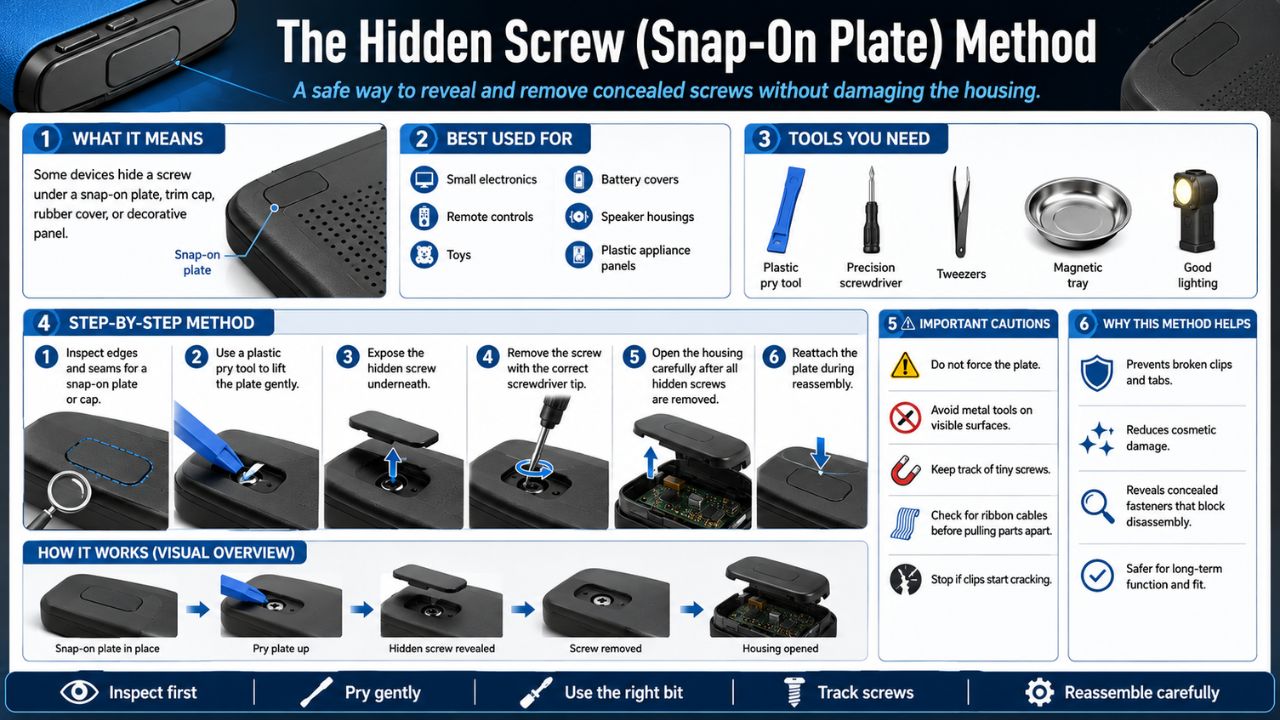
Many modern, minimalist, or high-end doorknobs don’t show any screws on the outside. Instead, they use a cosmetic cover plate called a rose to hide the ugly hardware.
To fix these, look closely at the neck of the knob or the edge of the round plate. You will usually find a small notch, slot, or a tiny metal tab called a detent. Depressing this tab or gently prying the notch with a flathead screwdriver lets you pop the cover plate off, revealing the structural screws underneath.
|
Factor |
Details |
|
Difficulty |
Easy (Requires a bit of patience) |
|
Tools Needed |
Flathead screwdriver (for prying), Phillips screwdriver |
|
Key Tip |
Wrap your flathead tape in painters tape to avoid scratching the metal plate. |
Item #3: The Set Screw (Allen Key) Method
If your doorknob turns but the latch mechanism doesn’t move, or if the knob slides clean off the spindle, you are dealing with a loose set screw. This is highly common on older vintage mortise locks and modern lever-style handles.
The handle is held onto a square metal rod (the spindle) by a tiny screw hidden on the underside of the knob’s neck. If this backs out, the handle spins freely. You just need to align the handle correctly and tighten this hidden screw.
|
Factor |
Details |
|
Difficulty |
Easy |
|
Tools Needed |
Allen wrench (Hex key) or a small flathead |
|
Key Tip |
Ensure the screw aligns perfectly with the flat side of the internal square spindle. |
Item #4: The Threaded Rose Method
Mainly found on traditional brass hardware or older homes, some doorknobs feature a rose plate that actually screws directly onto the door or onto a threaded hub.
When these loosen, the entire assembly starts to rotate when you turn the handle. To fix it, you have to spin the entire circular plate clockwise until it sits tight against the wood. Often, there is a tiny set screw on the edge of the plate that locks it into place once it is fully tightened down.
|
Factor |
Details |
|
Difficulty |
Easy |
|
Tools Needed |
Hand pressure, small screwdriver for the lock-screw |
|
Key Tip |
Don’t overtighten, or you might bind the internal spring mechanism. |
Step-by-Step Guide: How to Tighten a Loose Doorknob in 3 Minutes
If you want to get this done fast, follow this universal checklist to diagnose and execute the fix cleanly.
- Identify the Style: Look at your handle. Are screws visible? Is there a tiny hole on the neck?
- Access the Mounting Screws: If screws are hidden, use a small flathead tool to pry off the decorative ring or push the small spring-loaded pin to remove the knob handle first.
- Align the Handles: Hold both the interior and exterior sides of the doorknob straight. If they are crooked, the internal threads won’t line up correctly.
- Tighten Evenly: Turn the screws clockwise. If there are two screws, alternate between them (tighten the top a little, then the bottom) to keep the pressure perfectly even.
- Test the Action: Before you close the door completely, turn the knob a few times. Ensure it springs back smoothly and the latch moves all the way in and out.
Advanced Troubleshooting for Persistent Loose Handles
Sometimes, you tighten the screws, but the knob stays loose. This usually means the wood inside the door has stripped out or compressed over time.
A classic handyman trick is to remove the screws entirely, shove a few wooden toothpicks dipped in wood glue deep into the screw holes, break them off flush, and then drive the screws back in. The toothpicks give the screw threads fresh, tight material to bite into.
FAQs
Look for a microscopic hole on the collar of the knob. Sometimes it doesn’t look like a button, but inserting a paperclip or a small nail into that hole will release the handle mechanism so you can slide it off and see the hidden mounting plate.
Why does my doorknob keep coming loose every few weeks?
Door vibrations can break the friction hold of the screws. To fix this permanently, apply a single drop of blue threadlocker (like Loctite 242) to the threads of the screws before reinstalling them. This keeps them from vibrating loose while still letting you remove them later with basic hand tools.
Can a loose doorknob prevent the door from latching correctly?
Yes. If the handles sag or sit crookedly, they create internal friction on the latch bolt. This stops the internal spring from pushing the latch all the way out into the strike plate on the door frame.
Summary
Mastering how to tighten a loose doorknob in 3 minutes is a simple weekend win that keeps your home running smoothly. Whether you have exposed screws, modern snap-on plates, or tiny Allen key set screws, the solution is always within arm’s reach. Keep a basic screwdriver handy, check your door hardware once a year, and you’ll avoid costly replacement bills while keeping your home secure.