
You are sneaking to the kitchen for a midnight snack or trying to leave a sleeping toddler’s room when it happens. That high-pitched, piercing groan from the floorboards sounds like a siren in the middle of the night. Most people assume that once a carpet is down, you are stuck with those noises until the next time you renovate.
That is simply not the case because modern tools allow you to reach the root of the problem right through the fabric. Learning how to fix squeaky floors no carpet removal needed is one of the most satisfying weekend projects you can take on. It saves you the massive headache of moving heavy furniture, pulling up tack strips, and hiring a professional carpet stretcher to put everything back together.
The Science of the Squeak: Why Do Floors Make Noise?
Every house moves and breathes over time, which is why older homes often have more character—and more noise. The sound you hear is almost always caused by two things rubbing together under pressure. Usually, it is a gap that has opened up between the subfloor and the floor joist, which are the heavy beams supporting your room. When you step on that spot, the wood moves down the shaft of a nail or rubs against a neighboring board, creating that signature squeak.
|
Factor |
Description |
Impact Level |
|
Wood Shrinkage |
Lumber dries out over years, causing gaps to form around fasteners. |
High |
|
Foundation Settling |
As the house shifts, joists can warp or pull away from the subfloor. |
Medium |
|
Loose Nails |
Smooth nails lose their grip and allow the floor to slide up and down. |
Very High |
|
Joist Spacing |
Wide gaps between supports can lead to more floor flex and noise. |
Medium |
Subfloor Movement and Structural Gaps
The subfloor is typically a sheet of plywood or OSB that sits directly on the joists. If the builders used nails instead of screws and glue, those nails can eventually pull loose. Even a gap as thin as a piece of paper is enough to let the wood move and create a loud noise.
Friction and Fastener Failure
In older homes, the floorboards themselves might be the culprit. If you have a plank subfloor, the boards can rub against each other as they expand and contract with the seasons. This friction creates a different kind of “rubbing” sound compared to the sharp “click” of a loose nail.
Environmental Humidity Changes
Wood is like a sponge; it swells in the summer and shrinks in the winter. This constant cycle of movement is what eventually works nails loose. If your home’s humidity fluctuates wildly, you are much more likely to develop new squeaks every year.
Locating the Source Without Lifting the Carpet
You cannot fix what you cannot find, and finding a squeak through a thick carpet and padding takes a bit of finesse. You need to be methodical because the sound often travels along the joist, making it seem like the noise is coming from a few feet away. Having a partner help you is the fastest way to pin down the exact location while you mark the spots.
|
Method |
Best For |
Accuracy |
|
The Slow Walk |
Initial detection of general noisy areas. |
Moderate |
|
Weight Shifting |
Pinpointing the exact inch where the wood flexes. |
High |
|
Hand Pressure |
Detecting movement in the subfloor while looking closely. |
High |
|
Acoustic Tapping |
Differentiating between hollow spaces and solid joists. |
Moderate |
The Systematic Walkthrough
Start in one corner of the room and walk in a tight grid pattern. When you hear a squeak, stop and shift your weight back and forth on that single spot. You want to find the exact point where the noise is loudest and the movement feels most prominent under your foot.
Marking the Trouble Zone
Once you find the spot, do not rely on your memory. Use a piece of painter’s tape or a heavy object to mark the location immediately. Since you are not pulling the carpet, you need these markers to guide your tools later in the process.
Understanding Sound Travel
Keep in mind that sound can be a liar. A squeak might sound like it is right under your toe, but it could be a loose connection three feet away that is vibrating through the joist. Always test the area around your mark to ensure you are attacking the actual source.
Finding the Floor Joists Through the Carpet
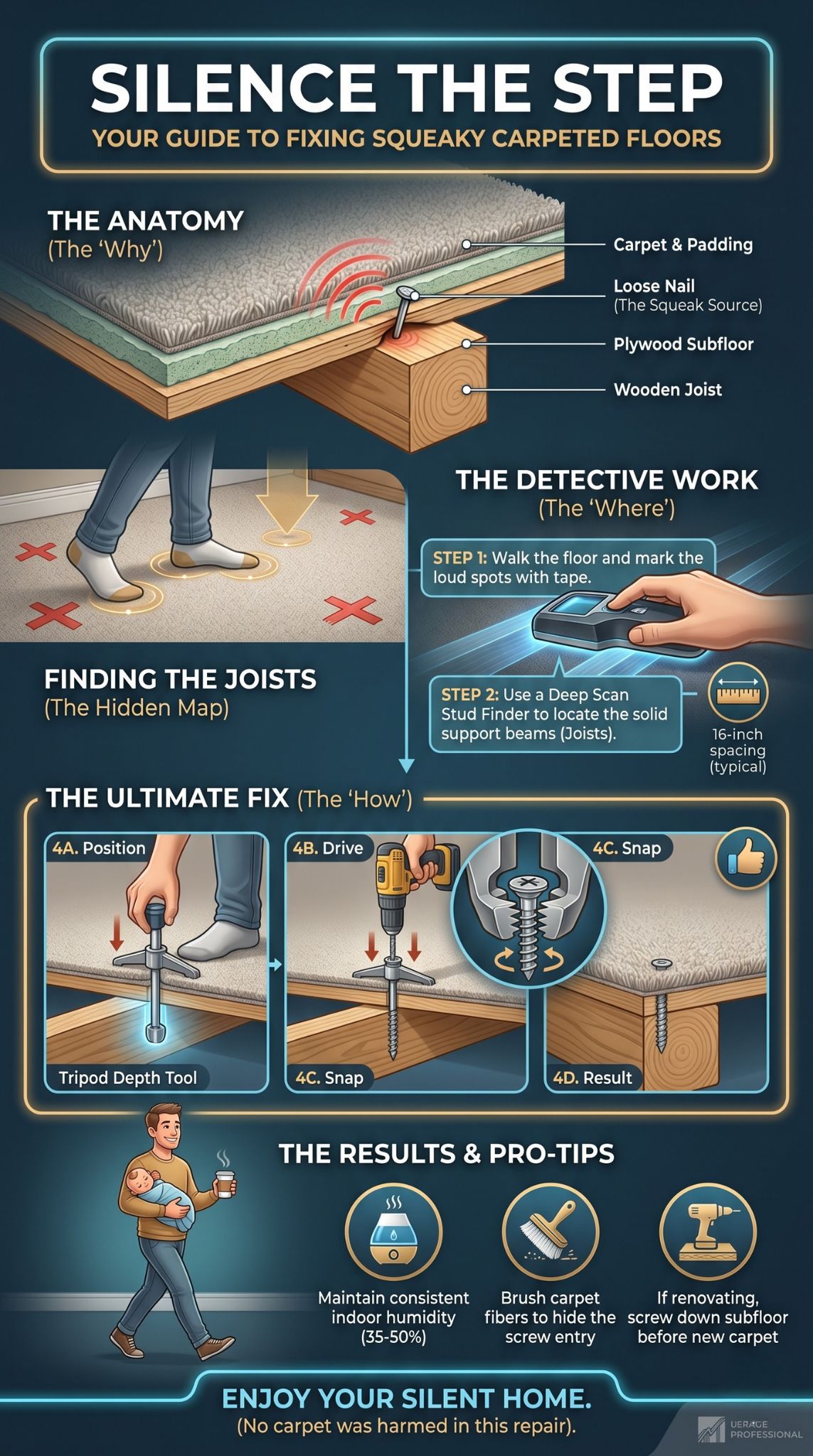
To fix the issue permanently, your fasteners must bite into the floor joists. Screwing into just the subfloor is a waste of time because there is nothing solid for the screw to hold onto. Finding these hidden wooden beams through layers of fabric and foam padding is the most technical part of the job.
|
Tool/Method |
Reliability |
Ease of Use |
|
Deep Scan Stud Finder |
High – if the carpet isn’t too thick. |
Easy |
|
The Hammer Tap |
Medium – requires a good ear for acoustics. |
Hard |
|
Measurement Method |
High – based on standard building codes. |
Moderate |
|
Pilot Bit Test |
Very High – provides physical confirmation. |
Moderate |
Using Technology to See Through Fabric
A high-quality stud finder with a “Deep Scan” mode is your best friend here. Move it slowly across the carpet; when it lights up, it is detecting the density of the joist. Most joists in modern homes are spaced sixteen inches apart, so once you find one, the next should be easy to locate.
The Measuring Technique
If the stud finder fails, look for a heating vent or a wall. Joists usually run the shortest span of a room. If you can see a joist through a vent opening, measure from that point in increments of sixteen inches to find the rest of the layout across the floor.
Physical Confirmation
Before you commit to a repair, you can use a very thin finish nail or a specialized probe to poke through the carpet. If you hit solid wood after about an inch or two, you have found the joist. If the nail sinks in with no resistance, you are in the hollow space between beams.
Read Also: How to Remove Red Wine Stains from Carpet: 5 Methods
How to Fix Squeaky Floors No Carpet Removal: The Breakaway Screw Method
The most effective way to fix squeaky floors no carpet removal is by using a specialized breakaway screw kit. These kits come with a tripod tool and screws that are designed to snap off below the surface of the floor. This allows you to pull the subfloor tight against the joist without leaving a dangerous screw head sticking out of your carpet. It is the gold standard for DIY floor repair because it is nearly invisible once finished.
|
Step |
Action |
Pro Tip |
|
Step 1 |
Place the tripod tool over the joist. |
Stand on the tool to compress the carpet. |
|
Step 2 |
Drive the screw through the guide. |
Use a high-speed drill for a clean entry. |
|
Step 3 |
Snap the head off using the tool. |
Rock the tool sideways for a clean break. |
|
Step 4 |
Brush the carpet fibers. |
Hide the entry hole by fluffing the pile. |
Setting Up the Tripod Tool
The tripod tool acts as a depth gauge. You place it over the spot you marked and stand on it with your full weight. This is important because it squashes the carpet and padding down so the screw can pull the wood layers together tightly.
Driving the Specialized Screw
The screws in these kits have a specific “score” mark on them. When you drive them through the tripod, the tool stops them at exactly the right depth. The screw passes through the carpet fibers without snagging them, which is a major concern for berber or looped carpets.
The Snap-Off Technique
Once the screw is driven in, you use the side of the tool to snap the head off. The screw is designed to break about half an inch below the wood surface. This ensures that no one will ever get a scratched foot or a snagged sock on the repair.
Final Inspection and Testing
Walk over the area again. If the squeak is gone, you can move to the next spot. If it still makes a little noise, you might need to drive a second screw a few inches down the same joist to fully stabilize the board.
Alternative Solutions: Shimming and Gluing from Below
If you have access to the floor from a basement or a crawlspace, you can often fix the problem without touching the carpet at all. This is actually the most reliable way to fix a floor because you can see exactly where the gap is. You can fill the space with a shim or use structural adhesive to stop the movement permanently.
|
Material |
Use Case |
Success Rate |
|
Wood Shims |
Gaps between the joist and subfloor. |
High |
|
Construction Adhesive |
Small gaps where a shim won’t fit. |
Medium |
|
Squeak-Relief Brackets |
Large gaps or warped joists. |
Very High |
|
Sistering Joists |
Severe structural bounce or sagging. |
Professional Grade |
The Shim and Glue Method
Have someone walk on the floor while you are underneath it with a flashlight. Look for the subfloor moving against the joist. Once you find it, coat a wooden shim in carpenter’s glue and slide it into the gap. Do not force it too hard, or you might lift the floor and create a hump.
Using Squeak-Relief Brackets
There are metal brackets designed to pull the subfloor down to the joist from underneath. You screw the bracket into the side of the joist and then into the subfloor. This creates a mechanical connection that is much stronger than a simple nail.
Dealing with “Long-Span” Squeaks
Sometimes the joists themselves are too long and they flex too much. Adding a “bridge” or a piece of 2×4 blocking between the joists can stiffen the floor. A stiffer floor is a quieter floor because it doesn’t allow for the minute movements that cause friction.
Essential Tools for Squeak-Free Success
You do not need a truck full of tools for this project, but having the right ones makes the difference between a ten-minute fix and a ruined carpet. If you try to use regular wood screws through a carpet, you will almost certainly catch a thread and pull a “run” in the fabric, which is a permanent and ugly mistake.
|
Tool |
Purpose |
Estimated Cost |
|
Squeaky Floor Kit |
Contains breakaway screws and guides. |
$20 – $30 |
|
Cordless Drill |
Drives the fasteners quickly and efficiently. |
$50 – $150 |
|
Painter’s Tape |
Marks locations without staining carpet. |
$5 |
|
Deep Scan Stud Finder |
Locates joists through padding. |
$30 – $60 |
Why a Specialized Kit is Non-Negotiable
Regular screws have heads that stay above the wood. Even if you try to sink them deep, they will eventually work their way up and become a hazard. Breakaway kits are specifically engineered to solve this, making them worth every penny of the small investment.
Power Drill Requirements
You want a drill with a decent amount of torque. Driving a three-inch screw through subfloor and into an old, dried-out oak joist can be surprisingly difficult. A 12V or 18V cordless drill is usually more than enough for the task.
The Importance of a Good Stud Finder
Do not skimp on the stud finder. Inexpensive models often give false positives when they have to read through carpet and padding. A model with “AC Detection” is also helpful so you can make sure you aren’t driving a screw into an electrical wire.
Preventive Measures for Long-Term Quiet
Fixing a squeak is great, but stopping them from coming back is even better. Most floor noise is a symptom of the environment inside your home. By controlling a few simple factors, you can keep your floors silent for years to come.
|
Action |
Frequency |
Benefit |
|
Humidity Control |
Constant |
Prevents wood from shrinking and growing. |
|
Use Screws in Renos |
Once |
Far superior to nails for holding power. |
|
Tighten Baseboards |
As needed |
Prevents “wall squeaks” at the floor edge. |
|
Quality Underlayment |
During Install |
Dampens sound and reduces friction. |
Managing Indoor Air Quality
Keep your home’s humidity between thirty-five and fifty percent. Using a humidifier in the winter prevents the wood from drying out and pulling away from the fasteners. This is the single best thing you can do for the longevity of your woodwork.
Strategic Fastening During Carpet Replacement
If you ever decide to replace your carpet, walk the bare subfloor before the new one goes down. This is your one chance to drive screws into every single joist across the entire room. It adds maybe an hour of work but guarantees a silent floor for the next twenty years.
Choosing the Right Carpet Padding
Thicker, denser padding does more than just feel good under your feet. It helps distribute your weight more evenly across the subfloor. When your weight is spread out, it puts less pinpoint pressure on any single loose nail, reducing the chance of a squeak starting.
When to Call a Professional
Not every squeak is a simple fix. Sometimes, the noise is a warning sign that something deeper is wrong with the structure of your house. If you have tried the breakaway screws and the noise persists, or if the floor feels “mushy,” it is time to stop the DIY approach and get an expert opinion.
|
Red Flag |
Potential Cause |
Action |
|
Sloping Floors |
Foundation settlement. |
Contact a structural engineer. |
|
Cracked Joists |
Overloading or age. |
Hire a licensed carpenter. |
|
Termite Damage |
Pests eating the wood structure. |
Call an exterminator immediately. |
|
Massive “Bounce” |
Undersized joists for the span. |
Structural reinforcement needed. |
Identifying Foundation Issues
If you notice that your floors are starting to slope toward the center of the house or toward an exterior wall, a screw won’t help. This usually means the piers or the foundation wall are shifting. This requires heavy equipment and professional stabilization.
Water Damage and Rot
If a squeak is located near a bathroom or kitchen, it might be caused by a slow leak that has rotted the wood. Rotted wood won’t hold a screw, and the squeak will only get worse. You need to fix the plumbing and replace the wood before the floor becomes unsafe.
Pest Infestations
In some regions, termites or carpenter ants can hollow out floor joists. The floor will squeak because the wood has lost its density. If you see “sawdust” or small holes in the wood from the basement, stop and call a pest control expert before doing any repairs.
Final Thoughts
Living with a noisy floor is a choice, not a necessity. Now that you know how to fix squeaky floors no carpet removal required, you can take back the silence of your home with a very small investment of time and money. By using the breakaway screw method, you address the structural gap between your subfloor and joists without ever disturbing the look of your room. It is a clean, professional-grade fix that works for almost any carpeted area. Just remember to be patient while locating the joists and always use the proper tools to avoid damaging your carpet fibers. Once you finish one room, you will likely find yourself hunting down every other squeak in the house.
Frequently Asked Questions (FAQs)
Can I use regular wood screws through the carpet if I’m careful?
It is highly discouraged. Regular screws will almost always grab a loop of the carpet and pull it, creating a permanent line or “run” across your floor. Additionally, the head of the screw will eventually poke through, creating a safety hazard for anyone walking barefoot.
How many screws should I use per squeak?
Usually, one well-placed screw into a joist will stop a squeak. However, if the subfloor is badly warped, you might need two or three screws spaced about two inches apart to fully pull the board down flat.
Will this method work on hardwood floors covered by carpet?
Yes. The breakaway screws are strong enough to pass through the hardwood layer and the subfloor into the joist. It may require a bit more force from your drill, but the principle remains exactly the same.
What if I accidentally hit a wire or a pipe?
This is a common fear. Most electrical wires and plumbing pipes are supposed to be drilled through the center of the joist, well away from the subfloor. However, using a stud finder with a wire-warning feature is a smart way to minimize this risk.
Does this work on concrete floors?
No. This method is specifically for wood-frame construction. If your carpet is over concrete and you hear a noise, it is likely the tack strip or the padding moving, and you will likely need to pull the carpet back to investigate the slab.