A door that refuses to close properly can make a normal day feel irritating. You push it, lift the knob, slam it once, then feel guilty because the whole house heard it. The good news is that you can usually fix sticking door problems without replacing the door or calling a carpenter right away.
Most doors stick because something small has changed. The hinges may be loose. The wood may have swollen from moisture. The latch may no longer line up with the strike plate. Sometimes the problem is just old paint, dirt, or a screw that has backed out over time.
The smart move is to diagnose the problem before sanding, trimming, or planing the door. Removing wood too early can create gaps that are harder to fix later. Start with the simple checks first. Then move to sanding or planing only when you are sure the door itself is rubbing.
Why Your Door Starts Sticking
A sticking door usually means the door is no longer sitting cleanly inside the frame. It may rub at the top, drag at the bottom, hit the latch side, or fail to catch the strike plate. Wood also reacts to moisture, so seasonal swelling is common in humid rooms and rainy weather.
Many wooden doors expand and shrink slightly as moisture levels change. That movement is normal, but it becomes a problem when the gap between the door and frame is already tight. A small change in the wood can make the door scrape, stick, or refuse to latch.
|
Possible Cause |
What You May Notice |
First Thing to Check |
|
Loose hinges |
Door drops or rubs at the top corner |
Hinge screws |
|
Humidity |
Door sticks more in rainy weather |
Moisture and ventilation |
|
Strike plate issue |
Door closes but won’t latch |
Latch alignment |
|
Paint buildup |
Door feels tight at the edge |
Painted edges and jamb |
|
Frame movement |
Uneven gaps around the door |
Door frame and wall cracks |
Humidity and Swollen Wood
Wooden doors can absorb moisture from the air. When this happens, the door may expand just enough to rub against the frame. This is common in bathrooms, kitchens, basements, laundry rooms, and exterior entryways.
Indoor humidity also changes with seasons. If a door sticks during rainy months but works fine in dry weather, moisture is probably part of the problem. In that case, sanding too much wood may create a gap later when the door shrinks again.
Loose Hinges
Loose hinges are one of the easiest problems to miss. A heavy door can slowly pull screws out of the jamb. When that happens, the latch-side corner may drop and scrape against the frame.
Before you sand anything, check every hinge screw. A few loose screws can make the whole door sit crooked. Tightening the hinges may solve the problem in minutes.
Misaligned Strike Plate
Sometimes the door itself is fine. The latch simply does not enter the strike plate hole cleanly. This makes the door feel stuck, even though the real problem is alignment.
If the door closes but pops open, bounces back, or needs extra force to latch, inspect the strike plate. The latch should slide into the opening without rubbing hard against the metal plate.
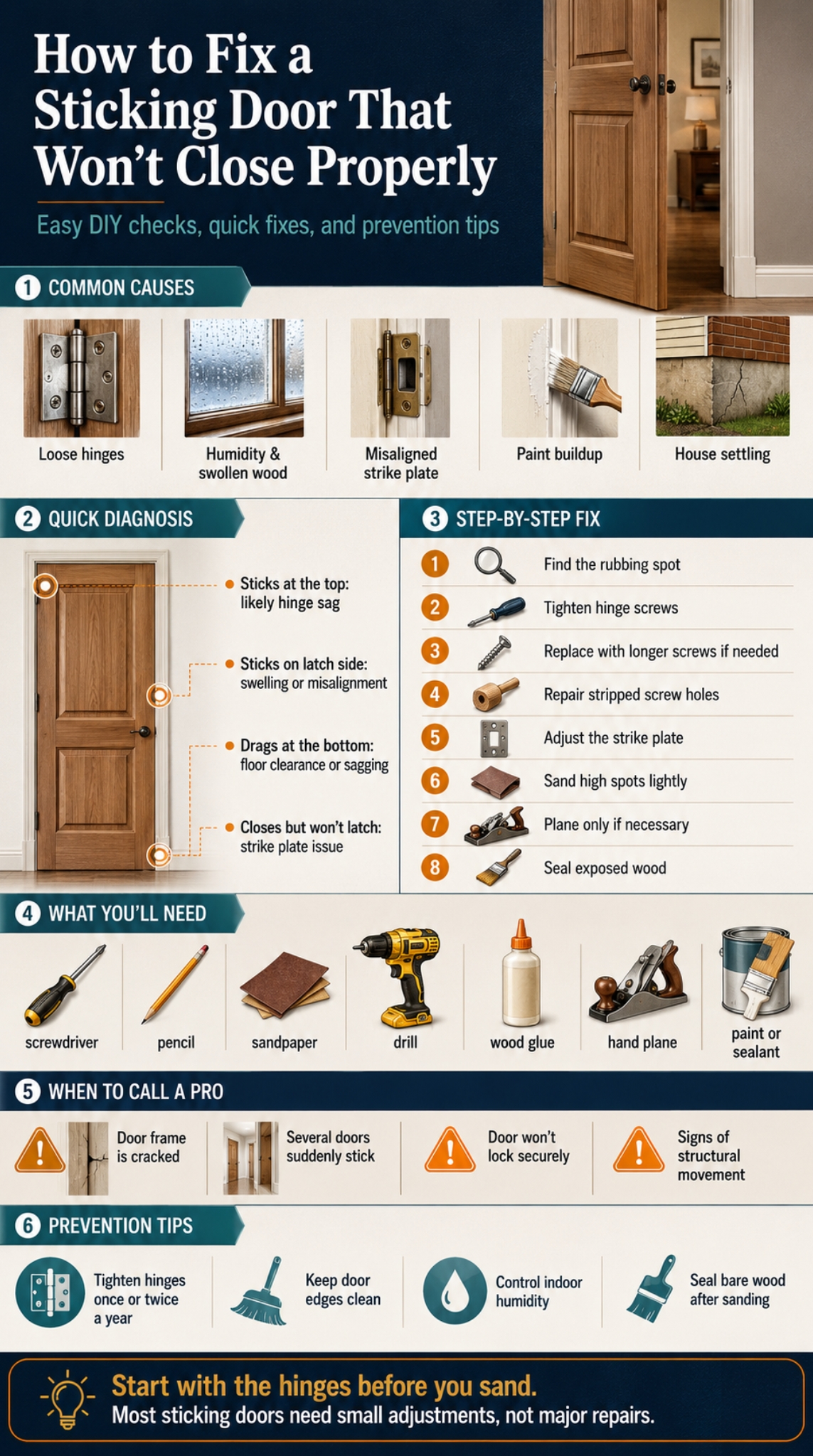
Quick Diagnosis Before You Fix Sticking Door Problems
Before touching the tools, open and close the door slowly. Watch where it catches. Listen for scraping. Look for shiny marks, chipped paint, dents, or dark rub lines. This small check saves time because each sticking point tells a different story.
Do not guess. A door that rubs at the top needs a different fix from a door that drags on the floor. A door that will not latch may not need sanding at all. The goal is to find the exact contact point first.
|
Where the Door Sticks |
Likely Cause |
Best First Fix |
|
Top corner |
Loose top hinge or sagging door |
Tighten hinge screws |
|
Latch side |
Swelling, paint, or misalignment |
Check hinges and strike plate |
|
Bottom edge |
New flooring or sagging door |
Check clearance and hinges |
|
Only in humid weather |
Moisture swelling |
Improve ventilation |
|
Door closes but won’t latch |
Strike plate mismatch |
Adjust strike plate |
Door Sticks at the Top
If the top latch-side corner rubs, the door may be sagging. The top hinge often carries a lot of stress. Tightening or replacing hinge screws can pull the door back into position.
Check the gap above the door. If it is tight near the latch side but wider near the hinge side, hinge sag is likely.
Door Sticks at the Bottom
A door that drags at the bottom may have loose hinges, swollen wood, or not enough clearance over new flooring. Carpet, tile, vinyl, and laminate can all reduce the gap under the door.
Look for scrape marks on the floor. Also check whether the bottom edge looks raw, swollen, or uneven.
Door Closes but Won’t Latch
If the door closes but will not stay shut, focus on the latch and strike plate. The latch must fit securely into the strike plate opening for the door to stay closed.
Common fixes include tightening hinges, filing the strike plate opening, or moving the strike plate slightly.
Tools and Materials You May Need
You do not need a full workshop to fix a sticking door. Many fixes require only a screwdriver, pencil, and flashlight. More serious rubbing may need sandpaper, a hand plane, longer screws, or a drill.
Keep the repair simple at first. Then move up only if the easy fixes do not work. This avoids unnecessary damage and keeps the repair beginner-friendly.
|
Tool or Material |
Use |
|
Screwdriver |
Tighten hinges and strike plate |
|
Pencil or chalk |
Mark rubbing spots |
|
Flashlight |
Inspect gaps and latch alignment |
|
Sandpaper |
Smooth minor high spots |
|
Longer screws |
Secure loose hinges |
|
Wood glue and toothpicks |
Repair stripped screw holes |
|
Hand plane |
Remove small amounts of wood |
|
Paint or sealant |
Protect exposed wood |
Basic Tools for Beginners
Start with a screwdriver, flashlight, pencil, and clean cloth. These are enough for hinge checks, strike plate checks, and simple cleaning.
A hand screwdriver gives better control than a drill when tightening old screws. It also lowers the risk of stripping weak screw holes.
Tools for Sanding or Planing
For minor rubbing, use medium-grit sandpaper wrapped around a wood block. For heavier rubbing, use a hand plane. Remove thin layers only.
Planing is not the first step. It is the step you use after checking hinges, latch alignment, dirt, paint, and humidity.
Safety Items
Wear safety glasses when sanding or planing. Use a dust mask if you are sanding paint or wood. If the door is heavy, get help before removing it from the hinges.
Older painted doors may have old coatings, so avoid aggressive sanding without knowing what you are working with.
Step-by-Step Guide to Fix a Sticking Door
The best way to fix sticking door issues is to work from the least invasive fix to the most invasive fix. Do not start by cutting the door. Start by checking alignment. Then tighten, clean, adjust, sand, and only then plane or trim.
This order matters because many sticking doors are caused by hardware, not extra wood. A loose hinge can make the door rub even when the door size is perfect.
|
Step |
What to Do |
Why It Helps |
|
1 |
Find the rubbing spot |
Prevents wrong repairs |
|
2 |
Tighten hinges |
Corrects sagging |
|
3 |
Use longer screws |
Adds stronger support |
|
4 |
Check strike plate |
Fixes latch problems |
|
5 |
Sand high spots |
Reduces minor rubbing |
|
6 |
Plane if needed |
Fixes heavy rubbing |
|
7 |
Seal exposed wood |
Prevents swelling again |
Step 1: Open and Close the Door Slowly
Move the door slowly and watch the gap around the frame. Do not force it. Look for the exact place where the door touches the jamb, floor, or strike plate.
Use a pencil to mark the rubbing spot. If you cannot see it clearly, rub chalk on the frame and close the door. The chalk can transfer to the high spot.
Step 2: Tighten the Hinges
Tighten all hinge screws on the door side and frame side. Start with the top hinge because it often causes sagging.
If a screw keeps spinning and does not tighten, the screw hole may be stripped. Do not keep forcing it. Repair the hole instead.
Step 3: Replace Short Screws With Longer Screws
If the top hinge is loose, replace one or two short screws with longer screws. A longer screw can reach deeper framing behind the jamb and pull the door back into alignment.
This is especially helpful when the door rubs near the top latch-side corner.
Step 4: Repair Stripped Screw Holes
Remove the loose screw. Add wood glue to a few toothpicks or a small wood dowel. Push them into the hole, let the glue dry, cut the excess flush, and reinstall the screw.
This gives the screw fresh material to bite into. It is a simple repair for older doors with worn hinge holes.
Step 5: Clean the Door Edge and Frame
Dirt, sticky residue, and old paint can make a door feel tighter than it really is. Clean the door edge, jamb, hinges, and latch area.
Do this before sanding. Sometimes a good cleaning is enough, especially on painted interior doors.
Step 6: Adjust the Strike Plate
Close the door slowly and watch the latch. If the latch hits the edge of the strike plate, tighten the plate screws first. If the latch is only slightly off, file the strike plate opening.
If the latch is far off, move the strike plate. Fill the old screw holes first so the new screws hold properly.
Step 7: Sand Small High Spots
If the door still rubs after hinge and latch checks, sand the marked area lightly. Work slowly. Test the door often.
Do not sand the entire edge unless the entire edge is rubbing. Most sticking problems happen in one small area.
Step 8: Plane the Door Only When Needed
Use a hand plane when sanding is not enough. Remove the door if needed, mark the high spot, and shave off thin layers.
After planing, rehang the door and test it. Do not remove too much wood at once.
Step 9: Seal the Bare Wood
Any sanded or planed wood should be sealed. Use primer, paint, varnish, or another suitable finish.
Bare wood absorbs moisture faster than sealed wood. If you skip this step, the door may swell again later.
How to Fix a Door That Sticks at the Top
A door that sticks at the top often points to hinge sag. The door may have dropped slightly, causing the upper latch-side corner to hit the frame. This can happen slowly, so you may not notice it until the door needs a shove to close.
Start with the hinges before sanding the top edge. If the hinges are loose, sanding will only hide the symptom for a while. The door may keep dropping.
|
Symptom |
Likely Cause |
Recommended Fix |
|
Top latch-side corner rubs |
Loose top hinge |
Tighten screws |
|
Gap is uneven at top |
Door sag |
Add longer hinge screw |
|
Top edge rubs evenly |
Swollen wood or paint |
Sand lightly |
|
Several doors stick |
Humidity or settling |
Inspect wider home conditions |
Check the Top Hinge
Open the door halfway and lift gently on the knob. If the door moves upward, the hinges may be loose.
Tighten the screws on the top hinge first. Then check the middle and bottom hinges.
Read Also: 20 Bedroom Lighting Ideas For a Cozy Atmosphere
Use a Longer Screw in the Top Hinge
Replace one screw in the top hinge with a longer screw. This can pull the jamb closer to the wall framing and lift the sagging edge slightly.
Use care. Over-tightening can pull the hinge too far and create a new gap.
Sand Only the Marked Area
If the hinge fix does not work, mark the rubbing spot and sand lightly. Keep the top edge even.
Seal the sanded area after the door closes smoothly.
How to Fix a Door That Sticks at the Bottom
A bottom-sticking door can be annoying because it scrapes the floor and may damage carpet, tile, or wood flooring. It often happens after new flooring is installed. It can also happen when the door sags, the bottom edge swells, or the threshold shifts.
Before trimming the bottom, check the hinges. A sagging door can look like a clearance problem even when the bottom edge is fine.
|
Cause |
Sign |
Fix |
|
Loose hinges |
Door droops toward latch side |
Tighten hinges |
|
New flooring |
Bottom rubs evenly |
Trim or plane bottom |
|
Swollen bottom edge |
Sticks after rain or humidity |
Dry, sand, seal |
|
Threshold issue |
Exterior door drags |
Adjust threshold if possible |
Check for Hinge Sag First
Even if the door rubs at the bottom, the real issue may be loose hinges. A sagging door can drop just enough to scrape the floor.
Tighten the hinges and test the door before trimming the bottom.
Look for Flooring Changes
If the problem started after new flooring, the door may need more bottom clearance. Mark where it rubs and remove the door if trimming is needed.
Take off less than you think you need. You can always remove more, but you cannot easily put wood back.
Seal the Bottom Edge
The bottom edge of a door is often left unfinished. That makes it easy for moisture to enter.
After trimming or sanding, seal the edge. This is especially important for bathroom, laundry room, basement, and exterior doors.
How to Fix a Door That Won’t Latch Properly
A door that will not latch can feel like a sticking door, but it is often a hardware problem. The latch may hit too high, too low, or too far to one side.
Do not move the strike plate until you know whether the door has sagged. If the hinges are loose, the latch will miss the strike plate even if the plate itself is in the right place.
|
Latch Problem |
What It Means |
Best Fix |
|
Latch hits above hole |
Door has dropped or plate is low |
Tighten hinges or move plate |
|
Latch hits below hole |
Plate may be high |
Adjust strike plate |
|
Latch hits front edge |
Plate sits too far back |
File or move plate |
|
Latch does not spring |
Latch may be dirty or damaged |
Clean or replace latch |
Check the Latch Mark
Put a little pencil, lipstick, or chalk on the latch. Close the door gently. The mark will show where the latch hits the strike plate.
This tells you whether the plate needs filing, moving, or tightening.
Tighten Hinges Before Moving the Plate
If the door has sagged, the latch will miss the strike plate. Tightening the hinge screws may fix the latch without moving the plate.
This is cleaner than drilling new strike plate holes too early.
File or Move the Strike Plate
If the latch is slightly off, file the strike plate opening. If it is far off, unscrew the plate and move it.
Fill old holes with wood glue and toothpicks before setting new screws.
How Humidity Makes Doors Stick
Humidity is a common reason doors stick during certain seasons. The door may work fine in dry weather and become tight after rain, heat, or heavy indoor moisture.
Bathrooms, kitchens, and laundry rooms are common trouble spots because steam and warm air raise moisture levels. Exterior doors can also swell because they face outdoor air, rain, and temperature changes.
|
Humidity Sign |
What It Suggests |
What to Do |
|
Door sticks only in rainy season |
Wood swelling |
Improve ventilation |
|
Door edge feels swollen |
Moisture absorption |
Dry and seal |
|
Paint feels tacky |
Poor curing or moisture |
Clean and repaint if needed |
|
Multiple wood doors stick |
Indoor humidity issue |
Check humidity level |
Improve Ventilation
Use bathroom fans, kitchen exhaust fans, and open windows when weather allows. Good airflow helps moisture leave the room.
If a bathroom door sticks often, check whether the exhaust fan works properly.
Use a Dehumidifier
A dehumidifier can help in damp rooms. This is useful in basements, laundry areas, and humid climates.
Reducing indoor moisture may not fix the door instantly, but it can stop the problem from getting worse.
Do Not Over-Plane During Humid Weather
A swollen door may shrink when the air gets dry again. If you plane too much during a humid period, the door may later show a wide gap.
Fix moisture first. Then remove wood only if the door still sticks.
Interior Door vs Exterior Door Fixes
Interior and exterior doors can stick for different reasons. Interior doors usually have hinge, latch, paint, or humidity problems. Exterior doors also deal with rain, temperature changes, weatherstripping, thresholds, and security hardware.
That means exterior door fixes need more care. If you remove too much material from a front door, you may create drafts, leaks, or lock problems.
|
Door Type |
Common Problem |
Special Concern |
|
Bedroom door |
Loose hinges or latch issue |
Privacy latch alignment |
|
Bathroom door |
Humidity swelling |
Ventilation |
|
Kitchen door |
Grease and paint buildup |
Cleaning |
|
Front door |
Weather exposure |
Security and sealing |
|
Back door |
Threshold or weatherstrip |
Draft control |
Interior Doors
Interior doors are usually easier to repair. Start with hinges, latch alignment, and paint buildup.
Most interior sticking issues can be fixed with tightening, sanding, or a small strike plate adjustment.
Exterior Doors
Exterior doors need a tighter seal for weather and security. If you remove too much wood, you may create drafts or weaken the fit around the lock.
Check whether the door sticks because of the door itself, the threshold, or the weatherstripping.
Check the Threshold and Weatherstripping
A front door may stick because weatherstripping is too thick, torn, or poorly placed. The threshold may also be too high.
Adjust carefully. The door should close smoothly, seal properly, and lock without force.
Common Mistakes to Avoid
A sticking door is usually simple, but it is easy to make the repair worse. The biggest mistake is removing wood before checking the hardware. Another mistake is forcing the door closed every day until the hinges, latch, or frame get damaged.
A careful repair saves time. Work slowly, test often, and do not assume every sticking door needs sanding.
|
Mistake |
Why It Is a Problem |
Better Choice |
|
Sanding too early |
May not fix alignment |
Check hinges first |
|
Removing too much wood |
Creates gaps |
Work slowly |
|
Ignoring latch |
Door may not stay shut |
Check strike plate |
|
Overusing drill |
Strips holes |
Use screwdriver carefully |
|
Leaving bare wood |
Causes future swelling |
Seal exposed areas |
Do Not Start With a Saw
A saw is rarely needed for a sticking door. Sanding, hinge repair, or planing is usually enough.
Only trim the door when you clearly need floor clearance.
Do Not Ignore Several Sticking Doors
One sticking door is usually a normal home repair. Several doors sticking at once may point to humidity, settling, or frame movement.
If you also see wall cracks, sloping floors, or windows that stick, get a professional opinion.
Do Not Leave the Door Unsealed
Any bare wood edge can absorb moisture. This is one of the easiest ways for the problem to return.
Seal the repaired edge before calling the job done.
When to Call a Professional
Most homeowners can handle light door repairs. But not every sticking door is a simple DIY job. If the door frame is twisted, the wall is cracked, the lock will not work, or the exterior door is no longer secure, it is safer to call a professional.
This is especially true for entry doors. A door that does not lock properly is not just annoying. It can become a safety issue.
|
Situation |
DIY or Professional? |
Why |
|
Loose hinge screw |
DIY |
Simple repair |
|
Slight latch misalignment |
DIY |
Small adjustment |
|
Minor rubbing |
DIY |
Sanding may work |
|
Cracked frame |
Professional |
Structural or framing issue |
|
Door will not lock |
Professional |
Security concern |
|
Multiple doors suddenly stick |
Professional inspection |
Possible movement or humidity issue |
Call a Carpenter for Frame Problems
If the frame is out of square, sanding the door may not solve the real issue. A carpenter can check whether the jamb needs adjustment.
This matters more for exterior doors and heavy solid wood doors.
Call a Door Specialist for Security Doors
If the door has a deadbolt, smart lock, storm door, or security hardware, poor alignment can affect safety.
Do not force a lock that is not lining up. That can damage the lock and make the door harder to repair.
Call for Possible Structural Movement
If several doors and windows suddenly stick, look beyond the door. The issue may involve settling, moisture, or foundation movement.
A professional inspection can separate a simple repair from a larger home issue.
Maintenance Tips to Stop the Door From Sticking Again
Once you fix the door, a little maintenance can keep it working smoothly. Doors move all year because homes expand, settle, dry out, and absorb moisture.
Small checks prevent big repairs later. Tight screws, clean edges, and sealed wood can make a door last longer and close better.
|
Maintenance Task |
How Often |
Why It Helps |
|
Tighten hinges |
Every 6–12 months |
Prevents sagging |
|
Clean door edges |
As needed |
Reduces friction |
|
Check humidity |
Seasonal |
Limits swelling |
|
Inspect latch |
When closing feels rough |
Prevents latch damage |
|
Seal bare wood |
After sanding or trimming |
Blocks moisture |
Tighten Screws Regularly
Hinge and strike plate screws can loosen with daily use. Check them once or twice a year.
This is especially useful for heavy doors and busy entry doors.
Keep Edges Clean
Wipe the door edge and frame when they get dusty or sticky. Dirt can add friction and make a tight door worse.
This matters most for kitchens, bathrooms, and exterior entries.
Control Moisture
Use fans, ventilation, and dehumidifiers where needed. Keep wooden doors painted or sealed on all edges.
A sealed door handles seasonal moisture better than an unfinished edge.
Final Thoughts
A sticking door does not always mean the door is ruined. Most of the time, the fix is simple. Start with the hinges. Check the latch and strike plate. Look for swelling, paint buildup, dirt, and uneven gaps. Then sand or plane only if the door itself is rubbing.
The best way to fix sticking door problems is to move slowly and test often. Small changes are safer than big cuts. Tighten one hinge. Test the door. Adjust the strike plate. Test again. Sand a little. Test again.
If the door still will not close properly, or if several doors in your home suddenly stick, do not guess. That may be a sign of frame movement, moisture problems, or another issue that needs a closer look.
Frequently Asked Questions About Sticking Doors
Why Does My Door Stick at Night but Not During the Day?
This can happen when temperature and humidity change. Wood can expand slightly when indoor moisture rises.
If the sticking comes and goes, check humidity before sanding the door.
Can I Use Soap or Wax on a Sticking Door?
Soap or wax may help with light rubbing, but it is not a real fix for sagging hinges or swollen wood.
Use it only after checking alignment.
Should I Paint Over a Sanded Door Edge?
Yes. A sanded edge exposes bare wood.
Seal it with primer, paint, varnish, or a matching finish to reduce future swelling.
Why Does My Door Pop Open After I Close It?
The latch may not be entering the strike plate hole fully.
Check the latch mark, tighten hinges, and adjust the strike plate if needed.
Can Weatherstripping Make a Door Hard to Close?
Yes. Weatherstripping that is too thick, damaged, or poorly installed can make an exterior door feel stuck.
Adjust the door first, then check the weatherstrip.
Is It Better to Sand the Door or the Frame?
Usually, sand the door, not the frame. But only sand the marked rubbing area.
If the frame is badly out of square, call a professional.
Why Does My New Door Stick After Installation?
The hinges may not be seated correctly, the frame may be slightly out of square, or the door may need minor adjustment.
Check hinge screws, gaps, and latch alignment first.