
Installing a ceiling fan is a great home project. A ceiling fan keeps your room cool. It helps lower your energy bills. It also adds bright light to your living space.
Many people think installing a fan is too hard. They think they must hire an expensive electrician. But you can do this job yourself. This article will show you exactly how to do it. We use simple words and clear steps.
We cover everything you need to know. You will learn about safety, necessary tools, and wiring. Follow this guide to install your new ceiling fan safely and correctly.
Safety First: Crucial Preparations
Safety is the most important part of any electrical project. Working with electricity can be dangerous if you are not careful. You must follow the right safety rules to protect yourself.
Turn Off the Power
You must shut off the electrical power before you touch any wires. Go to your home’s main service panel. This panel is also called the breaker box. Find the circuit breaker for the room where you are working. Flip the switch to the “OFF” position.
Never just turn off the wall switch. The wall switch does not stop the main power from flowing to the ceiling wires.
Verify the Power is Off
Do not guess if the power is off. Use a non-contact voltage tester to check. Put the tester near the wires in the ceiling box. If the tester lights up or makes a sound, the power is still on. Find the correct breaker and turn it off. Only start working when the tester shows no electrical current.
|
Safety Check Item |
Action Required |
Tool to Use |
|
Main Power Source |
Turn off the circuit breaker |
Breaker Box Switch |
|
Current Test |
Check wires for electricity |
Non-Contact Voltage Tester |
|
Work Area |
Clear the floor beneath the box |
Visual Inspection |
Essential Tools and Materials
You need the right tools before you start. Having everything ready makes the job fast and easy.
Gathering Your Equipment
Most of these items are standard tools. You might already have them in your garage. If you do not, you can buy them at any local hardware store.
- Circuit Tester: To ensure the power is completely off.
- Screwdrivers: You need both a flat-head screwdriver and a Phillips-head screwdriver.
- Wire Strippers: To remove the plastic coating from the wire ends.
- Pliers: To twist wires together firmly.
- Electrical Tape: To wrap around wire connections for extra safety.
- Ladder: To reach the ceiling safely.
Choosing Your Ceiling Fan Kit
Your new ceiling fan kit will include the fan motor, blades, brackets, and screws. It may also come with a light kit and a remote control. Make sure you read the manufacturer instructions inside the box.
|
Tools Needed |
Materials Needed |
Optional Items |
|
Screwdrivers |
Ceiling Fan Kit |
Light Bulbs |
|
Wire Strippers |
Wire Nuts (Connectors) |
Balancing Kit |
|
Ladder |
Electrical Tape |
Remote Control Battery |
|
Voltage Tester |
Heavy-Duty Outlet Box |
Downrod Extension |
Checking the Ceiling Junction Box
You cannot hang a heavy fan from a standard plastic light fixture box. Standard light boxes are thin. They are only made to hold lightweight light fixtures. A ceiling fan is heavy and it moves. The movement creates vibration and stress.
The Fan-Rated Box
You must use a special electrical box. This box is called a fan-rated junction box or an outlet box. It is made of strong metal or heavy-duty plastic. It is built to hold a weight of at least 50 pounds.
Look inside your ceiling hole. Check the markings on the current box. It should say “Acceptable for Fan Support.” If it does not say this, you must replace the box.
Installing a Support Brace
If there is no wood beam above the ceiling hole, you need an adjustable brace bar. You can insert this metal brace through the ceiling hole. Twist the bar to expand it. The ends of the bar will bite into the wooden ceiling joists. This creates a very strong anchor for your new fan-rated box.
|
Box Type |
Weight Capacity |
Safe for Moving Fans? |
|
Standard Light Box |
Up to 15 pounds |
No (Danger of falling) |
|
Fan-Rated Box |
50 to 70 pounds |
Yes (Meets electrical code) |
Assembling the Ceiling Fan
It is much easier to assemble some parts of the fan on the floor or a table before you climb the ladder.
Preparing the Motor Housing
Take the fan motor out of the box. Remove any plastic shipping guards. These guards protect the motor during transport, but the fan will not turn if you leave them on.
Attaching the Downrod
Most rooms with standard or high ceilings use a downrod. A downrod is a metal pipe that holds the fan down away from the ceiling.
- Feed the electrical wires from the fan motor up through the center of the downrod.
- Set the downrod into the top of the fan motor collar.
- Insert the metal clevis pin through the collar and downrod holes.
- Secure the pin with the hairpin cotter clip.
- Tighten the small locking screws on the motor collar to stop any shaking.
- Slide the decorative canopy ring over the downrod. The canopy covers the wires at the ceiling later.
|
Assembly Step |
Key Piece to Secure |
Why It Matters |
|
Step 1 |
Clevis Pin & Cotter Clip |
Holds the fan to the rod |
|
Step 2 |
Motor Collar Screws |
Prevents the fan from wobbling |
|
Step 3 |
Canopy Placement |
Hides the wire connections |
Mounting the Bracket to the Ceiling
Now it is time to work at the ceiling level. Set up your ladder on flat, sturdy ground.
Attaching the Hanger Bracket
The hanger bracket holds the entire weight of the fan while you connect the wires.
Pull the home’s electrical wires out of the junction box. Pass these wires through the center opening of the new metal mounting bracket. Hold the bracket against the box. Use the heavy screws that came with your fan-rated box to attach the bracket. Tighten the screws all the way down. The bracket must not move or wiggle.
Installing the Hanger Bracket. Source: Family Handyman
Hanging the Motor Unit
Pick up the assembled fan motor unit carefully. Lift it up to the ceiling bracket. Most fans use a ball-and-socket design. The top ball of the downrod slides right into the bracket cup.
Turn the motor gently until the groove on the ball lines up with the tab on the mounting bracket. The motor will drop slightly and lock into place. Now, the fan is hanging safely by itself. This leaves your hands free to do the wiring work.
|
Bracket Part |
Function |
Common Mistake |
|
Mounting Screws |
Locks bracket to the box |
Using weak wood screws |
|
Alignment Tab |
Stops the downrod from spinning |
Missing the groove alignment |
Connecting the Electrical Wires
Connecting the wires is the most critical step. You must match the correct wire colors together. Standard home wiring in the United States uses simple color coding.
Standard Color Meanings
Before connecting anything, you need to understand what each wire color represents:
- Black Wire: This is the hot wire. It brings power from the breaker box to the fan motor.
- White Wire: This is the neutral wire. It completes the electrical circuit.
- Green or Bare Copper Wire: This is the ground wire. It protects your home from electrical shocks.
- Blue Wire (Sometimes Striped): This wire feeds power specifically to the light kit.
Step-by-Step Wiring Sequence
Use your wire strippers to expose about half an inch of bare copper on each wire.
Ceiling Fan Wiring Diagram. Source: Pro Tool Reviews
1 Connect the Ground Wires
Safety First
1.Connect the Ground Wires:Safety First.
Gather the green wire from the ceiling bracket, the green wire from the downrod ball, and the bare copper wire from your home’s ceiling box. Twist these three wires together using a plastic wire nut. Wrapping the nut with electrical tape adds extra safety.
2. Connect the Neutral Wires
Circuit Completion
2.Connect the Neutral Wires:Circuit Completion.
Find the white wire coming from the ceiling fan motor. Match it with the white neutral wire coming out of the ceiling box. Twist the bare ends together firmly and secure them with a wire nut.
3 Connect the Power Wires
Motor & Light Power
3.Connect the Power Wires:Motor & Light Power.
If you have a single wall switch for both the fan and light, twist the black fan wire and the blue light wire together. Then, connect both of them to the single hot black wire from the ceiling box. Secure them with a wire nut.
Attaching the Blades and Light Kit
With the wiring done, your fan is almost ready. Now you can attach the pieces that move the air and add light.
Installing Fan Blades
It is best to install the blades after the motor is hanging. If you install them on the floor, you might bend the metal blade irons during lifting. A bent blade iron makes the fan wobble.
- Attach each fan blade to its metal blade arm using the provided screws and rubber washers. The washers protect the wood or plastic blades from cracking.
- Lift the blade assembly up to the motor unit.
- Align the holes on the blade arm with the holes on the bottom of the motor.
- Tighten the motor screws securely. Repeat this for all the remaining blades.
Connecting the Light Assembly
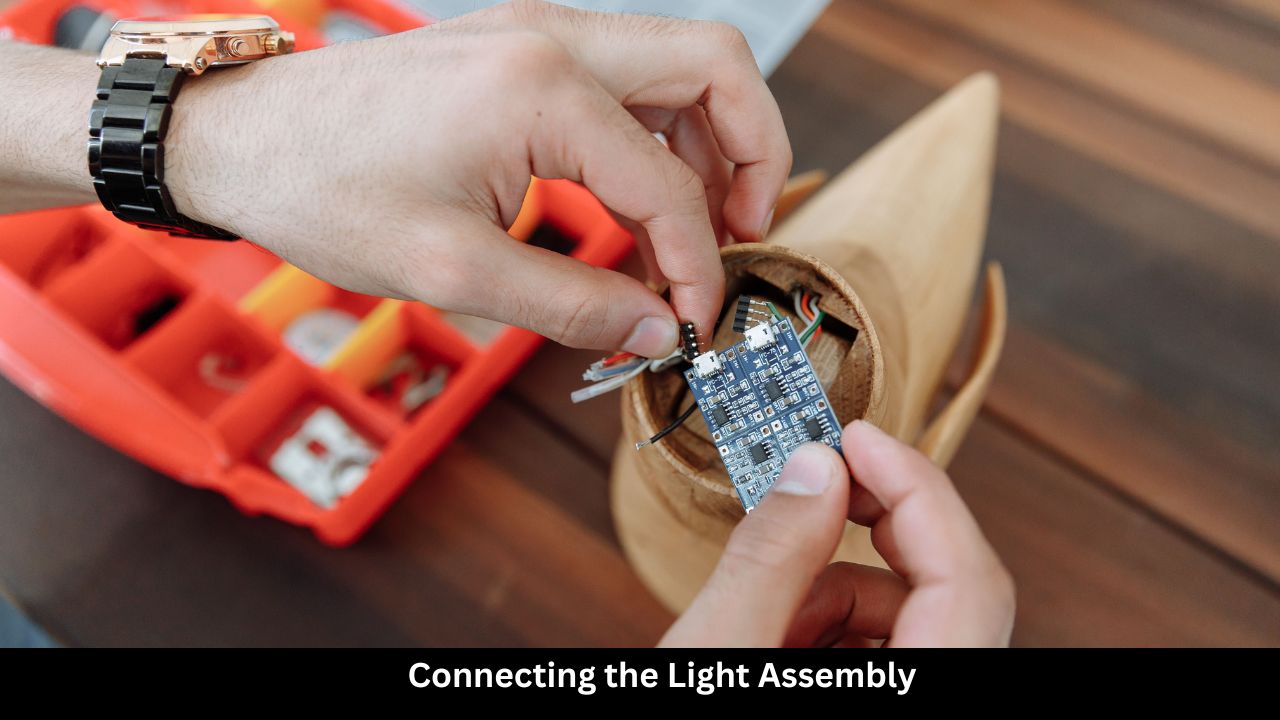
If your fan model includes a light kit, you will find a quick-connect plastic wiring plug at the bottom of the motor housing.
Snap the male plug from the light kit into the female plug on the motor. Push the pieces together until you hear a click. Lift the light kit housing up against the motor pan and secure it using the small structural screws provided in the kit.
|
Part to Install |
Hardware Needed |
Crucial Detail |
|
Blades |
Screws and Rubber Washers |
Tighten evenly to prevent shaking |
|
Blade Irons |
Motor Screws |
Do not bend during installation |
|
Light Kit |
Quick-Plug and Small Screws |
Tuck internal wires away safely |
Final Testing and Troubleshooting
Your installation is now complete. It is time to turn the electricity back on and test your hard work.
The First Power Test
Go back to your main breaker box. Flip the circuit breaker switch back to the “ON” position. Walk into the room and turn on your wall switch. Use the fan pull chains or the remote control to test the light and the different fan speeds.
Fixing Common Problems
- The Fan Does Not Turn On: Turn the breaker off immediately. Remove the decorative ceiling canopy. Check your wire connections to make sure no wire nuts have slipped off.
- The Fan Shakes or Wobbles: Make sure all the blade screws are completely tight. If the wobble stays, use the plastic balancing clip that came in your fan kit. Place the clip on the edge of a blade to find the uneven side, then replace it with an adhesive weight.
- The Fan Makes a Humming Noise: New electric motors need time to settle. Let the fan run on low speed for 24 hours. The noise usually disappears on its own.
Frequently Asked Questions (FAQ)
Can I install a ceiling fan where a light fixture was?
Yes. You can use the same electrical wires. However, you must replace the old plastic light box with a strong, fan-rated metal box to support the weight of the moving fan.
What do I do if my ceiling wires do not match the fan colors?
In some old homes, the hot wire might be red instead of black, or the ground wire might not be present. Use a digital multimeter or voltage tester to find the hot line, or talk to an expert electrician to avoid dangerous shorts.
How low should a ceiling fan hang from the floor?
For safety and efficiency, the fan blades should hang at least 7 feet above the floor. If your ceilings are lower than 8 feet, you should purchase a “hugger” or flush-mount fan style.
Which way should the fan blades spin?
During hot summer days, the blades should turn counterclockwise to push cool air straight down. In cold winter weather, reverse the motor switch so the blades turn clockwise. This pulls cold air up and redistributes warm air down along the walls.
Final Words
Installing your own ceiling fan is an excellent way to upgrade your home. It saves you money on professional labor costs and gives you a wonderful sense of achievement.
Take your time during each stage of the process. Always double-check that the electric power is turned completely off before touching any wires. By following the simple steps in this guide, you can enjoy a cool breeze and bright light for many years to come.