If your oven looks like it’s been through a few too many messy meals, you know the frustration of scrubbing baked-on grease. Many store-bought cleaners promise fast results, but they often contain harsh chemicals that irritate your skin, eyes, and lungs.
That’s where clean oven no chemicals methods shine. Using everyday household ingredients, you can achieve a sparkling clean oven safely, eco-consciously, and without worrying about toxic fumes.
In this guide, I’ll walk you through practical, chemical-free oven cleaning techniques, maintenance tips, and mistakes to avoid. By the end, you’ll have a clean oven and peace of mind.
Why Choose Chemical-Free Oven Cleaning?
Cleaning your oven without harsh chemicals is about more than just avoiding fumes. It’s a healthier, safer, and more sustainable approach.
Health Benefits
Oven cleaners are often loaded with ammonia, bleach, or lye. These chemicals can irritate your skin, lungs, and eyes. By going chemical-free, you reduce exposure for yourself and your family.
Environmental Impact
Harsh chemicals can end up in drains, harming aquatic life and polluting water systems. Natural cleaning solutions like baking soda and vinegar are biodegradable and eco-friendly.
Cost and Convenience
Many natural cleaners are already in your pantry. You can save money while still getting professional-level cleaning results.
Table: Benefits of Chemical-Free Oven Cleaning
|
Benefit |
Explanation |
Example |
|
Healthier |
Reduces exposure to toxic fumes |
No breathing ammonia while cleaning |
|
Eco-Friendly |
Ingredients are biodegradable |
Baking soda and vinegar |
|
Cost-Effective |
Uses common household items |
Lemon, salt, baking soda |
|
Gentle on Oven |
Less likely to damage enamel |
Avoids harsh abrasives |
Preparing Your Oven for a Deep Clean
Before starting, prep your oven to make cleaning efficient and safe.
Safety First
Always unplug your oven or switch off the power. Let it cool completely to prevent burns.
Remove Oven Racks and Accessories
Take out racks, trays, and thermometers. Soak racks separately to tackle grime without affecting the oven interior.
Gather Your Natural Cleaning Supplies
Common ingredients include baking soda, white vinegar, lemon, water, and microfiber cloths. Optional items: salt, essential oils for scent.
Table: Essential Tools & Ingredients
|
Item |
Purpose |
Notes |
|
Baking soda |
Base cleaner for grease |
Mix with water to form paste |
|
White vinegar |
Reacts with baking soda to remove grime |
Use in spray bottle |
|
Lemon |
Cuts grease, leaves fresh scent |
Slice or juice |
|
Microfiber cloth |
Gentle wiping |
Avoid abrasive sponges |
|
Salt |
Extra scrubbing power |
Works on burnt spots |
Step-by-Step Chemical-Free Cleaning Methods
Here are the most effective methods to clean your oven naturally.
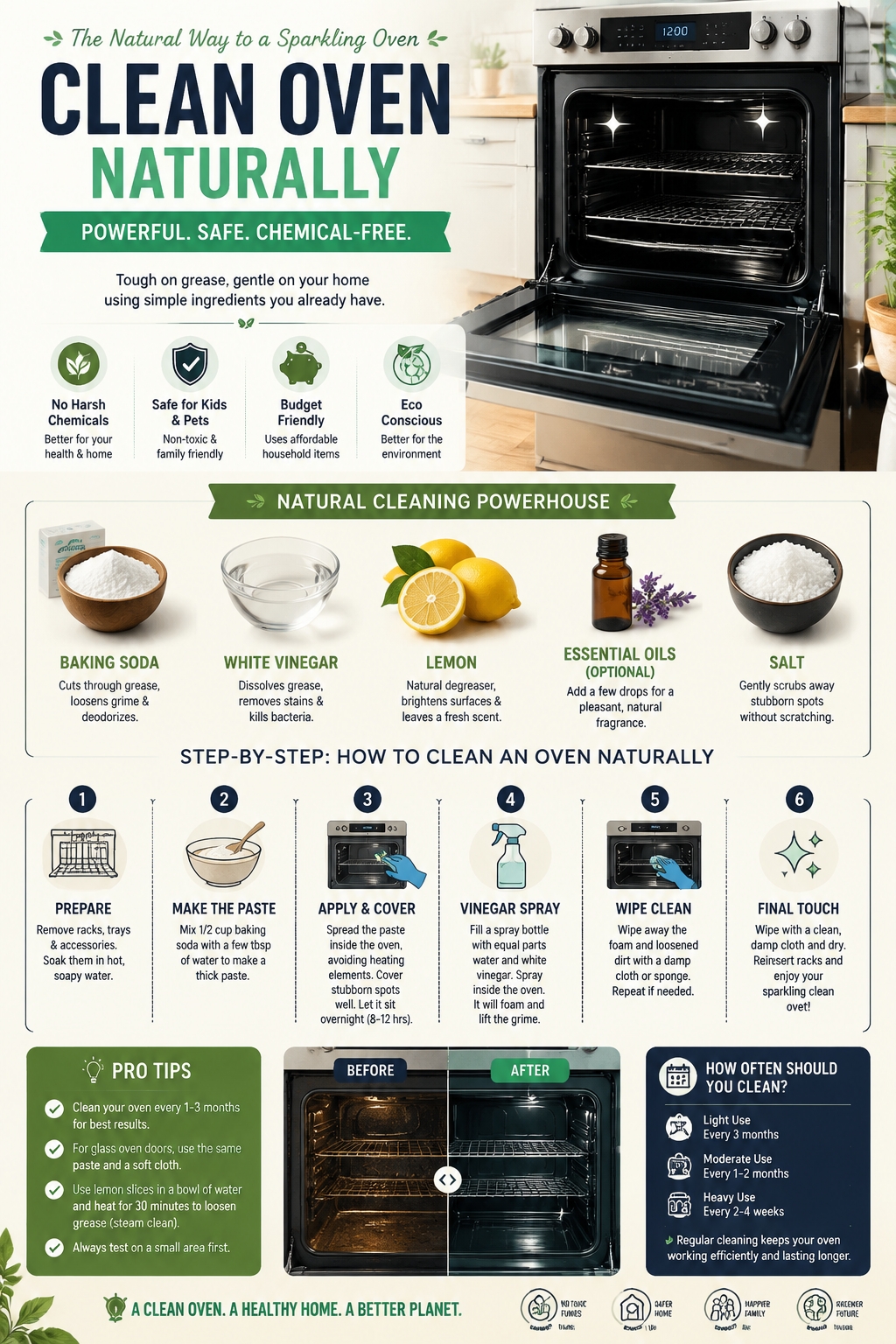
Method 1 – Baking Soda Paste
- Mix baking soda with water to create a thick paste.
- Spread it evenly over oven surfaces, avoiding heating elements.
- Let it sit for 12–24 hours.
- Wipe with a damp cloth, rinsing thoroughly.
- Tip: Use a plastic spatula to lift stubborn residue.
Method 2 – Vinegar Spray
- Fill a spray bottle with white vinegar.
- Spray over baking soda residue for a foaming reaction.
- Wipe with a microfiber cloth for a shiny finish.
- Pro Tip: Warm vinegar slightly for more power.
Read Also: Best Affordable Curtains in 2026: Top 10 Picks
Method 3 – Lemon and Steam
- Slice lemons and place in an oven-safe bowl with water.
- Heat oven to 250°F (120°C) for 20–30 minutes.
- Steam loosens grease for easy wiping.
- Extra: Lemon leaves a natural, fresh scent.
Method 4 – Salt and Baking Soda Combo
- Sprinkle salt over stubborn burnt-on food.
- Add baking soda and lightly spray with water.
- Let sit, then scrub gently with a sponge.
Table: Comparison of Cleaning Methods
|
Method |
Strength |
Best For |
Time Required |
|
Baking Soda Paste |
Deep clean |
General oven grime |
12–24 hours |
|
Vinegar Spray |
Quick reaction |
Residue removal |
10–15 min |
|
Lemon & Steam |
Fresh scent & grease removal |
Light buildup |
20–30 min |
|
Salt & Baking Soda |
Tough burnt spots |
Carbonized food |
1–2 hours |
Cleaning Oven Racks Naturally
Racks often take the brunt of heavy spills.
Soaking Method
- Fill a bathtub or large container with hot water and baking soda.
- Soak racks for several hours.
- Scrub with a brush or sponge for effortless cleaning.
Foil Lining Trick
- Place foil on the bottom of the oven (under racks) to catch spills.
- Makes future cleaning faster and easier.
Maintaining Racks
- Wipe down racks weekly to prevent heavy buildup.
Table: Rack Cleaning Tips
|
Tip |
How to Apply |
Benefit |
|
Soak in baking soda water |
Submerge 2–4 hours |
Loosens grease easily |
|
Use gentle scrubbing |
Sponge or brush |
Prevents enamel scratches |
|
Foil lining |
Place beneath oven racks |
Reduces future mess |
|
Regular maintenance |
Wipe weekly |
Avoids stubborn grime |
Quick Daily Maintenance Tips
Maintaining a clean oven prevents big scrubs later.
- Wipe spills immediately.
- Use a damp cloth with mild soap after heavy cooking.
- Avoid aerosol sprays with chemicals.
Table: Daily Oven Care Checklist
|
Action |
Frequency |
Reason |
|
Wipe spills |
Immediately |
Prevents baked-on mess |
|
Light wipe |
After each use |
Keeps oven shiny |
|
Check racks |
Weekly |
Prevents buildup |
|
Vent cleaning |
Monthly |
Maintains airflow |
Common Mistakes to Avoid When Cleaning Naturally
Too Much Water
Excess water can damage electrical components.
Scrubbing Too Hard
Avoid scratching enamel surfaces.
Ignoring Oven Door Glass
Grease can build up on glass; wipe regularly.
Table: Mistakes & Prevention
|
Mistake |
How to Avoid |
Consequence |
|
Excess water |
Use damp cloths, not soaking |
Electrical damage |
|
Hard scrubbing |
Use spatula or sponge |
Scratches enamel |
|
Ignoring glass |
Wipe after each use |
Grease buildup |
When to Call a Professional
- Persistent burnt-on residue despite natural cleaning.
- Oven malfunctions after cleaning.
- Specialty ovens (steam ovens, self-cleaning) may need expert care.
Table: Signs You Need a Pro
|
Sign |
Reason |
|
Burnt-on grime remains |
Natural methods exhausted |
|
Oven smells unusual |
Potential electrical issues |
|
Malfunctioning temperature |
Avoid DIY repair |
|
Specialty oven type |
Steam or pyrolytic ovens |
Final Thoughts
Cleaning your oven doesn’t have to involve harsh chemicals. Using simple ingredients like baking soda, vinegar, and lemon, you can achieve a sparkling clean oven safely and sustainably. Regular maintenance prevents heavy buildup and makes cleaning easier over time. Embrace chemical-free methods for a safer, eco-friendly kitchen and enjoy the satisfaction of a clean oven with minimal effort.
FAQ
Can I use baking soda and vinegar together in the oven?
Yes. Baking soda loosens grime, vinegar reacts with it to lift residue efficiently.
How often should I clean my oven chemically-free?
Every 2–3 months for deep cleaning, weekly for light maintenance.
Will natural methods remove burnt-on cheese or carbonized food?
Yes, but may require longer soaking or combined methods like salt + baking soda.
Is lemon safe for all oven surfaces?
Yes, except avoid direct contact with heating elements.
Can I clean my self-cleaning oven naturally?
Yes, but avoid harsh scrubbing; follow manufacturer’s instructions.
How long does it take for baking soda paste to work?
12–24 hours for stubborn grime.
Can I reuse the baking soda paste?
No, discard after cleaning to prevent residue buildup.