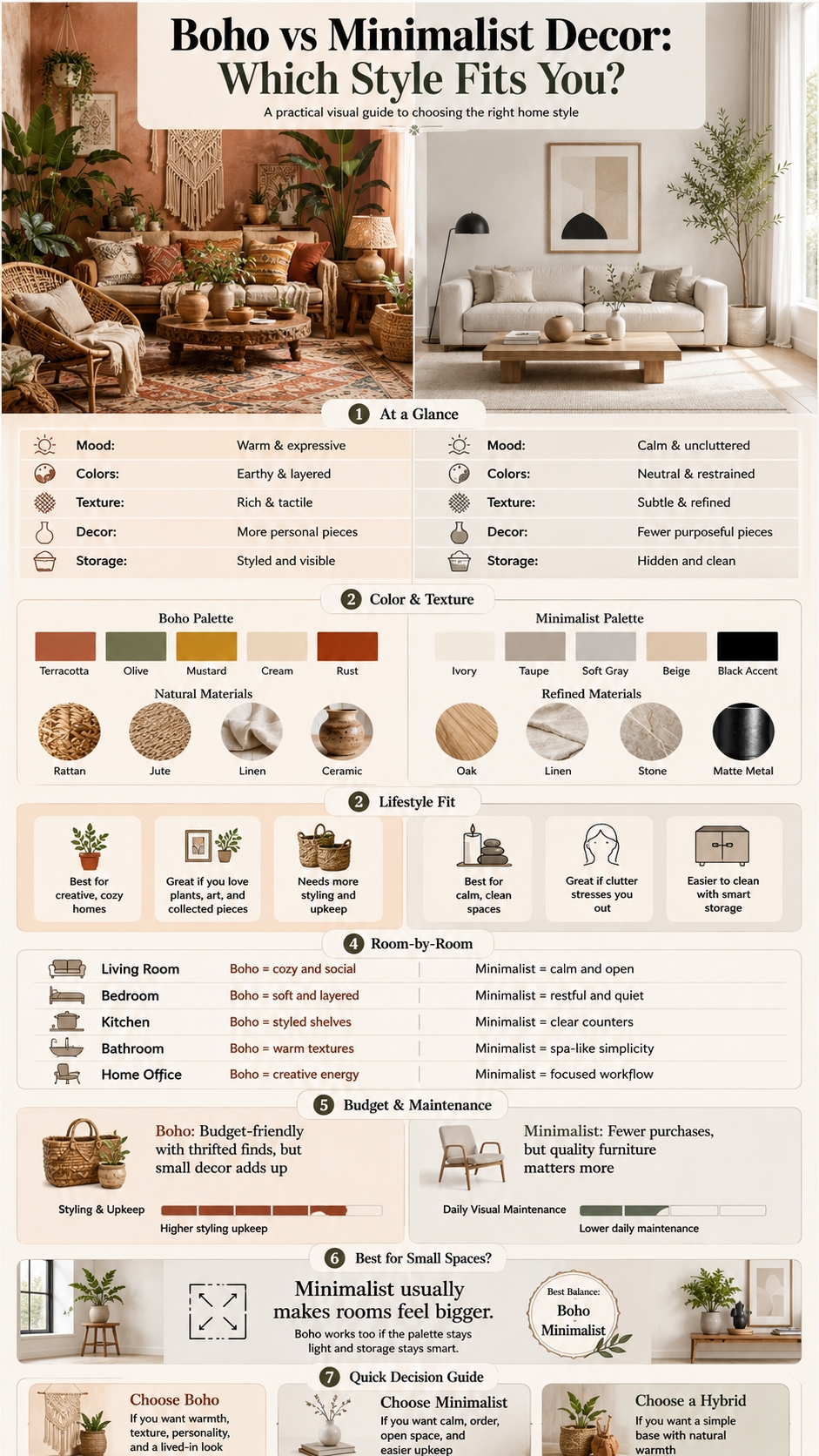
Choosing between boho vs minimalist decor sounds easy until you start saving room ideas. One photo has woven chairs, plants, patterned rugs, and warm lighting. The next has clean walls, soft neutrals, hidden storage, and a sofa that looks like it has never met clutter in its life.
Both styles can look beautiful. Both can also go wrong quickly. Boho can feel cozy and personal, but it may look busy if you keep adding things without a plan. Minimalist decor can feel calm and fresh, but it can also become cold if the room has no texture, warmth, or personality.
The real question is not which style is better. The better question is this: which one fits your daily life?
This guide compares the two styles in a practical way. We’ll look at color, furniture, cost, storage, room types, maintenance, and personality fit. You’ll also see where the two styles overlap, especially through warm minimalism and boho minimalist decor.
What Boho and Minimalist Decor Really Mean
Boho and minimalist decor sit on opposite ends of the design mood board. Boho loves layers, texture, collected pieces, plants, and relaxed character. Minimalism prefers open space, simple forms, function, and fewer objects.
Still, the two styles are not enemies. A boho room can be tidy. A minimalist room can be warm. The difference lies in how much visual detail you want around you every day.
|
Style |
Main Idea |
Best Known For |
|
Boho decor |
Personal, relaxed, layered spaces |
Texture, plants, vintage pieces, warm colors |
|
Minimalist decor |
Simple, calm, functional spaces |
Clean lines, open space, neutral colors |
|
Hybrid style |
Simple base with warm natural details |
Calm rooms with texture and personality |
What Is Boho Decor?
Boho decor, short for bohemian decor, is relaxed, creative, and expressive. It often includes natural materials, layered rugs, cushions, plants, ceramics, books, baskets, and handmade-looking accents.
This style works well for people who want their home to feel lived-in rather than showroom-perfect. It welcomes vintage furniture, travel finds, family pieces, and art that tells a story.
Bohemian interiors are often known for eclectic objects, natural elements, bold colors, vintage furniture, and handmade pieces. The style gives more freedom than many formal design styles.
What Is Minimalist Decor?
Minimalist decor is built around simplicity. It uses fewer pieces, cleaner lines, more open space, and a clear purpose for every item in the room.
A minimalist home does not have to be empty. Good minimalism feels calm, organized, and easy to live in. The best versions use soft textures, natural light, and warm materials so the space does not feel flat.
Minimalist interior design is commonly linked with bare essentials, uncluttered rooms, clean lines, open layouts, functional furniture, and simple color palettes.
Boho vs Minimalist Decor at a Glance
Here is the simplest way to understand boho vs minimalist decor. Boho adds comfort through layers. Minimalism creates comfort through space. One feels collected. The other feels edited.
This section is useful if you want a quick decision before going deeper. But remember, most real homes do not follow one style perfectly. You can take ideas from both and still have a room that feels balanced.
|
Feature |
Boho Decor |
Minimalist Decor |
|
Mood |
Warm, creative, relaxed |
Calm, clean, organized |
|
Color |
Earthy, rich, mixed |
Neutral, soft, restrained |
|
Texture |
High texture |
Controlled texture |
|
Furniture |
Collected, casual, vintage-friendly |
Simple, functional, streamlined |
|
Decor Items |
More visible objects |
Fewer visible objects |
|
Storage |
Baskets, shelves, open styling |
Closed cabinets, hidden storage |
|
Maintenance |
More dusting and editing |
Easier to clean if storage works |
|
Best For |
Cozy, expressive homes |
Calm, clutter-free homes |
The Main Difference Is Visual Energy
Boho rooms have more visual energy. You see layers, shapes, textures, books, art, plants, and personal details.
Minimalist rooms lower visual noise. They use fewer items and give the eye more breathing room. That can make a space feel bigger and calmer.
Which One Feels Better Day to Day?
Ask yourself one simple question. Do you feel happy when your room has many personal details, or do you feel better when surfaces are clear?
Your answer says more than any trend report. A home should support your mood, not fight it.
Color Palette: Warm Layers vs Calm Neutrals
Color is where the two styles first look different. Boho decor often leans into warmth. Minimalist decor usually starts with calm neutrals.
Recent design trend coverage also points toward warmer, earthier interiors. Designers are seeing more interest in olive green, taupe, deep brown, stained woods, muted blues, curves, and character-rich details.
|
Color Area |
Boho Decor |
Minimalist Decor |
|
Base colors |
Cream, beige, clay, tan |
White, ivory, gray, beige |
|
Accent colors |
Rust, mustard, olive, terracotta |
Black, brown, muted green, soft taupe |
|
Mood |
Cozy and expressive |
Quiet and open |
|
Risk |
Too many colors at once |
Too plain without texture |
Boho Color Ideas
Boho decor works beautifully with terracotta, rust, mustard, olive, warm brown, cream, dusty pink, and muted blue. These colors make a room feel relaxed and grounded.
You do not need to use all of them. In fact, you should not. Pick three main colors and repeat them through rugs, pillows, curtains, wall art, and small decor.
Read Also: 12 Closet Organization Hacks That Actually Save Space
Minimalist Color Ideas
Minimalist decor usually works best with a tight color palette. White, ivory, beige, taupe, soft gray, black, and warm wood tones are common choices.
The trick is to avoid making the room feel like a blank page. Add texture through linen, wool, wood, stone, or matte finishes.
The Best Middle Ground
Warm minimalism is a great middle ground. It keeps the calm feeling of minimalism but adds natural texture, soft neutrals, and a more human touch.
This is also why boho minimalist decor has become more appealing. It gives people the clean look they want without making the home feel cold.
Materials and Textures
Texture is the secret weapon in both styles. It makes boho rooms feel rich and makes minimalist rooms feel less empty.
Boho uses more texture at once. Minimalism uses fewer textures but gives them more space to stand out. That is why a single linen sofa or oak table can matter so much in a minimalist room.
|
Material |
Boho Use |
Minimalist Use |
|
Rattan |
Chairs, baskets, lampshades |
One accent piece |
|
Wood |
Mixed tones, carved pieces |
Smooth, simple furniture |
|
Linen |
Bedding, curtains, cushions |
Bedding, sofa covers, curtains |
|
Wool |
Rugs, throws, pillows |
One rug or throw |
|
Ceramic |
Handmade bowls, vases, planters |
One or two sculptural pieces |
|
Stone |
Rustic accents |
Clean counters or decor objects |
Boho Texture Choices
Boho decor loves rattan, jute, cane, bamboo, linen, cotton, wool, macramé, clay, wood, and leather. The room should feel touchable.
A jute rug, a linen sofa, a ceramic vase, and a rattan chair can work together because they share a natural look. The goal is not perfection. The goal is harmony.
Minimalist Texture Choices
Minimalist decor works with wood, stone, linen, wool, leather, glass, concrete, and metal. But it usually uses them in a quieter way.
For example, a minimalist living room might have a linen sofa, a wood coffee table, a wool rug, and one black metal lamp. That may be enough.
Why Texture Matters More Than Decor
Texture can replace clutter. Instead of adding ten small objects to make a room interesting, you can use one textured rug, one warm lamp, and one beautiful chair.
This is especially helpful if you like calm rooms but do not want a cold home.
Furniture Style: Collected vs Streamlined
Furniture decides how the room works. Decor decides how it feels. In boho vs minimalist decor, furniture choices create a big difference in daily comfort.
Boho furniture often looks collected over time. Minimalist furniture usually looks intentional and simple. Neither is better. The right choice depends on your space, routine, and comfort needs.
|
Furniture Area |
Boho Decor |
Minimalist Decor |
|
Sofa |
Soft, relaxed, layered with pillows |
Clean-lined, neutral, simple |
|
Chairs |
Rattan, vintage, accent chairs |
Slim, structured, functional |
|
Tables |
Wood, carved, thrifted, mixed |
Simple, smooth, practical |
|
Storage |
Open shelves, baskets, cabinets |
Closed cabinets, built-ins |
|
Bed |
Layered bedding, wood or cane headboard |
Simple frame, clear bedside area |
Boho Furniture Style
Boho furniture often includes low sofas, vintage chairs, wood coffee tables, rattan seating, poufs, benches, open shelves, and mixed finishes.
The room does not need to match perfectly. Actually, it usually looks better when it does not. But the pieces should still share a mood through color, material, or shape.
Minimalist Furniture Style
Minimalist furniture uses clean lines and practical shapes. Sofas, beds, tables, and cabinets usually have simple forms and little ornament.
Function matters a lot here. Storage beds, modular sofas, slim desks, closed media units, and built-in cabinets can make minimalist decor easier to live with.
What to Ask Before Buying
Before buying any major piece, ask:
- Does it fit the room without crowding it?
- Does it serve a real purpose?
- Is it comfortable enough for daily use?
- Does it match the mood I want?
- Will I still like it in two or three years?
Clutter, Storage, and Maintenance
This is where style meets real life. A room can look great in a photo and still annoy you every morning.
Boho decor usually has more visible items. Minimalist decor hides more things away. That means your storage habits matter as much as your taste.
|
Lifestyle Factor |
Boho Decor |
Minimalist Decor |
|
Daily cleaning |
More items to dust |
Fewer surfaces to clear |
|
Organization |
Needs regular editing |
Needs strong storage |
|
Visual clutter |
Higher risk |
Lower risk |
|
Plant care |
Often more plants |
Usually fewer plants |
|
Best habit |
Rotate and edit decor |
Put items away daily |
Boho and Visible Styling
Boho rooms often show books, plants, baskets, candles, art, pottery, and textiles. This can make the room feel warm and personal.
The problem starts when every shelf, wall, and corner gets filled. A good boho room still needs empty space. Otherwise, cozy becomes crowded.
Minimalism and Hidden Storage
Minimalist decor depends on storage. Clear counters only work if everything has a home.
Closed cabinets, drawer dividers, storage beds, cable boxes, and simple baskets help keep the look clean. Without storage, minimalism becomes a daily struggle.
Which Style Is Easier to Clean?
Minimalist decor is usually easier to clean because there are fewer objects. But it only works if you are willing to put things away.
Boho decor needs more dusting and editing. Plants need care. Rugs need cleaning. Shelves need attention. Still, many people prefer the warmth enough to accept the upkeep.
Budget: Which Style Costs More?
Boho vs minimalist decor can both be affordable or expensive. The final cost depends on how you shop, what you already own, and how fast you want the room finished.
Boho can be budget-friendly because it works well with thrifted finds and slow decorating. Minimalism can save money because you buy fewer things. But high-quality minimalist furniture can cost more because every piece is more visible.
|
Budget Factor |
Boho Decor |
Minimalist Decor |
|
Easy budget wins |
Thrifted furniture, plants, baskets |
Decluttering, fewer purchases |
|
Expensive items |
Rugs, artisan decor, large plants |
Quality sofa, storage, built-ins |
|
Shopping pace |
Easy to build over time |
Better with careful planning |
|
Biggest risk |
Buying too many small items |
Buying cheap pieces that stand out |
When Boho Is Budget-Friendly
Boho decor is friendly to secondhand shopping. A vintage table, thrifted chair, handmade cushion, or flea market lamp can add charm.
You can also build the look slowly. Start with a rug, add plants, bring in baskets, then layer art and textiles.
When Boho Gets Expensive
Boho gets expensive when you start buying large rugs, handmade ceramics, artisan lighting, imported textiles, and mature plants.
The small items also add up. Ten cheap accessories can cost more than one strong piece that actually improves the room.
When Minimalism Is Budget-Friendly
Minimalism can be affordable because the first step is not shopping. It is editing. Removing clutter can change the room before you spend anything.
A simple palette also helps. You can update a room with better lighting, clean storage, and fewer visible objects.
When Minimalism Gets Expensive
Minimalism exposes quality. If the sofa is uncomfortable, the storage is poor, or the lighting is harsh, there is nowhere to hide.
That is why many minimalist rooms rely on better materials, good furniture proportions, and smart storage. Those things can cost more upfront.
Boho vs Minimalist Decor by Room
Different rooms need different answers. A boho living room may feel welcoming, while a minimalist home office may help you focus. You do not need to use one style everywhere.
This is also where hybrid styling works well. You may want a calm minimalist bedroom and a warmer boho living room. That is completely fine.
|
Room |
Boho Works Well When |
Minimalist Works Well When |
|
Living room |
You host, relax, and want warmth |
You want calm and easy cleaning |
|
Bedroom |
You like soft layers and cozy bedding |
You need a peaceful sleep space |
|
Kitchen |
You enjoy open shelves and ceramics |
You prefer clear counters |
|
Bathroom |
You want warmth and texture |
You want a spa-like clean look |
|
Home office |
You like creative energy |
You need focus and fewer distractions |
Living Room
A boho living room can use a patterned rug, rattan chair, plants, mixed pillows, wood tables, and warm lamps. It feels relaxed and social.
A minimalist living room may use a neutral sofa, one large artwork, closed media storage, a simple coffee table, and soft curtains. It feels calm and open.
If you have kids or pets, choose washable fabrics in either style. A beautiful room that cannot handle real life will not stay beautiful for long.
Bedroom
Boho bedrooms work well with linen bedding, woven wall art, wood furniture, plants, and soft layered lighting. The goal is comfort.
Minimalist bedrooms work well with clear nightstands, simple bedding, hidden storage, neutral walls, and low visual noise. This can support better rest for people who feel stressed by clutter.
Keep the bedroom less busy than the living room, even if you love boho style.
Kitchen and Dining Area
Boho kitchens often use open shelves, ceramics, wooden boards, woven pendants, plants, and warm metals. This look works best if you enjoy visible styling.
Minimalist kitchens focus on clear counters, simple cabinets, matching dinnerware, hidden appliances, and clean lighting.
A good compromise is simple cabinetry with a few warm wood, ceramic, or woven accents.
Bathroom
A boho bathroom can feel warmer with baskets, textured towels, a small plant, wood accents, and a warm mirror frame.
A minimalist bathroom usually feels cleaner with closed storage, simple towels, neutral colors, and limited counter items.
Bathrooms are small, so do not overdecorate them. One or two strong details are enough.
Home Office
Boho offices can feel creative with art, plants, warm lamps, and a wooden desk. This works well for creative work.
Minimalist offices often work better for focus. Clear desks, hidden cables, closed storage, and simple lighting reduce distractions.
For most people, the best home office is closer to minimalism with one or two personal boho touches.
Which Style Works Better for Small Spaces?
Small spaces need discipline. That does not mean they must be boring. It means every piece has to work harder.
Minimalist decor often makes a small room feel larger because it keeps the floor visible and limits visual clutter. Boho can also work in a small room, but it needs a tighter color palette and smarter storage.
|
Small-Space Need |
Better Choice |
Why |
|
Make room feel bigger |
Minimalist decor |
Fewer objects and cleaner sightlines |
|
Make room feel cozy |
Boho decor |
More texture and warmth |
|
Hide daily items |
Minimalist decor |
Closed storage helps |
|
Add personality |
Boho decor |
Art, textiles, and plants help |
|
Balance both |
Boho minimalist decor |
Warmth without overcrowding |
Small-Space Boho Tips
Use one main rug instead of several competing rugs. Keep the walls light. Choose slim wood or rattan furniture.
Use baskets for hidden storage. Hang plants instead of placing too many on the floor. Repeat the same colors so the room feels connected.
Small-Space Minimalist Tips
Choose furniture with storage. Keep floors as open as possible. Use wall-mounted shelves or closed cabinets.
Avoid filling the room with tiny decor pieces. One large artwork often looks better than many small frames.
Best Choice for Apartments
For apartments, boho minimalist decor often works best. It gives you warmth, but it does not swallow the room.
Think neutral walls, simple furniture, woven storage, one rug, a few plants, and warm lighting.
Can You Mix Boho and Minimalist Decor?
Yes, and many people should. Strict boho can feel too busy. Strict minimalism can feel too bare. A hybrid style gives you the best of both.
This approach is often called boho minimalist decor, warm minimalism, or modern organic style. It keeps the room simple but adds natural texture and softer details.
|
Design Layer |
What to Do |
|
Base |
Keep walls, large furniture, and storage simple |
|
Color |
Use cream, sand, taupe, beige, brown, and olive |
|
Texture |
Add jute, linen, wool, clay, rattan, and wood |
|
Decor |
Choose fewer pieces with more meaning |
|
Plants |
Use greenery, but avoid overcrowding |
|
Pattern |
Limit patterns to one or two areas |
|
Lighting |
Use warm lamps, sconces, or woven shades |
Start With a Minimalist Base
Use simple furniture, clear surfaces, and a calm color palette first. This gives the room structure.
Then add boho warmth through a woven rug, linen curtains, wood furniture, a ceramic vase, or a plant.
Add Boho Details Slowly
The easiest mistake is adding too much at once. Start with texture before pattern.
For example, use a jute rug, a warm throw, one rattan item, and a plant. If the room still feels too plain, add art or cushions.
What to Avoid
Avoid too many small accessories. Avoid five different patterns in one room. Avoid cold white walls with no texture.
The goal is not half boho and half minimalism. The goal is a calm room with soul.
Boho vs Minimalist Decor: Which Style Fits Your Personality?
Style is personal. A room is not just a photo. It affects how you feel when you wake up, work, rest, cook, and host people.
Use this section as a quick self-check. Your habits matter more than what is trending online.
|
You Might Prefer |
If You Like |
|
Boho decor |
Warmth, art, plants, books, layered textiles |
|
Minimalist decor |
Order, clear space, simple routines, calm colors |
|
Hybrid style |
Warm neutrals, natural texture, simple rooms with character |
Choose Boho Decor If You Like Personality
Boho is a strong fit if you enjoy collected pieces, creative corners, plants, wall art, books, handmade objects, and cozy rooms.
It also works well if you like changing your space often. You can update cushions, throws, rugs, and wall art without replacing everything.
Choose Minimalist Decor If You Need Calm
Minimalism is a strong fit if clutter stresses you out. It also helps if you prefer easy cleaning, open surfaces, and simple routines.
This style can be especially helpful in bedrooms, small apartments, and home offices.
Choose Hybrid Decor If You Want Balance
A hybrid style works if you like clean rooms but still want warmth. It is also a good choice if you live with someone who has different taste.
One person gets simplicity. The other gets texture and personality. That is a pretty fair deal.
Common Mistakes to Avoid
Both styles can fail when people copy pictures without thinking about real life. A room must work for your daily habits, not just your Pinterest board.
The most common mistakes are simple. Boho rooms get overloaded. Minimalist rooms get under-designed. Both problems are fixable.
|
Style |
Common Mistake |
Better Choice |
|
Boho |
Too many patterns |
Repeat a clear color palette |
|
Boho |
Too many small objects |
Use fewer, larger pieces |
|
Boho |
No storage plan |
Add baskets and cabinets |
|
Minimalist |
Room feels cold |
Add wood, linen, wool, and warm light |
|
Minimalist |
Not enough storage |
Use closed cabinets |
|
Minimalist |
No personality |
Add one or two meaningful pieces |
Boho Mistakes
The biggest boho mistake is adding everything you like. A room can have personality without carrying every texture, pattern, and color at once.
Use a clear base color. Repeat materials. Leave some empty space. Let your best pieces stand out.
Minimalist Mistakes
The biggest minimalist mistake is removing too much. A room with no warmth, no art, and no texture can feel unfinished.
Minimalist decor still needs comfort. Use soft lighting, natural materials, and furniture that feels good, not just furniture that photographs well.
The shared mistake is ignoring function. If your storage is bad, your sofa is uncomfortable, or your lighting is harsh, the style will not save the room.
Start with how you live. Then decorate around that.
Simple Starter Plans for Each Style
You do not need to redesign your whole home in one weekend. Start with one room and make small, smart changes.
The best starting point is usually the room you use most. For many people, that means the living room, bedroom, or home office.
|
Style |
First Step |
Best Starter Item |
|
Boho |
Add warmth and texture |
Rug, plant, basket, lamp |
|
Minimalist |
Declutter and simplify |
Storage cabinet, simple lamp |
|
Hybrid |
Keep the base calm |
Natural rug, wood table, linen curtains |
5-Step Boho Starter Plan
- Pick a warm base color.
- Add one textured rug.
- Bring in wood, rattan, or woven storage.
- Add plants or botanical details.
- Finish with personal art and soft lighting.
This gives you the boho feeling without making the room chaotic.
5-Step Minimalist Starter Plan
- Remove items you do not use.
- Choose two or three main colors.
- Add closed storage.
- Keep furniture simple and useful.
- Add warmth with texture and lighting.
This makes the room cleaner without making it lifeless.
5-Step Hybrid Starter Plan
- Keep large furniture simple.
- Use warm neutral colors.
- Add one natural fiber rug.
- Choose two or three textured accents.
- Keep surfaces edited but not empty.
This is the safest option for many modern homes.
Final Thoughts
The best choice in boho vs minimalist decor depends on how you want your home to feel. Boho is better if you want warmth, layers, plants, art, texture, and a relaxed mood. Minimalist decor is better if you want calm, order, open space, and easier cleaning.
But you do not have to choose one side forever. Many homes look better when they borrow from both. A simple sofa can sit on a jute rug. A clean bedroom can still have linen bedding and warm wood. A minimalist office can still have one beautiful plant.
Start with your lifestyle. Then choose the style that supports it. Your home does not need to impress strangers online. It needs to feel good when you walk in tired, drop your keys, and finally breathe.
FAQs About Boho vs Minimalist Decor
|
Question |
Quick Answer |
|
Can boho decor be simple? |
Yes, if you control color, pattern, and decor quantity. |
|
Is minimalism still popular? |
Yes, but warmer and softer versions are gaining attention. |
|
Can renters use both styles? |
Yes, both work well with removable and flexible decor. |
|
Which style is better for families? |
Either can work with smart storage and durable materials. |
Is boho decor just another word for messy decor?
No. Boho decor should feel relaxed, not messy. The difference is editing. A good boho room has layers, but it also has balance, storage, and a clear color story.
Can minimalist decor work in a family home?
Yes. Minimalist decor can work very well for families if storage is realistic. Closed cabinets, washable fabrics, baskets, and durable furniture make the style easier to maintain.
Is boho minimalist decor good for renters?
Yes. It is one of the easiest styles for renters. You can use rugs, curtains, plants, baskets, removable wall art, and portable lighting without changing the structure of the home.
Which style is better for people who work from home?
Minimalist decor is usually better for focus because it reduces visual distraction. But a few boho touches, such as plants, warm lighting, or textured curtains, can make the workspace feel less sterile.
Can I change from boho to minimalist without buying new furniture?
Yes. Start by removing extra accessories, simplifying your color palette, clearing surfaces, and using closed storage. Keep the best natural textures and personal pieces, then remove the rest.
Which style looks more timeless?
Minimalist decor can look timeless because it uses simple shapes and fewer trendy objects. Boho can also age well if you focus on natural materials, handmade pieces, vintage furniture, and warm colors instead of fast decor trends.