
Let’s be honest, most of us don’t have a sprawling farm or even a decent-sized backyard. But that doesn’t mean you have to settle for those flavorless, rubbery tomatoes from the grocery store. In 2026, the tech and the seeds have finally caught up to our urban reality. You can absolutely grow tomatoes in containers and end up with a harvest so big your neighbors will be knocking on your door for samples.
This guide is all about making that happen on your balcony, patio, or even a sunny fire escape. We are moving past basic “potting and praying” and into a more intentional, high-yield way of gardening.
Why Container Gardening is Dominating in 2026
The shift toward growing our own food has hit a fever pitch this year. With urban heat islands making traditional gardening tougher and grocery prices staying high, people are turning to their porches. We are seeing a massive trend in smart gardening where small-space efficiency is the top priority. Growing your own food isn’t just a hobby anymore; it is a way to ensure you are eating clean, nutrient-dense produce without the carbon footprint of shipping.
|
Feature |
Why It Matters in 2026 |
|
Space Efficiency |
You can grow vertically in areas as small as 2 square feet. |
|
Climate Control |
Containers can be moved to avoid extreme heat or unexpected frost. |
|
Tech Integration |
Smart sensors now monitor soil moisture in real-time via smartphone. |
|
Pest Management |
Elevation keeps many ground-dwelling bugs away from your plants. |
The Rise of the Urban Micro-Farm
Micro-farming is the buzzword for 2026. It involves using every available inch of a balcony to create a high-output ecosystem. People are no longer just putting one plant in a pot; they are creating “layered” containers that maximize yield.
Automation and the Modern Gardener
You don’t need to be home all day to keep your plants alive. New automated drip systems and solar-powered sensors have made it possible for even the busiest professionals to maintain a thriving garden. These tools handle the boring stuff so you can just enjoy the harvest.
Choosing the Best Tomato Varieties for Containers
The biggest mistake people make is buying the first seedling they see at the big-box store. If you want to grow tomatoes in containers successfully, you have to pick the right “engine” for your pot. Some tomatoes want to grow twelve feet tall, which is a nightmare in a container. Others are bred specifically to stay small and bushy while still pumping out full-sized fruit.
|
Variety Category |
Growth Habit |
Best For |
|
Determinate |
Bushy, stops at a certain height |
Small balconies and limited support. |
|
Indeterminate |
Vining, grows until frost |
Large pots with tall trellises. |
|
Dwarf Tomato Project |
Stocky, huge fruit on short stems |
Maximum flavor in minimum space. |
|
Micro-Dwarf |
Stays under 12 inches |
Windowsills and small tabletops. |
Determinate vs. Indeterminate Tomatoes
Determinate tomatoes are like a sprint; they grow to a set size, produce all their fruit at once, and then they are done. This is great if you want to do a big batch of salsa. Indeterminate varieties are more like a marathon. They keep growing and fruiting until the cold weather kills them. For containers, determinate types are usually the “easy mode” option.
Top Container Tomato Varieties for 2026
This year, the Honey Bee Cherry is winning awards for its sweetness and resilience. If you want a slicer for sandwiches, look for Tasmanian Chocolate from the Dwarf Tomato Project. It gives you that rich, smoky heirloom flavor on a plant that won’t take over your entire patio.
Selecting the Perfect Container
Your pot is the entire world for your tomato plant. If the pot is too small, the plant will get “root-bound,” which is basically the plant version of claustrophobia. In 2026, we have moved beyond heavy clay pots toward materials that help the roots breathe. You need something that balances drainage with moisture retention.
|
Container Material |
Pros |
Cons |
|
Fabric Grow Bags |
Excellent aeration, prevents root circling |
Dries out faster in high heat. |
|
Self-Watering Pots |
Consistent moisture, great for travelers |
Can be expensive and heavy. |
|
Recycled Plastic |
Lightweight and holds water well |
Can overheat roots if not shaded. |
|
Terracotta |
Classic look, porous |
Very heavy and prone to cracking. |
Size and Depth Requirements
Size is the one area where you shouldn’t compromise. For a standard tomato plant, you need at least 5 to 10 gallons of space. A 5-gallon bucket is the classic DIY choice, but a 10-gallon fabric bag will give you a much happier plant. Depth matters because tomatoes send out deep “anchor” roots to keep themselves steady.
Material Choices: Fabric vs. Plastic
Fabric pots are the gold standard right now. They “air-prune” the roots, which means when a root hits the side, it stops growing and branches out instead of circling the pot. Plastic is still useful if you live in a very dry climate, as it keeps the water from evaporating through the sides of the container.
The 2026 Trend: Upside-Down Tomato Planters
Hanging your tomatoes upside down is making a comeback in 2026. It saves floor space and keeps the fruit away from squirrels. However, it requires very frequent watering because gravity pulls all the moisture away from the roots quickly.
The Ultimate Soil Recipe for Container Tomatoes
If you use dirt from your backyard, your container garden will likely fail. Backyard soil is too heavy; it packs down like a brick and smothers the roots. When you grow tomatoes in containers, you need a “soilless” potting mix. This mix is designed to be fluffy, light, and full of air pockets so the roots can grow fast.
|
Ingredient |
Purpose |
Ratio Recommendation |
|
Coconut Coir or Peat |
Moisture retention |
40% |
|
Perlite or Pumice |
Airflow and drainage |
30% |
|
High-Quality Compost |
Natural nutrients and microbes |
20% |
|
Worm Castings |
“Black gold” for growth boost |
10% |
Why You Should Never Use Garden Soil
Garden soil contains clay, pests, and fungi that thrive in the ground but become toxic in a pot. It doesn’t drain well enough for a container. You want a mix that feels like a sponge—it holds water but lets the excess run out the bottom immediately.
Building a Nutrient-Dense Potting Mix
Start with a base of coconut coir, which is more sustainable than peat moss. Add plenty of perlite—those little white “popcorn” looking rocks—to make sure the soil doesn’t get compacted. Finally, fold in some compost to give the plant a slow-release buffet of nutrients.
The Role of Fertilizers and Organic Amendments
Tomatoes are “heavy feeders.” They eat a lot. Because you water containers frequently, you are constantly washing nutrients out of the soil. You’ll need to add a balanced, organic fertilizer every two weeks once the plant starts flowering to keep it from running out of gas.
Step-by-Step Guide to Planting Your Tomatoes
Planting a tomato isn’t like planting a flower. There is a specific “deep planting” trick that every pro uses to get a massive harvest. In 2026, we are also timing our planting based on hyper-local weather data rather than just general “zones.” The goal is to get the plant established before the summer heat waves hit.
|
Step |
Action |
Why It Works |
|
1 |
Harden off the seedling |
Gradually acclaims the plant to sun/wind. |
|
2 |
Remove bottom leaves |
Prepares the stem for deep burial. |
|
3 |
Plant deep |
Grows roots all along the buried stem. |
|
4 |
Water and Mulch |
Settles the soil and locks in moisture. |
Timing Your Planting
Don’t rush it. Tomatoes hate the cold. If the nighttime temperature is still dipping below 50 degrees, keep them inside. In 2026, many gardeners are using “wall-o-water” teepees to warm the soil early, but the safest bet is waiting for consistent warmth.
The Deep Planting Method
This is the secret sauce. You should bury about two-thirds of the plant underground. It sounds crazy, but those little hairs on the stem will turn into roots. A deeper root system means a plant that can survive a hot day without wilting.
Mulching for Moisture Retention
Once your tomato is in the pot, cover the soil with straw or wood chips. This stops the sun from baking the soil surface. It also prevents soil from splashing onto the leaves, which is how most tomato diseases start.
Watering and Sunlight: The Keys to a Heavy Harvest
You can have the best soil and the most expensive seeds, but if you mess up the water and sun, it’s game over. To grow tomatoes in containers, you have to realize that the pot is an island. It gets hotter and drier than the ground. Managing these two factors is where the “smart” in smart gardening really comes into play.
|
Resource |
Minimum Requirement |
Pro Tip for 2026 |
|
Sunlight |
6–8 hours of direct sun |
Use a reflective Mylar sheet to bounce light. |
|
Water |
Consistent moisture (not soaked) |
Water early in the morning, never at night. |
|
Airflow |
Good breeze |
Don’t crowd your pots together. |
|
Temperature |
65°F to 85°F |
Use shade cloth if it hits over 95°F. |
Sunlight Requirements
Tomatoes are solar-powered. They need at least six hours of direct, “squint-your-eyes” bright sunlight. If you have a north-facing balcony with lots of shade, you might struggle. However, in 2026, high-efficiency LED grow lights have become cheap enough to supplement outdoor sun on cloudy days.
Watering Best Practices
The number one killer of container tomatoes is inconsistent watering. If the soil goes from bone-dry to soaking wet, the fruit will crack. You want the soil to feel like a wrung-out sponge at all times. Always water the soil, not the leaves, to keep fungus away.
Read Also: 12 Easy Vegetables to Grow for Beginners in 2026
Utilizing 2026 Smart Gardening Tech for Irrigation
This year, we have app-controlled valves that connect to your garden hose. They check the local weather forecast—if it’s going to rain, they skip the watering. If a heatwave is coming, they give the plants an extra drink. This kind of tech makes it much easier to grow tomatoes in containers without the stress.
Support Structures and Pruning Techniques
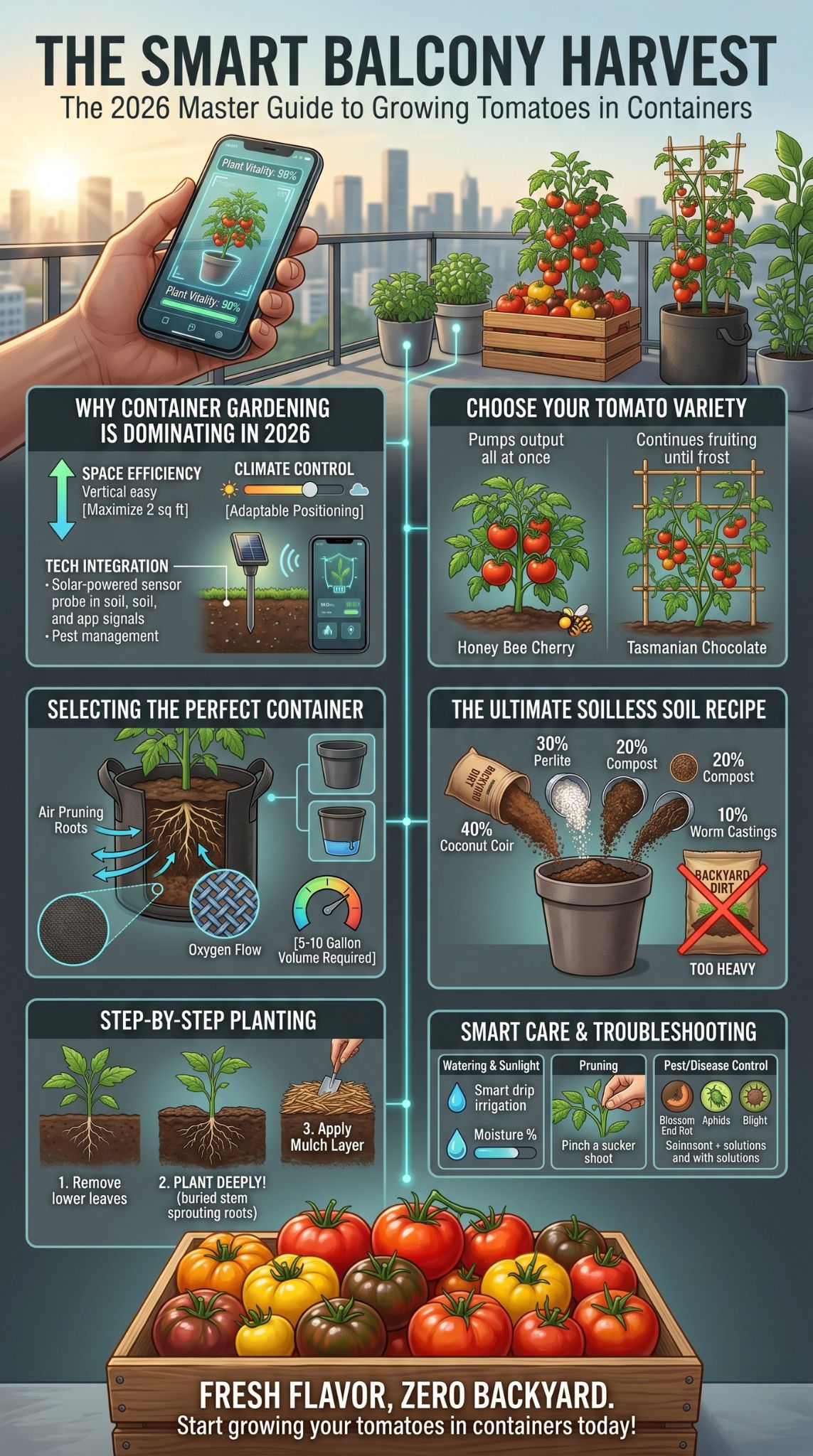
A tomato plant is basically a vine that wants to collapse under its own weight. If you don’t support it, the fruit will sit on the soil and rot. Pruning is also vital because it tells the plant to stop making “useless” leaves and start making “delicious” tomatoes.
|
Support Type |
Best Variety Match |
Durability |
|
Wire Cage |
Determinate / Bushy types |
Medium – can tip in wind. |
|
Bamboo Stakes |
Single-stem Indeterminates |
High – very stable if tied well. |
|
Trellis / Netting |
Vining Cherry tomatoes |
High – allows for vertical growth. |
|
Heavy-Duty Spiral |
Large Beefsteaks |
Very High – supports heavy fruit. |
Cages, Stakes, and Trellises
Put your support in the pot the day you plant. If you wait until the plant is big, you will end up stabbing the roots when you try to force the stake into the soil. For 2026, foldable metal cages are popular because they are easy to store in an apartment during the winter.
How and When to Prune Container Tomatoes
If you see a tiny “sucker” shoot growing in the armpit of a branch, pinch it off. This keeps the plant focused on one or two main stems. It also improves airflow, which is the best way to prevent disease. However, don’t prune determinate plants too much, or you’ll accidentally cut off your future harvest.
Companion Planting in Containers
In 2026, we don’t just grow one thing in a pot. We create a “guild.” This is the idea that some plants help each other grow better. By adding herbs or flowers to your tomato container, you can naturally repel pests and even make your tomatoes taste better.
|
Companion Plant |
Benefit to Tomato |
Planting Note |
|
Basil |
Repels flies/mosquitoes, improves flavor |
Plant at the edge of the pot. |
|
Marigolds |
Deters soil nematodes and aphids |
Bright flowers attract “good” bugs. |
|
Chives |
Wards off spider mites |
Low-profile and easy to maintain. |
|
Nasturtiums |
Acts as a “trap crop” for aphids |
Edible flowers are a bonus. |
Best Companions for Tomatoes
Basil is the classic partner. They grow well together because they both love the same amount of water and sun. Plus, there is a theory that the volatile oils in basil act as a natural pest repellent for the tomato plant.
Plants to Avoid
Keep your tomatoes away from potatoes and fennel. Potatoes are in the same family and can pass diseases back and forth. Fennel is just a “bully” in the garden—it releases chemicals into the soil that can stunt the growth of almost anything nearby.
Troubleshooting Common Pests and Diseases
Even the best gardeners deal with problems. When you grow tomatoes in containers, you have to be a bit of a detective. Most issues show up on the leaves first. If you catch them early, you can usually save the plant with organic methods.
|
Problem |
Symptom |
2026 Solution |
|
Blossom End Rot |
Black leathery bottom on fruit |
Fix watering and add liquid calcium. |
|
Aphids |
Tiny bugs on new growth |
Blast with water or use Neem oil. |
|
Tomato Hornworm |
Giant green caterpillar |
Hand-pick and move to a wild area. |
|
Early Blight |
Yellow spots with “target” rings |
Remove lower leaves for airflow. |
Blossom End Rot
This isn’t a disease; it’s a nutrient delivery problem. It usually happens because the watering is inconsistent, so the plant can’t move calcium to the fruit. If you see this, don’t panic. Fix your watering schedule and the next round of tomatoes should be fine.
Tomato Hornworms and Aphids
Hornworms are the stuff of nightmares—they can eat an entire plant in a night. Luckily, they are big and easy to see. Aphids are smaller but can be handled with a simple spray of soapy water. In 2026, many people are buying ladybugs online to act as a “security force” for their balcony.
Blight and Fungal Issues
Fungus loves wet leaves and stagnant air. This is why we prune the bottom leaves and use mulch. If you see leaves turning brown and crispy, cut them off immediately and wash your hands so you don’t spread the spores to the rest of the garden.
Harvesting and Storing Your Tomatoes
The moment of truth! Harvesting is more of an art than a science. In 2026, we are learning more about the “breaker stage,” which is the point where a tomato starts to turn color. You don’t actually have to leave it on the vine until it’s fully red to get the best flavor.
|
Stage |
Appearance |
Best Action |
|
Green |
Hard and solid green |
Leave on vine (unless frost is coming). |
|
Breaker |
First flush of pink/orange |
Safe to harvest and ripen indoors. |
|
Fully Ripe |
Deep color, slightly soft |
Harvest and eat immediately. |
|
Overripe |
Very soft, skin may crack |
Use for sauce or seeds. |
Signs of Peak Ripeness
A ripe tomato should feel heavy for its size and have a slight “give” when you press it. It should also smell like a tomato right at the stem. If it’s rock hard, it’s not ready. If it’s mushy, you waited a day too long.
Proper Storage Techniques
Never, ever put your homegrown tomatoes in the fridge. The cold kills the enzymes that create that amazing flavor, and it makes the texture mealy. Keep them on the counter, away from direct sun, and eat them within a few days. If you have too many, you can freeze them whole for winter stews.
Final Thoughts
Learning how to grow tomatoes in containers is one of the most useful skills you can pick up in 2026. It’s about more than just food; it’s about the satisfaction of watching something grow from a tiny seed into a heavy, fruit-laden plant. Even if you only have a small space, you can achieve amazing results by picking the right variety, using high-quality soil, and staying consistent with your watering. The tech we have today makes it easier than ever, but at the end of the day, it’s still about that connection between you and the soil. So, grab a pot, find a sunny spot, and get started. There is nothing quite like the taste of a sun-warmed tomato you grew yourself.
FAQs
Can I reuse my potting soil from last year?
It is risky. Soil wears out and can harbor diseases. If you must reuse it, mix in at least 50% fresh compost and a handful of organic fertilizer to “recharge” it. However, if your plants were sick last year, toss the soil and start fresh.
Do I need to worry about bees for my balcony tomatoes?
Tomatoes are self-pollinating, meaning the wind is usually enough to do the job. However, having bees around helps a lot. If you are on a high-floor balcony with no wind or bugs, give the flowering stems a gentle shake once a day to help the pollen move.
My tomatoes are cracking at the top. Why?
This is almost always due to a sudden surge in water after a dry spell. The inside of the tomato grows faster than the skin can stretch. To avoid this, keep your moisture levels steady and harvest fruit as soon as they reach the “breaker” stage if heavy rain is in the forecast.
Is it okay to use tap water for my plants?
Usually, yes. However, if your city uses a lot of chlorine, you might want to let the water sit in a bucket overnight before using it. This allows the chlorine to evaporate, making it gentler on the beneficial microbes in your soil.