
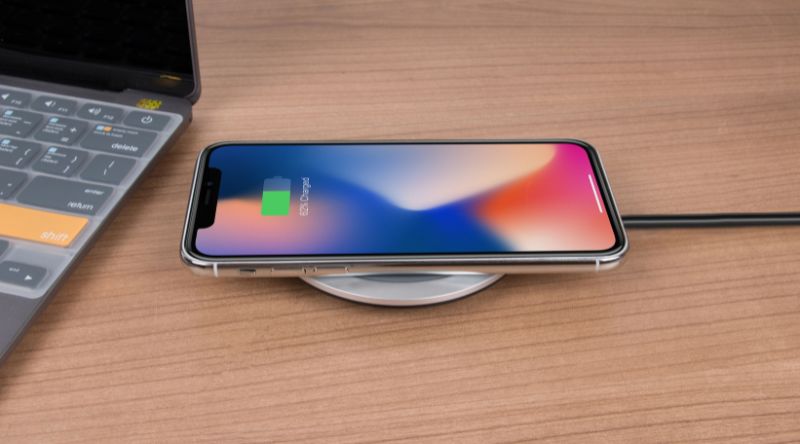
You drop your smartphone onto a sleek plastic pad, and it immediately starts charging. No cables, no fumbling in the dark, no worn-out charging ports. It feels like magic, but it is pure physics. Cutting the cord is no longer a futuristic dream.
From electric toothbrushes to massive electric vehicle charging pads, cutting the cord is changing how we interact with machines. But what happens in that invisible space between the transmitter and your device? How does wireless power transfer actually work? At its core, this technology relies on electromagnetism to move electrical energy across an air gap. Instead of forcing electrons through a copper wire, we use magnetic fields to bridge the distance. Let us unpack the exact mechanics behind this invisible power grid and look at the distinct technologies making it happen.
Why This Topic Matters
We live in a world tethered by wires. The average household contains dozens of charging cables, brick adapters, and power strips. This setup creates clutter, consumes resources, and introduces points of failure. Worn cables pose fire hazards, and broken ports send perfectly good electronics to landfills.
Wireless power changes the game. By removing physical connectors, we create completely sealed, waterproof devices. It allows medical implants to recharge safely through human skin. In the industrial sector, it keeps automated robots running 24/7 without human intervention. Understanding this technology lets us see where consumer tech, transport, and infrastructure are heading next.
Overview: The Core Mechanisms of Wireless Power
| Technology Type | Effective Range | Primary Use Case | Efficiency Level |
| Magnetic Induction | Millimeters (Tight contact) | Smartphones, smartwatches, toothbrushes | High (70% – 85%) |
| Magnetic Resonance | Centimeters to Decimeters | Laptops, multiple devices, EV charging | Medium to High (60% – 80%) |
| Radio Frequency (RF) | Meters (Far-field) | IoT sensors, smart home trackers | Low (Under 10%) |
| Laser/Optical | Kilometers (Line of sight) | Aerospace, military, drones | Low to Medium (15% – 30%) |
Top 4 Technologies Powering the Wireless Revolution
Item #1: Magnetic Induction (The Qi Standard)
Magnetic induction is the technology inside your current smartphone charging pad. It requires two copper coils placed in close proximity. The transmitter coil sits inside the charging pad, while the receiver coil lives inside your phone.
When you plug the pad into the wall, alternating current (AC) flows through the transmitter coil. This current creates a dynamic, continuously fluctuating magnetic field around the pad. When you place your phone directly on top, this moving magnetic field passes through the phone’s internal coil. Through a process called electromagnetic induction, the moving field forces electrons in the phone’s coil to move, creating a new electrical current. A built-in rectifier converts this AC power back into direct current (DC) to fill your battery.
-
Key Advantage: Highly efficient when perfectly aligned.
-
Real-World Example: Apple MagSafe and generic Qi wireless chargers.
-
Pro-Tip: If your phone gets hot on a wireless pad, the coils are misaligned, forcing the system to work harder and waste energy as heat.
| Metric | Details |
| Optimal Distance | 2 mm to 5 mm |
| Alignment Sensitivity | High (Requires precise placement) |
| Common Frequency Range | 87 kHz to 205 kHz |
Item #2: Magnetic Resonant Coupling
Magnetic resonance builds on induction but frees you from strict alignment constraints. Instead of requiring tight contact, it allows devices to charge over longer distances. It works by tuning both the transmitter and receiver coils to vibrate at the exact same magnetic frequency.
Think of it like a tuning fork. If you strike one tuning fork, another fork of the same size nearby will start vibrating in harmony. In resonant transfer, the power source creates a magnetic field that oscillates at a highly specific frequency. The receiving device, tuned to that exact same frequency, absorbs energy from the field while ignoring surrounding objects. This allows a single charging pad hidden under a wooden desk to power a laptop, mouse, and phone simultaneously, even through several inches of wood.
-
Key Advantage: Allows positional freedom and multi-device charging.
-
Real-World Example: Under-counter kitchen chargers and automated guided vehicles (AGVs) in factories.
-
Pro-Tip: Resonant charging allows for spatial freedom, meaning you can place your device down casually without checking for a charging icon.
| Metric | Details |
| Optimal Distance | 1 cm to 30 cm |
| Alignment Sensitivity | Low (Works through surfaces and angles) |
| Common Frequency Range | 6.78 MHz |
Item #3: Radio Frequency (RF) Energy Harvesting
RF power transfer operates in the far-field zone. Instead of using localized magnetic fields, it transmits power using radio waves, similar to how a Wi-Fi router transmits data. A dedicated transmitter broadcasts RF energy into an environment, and specialized antennas capture it.
A tiny component called a “rectenna” (rectifying antenna) catches the radio waves and converts them straight into usable DC electricity. Because radio waves disperse quickly over distance according to the inverse-square law, the amount of power received far away is incredibly small. However, it provides just enough continuous trickle power to keep ultra-low-power devices running indefinitely without a battery change.
-
Key Advantage: True long-range power delivery without wires.
-
Real-World Example: Retail electronic shelf labels and wireless IoT temperature sensors.
-
Pro-Tip: RF energy harvesting is perfect for hard-to-reach industrial sensors where swapping batteries is costly or dangerous.
| Metric | Details |
| Optimal Distance | 1 meter to 10+ meters |
| Alignment Sensitivity | None (Omnidirectional or beamformed) |
| Power Output Cap | Milliwatts to Microwatts |
Item #4: Infrared and Laser Power Beaming
Laser power beaming uses optical frequencies to send energy across vast distances. A transmitter generates a highly concentrated beam of light—usually infrared or laser light—and aims it precisely at a target.
The receiving device features a specialized photovoltaic cell, much like a solar panel tailored to a specific wavelength of light. When the laser hits the panel, the photons knock electrons free, creating electricity. Because lasers do not spread out like radio waves, they can maintain a tight beam over kilometers, transferring significant amounts of energy over long distances, provided there is a clear line of sight.
-
Key Advantage: Extreme distance capabilities.
-
Real-World Example: Powering military drones mid-flight from the ground or sending power to satellites.
-
Pro-Tip: Advanced laser systems include automated safety shut-offs that instantly kill the beam if a bird or human hand interrupts the path.
| Metric | Details |
| Optimal Distance | Hundreds of meters to kilometers |
| Alignment Sensitivity | Extreme (Requires strict line-of-sight tracking) |
| Safety Mechanisms | Interlocking safety rings and radar tracking |
How Does Wireless Power Transfer Actually Work? The Physics Broken Down
To understand the core mechanics without getting lost in textbook jargon, think of the system as a three-part chain: Generation, Transmission, and Reception.
[Wall Outlet / Source] ──> [Transmitter Circuit & Coil] ──> (Invisible Magnetic Field) ──> [Receiver Coil & Rectifier] ──> [Battery]
-
Converting the Source: Wall power comes out as 50Hz or 60Hz alternating current. The transmitter base takes this power and steps up the frequency drastically using internal circuitry. High frequencies make energy transfer across air gaps far more efficient.
-
Creating the Field: As this high-frequency current races through the transmitter coil, it creates an expanding and collapsing magnetic field.
-
Bridging the Gap: The magnetic field passes through the air gap. If a compatible receiver coil enters this zone, the magnetic flux lines cut across the copper wire loops.
-
Catching the Current: The movement of the magnetic field forces the electrons inside the receiver coil to flow, generating an alternating current.
-
Smoothing it Out: Batteries cannot accept raw AC power; they require steady direct current (DC). The device’s internal rectifier cleans up the jagged AC signal, turning it into smooth DC power ready to charge your device.
The Biggest Hurdles: Why Isn’t Everything Wireless Yet?
If the tech is so great, why do we still have power cords plugged into our walls? The answer comes down to engineering realities.
Efficiency Losses
No matter how well you align two coils, sending power through the air wastes energy. Traditional copper cables boast an efficiency rate of roughly 95% to 98%. Consumer wireless charging pads hover around 75% to 80%. The missing 20% escapes as heat. On a global scale, switching every device to wireless charging would cause a massive spike in energy consumption.
Heat Generation
Heat is the enemy of lithium-ion batteries. Because wireless systems generate extra heat during the transfer process, devices can warm up quickly. If a phone gets too warm, its internal software throttles the charging speed to protect the battery, making wireless charging notably slower than using a high-wattage fast-charging cable.
Cost and Complexity
A standard charging cable requires a wire, two plugs, and a small chip. A wireless setup requires complex control boards, precisely wound copper coils, shielding materials to protect internal electronics from magnetic interference, and advanced software to manage the handshake between the charger and the device. This drives up production costs.
FAQs: Uncommon Questions Answered
Can wireless charging pass through a metal phone case?
No. Thick metal cases block the alternating magnetic fields completely. The metal case acts as a shield, absorbing the energy itself. This causes the case to heat up rapidly via eddy currents, which can trip the charger’s safety sensors and halt the power flow entirely. Plastic, leather, and glass cases work perfectly fine.
Is wireless power transfer safe for the human body?
Yes. Consumer systems use non-ionizing low-frequency magnetic fields. These fields interact strongly with conductive metals (like the copper coils in your phone) but pass harmlessly through human tissue without causing molecular damage. They operate under strict safety guidelines set by organizations like the ICNIRP.
Does keeping a phone on a wireless pad overnight damage the battery?
Not anymore. Modern smartphones and charging pads communicate continuously. Once your phone hits 100%, the phone tells the pad to drop down to a tiny trickle charge or shut off completely. The minimal degradation that does occur over time is caused by ambient heat rather than overcharging.
Can pests or dust block wireless power transfer?
Dust, dirt, and pet hair do not affect magnetic fields. The magnetic flux lines pass right through non-magnetic debris without any loss of performance. Only conductive materials or extreme physical distance will interrupt the energy transfer.
Conclusion
So, how does wireless power transfer actually work? It bypasses physical wires by converting electrical energy into dynamic magnetic or electromagnetic fields, sending them across an air gap, and converting them back into usable electricity on the other side.
While efficiency losses and thermal challenges keep us reliant on traditional cables for heavy duty tasks, the technology is improving rapidly. As resonant and long-range RF systems continue to mature, we are moving closer to a world where low-power electronics stay perpetually charged without ever plugging in. For now, the convenience of dropping a phone on a pad is just the first step toward a completely wire-free future