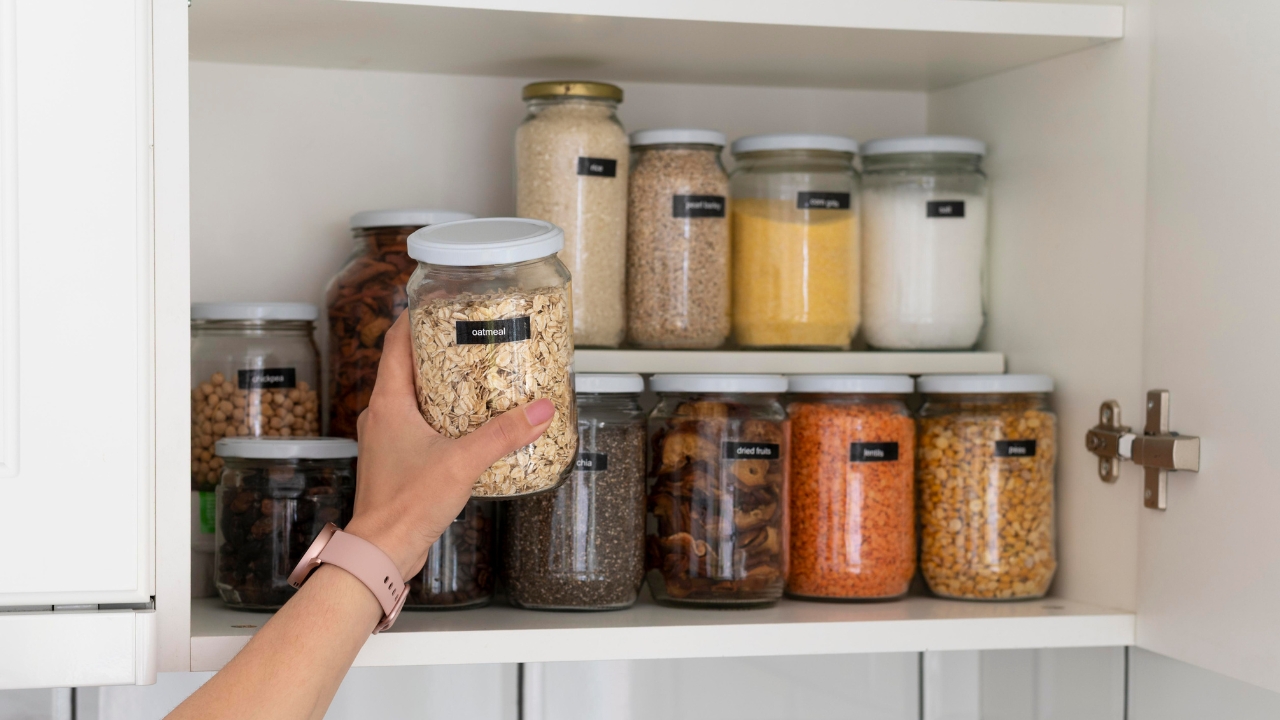
Open your pantry right now. Can you see what you own? Or is it the usual crime scene of half-used pasta, mystery packets, old spices, three bags of rice, and one sad can of beans hiding in the back?
Learning how to organize a pantry is not about making your shelves look like a magazine shoot. That is nice, but it is not the real goal. A good pantry should help you cook faster, waste less food, shop smarter, and stop buying things you already have.
In 2026, pantry organization matters even more because groceries are expensive, kitchens are busy, and many homes do not have endless storage. The USDA estimates that 30% to 40% of the U.S. food supply is wasted, so a messy pantry is not just annoying. It can also quietly waste money.
This guide shows you how to build a practical pantry system with zones, labels, containers, safety rules, and easy maintenance habits.
Why Pantry Organization Matters in 2026
Pantry organization is no longer just a “nice home project.” It is part of smarter cooking, better budgeting, and less food waste. When everything has a place, you can see what you already own before buying more.
Home buyers also care about kitchen storage. NAHB reported that 80% of home buyers rated a walk-in pantry and table space for eating as essential or desirable kitchen features. A pantry may look simple, but it plays a big role in how a kitchen works every day.
A clean pantry also makes meal planning less stressful. You can build dinner around what you already have instead of making another last-minute grocery run.
|
Key Benefit |
Why It Matters |
|
Saves time |
You find ingredients faster |
|
Saves money |
You avoid duplicate purchases |
|
Reduces waste |
Older food gets used first |
|
Improves cooking flow |
Daily items stay easy to reach |
|
Supports meal planning |
You can see what meals are possible |
Time Savings
A messy pantry slows everything down. You spend five minutes looking for cumin, then realize you bought another jar last week. A simple shelf system fixes that.
Better Grocery Planning
When your pantry is sorted by category, shopping becomes easier. You can check your pasta, rice, canned goods, sauces, and snacks before you leave home.
Less Food Waste
Food gets wasted when it disappears. Deep shelves, dark corners, and overstuffed bins make it easy to forget what you own.
Start With a Full Pantry Audit
Before buying bins or containers, take everything out. Yes, everything. This is the part people skip, and it is usually why the system fails later.
A proper audit shows what you actually eat, what you overbuy, what has expired, and what does not belong in the pantry at all. Many professional organizers recommend taking stock and cleaning out the pantry before building the system.
Do not try to organize around clutter. Clear the shelves first, then build the system around real habits.
|
Audit Step |
What to Do |
|
Empty shelves |
Remove every item |
|
Check dates |
Look for old, stale, or damaged food |
|
Sort by type |
Group similar items together |
|
Clean shelves |
Remove crumbs, spills, and dust |
|
Rebuild zones |
Put items back with purpose |
Take Everything Out
Remove cans, packets, oils, spices, baking supplies, snacks, cereals, condiments, and backup stock. Put everything on a table or counter.
Check Dates and Condition
Look for expired items, stale crackers, rancid nuts, damaged cans, open packets, and duplicate products. Do not rely only on dates. Check smell, texture, packaging, and storage condition.
Make Four Sorting Groups
Use these groups:
- Keep
- Use soon
- Donate if unopened and accepted locally
- Throw away or compost
Clean Before Restocking
Vacuum crumbs, wipe sticky shelves, clean corners, and let everything dry. Crumbs attract pests, and spills make containers sticky.
How to Organize a Pantry With Zones
This is the most important step if you want to organize pantry pro-style without making your kitchen harder to use. Zones turn random storage into a working system.
A zone simply means a group of items that belong together. Pasta and sauces go together. Baking items go together. Breakfast items go together. Snacks go together.
Do not copy someone else’s pantry exactly. Your zones should match how your home eats.
|
Pantry Zone |
Items to Include |
|
Breakfast |
Cereal, oats, coffee, tea, spreads |
|
Baking |
Flour, sugar, baking powder, chocolate chips |
|
Dinner staples |
Pasta, rice, beans, sauces, canned tomatoes |
|
Snacks |
Crackers, chips, bars, nuts |
|
Backup stock |
Extra cans, unopened sauces, bulk items |
|
Use-first bin |
Items close to date or already opened |
Breakfast Zone
Keep cereal, oats, granola, nut butter, jam, tea, coffee, and breakfast bars together. This makes mornings easier.
Baking Zone
Store flour, sugar, baking powder, cocoa, chocolate chips, extracts, and decorating items in one area. Add measuring cups nearby if you have space.
Dinner Zone
This area should hold pasta, rice, lentils, beans, canned tomatoes, broth, sauces, and common seasonings. These are the items people grab on busy nights.
Snack Zone
Use open bins for snacks, especially if children use the pantry. Keep everyday snacks at a reachable height.
Read Also: 20 Bedroom Lighting Ideas For a Cozy Atmosphere
Use-First Zone
This is a small but powerful habit. Keep nearly expired items, opened packets, and half-used ingredients in one visible bin.
Choose Containers That Actually Help
Matching containers look good, but they are not always necessary. The best pantry containers solve real problems. They keep food fresh, stop spills, make shelves easier to see, and fit the space.
Do not decant every single thing just because it looks neat online. Some items should stay in their original packaging because the label has cooking directions, allergy details, or storage instructions.
Measure before you buy. Shelf height, depth, width, and door clearance matter more than the container set you saw on social media.
|
Container Type |
Best Use |
Watch Out For |
|
Clear airtight containers |
Flour, rice, pasta, cereal |
Can be expensive |
|
Glass jars |
Dry goods, visible shelves |
Heavy and breakable |
|
Plastic bins |
Snacks, packets, small items |
Quality varies |
|
Baskets |
Backup stock and visual clutter |
Harder to see inside |
|
Lazy Susans |
Oils, sauces, spices |
Need enough shelf depth |
When to Use Clear Containers
Use clear containers for foods that spill, go stale, or come in weak packaging. Good examples include flour, sugar, rice, oats, lentils, cereal, and pasta.
When to Keep Original Packaging
Keep items in original packaging when you need instructions, barcodes, allergy notes, or best-by dates. You can still place those packages inside a labeled bin.
Do Not Overspend
Start with the problem areas first. If cereal goes stale, buy cereal containers. If sauce packets fall everywhere, buy one small bin.
Label the Pantry So Everyone Can Follow It
Labels are not just pretty decoration. They tell everyone where things belong. That matters if more than one person uses the pantry.
A good label should be simple, readable, and practical. Do not use fancy fonts that look nice but are hard to read quickly.
Label shelves, bins, and containers when needed. Shelf labels are especially useful because they keep the system working even when a bin is empty.
|
Label Type |
Best For |
|
Shelf labels |
Pantry zones |
|
Bin labels |
Snacks, baking, packets |
|
Container labels |
Flour, rice, sugar, oats |
|
Date labels |
Decanted dry goods |
|
Use-first label |
Older or opened food |
Label Shelves First
Start with shelf labels such as Breakfast, Baking, Snacks, Pasta and Rice, Canned Goods, Spices, and Backup Stock.
Add Dates to Decanted Food
When you pour food into a container, add the purchase date or best-by date. Use a small sticker, washable marker, or label tape.
Keep Labels Flexible
Your pantry will change. Use labels that can be removed or updated without leaving a mess.
Arrange Pantry Shelves by Use and Weight
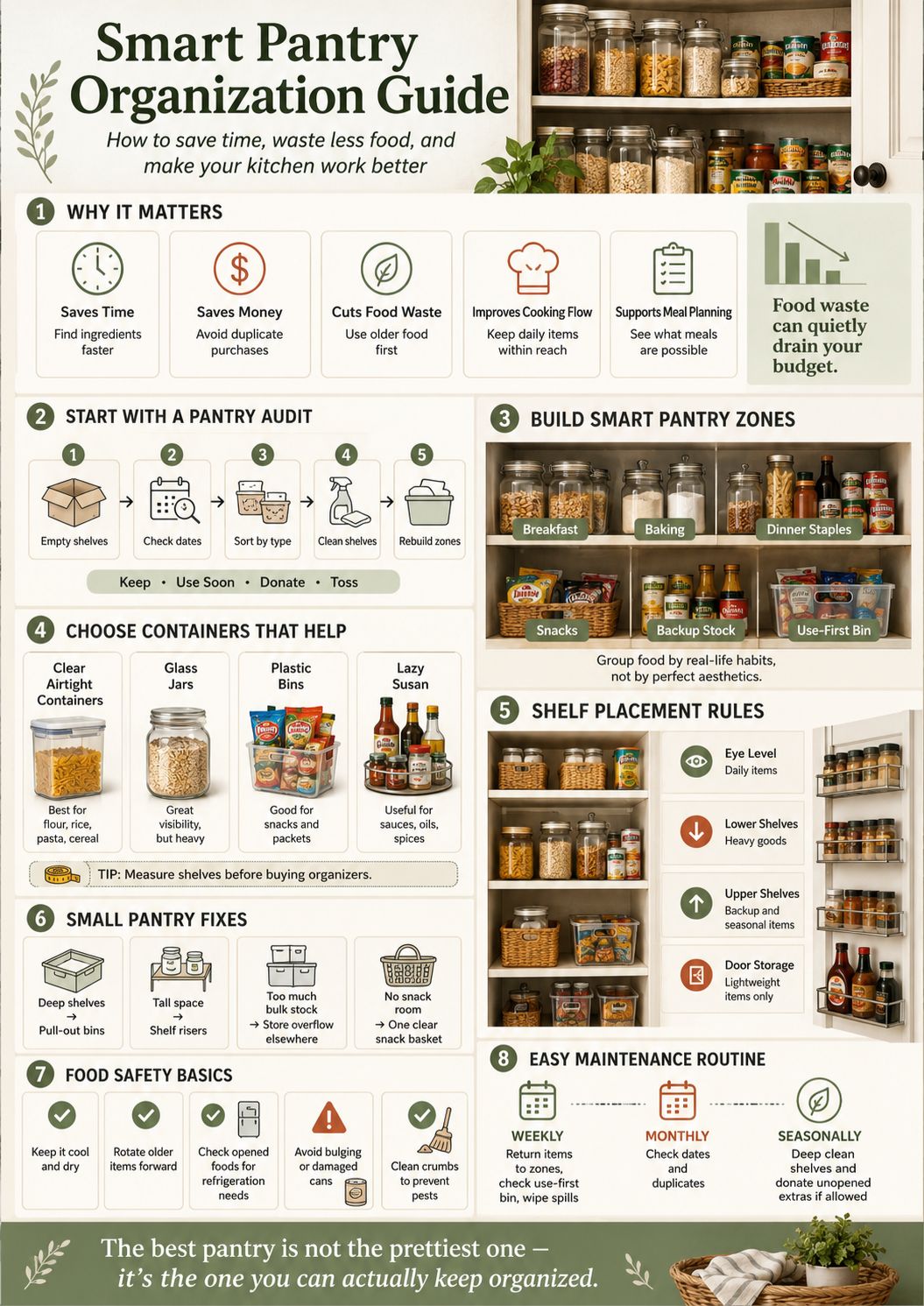
A professional pantry layout is simple. Daily items go where you can reach them. Heavy items go low. Rarely used items go high.
This keeps the pantry safer and easier to use. Nobody wants to pull a heavy bag of flour from the top shelf and hope for the best.
Shelf layout also depends on who uses the pantry. If children grab their own snacks, keep approved snacks low. If pets are in the home, keep unsafe foods higher.
|
Shelf Area |
Best Items |
|
Eye level |
Daily cooking items, snacks, breakfast |
|
Lower shelves |
Heavy cans, drinks, rice, flour |
|
Upper shelves |
Backup stock, party supplies, seasonal items |
|
Door storage |
Spices, wraps, packets, light bottles |
|
Deep corners |
Lazy Susans or pull-out bins |
Eye-Level Shelves
Place daily-use food here. This includes breakfast items, dinner staples, coffee, tea, snacks, and common sauces.
Lower Shelves
Use lower shelves for heavy items like canned goods, drinks, oils, flour, rice, and bulk products.
Upper Shelves
Store items you use less often, such as holiday baking supplies, extra paper goods, serving items, and backup stock.
Pantry Door
Use the door for lightweight items only. Spices, seasoning packets, wraps, and small bottles work well if the door closes properly.
Small Pantry Organization Ideas
Small pantries need smarter editing. You cannot store everything in a tiny pantry, so the goal is to keep active items nearby and move overflow elsewhere.
This is where many people go wrong. They buy oversized containers, stack too many things, and lose half the shelf space.
For a small pantry, think vertically. Use risers, door racks, stackable bins, and narrow containers.
|
Small Pantry Problem |
Smart Fix |
|
Deep shelves |
Pull-out bins |
|
Short shelves |
Stackable containers |
|
Tall empty space |
Shelf risers |
|
No snack room |
One snack basket |
|
Too much bulk stock |
Store overflow elsewhere |
Use Vertical Space
Add shelf risers for cans, jars, and spices. Use under-shelf baskets for wraps, packets, or lightweight items.
Use Pull-Out Bins
Deep shelves are hard to manage. Pull-out bins let you grab a whole category instead of digging through the back.
Avoid Giant Containers
Large containers look impressive, but they often waste space in small pantries. Choose containers that match what you actually buy.
Move Overflow Out
Keep only active food in the kitchen pantry. Store bulk extras in a utility closet, garage shelf, or high cabinet if safe and dry.
Food Safety Rules for Pantry Storage
A pantry should be organized, but it also needs to be safe. Food storage depends on temperature, moisture, packaging, and whether the food has been opened.
USDA guidance says shelf-stable foods should be stored in a cool, dry place, not beside the stove, under the sink, in a damp garage, or anywhere exposed to extreme temperatures.
The CDC also advises that perishable food should not sit out for more than 2 hours, or more than 1 hour if exposed to temperatures above 90°F.
|
Safety Rule |
Why It Matters |
|
Keep it cool and dry |
Heat and moisture damage food |
|
Rotate older items forward |
Reduces waste |
|
Check opened foods |
Some need refrigeration |
|
Avoid damaged cans |
Bulging or leaking cans can be unsafe |
|
Clean crumbs |
Helps prevent pests |
Keep Pantry Food Away From Heat
Do not store oils, spices, flour, or canned goods next to the oven. Heat can reduce quality and shorten shelf life.
Know What Needs Refrigeration
Some sauces, jams, nut butters, and condiments may need refrigeration after opening. Always check the package label.
Understand Date Labels
USDA explains that, except for infant formula, food product dates are generally not required by federal law and are not usually safety dates. Many dates are about quality, not danger.
Use Food Storage Tools
Food storage guides and food safety apps can help users understand storage times for food and beverages, so they can keep items fresh longer.
Pantry Systems for Different Homes
There is no single perfect pantry. A family pantry, renter pantry, meal prep pantry, and small apartment pantry all need different systems.
The best way to organize a pantry is to design it around behavior. Who cooks? Who snacks? Who shops? Who puts groceries away?
If the system does not match real life, it will fall apart within a week.
|
Household Type |
Best Pantry System |
|
Families |
Kid-friendly snack zones |
|
Renters |
Removable bins and shelf liners |
|
Meal preppers |
Ingredient zones and weekly baskets |
|
Bulk buyers |
Active stock plus overflow storage |
|
Small apartments |
Compact bins and vertical storage |
For Families With Kids
Create a lower snack zone with approved items. Use open bins so children can see what they are allowed to grab.
For Meal Preppers
Group food by meal type. Keep grains, canned proteins, sauces, and spices easy to access.
For Renters
Avoid permanent shelving changes. Use baskets, removable labels, freestanding racks, and door organizers.
For Bulk Buyers
Do not overload the main pantry. Keep one active container in the pantry and store extra stock elsewhere.
Common Pantry Organization Mistakes
Most pantry systems fail because they are too complicated. The pantry may look beautiful on day one, but nobody wants to maintain 27 tiny categories after a long day.
Another common mistake is buying too much storage before decluttering. Containers do not fix overbuying. They just make the clutter look more expensive.
A good pantry should feel easy, not fragile.
|
Mistake |
Better Approach |
|
Buying bins first |
Declutter first |
|
Decanting everything |
Decant only problem items |
|
Using too many categories |
Keep zones broad |
|
Hiding food in baskets |
Label every basket |
|
Ignoring habits |
Build around real use |
Buying Containers Too Early
You need to know what you own before you know what to buy. Empty, sort, and measure first.
Decanting Too Much
Decanting is useful, but it can become another chore. Keep it for food you use often or food that needs better storage.
Making Zones Too Specific
Too many zones make the pantry harder to follow. Use broad, clear categories.
Ignoring the People Who Use the Pantry
If your family cannot understand the system, they will not use it. Keep labels plain and zones obvious.
Weekly and Monthly Pantry Maintenance
The secret to a good pantry is not the first big reset. It is the small habits after that.
A five-minute weekly reset can prevent the pantry from becoming chaotic again. You do not need to empty every shelf every week.
The easiest time to maintain the pantry is when you put groceries away. Move older items forward and place newer items behind them.
|
Maintenance Task |
How Often |
|
Put items back in zones |
Weekly |
|
Check use-first bin |
Weekly |
|
Wipe spills |
Weekly |
|
Check dates |
Monthly |
|
Deep clean shelves |
Seasonally |
Weekly Reset
Put stray items back, check the use-first bin, wipe small spills, and update your grocery list.
Monthly Check
Look for duplicates, expired food, stale snacks, and empty containers. Adjust zones if they no longer make sense.
Seasonal Deep Clean
Empty one section at a time. Wash bins, check for pests, clean shelves, and donate unopened food you will not use if local rules allow it.
Pantry Product Checklist
You do not need every organizer on the market. A few flexible tools are enough for most pantries.
Start with tools that improve visibility and access. Clear bins, labels, shelf risers, and lazy Susans usually solve more problems than fancy specialty products.
Buy slowly. Test your system for a week before spending more.
|
Product |
Best Use |
|
Clear bins |
Packets, snacks, categories |
|
Shelf risers |
Cans, jars, spices |
|
Lazy Susans |
Oils, sauces, corner shelves |
|
Airtight containers |
Dry goods |
|
Door rack |
Lightweight pantry items |
|
Labels |
Shelves, bins, containers |
What Is Worth Buying
Clear bins, shelf risers, lazy Susans, airtight containers, and simple labels are usually worth it.
What to Skip
Skip oversized container sets, hard-to-clean bins, tiny specialty organizers, and anything that only works for one product.
Measure Before Buying
Write down shelf width, height, and depth. Also check if the door can close after adding racks or bins.
Final Thoughts
The best pantry is not the prettiest one. It is the one you can actually keep organized.
If you want to know how to organize a pantry in a way that lasts, start with three rules: remove what you do not use, group food by real-life habits, and make everything easy to return. Containers and labels help, but they are not the whole system.
A pantry should save time, reduce waste, and make cooking less annoying. Start with one shelf if the full pantry feels too much. Clear it, clean it, group the items, and label the space.
Once that shelf works, move to the next one. That is how a pantry becomes organized without turning into another weekend project you secretly regret.
Frequently Asked Questions About How to Organize a Pantry
What is the fastest way to organize a pantry?
The fastest way is to empty one shelf, throw away damaged or stale food, group similar items, wipe the shelf, and put items back by category. Start small instead of trying to finish the whole pantry at once.
Should pantry containers be airtight?
Airtight containers are best for dry goods like flour, rice, cereal, pasta, lentils, and sugar. They help protect food from air, moisture, spills, and pests.
Is it better to use clear or opaque bins in a pantry?
Clear bins work better when you need visibility. Opaque bins are better when you want to hide visual clutter, but they must be labeled clearly.
How do I organize deep pantry shelves?
Use pull-out bins, lazy Susans, or shallow baskets. Avoid stacking too many items in front of each other because the back row usually gets forgotten.
What should go on the bottom pantry shelf?
Heavy items belong on the bottom shelf. Store canned goods, drinks, flour, rice, oils, and bulk items there.
How do I stop buying duplicate pantry items?
Keep a pantry inventory list or check your shelves before grocery shopping. A use-first bin also helps you notice what needs to be finished.
What should not be stored in a pantry?
Do not store perishable foods in the pantry. Also check labels on opened sauces, jams, nut butters, and condiments because some need refrigeration after opening.