
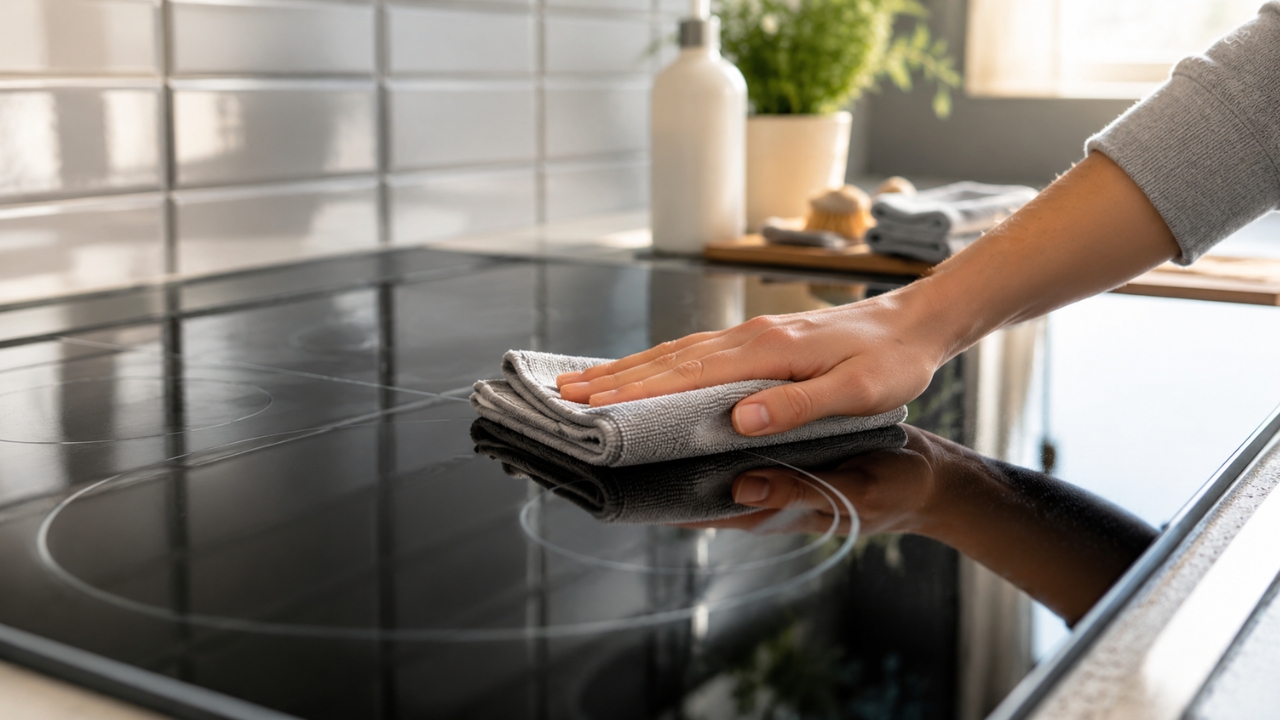
A glass stovetop looks great when it’s clean. It gives the kitchen that smooth, polished look. But one boil-over can ruin the mood fast.
Pasta water dries into cloudy rings. Oil splatters around the burner. Sauce burns into dark patches. And if you grab the wrong scrubber, you may leave scratches that never fully go away.
That’s why the goal isn’t to scrub harder. It’s to clean smarter.
If you want to clean glass stovetop surfaces without scratching them, you need a gentle method. You also need the right tools. Glass and ceramic cooktops can handle heat, but the top surface still needs care. Harsh pads, gritty crumbs, dirty pan bottoms, and strong chemicals can damage the finish.
The good news? You can keep a glass stovetop shiny without much work. You just need to clean small messes before they turn into burned-on stains.
Why Glass Stovetops Scratch So Easily
Glass stovetops look tough. They feel solid. But the surface can still scratch.
The biggest problem is grit. A tiny crumb, salt grain, or dried bit of sauce can drag across the glass when you wipe it. That small particle can work like sandpaper.
That’s why you should never start by scrubbing. First, remove loose crumbs and dry debris.
|
Scratch Risk |
Common Cause |
Safer Habit |
|
Fine scratches |
Crumbs, salt, dried food |
Wipe debris away first |
|
Gray streaks |
Sliding cookware |
Lift pots and pans |
|
Cloudy film |
Cleaner residue or minerals |
Rinse and buff dry |
|
Pitting |
Hot sugar or melted plastic |
Remove carefully right away |
|
Burned rings |
Spills left too long |
Clean after cooking |
Glass-ceramic is strong, but not scratch-proof
Most smooth cooktops use glass-ceramic material. It handles heat well. But that doesn’t mean you can treat it like a steel surface.
A light scratch may not affect cooking. But it can make the stovetop look old. It can also trap grease, which makes the next cleaning harder.
Your pans can cause marks too
Sometimes the stovetop isn’t the real problem. The bottom of the pan is.
If a pot has dried food, salt, grease, or rough spots underneath, it can leave marks on the glass. Sliding a heavy pan can also leave gray metal streaks.
Before cooking, check the bottom of your cookware. If it feels dirty or rough, wipe it first.
Tools You Need to Clean Glass Stovetop Safely
You don’t need fancy tools. You need safe ones.
A good glass stovetop cleaning kit is small. Keep it simple.
|
Tool |
Best Use |
Safety Tip |
|
Microfiber cloth |
Daily wiping and drying |
Use a clean cloth |
|
Mild dish soap |
Fresh grease and splatter |
Rinse well |
|
White vinegar |
Light streaks and water marks |
Never mix with bleach |
|
Nonabrasive pad |
Gentle stain cleaning |
Avoid rough sponge backs |
|
Cooktop cream cleaner |
Burned rings and shine |
Follow label directions |
|
Cooktop scraper |
Stuck-on residue |
Keep blade flat |
|
Baking soda paste |
Grease and stains |
Use gently, not dry |
Best cleaner for daily messes
For everyday cleaning, warm water and mild dish soap work well. Use a soft microfiber cloth. That’s enough for light grease, fingerprints, and fresh splatter.
You can also use diluted white vinegar for streaks or cloudy spots. Just rinse after using it and dry the surface well.
Best cleaner for burned stains
For burned rings or stuck-on food, use a cleaner made for glass or ceramic cooktops. These creams are designed to clean without scratching when used with the right pad.
Don’t use random cleaning powders. Many are too harsh.
Best scraper for stubborn food
A scraper can be safe, but only if it’s made for cooktops. Don’t use a kitchen knife. Don’t use a loose razor blade in your hand.
Hold the scraper at a low angle, around 45 degrees. Keep the blade flat. Push slowly. The goal is to lift the residue, not dig into the glass.
Daily Method to Clean Glass Stovetop Without Scratches
Daily cleaning is the easiest way to avoid heavy scrubbing later.
The best time to clean is after cooking, once the surface is cool. Don’t wait until spills get cooked again and again. That’s how soft stains become hard stains.
|
Step |
What to Do |
Why It Helps |
|
1 |
Turn off the stove |
Keeps you safe |
|
2 |
Let it cool |
Prevents burns and streaks |
|
3 |
Remove crumbs |
Stops scratches |
|
4 |
Wipe with soapy water |
Clears grease |
|
5 |
Rinse with a damp cloth |
Removes residue |
|
6 |
Buff dry |
Restores shine |
Simple daily cleaning steps
- Turn off all burners.
- Wait until the glass cools.
- Wipe away crumbs with a dry microfiber cloth.
- Clean the surface with warm soapy water.
- Wipe again with a clean damp cloth.
- Dry and buff with microfiber.
That’s it.
This takes only a few minutes. And it saves you from fighting burned-on food later.
Don’t skip the first dry wipe
This step matters more than people think.
If you spray cleaner over crumbs and start wiping, you may drag grit across the glass. That’s one of the easiest ways to scratch it.
Always clear loose debris first.
How to Deep Clean Burned Food, Grease, and Stains
Some messes need more than a quick wipe. Burned sauce, oil rings, and dried pasta water can cling to the surface.
The key is patience. Let the cleaner soften the stain. Don’t attack it with pressure.
|
Mess Type |
Best Method |
Avoid |
|
Burned sauce |
Cooktop cream and scraper |
Knife or steel wool |
|
Grease film |
Dish soap and microfiber |
Dry scrubbing |
|
Pasta water stains |
Vinegar wipe and buffing |
Letting it reheat |
|
Brown burner rings |
Cooktop cleaner and pad |
Abrasive powder |
|
Old crusted food |
Soften, scrape, polish |
Chipping with sharp tools |
Method 1: Use cooktop cleaner
Apply a small amount of ceramic or glass cooktop cleaner to the stain.
Rub gently with a nonabrasive pad. Let the cleaner sit or dry into a haze if the label says so. Then wipe and buff with a clean cloth.
This works well for burner rings, dull patches, and light burned stains.
Method 2: Try baking soda paste
Baking soda can help with grease and stuck-on grime, but use it carefully.
Mix baking soda with a little water until it forms a soft paste. Spread it over the stain. Let it sit for 15 to 20 minutes. Then wipe gently with a damp cloth or nonabrasive pad.
Don’t scrub dry baking soda into the surface. Dry powder can act gritty if you press too hard.
Read Also: How to Remove Sticker Residue from Any Surface
Method 3: Scrape stubborn residue
If food is stuck hard, use a cooktop scraper.
Keep the blade flat. Hold it around 45 degrees. Push slowly under the edge of the burned food. Don’t use the corner of the blade. Don’t jab at the stain.
After scraping, clean the area with cooktop cream and buff dry.
What Not to Use on a Glass Stovetop
Most damage comes from the wrong tool. A rough pad can scratch the surface in seconds.
Avoid anything that feels harsh or gritty.
|
Do Not Use |
Why It’s Risky |
Use Instead |
|
Steel wool |
Scratches glass |
Nonabrasive pad |
|
Scouring pads |
Leave fine marks |
Microfiber cloth |
|
Abrasive powder |
Can dull the surface |
Cooktop cream |
|
Oven cleaner |
Too harsh |
Ceramic glass cleaner |
|
Ammonia cleaner |
Can leave damage or film |
Approved cooktop cleaner |
|
Dirty sponge |
Spreads grit and grease |
Fresh cloth |
|
Knife |
Can gouge glass |
Cooktop scraper |
Don’t use window cleaner for cooked-on stains
A glass stovetop is not the same as a window.
Window cleaners can leave residue. Some contain ammonia, which may discolor or damage the surface when heated. Use a cooktop-safe cleaner instead.
Don’t press harder when a stain won’t move
Hard pressure is not the answer. If a stain sticks, soften it first.
Use cleaner. Let it sit. Use a scraper if needed. Then polish.
Don’t use a dirty dish sponge
A dirty sponge can leave grease and food particles behind. Once the burner heats again, that film can turn into a stain.
Use a clean cloth every time.
How to Handle Sugar, Plastic, Metal Marks, and Cloudy Spots
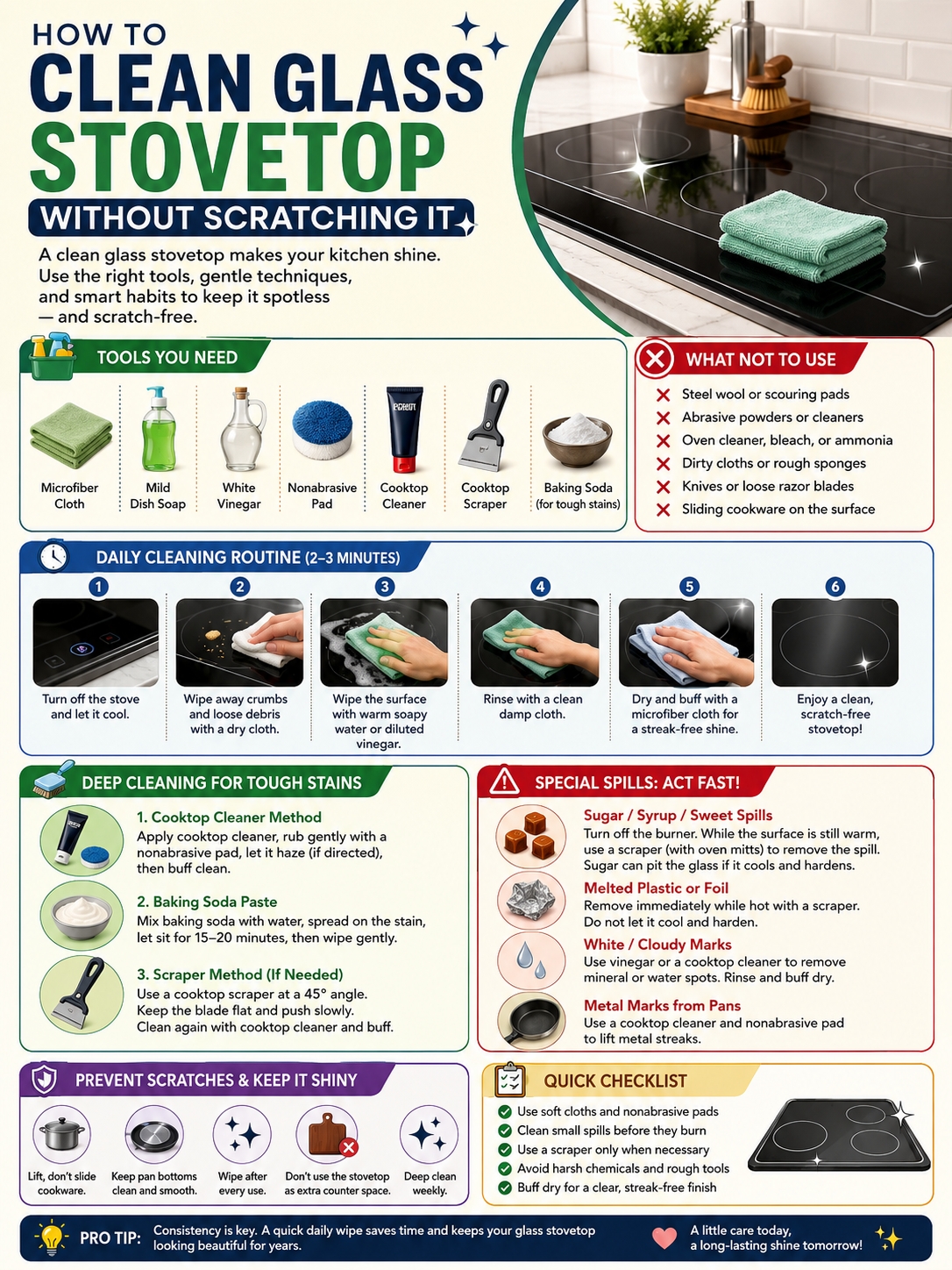
Some spills need special care. Sugar is the biggest one.
Hot sugar can bond to glass-ceramic surfaces. If it cools and hardens, it can cause pitting. That means small permanent marks in the surface.
|
Problem |
What It Looks Like |
Best Action |
|
Hot sugar |
Sticky, shiny patch |
Scrape carefully while hot |
|
Melted plastic |
Raised or smeared film |
Remove with care |
|
Aluminum foil |
Metallic melted mark |
Remove right away if hot |
|
White spots |
Cloudy mineral marks |
Use vinegar or cooktop cleaner |
|
Gray streaks |
Metal marks from pans |
Use ceramic cleaner |
|
Fine scratches |
Hairline marks |
Clean and polish |
Sugary spills
Sugary spills include syrup, jam, caramel, candy, sweet sauces, chocolate, and sugary boil-overs.
Turn off the burner. Wear an oven mitt. Use a cooktop scraper to move the spill away from the hot area. Let the surface cool. Then clean with ceramic glass cleaner.
Don’t wipe hot sugar with a sponge. It may melt or smear the mess.
Melted plastic or foil
Plastic wrap, plastic utensils, and aluminum foil can melt onto a hot stovetop.
Treat them like sugar. Turn off the heat. Use protection. Scrape carefully while the material is still soft enough to move.
Check your appliance manual if the spill looks severe.
White or cloudy marks
Cloudy marks often come from minerals, water, starch, or cleaner residue. Pasta water and rice water can leave this kind of film.
Try a vinegar-water wipe first. Then rinse and dry. If the stain remains, use ceramic cooktop cleaner.
Existing scratches
Real scratches usually don’t disappear.
You can make them less visible by cleaning trapped residue and polishing the surface. But deep scratches, chips, or cracks need professional help.
If the glass cracks, stop using the stovetop.
How to Prevent Scratches and Keep the Shine Longer
The best cleaning method is prevention. A few small habits can keep your glass stovetop looking new for years.
|
Habit |
Why It Helps |
How Often |
|
Wipe after cooking |
Stops buildup |
Every use |
|
Clean pan bottoms |
Prevents grit scratches |
Before cooking |
|
Lift cookware |
Avoids drag marks |
Always |
|
Use flat pans |
Reduces rocking |
Always |
|
Keep scraper nearby |
Helps with urgent spills |
Ongoing |
|
Buff dry |
Prevents streaks |
After cleaning |
Lift your pans
Don’t slide cookware across the glass. Lift it.
This matters most with heavy pots, cast iron, and pans with rough bottoms. One careless slide can leave a long mark.
Check the bottom of cookware
Before you cook, check the pan bottom.
If it has dried sauce, oil, salt, or grit, clean it. This takes seconds and prevents marks.
Don’t use the stove as counter space
It’s tempting to place cutting boards, grocery bags, lids, or jars on the stovetop. Don’t.
Those items can drag grit across the surface. They can also hide small debris you won’t notice until it scratches.
Keep a small cleaning kit nearby
Store these close to the stove:
- Microfiber cloth
- Ceramic glass cooktop cleaner
- Nonabrasive pad
- Cooktop scraper
- Diluted vinegar spray
When cleaning tools are easy to reach, you’ll clean small messes faster.
Clean Glass Stovetop Checklist
Here’s a simple routine you can follow.
|
Situation |
What to Do |
When |
|
Light cooking |
Wipe with damp microfiber |
After each use |
|
Greasy cooking |
Use dish soap, rinse, buff |
After cooking |
|
Burned food |
Soften, scrape, polish |
As needed |
|
Sugar spill |
Scrape carefully right away |
Immediately |
|
Cloudy marks |
Vinegar wipe or cooktop cleaner |
As needed |
|
Weekly care |
Cooktop cream and soft pad |
Once a week |
Fast weekly routine
- Clear loose debris.
- Apply ceramic cooktop cleaner.
- Rub gently with a nonabrasive pad.
- Scrape only stuck-on spots.
- Wipe clean.
- Buff dry.
A weekly clean keeps stains from building up. It also makes daily wiping much easier.
Final Thoughts
The safest way to clean glass stovetop surfaces is simple: go gentle, clean often, and use the right tools.
Clear crumbs first. Wipe with a soft cloth. Use ceramic cooktop cleaner for stains. Let stuck-on food soften before you scrape. When you do use a scraper, keep the blade flat and move slowly.
Don’t use steel wool, rough pads, knives, oven cleaner, or gritty powders. They can damage the surface fast.
Also, watch out for sugar, chocolate, melted plastic, and foil. Those spills need quick action because they can bond to hot glass and leave permanent marks.
|
Main Lesson |
What to Remember |
|
Gentle cleaning works best |
Don’t scrub hard |
|
Clean often |
Small messes are easier |
|
Use the right scraper |
Keep it flat and angled |
|
Sugar needs fast action |
Remove before it hardens |
|
Protect the surface daily |
Lift pans and wipe after use |
A clean glass stovetop doesn’t need harsh chemicals or heavy scrubbing. It needs a calm, steady routine.
Clear the debris. Soften the stain. Wipe gently. Scrape only when needed. Buff it dry.
Do that, and your glass stovetop will stay glossy, smooth, and much easier to clean.
FAQs About Cleaning a Glass Stovetop
Can I use a razor blade on a glass stovetop?
Yes, but only with care. Use a scraper made for ceramic glass cooktops. Hold it at a low angle and keep the blade flat.
Never use a knife. Never dig into the surface with the corner of a blade.
Can I use baking soda and vinegar together?
You can, but don’t expect the fizz to do all the work.
Baking soda paste helps loosen grease. Vinegar helps with streaks and mineral marks. Use them gently. Rinse well and dry the surface after cleaning.
Why does my glass stovetop look cloudy after cleaning?
Cloudiness usually comes from cleaner residue, minerals, grease film, or starchy water. Try wiping with diluted vinegar, rinsing with a damp cloth, and buffing dry.
If the spot feels rough, it may be pitting or fine scratching.
Can I use a Magic Eraser?
Be careful. Magic Erasers can be mildly abrasive. Check your cooktop manual first.
For safer cleaning, use microfiber, cooktop cream, and a nonabrasive pad.
Can I use cast iron on a glass stovetop?
Usually, yes. But lift it instead of sliding it. Make sure the bottom is clean and smooth.
Cast iron is heavy. If you drop it or drag it, it can scratch or even crack the glass.
What should I do if the stovetop cracks?
Stop using it right away. A crack is not a stain or scratch. Don’t try to seal it yourself.
Call the appliance brand or a qualified repair technician.
How often should I deep clean a glass stovetop?
If you cook daily, wipe it after each use and deep clean once a week. If you cook less often, deep clean whenever you notice rings, haze, or stuck-on spots.