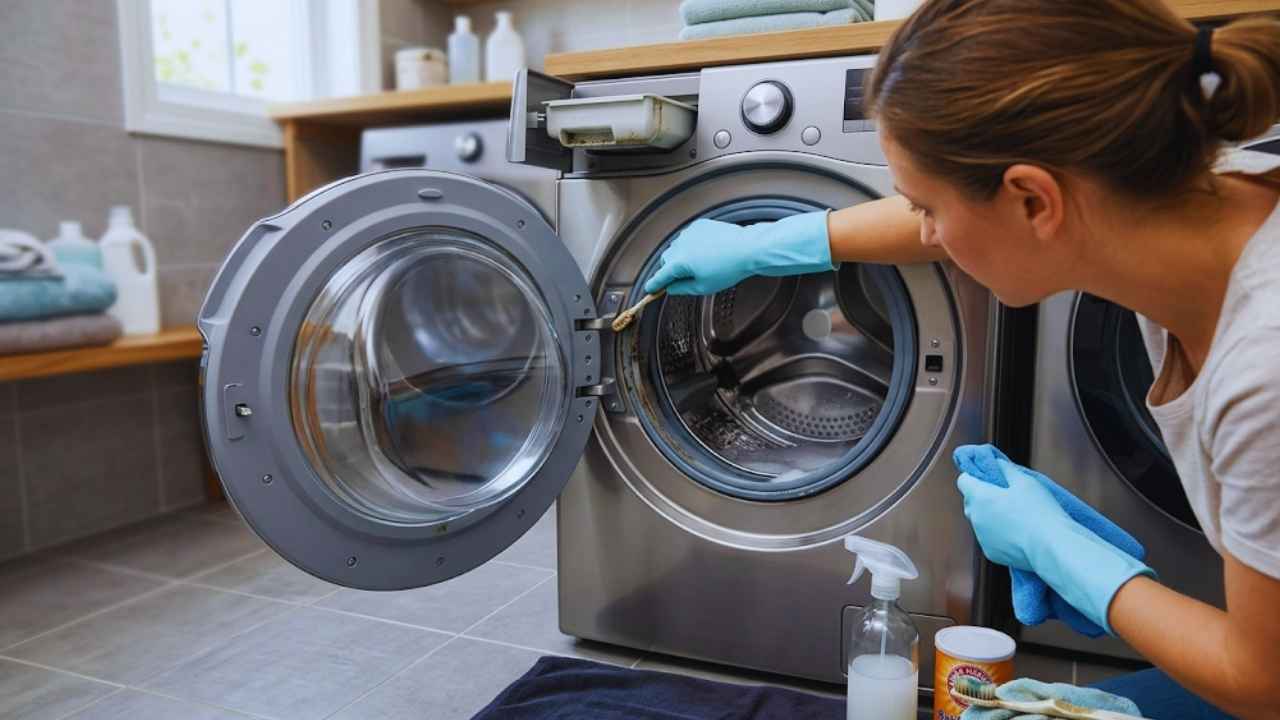
We have all been there. You toss a load of laundry in, expecting it to come out smelling like a fresh spring breeze. Instead, you open the door and get blasted with the scent of a wet dog hiding in a damp basement. It is incredibly gross and frustrating.
Your washer is dark, warm, and constantly wet. Over time, it traps dirt, soap scum, and moisture. Before you know it, you have a massive mold and bacteria party happening right where you wash your clothes. Ignoring the issue does not work. The stench just transfers to your favorite outfits, and the bacterial buildup can actually irritate your skin. If you want to clean smelly washing machine drums, gaskets, and filters, you need a smart game plan. Let’s fix this fast using simple supplies and science-backed methods that actually destroy the odor at its source.
Why Your Washer Smells Like a Swamp (The Science)?
Did you know your washer is basically a bacteria farm? Scientists recently swabbed household washing machines and found hundreds of bacteria strains living inside. The main culprit causing that wet-dog smell is a tough bug called Moraxella osloensis. It loves the dark, damp rubber seal of your machine. Because we all try to save money and energy by washing in cold water, these bugs never actually die off.
A cold wash just gives them a nice bath. They survive, multiply, and feed on your leftover skin cells, sweat, and fabric softener. Eventually, they form a sticky biofilm on the plastic parts inside your drum. Once that slime shield forms, regular laundry detergent cannot penetrate it. Modern detergents often leave behind an alkaline residue when used in cold water, creating the absolute perfect breeding ground for rancid-smelling fatty acids.
|
Odor Culprit |
What Happens Inside |
The Damage |
|
Moraxella osloensis |
Survives low-temperature cold washes perfectly. |
Produces rancid fatty acids that make clothes smell musty. |
|
Bacterial Biofilm |
Bugs build a sticky slime shield on plastic parts. |
Blocks normal soap from killing the trapped bacteria. |
|
Cold Water Cycles |
Barely makes bacteria flinch during the wash. |
Allows colonies to grow massive over months of use. |
|
Alkaline Residue |
Unrinsed soap alters the pH of the metal drum. |
Creates a sticky environment that traps shedding skin cells. |
Your Odor-Busting Toolkit (Skip the Bleach)
You might think you need industrial bleach to nuke the smell. Stop right there. Real-world appliance data shows that liquid chlorine bleach actually degrades the EPDM rubber gaskets used in modern washers. It causes microscopic tears in the rubber, which just gives bacteria more places to hide and holds even more standing water. Instead, grab some three percent hydrogen peroxide for your rubber seals. It penetrates the biofilm and kills mold without eating your machine parts.
You also need white vinegar. The mild acid cuts through hard water scale and dissolves that sticky soap scum shield. For the actual stainless steel drum, grab some food-grade citric acid or regular baking soda. Citric acid is a secret weapon that drops the pH level inside the drum, totally disrupting the bacteria’s grip on the metal. Finally, grab an old toothbrush and some lint-free microfiber cloths.
|
Cleaning Supply |
Purpose |
Where to Use It |
|
Hydrogen Peroxide (3%) |
Destroys mold roots without ruining EPDM rubber. |
The thick folds of the front door gasket. |
|
Food-Grade Citric Acid |
Lowers pH levels to break the bacterial biofilm. |
Poured directly into the empty metal drum. |
|
White Vinegar |
Dissolves hard water scale and cuts through soap scum. |
The detergent drawer and overall drum cleaning. |
|
Old Toothbrush |
Reaches the tight corners where mold safely hides. |
Rubber door tracks and the drain pump filter. |
Deep Cleaning a Front-Loader Machine
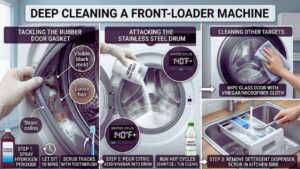
Front-loading machines hold a lot of water right at the front door, making them the absolute worst offenders for mold and mildew. Start by tackling that thick rubber door seal. Pull back the folds gently with your hands. You will almost certainly find a nasty layer of black sludge, loose hair, and maybe a lost coin. Spray the entire inside of the gasket heavily with your hydrogen peroxide. Let it sit for ten solid minutes so it can break down the deep mold roots.
Grab your toothbrush and scrub the tight tracks, then wipe it all away with a clean microfiber cloth. Next, we attack the main drum. Pour half a cup of citric acid powder or two cups of white vinegar directly into the drum. Set your machine to the absolute hottest cycle available, usually a Sanitize or Tub Clean setting hitting at least 140 degrees Fahrenheit. The boiling hot water combined with the acid will strip away the hidden biofilm completely.
|
Front-Loader Target |
Primary Odor Symptom |
Action Plan |
|
Rubber Door Gasket |
Visible black mold and a strong mildew scent. |
Soak with peroxide, scrub with a toothbrush, wipe dry. |
|
Stainless Steel Drum |
A sour, stale smell radiating from the metal. |
Hot sanitize cycle with citric acid or white vinegar. |
|
Glass Door Panel |
Cloudy, sticky film catching pet hair. |
Wipe down with vinegar and a microfiber cloth. |
|
Detergent Dispenser |
Smells like rotting soap and stagnant pond water. |
Remove completely and scrub in the kitchen sink. |
Deep Cleaning a Top-Loader Machine
Top-loaders rely on gravity to drain, so they do not trap standing water inside the front door. However, they hold a massive amount of hidden grime underneath the center agitator and along the upper rim of the drum. You need to use a deep soak method to loosen the dirt properly. Set the washer to its largest load size and the absolute hottest water temperature available.
Let the drum fill up entirely, then pour in four cups of white vinegar. Let the machine agitate for just one minute to mix the acid into the water, and then firmly pause the cycle. Walk away and let it soak for a full hour. While you wait, dip a cloth into the hot vinegar water and wipe down the lid, the rim, and the top of the agitator. Unpause the cycle and let it drain out. Run one final quick wash with a cup of baking soda to scrub away the loosened gunk safely.
|
Top-Loader Target |
Primary Odor Symptom |
Action Plan |
|
Center Agitator |
Stale smells coming from the bottom center. |
One-hour hot water and white vinegar deep soak. |
|
Upper Drum Rim |
Visible scum lines above the water level. |
Wipe down manually while the drum soaks. |
|
Inside the Lid |
Musty smells right when you open the machine. |
Scrub with a microfiber cloth dipped in vinegar. |
|
Residual Scum |
Flakes of dirt left behind after the vinegar soak. |
Run a second empty cycle with baking soda. |
The Hidden Odor Traps You Keep Missing
You scrubbed the drum perfectly, but your laundry room still smells like a sewer. The problem is hiding deep inside your drainage system. Front-loaders have a small square door on the bottom front panel. That is your drain pump filter. Open it, uncap the small hose to drain the water into a bowl, and unscrew the main filter. You will pull out clumps of rotting hair, lint, and undissolved soap. Wash it thoroughly in the sink. The sump hose connecting the drum to the pump is another major trap.
Calcium from hard water mixes with soap to form insoluble curds that clog the hose, severely slowing down drainage. If water sits in the drum after a spin cycle, your hose is blocked. Finally, synthetic clothes shed thousands of microfibers per wash. These tiny plastic threads get lodged in the drum seams and hold moisture forever, creating perfect little humid zones for bacteria to thrive.
|
Hidden Component |
Location |
Odor Fix |
|
Drain Pump Filter |
Bottom right panel behind a small door. |
Empty the water, remove debris, and scrub in the sink. |
|
Sump Hose |
Internal tube connecting the drum to the pump. |
Clear physical blockages to stop standing water. |
|
Microfiber Clusters |
Trapped inside the tiny metal seams of the drum. |
Wash synthetic clothing inside a microfiber-catching bag. |
|
Standpipe |
The wall pipe behind your washing machine. |
Pour enzymatic cleaner down the pipe to clear rotting lint. |
How Your Detergent Habits Ruin the Machine?
People think more soap means cleaner clothes, but appliance experts confirm this is the biggest lie in laundry. When you dump a full cap of detergent into the dispenser, the machine simply cannot rinse it all out. High-efficiency washers use a fraction of the water that older models used. That unrinsed soap leaves a heavy, alkaline residue on the metal drum baffles.
That sticky residue grabs onto dirt, body oils, and shedding microfibers instantly. Before you know it, you have a thick, slimy layer of soap scum hiding behind the drum where you cannot even see it. Furthermore, loading the machine to the absolute brim prevents water from circulating properly. Clothes just clump together, trapping sweat and odor deep in the fabric. You must leave at least a quarter of the drum completely empty so the clothes can actually tumble and the soap can rinse away cleanly.
|
Bad Habit |
The Negative Result |
The Easy Fix |
|
Over-dosing Soap |
Leaves alkaline residue that traps dirt and oil. |
Use only two tablespoons of HE liquid detergent per load. |
|
Liquid Softener |
Coats the entire drum in a waxy, animal-fat film. |
Switch to natural wool dryer balls in your dryer instead. |
|
Stuffing the Drum |
Clothes clump together and block water circulation. |
Leave at least 25 percent of the drum totally empty. |
|
Ignoring Hard Water |
Minerals bind with soap to form a rocky, stinky scale. |
Use citric acid monthly to dissolve the calcium buildup. |
Keep the Stink Away Permanently
You just put in the hard work to clean smelly washing machine parts, so do not let the funk return next week. The absolute best thing you can do is leave the washer door wide open after every single load. Mold and bacteria desperately need standing moisture to survive. If you let the machine air dry completely, the mold simply dies off without a fight. Next, cut your detergent usage in half right now.
Most people use way too much soap. High-efficiency machines only need about two tablespoons per load. The extra soap does not get your clothes cleaner; it just coats the inside of your machine in a sticky film. Also, stop using liquid fabric softener immediately, as it coats the drum in animal fat. Finally, commit to running a blazing hot, empty wash cycle once a month. The high heat guarantees those cold-water surviving bacteria finally meet their end.
|
Daily Habit |
Why You Must Do It |
Time Required |
|
Leave the Door Open |
Starves mold and bacteria of the moisture they need. |
Two seconds after unloading clothes. |
|
Wipe the Gasket |
Removes standing water from the most vulnerable spot. |
Thirty seconds at the end of laundry day. |
|
Measure Your Soap |
Prevents the alkaline residue that builds bacterial slime. |
Ten seconds before you start the wash. |
|
Monthly Hot Wash |
Flushes out the pipes before any bad smells can settle in. |
Zero active time, just press the sanitize button. |
Final Thoughts
Dealing with a smelly washer is incredibly annoying, but fixing it does not require a chemistry degree or an expensive repair bill. Stop the gross laundry cycle today. Scrub out that rubber seal with peroxide, clear the hidden drain filter, and hit the drum with a boiling hot citric acid wash.
Once you learn how to properly clean smelly washing machine odors at the source, your clothes will finally come out smelling exactly like they should—fresh, clean, and ready to wear. Stick to your new maintenance routine, leave that door open, and ditch the fabric softener for good.
Frequently Asked Questions (FAQs) About Clean Smelly Washing Machine
Can I use dishwasher tablets to clean my washing machine?
You see this specific cleaning hack all over social media. Do not do it under any circumstances. Dishwasher tablets contain harsh chemical foaming agents designed to strip baked-on food grease off glass and ceramic plates. Your laundry appliance is not built to handle that specific type of foam. The tablet creates massive amounts of excess suds that quickly expand inside the watertight drum. These thick suds can easily push past the internal water seals and completely short out your expensive electronic sensors. Stick to citric acid or standard white vinegar to safely protect your internal water pump and computer board.
Why does my washing machine smell like sewage only when it rains?
If the rotten egg smell only hits your laundry room during heavy rainstorms, your machine is actually perfectly fine. The real problem hides up inside your home plumbing vent. Heavy rain drastically alters the air pressure deep inside your municipal sewer lines. If your roof vent is even slightly clogged with dead leaves or bird nests, that foul sewer gas gets pushed backward down your pipes. The gas constantly looks for the easiest escape route, which is usually the open standpipe behind your washing machine drain hose. You will need a local plumber to clear the roof vent to stop the backdraft permanently.
Why do my clothes smell worse right after I wash them?
This incredibly frustrating situation happens when the bacterial biofilm inside your drum finally cracks open. If you have unknowingly ignored a hidden mold problem for months, your next load of laundry essentially acts like a giant sponge. The hot water and agitation disturb the hidden mold colonies, ripping the bacteria off the internal plastic parts and dumping it directly into your fabric fibers. If your clothes suddenly smell like wet dogs straight out of the final spin cycle, you must stop washing garments immediately. Run a blazing hot sanitize cycle with vinegar to strip the drum clean before you ruin any more outfits.
Do expensive store-bought washing machine cleaners actually work better?
It really depends on exactly what you need to fix inside the drum. Store-bought cleaning tablets use a chemical called sodium percarbonate. When it hits hot water, it releases millions of aggressive oxygen bubbles to lift away heavy organic grime fast. They work incredibly well if you have neglected your machine for years and need a heavy-duty reset. However, plain white vinegar actually works much better for dissolving hard water calcium scale. If you keep up with a simple monthly maintenance routine, cheap white vinegar handles the job perfectly and saves you a ton of cash over time.