

Imagine having a perfect virtual clone of your most expensive factory machine, your entire global supply chain, or even the human heart. Now imagine that clone isn’t just a static 3D model, but a living, breathing digital duplicate that updates in real time whenever the physical object changes.
That is not science fiction. It is a rapidly scaling business reality. As global markets get more volatile and asset management grows more complex, enterprises are desperately looking for ways to predict the future instead of reacting to failures. This guide breaks down exactly what are digital twins and how companies use them to transform everyday operations, optimize product lifecycles, and completely eliminate costly guesswork.
Why This Topic Matters
The corporate world is moving away from physical trial-and-error. Building physical prototypes, waiting for heavy machinery to break down before fixing it, and running blind logistics routes are massive cash drains.
Recent market research underscores just how fast this shift is happening. The global digital twin market size jumped to $24.48 billion in 2025 and is projected to hit $33.97 billion in 2026. By 2034, it is estimated to skyrocket to a staggering $384.79 billion. Companies that do not figure out how to bridge their physical assets with cloud-based virtual environments risk falling behind competitors who can literally simulate their success before spending a single dollar.
Top 5 Applications of Digital Twins in Business
To fully understand what are digital twins and how companies use them, you need to look at how different industries put this tech to work. Here are the five most impactful ways businesses leverage virtual replicas today.
Item #1: Predictive Maintenance for Heavy Industrial Machinery
Industrial plants lose billions of dollars every year to unexpected equipment breakdowns. By building a digital twin of critical machinery, companies track real-time wear and tear, catching issues before the gears stop turning.
Instead of waiting for a wind turbine or a factory compressor to fail, embedded IoT (Internet of Things) sensors stream continuous operational data—like internal temperature, vibration frequencies, and pressure—directly to a cloud platform. The digital twin runs simulations against this incoming data to pinpoint exactly when a component will degrade.
For instance, GE Aerospace uses its Predix platform to run high-fidelity twins for over 400 power plants globally, ensuring continuous power grid stability by predicting blade and turbine wear.
|
Feature |
Predictive Maintenance Impact |
|
Primary Data Source |
IoT vibration, temperature, and pressure sensors |
|
Core Business Benefit |
Reduces unexpected work stoppages by up to 20% |
|
Real-World Example |
GE Aerospace Predix APM platform |
Item #2: Aerospace Vehicle Design and Virtual Testing
Developing an aircraft takes years of engineering and millions in raw materials. Aerospace companies use digital twins to move the entire design and stress-testing process into a risk-free virtual space.
Engineers build an end-to-end digital twin of a new jet engine or fuselage before manufacturing a single physical part. They can run millions of virtual wind tunnel simulations or simulate extreme weather conditions to see how the airframe responds.
According to industrial reports, the U.S. Air Force saved over 7.4 million Euros on F-22 wind tunnel testing by shifting to digital-twin-based computational fluid dynamics. Similarly, aircraft development timelines drop by roughly 25% when teams build twins instead of relying solely on physical mockups.
|
Feature |
Aerospace Optimization Impact |
|
Primary Data Source |
CAD engineering models and flight telemetry data |
|
Core Business Benefit |
Shorter R&D cycles and millions saved in structural testing |
|
Real-World Example |
Rolls-Royce IntelligentEngine program |
Item #3: Smart City Urban Planning and Infrastructure Management
Managing a modern city involves a massive web of interconnected transit, utility grids, and public safety systems. Local governments use digital twins to model entire municipal landscapes.
A smart city twin pools together data from traffic cameras, water pipe pressure monitors, and electrical grids into a unified 3D map. This allows urban planners to test how a new skyscraper might block wind patterns, or how a flash flood would overwhelm localized stormwater infrastructure.
Singapore’s full-scale “Virtual Singapore” project acts as a live 3D model that helps city officials optimize public transport routes, plan solar panel installations, and manage heavy traffic bottlenecks across the island.
|
Feature |
Smart City Infrastructure Impact |
|
Primary Data Source |
GIS mapping, traffic sensors, and utility smart meters |
|
Core Business Benefit |
Optimized emergency response and better public energy use |
|
Real-World Example |
The Virtual Singapore Platform |
Item #4: Healthcare Operations and Personalized Medical Treatment
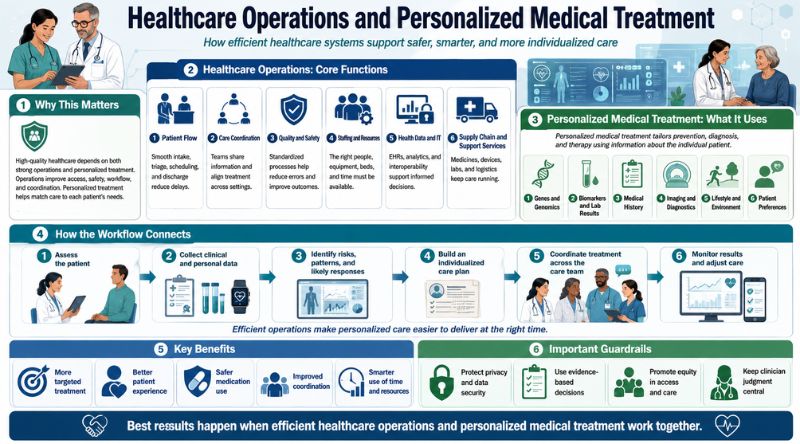
Hospitals and medical researchers are moving beyond generic healthcare models. By creating digital twins of facilities and even individual human bodies, they are unlocking highly precise patient care.
On an operational level, hospital administrators use digital twins of their facilities to run simulations on staffing levels, ER patient flows, and bed capacities to prevent bottlenecks during peak seasons. On a clinical level, advanced twins model individual organs, like a patient’s heart, using MRI scans and genetic data. This allows surgeons to test a complex cardiovascular surgery virtually before ever picking up a scalpel.
|
Feature |
Healthcare and Clinical Impact |
|
Primary Data Source |
Wearable health data, MRI/CT scans, and electronic health records |
|
Core Business Benefit |
Better surgical success rates and optimized hospital room allocation |
|
Real-World Example |
Dassault Systèmes “Living Heart” Project |
Item #5: Supply Chain Network Optimization and Warehouse Logistics
Global logistics networks are highly sensitive to disruptions. Digital twins provide complete, end-to-end visibility across warehouses, shipping lanes, and regional distribution nodes.
A logistics company can build a digital twin of its primary fulfillment center to test out different warehouse layouts and picker workflows. This flags physical bottlenecks before rearranging heavy shelving units. On the road, a supply chain twin pulls in real-time weather, port congestion data, and construction delays, instantly recalculating optimal delivery routes to keep fleets moving efficiently.
|
Feature |
Logistics and Supply Chain Impact |
|
Primary Data Source |
RFID tags, GPS fleet trackers, and live traffic feeds |
|
Core Business Benefit |
Maximize floor space utilization and minimize fuel consumption |
|
Real-World Example |
DHL Warehouse Digital Twin Implementations |
What Are Digital Twins and How Companies Use Them to Drive Value
To get the most out of this tech, businesses look at the digital twin lifecycle as a continuous loop of data and action. The physical object sends data up to the cloud, the cloud processes that data to update the virtual twin, and the twin outputs actionable insights that engineers use to modify the physical asset.
+————————+ +————————+
| Physical Asset | — Sensor Streams ->| Digital Twin (Cloud) |
| (Factory, Jet, City) | <- Physical Adjust -| (Simulations, AI) |
+————————+ +————————+
When deployed correctly, this loop yields a regular 15% boost in overall operational efficiency across corporate supply chains.
Uncommon FAQs
Can a digital twin function entirely offline without a cloud connection?
While some basic, localized system twins can operate on on-premises edge servers due to data sovereignty or latency needs, a true digital twin relies on a continuous loop of data updates. If a twin is cut off from its real-world counterpart’s data streams, it quickly degrades into a static 3D computer model rather than a live, functioning twin.
What is the difference between a digital twin and a standard CAD model?
A Computer-Aided Design (CAD) model is a static digital blueprint that shows how an object should look and fit together structurally. A digital twin, on the other hand, is a live model connected to real-world sensors. If the physical machine gets hotter, runs slower, or suffers structural wear, the digital twin updates to mirror those exact changes in real time.
How do mid-sized companies afford digital twin technology given the high upfront costs?
Historically, only massive enterprises could afford the specialized software and custom sensor integrations required for twins. Today, major cloud vendors offer Digital Twin as a Service (DTaaS) models. This allows smaller companies to pay a monthly subscription fee to run modular, pre-built twins on existing cloud infrastructure without heavy upfront development bills.
Conclusion
Understanding what are digital twins and how companies use them is no longer just for tech enthusiasts—it is an operational necessity for modern businesses. By pairing live IoT data streams with advanced cloud simulations, companies across manufacturing, aerospace, and healthcare are successfully cutting down on maintenance costs, improving product designs, and running highly resilient operations.
If your organization manages complex assets, heavy infrastructure, or intricate supply chains, now is the time to start small. Evaluate your highest-value assets, identify your key data bottlenecks, and map out a pilot program to build your first virtual duplicate.