
I remember bringing home my very first houseplant. I had no idea what I was doing, and within three weeks, it looked like a crispy brown stick. If you have been there too, do not worry. You just need to know how to find the best indoor plants beginners can manage without stress.
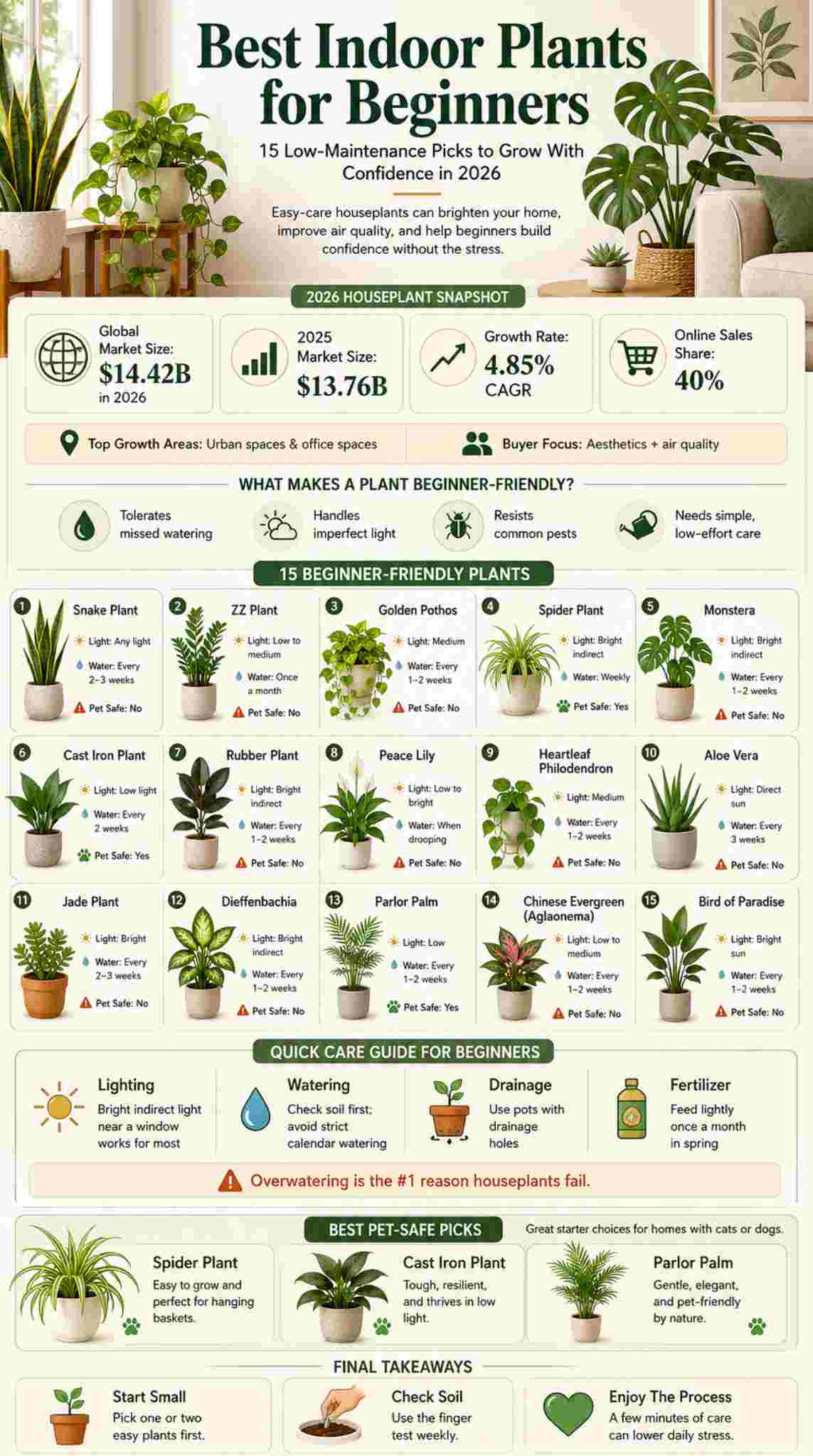
The current houseplant market is booming, expected to hit $14.42 billion globally in 2026. This massive surge means plant shops are stocking more resilient, tough-as-nails varieties than ever before. You can easily build a lush, green space in your apartment or office without a horticulture degree.
|
Market Trend |
2025 Value |
2026 Value |
Growth Rate |
|
Global Market Size |
$13.76 billion |
$14.42 billion |
4.85% CAGR |
|
Online Sales Share |
38% |
40% |
Increasing |
|
Top Growth Area |
Urban spaces |
Office spaces |
High |
|
Main Buyer Focus |
Aesthetics |
Air quality |
Steady |
Why 2026 is the Year for Houseplants
We are seeing a huge shift toward biophilic design this year. People want their homes and workspaces to feel connected to nature. More folks are working from home or hybrid setups, so having greenery around makes those hours staring at a screen much more bearable. You do not need massive outdoor gardens anymore. A few carefully chosen pots can change the entire energy of a room. I love how modern interior trends rely on plants as actual architectural pieces instead of just an afterthought in the corner.
Why Choose Low-Maintenance Indoor Plants?
Starting with demanding plants is exactly how new gardeners end up quitting. You want options that fit your busy schedule and forgive your mistakes. Low-maintenance varieties teach you how to read soil moisture and lighting without punishing you immediately if you forget a watering day. They give you a quick confidence boost. Once you keep a simple plant thriving, you feel ready to tackle something a little more challenging later.
|
Benefit Type |
Description |
Time Required |
|
Stress Reduction |
Caring for plants lowers anxiety |
5 minutes a day |
|
Better Air Quality |
Filtering out everyday indoor toxins |
Passive |
|
Aesthetic Appeal |
Instantly warms up cold, empty spaces |
Immediate |
|
Financial Savings |
Buying hardy plants means fewer replacements |
Long-term |
Health and Wellness Benefits
Having life in your room does wonders for your mental health. I notice a genuine drop in my stress levels when I spend a few minutes checking on my leaves. Some varieties actively filter out things like formaldehyde from the air. You sleep better, you breathe better, and your space feels more alive.
What Makes a Houseplant Beginner-Friendly?
A plant earns the beginner-friendly label if it tolerates neglect. It needs to survive a missed watering cycle or a room with less-than-perfect sunlight. The most forgiving varieties store water in their thick leaves or bulbous roots. They also resist common bugs like spider mites or fungus gnats.
The 15 Best Indoor Plants Beginners Must Try in 2026
If you are standing in a nursery feeling completely lost, this list is your cheat sheet. These fifteen varieties represent the absolute best indoor plants beginners can buy right now. They look amazing, cost very little, and practically take care of themselves. I have personally recommended these to friends who claim they kill everything they touch. Let us dive into the top choices that will transform your living space into a jungle this year.
|
Plant Name |
Light Requirement |
Watering Schedule |
Pet Safe |
|
Snake Plant |
Any light |
Every 2-3 weeks |
No |
|
ZZ Plant |
Low to medium |
Once a month |
No |
|
Golden Pothos |
Medium |
Every 1-2 weeks |
No |
|
Spider Plant |
Bright indirect |
Weekly |
Yes |
|
Monstera |
Bright indirect |
Every 1-2 weeks |
No |
|
Cast Iron Plant |
Low light |
Every 2 weeks |
Yes |
|
Rubber Plant |
Bright indirect |
Every 1-2 weeks |
No |
|
Peace Lily |
Low to bright |
When drooping |
No |
|
Philodendron |
Medium |
Every 1-2 weeks |
No |
|
Aloe Vera |
Direct sun |
Every 3 weeks |
No |
|
Jade Plant |
Bright |
Every 2-3 weeks |
No |
|
Dieffenbachia |
Bright indirect |
Every 1-2 weeks |
No |
|
Parlor Palm |
Low |
Every 1-2 weeks |
Yes |
|
Aglaonema |
Low to medium |
Every 1-2 weeks |
No |
|
Bird of Paradise |
Bright sun |
Every 1-2 weeks |
No |
1. Snake Plant (Sansevieria)
I consider the snake plant to be nearly indestructible. It has tall, stiff leaves that grow straight up, making it great for tight spaces. You can stick it in a dark bathroom or a sunny window, and it will just keep growing. It actually prefers dry soil, so you only need to water it once a month. It also releases oxygen at night, which makes it an awesome addition to your bedroom. Just keep it away from pets, as it can upset their stomachs.
2. ZZ Plant (Zamioculcas zamiifolia)
The ZZ plant looks like it belongs in a modern art museum. It has these shiny, dark green leaves that line up perfectly on thick stems. Beneath the dirt, it grows potato-like roots that hold tons of water. This means you can go on a three-week vacation and it will not even notice you left. It thrives under terrible office lighting. When people ask me for the best indoor plants beginners can ignore completely, this is always my first answer.
3. Golden Pothos (Epipremnum aureum)
If you want something that trails down a bookshelf, grab a golden pothos. It grows ridiculously fast and has pretty, heart-shaped leaves with yellow splashes. It tells you exactly when it is thirsty because the leaves get super droopy. Give it a drink, and it pops right back up in hours. You can even cut off a piece, stick it in a glass of water, and grow a whole new plant.
Read Also: 12 Closet Organization Hacks That Actually Save Space
4. Spider Plant (Chlorophytum comosum)
Spider plants look like little fireworks of green and white leaves. They are incredibly retro but making a massive comeback right now. When they get happy, they shoot out long stems with tiny baby plants on the ends. You can snip those babies off and plant them. Best of all, they are entirely safe for cats and dogs. If your cat likes to chew on leaves, this is a safe bet.
5. Monstera Deliciosa (Swiss Cheese Plant)
You have definitely seen the Monstera all over social media. It has giant leaves with natural holes and splits in them. It looks super exotic, but it is actually very easy to handle. It likes bright, indirect sunlight and a good watering every week or two. As it gets taller, you might need to tie it to a moss pole so it does not flop over. Wiping the dust off its big leaves keeps it looking shiny and healthy.
6. Cast Iron Plant (Aspidistra elatior)
The cast iron plant lives up to its tough name. It has deep green, leathery leaves that stand straight up. This is the plant you buy for that dark, drafty hallway where nothing else survives. It handles cold drafts, low light, and forgotten waterings like a champion. It grows pretty slowly, so you will not need to repot it for years. It is also completely non-toxic to your furry friends.
7. Rubber Plant (Ficus elastica)
The rubber plant makes a huge statement. It has big, thick leaves that look almost like glossy leather. Some types are dark green, while others have a cool burgundy tint. It needs a bright spot near a window to keep those colors looking sharp. It does not like to be moved around much, so find a good spot and leave it there. Water it when the top layer of dirt feels dry.
8. Peace Lily (Spathiphyllum)
I love the peace lily because it takes the guesswork out of watering. It has dark green leaves and white flowers that look like little sails. When it needs water, the whole plant collapses dramatically. You might think you killed it, but pour some water in, and it bounces back completely. It also does an amazing job at cleaning indoor air. Keep it out of reach of pets, though.
9. Heartleaf Philodendron
This one looks a lot like the pothos but has softer, more delicate leaves. It grows as a long vine that looks great in a hanging basket. It handles low light very well and grows quickly. If the vines get too long, just give them a haircut. It is super forgiving if you forget about it for a while. It is a classic for a reason.
10. Aloe Vera
Everyone knows aloe vera is great for sunburns, but it also looks super cool on a windowsill. It is a succulent, so it loves bright sunshine and hates too much water. Put it in your sunniest window and forget about it for three weeks. If you water it too much, the leaves get mushy and rot. It is practical, pretty, and perfect for a hands-off owner.
11. Jade Plant (Crassula ovata)
The jade plant looks like a cute miniature tree. It has thick, woody branches and round, fleshy leaves. Many people think it brings good luck and money to a household. It needs a lot of light and soil that drains really fast. Like aloe, it stores water in its leaves, so wait until the soil is totally dry before adding more. It grows slowly but can live for decades.
12. Dieffenbachia (Dumb Cane)
If you want big, flashy colors, check out the Dieffenbachia. The leaves are covered in awesome patterns of green, white, and yellow. It grows into a nice, bushy floor plant. It likes bright, indirect light; direct sun will burn those pretty leaves. It will drop its bottom leaves if you give it too much water. Be careful, as the sap is highly toxic and can cause mouth swelling if eaten.
13. Parlor Palm (Chamaedorea elegans)
The parlor palm adds a soft, tropical vibe to your living room. It has feathery fronds that look very elegant. It naturally grows on the shaded floor of jungles, so it actually prefers lower light. Do not put it in a bright window, or it will fry. It is completely safe for pets and grows nice and slow. It is perfect for adding height to a shady corner.
14. Chinese Evergreen (Aglaonema)
This plant brings serious pops of color. You can find them with bright pink, red, or silver patterns on their leaves. The darker the green on the leaves, the less light it needs to survive. The pink ones need a bit more brightness. It handles dry indoor air much better than most tropical plants. I highly recommend this if you want something other than plain green.
15. Bird of Paradise (Strelitzia)
The Bird of Paradise is a massive floor plant with huge, paddle-shaped leaves. It looks like something straight out of Hawaii. Even though it looks fancy, it is quite simple to keep alive. It just needs a ton of bright light and plenty of space to spread out. You probably will not see its famous orange flowers indoors, but the gigantic leaves are worth it anyway.
Essential Plant Care Tips for Beginners
Taking care of plants does not require magic. You just need to follow a few basic rules. Once you understand how light and water interact in your home, the rest is easy. Do not let overthinking ruin the fun. I always tell people that observing the best indoor plants beginners own is the quickest way to learn. Let us break down the absolute essentials of plant care.
|
Care Aspect |
The Right Way |
The Wrong Way |
|
Lighting |
Bright indirect near a window |
Dark closets or direct blazing sun |
|
Watering |
Checking soil with a finger first |
Pouring water on a strict calendar schedule |
|
Drainage |
Pots with holes at the bottom |
Pots with zero drainage holes |
|
Fertilizer |
Diluted liquid once a month in spring |
Heavy chemical feeding in winter |
Understanding Lighting Needs
Light is food for your greenery. Bright, indirect light means the plant sits near a sunny window but out of the harsh sunbeams. Direct sun can scorch delicate leaves just like human skin gets a sunburn. Low light does not mean pitch black. If you cannot read a book in that corner without turning on a lamp, a plant cannot survive there either.
Mastering the Watering Routine
Overwatering kills more houseplants than anything else. When the dirt stays soaking wet, the roots literally drown and rot. Always use your finger to test the dirt. Push it down about two inches. If it feels wet, do not add water. When you do water, pour it in until it drips out the bottom of the pot. Never let the pot sit in a puddle of water for days.
Soil, Drainage, and Repotting Basics
Your pots must have drainage holes. If you find a cute pot without a hole, leave your plant in its cheap plastic pot and just drop it inside the cute one. Most tropical varieties like standard indoor potting dirt. Succulents like snake plants and aloe need dirt mixed with sand or perlite so the water drains out fast. You only need to repot when roots start poking out of the drainage holes.
Final Thoughts
Getting into indoor gardening is one of the best things you can do for your home. You do not need to spend a fortune or have a perfect track record. By sticking to the best indoor plants beginners love, you guarantee yourself an easy win. Start with one or two tough plants from this list, figure out their quirks, and watch them grow. If a leaf turns yellow or something goes wrong, do not beat yourself up. Every plant parent learns through trial and error. Grab a watering can, find a sunny window, and enjoy bringing a little bit of the outdoors inside.
|
Final Takeaways |
Why It Matters |
Next Steps |
|
Start Small |
Prevents feeling overwhelmed |
Pick one tough plant today |
|
Check Soil |
Stops root rot immediately |
Use the finger test weekly |
|
Enjoy the Process |
Reduces your daily stress |
Spend 5 minutes observing leaves |
Frequently Asked Questions (FAQs)
People ask a lot of the same questions when they start out. It is totally normal to feel a bit confused by conflicting advice online. Finding the best indoor plants beginners can thrive with means sorting through common myths. I pulled together some of the more unusual questions I see popping up in search results this year.
|
Common Question |
Quick Answer |
Level of Difficulty |
|
Foil tricks? |
Aluminum foil reflects light and deters bugs |
Easy |
|
Hardest to kill? |
Snake plant and ZZ plant |
Very Easy |
|
Ice cube watering? |
Bad idea, shocks tropical roots |
Moderate |
|
Safe for cats? |
Spider plants and Parlor palms |
Easy |
Is aluminum foil actually useful for houseplants?
Surprisingly, yes. A big trend in 2026 is using aluminum foil around your pots. Placing a small sheet near the base reflects sunlight back up into the lower leaves. It also confuses small pests like aphids, keeping them away from your stems. Just do not wrap the foil tightly around the dirt, as it blocks airflow.
Why do my plant’s leaf tips keep turning brown?
Brown, crispy tips usually mean the air in your house is too dry, or your tap water has too much chlorine. Try filling a spray bottle with water and misting the area around your plants. You can also leave your watering can out overnight so the harsh chemicals in tap water evaporate before you pour it on the dirt.
Can I use coffee grounds to feed my plants?
You can, but be careful. Coffee grounds add nitrogen to the dirt, which leaves love. However, dumping wet coffee grounds directly on top of indoor soil usually leads to nasty mold. It is much better to mix a tiny bit into the dirt when repotting or compost them first outside.